
The Red Giant carrot is a mid-season, high-yielding giant carrot. Its seeds are sown in May, and the harvest begins in August. This variety produces abundant crops and is renowned for its enormous, sweet roots. The name Red Giant is a Russian translation of the German word for "Rote Riesen."
What kind is this?
Red Giant is a member of the Flake (Valeria) cultivar type, indicating its late ripening period and particular suitability for long-term storage. It is a self-sufficient variety, not a hybrid, so you can use your own planting material for further cultivation.
Peculiarities of origin
Red Giant is one of the modern carrot varieties developed by employees of the Moscow company OOO AGROFIRMA AELITA.
The variety was registered in the State Register in 2015 and recommended for cultivation in the Central Federal District of Russia, although its cultivation is practiced throughout almost the entire country.
Chemical composition, trace elements and vitamins, beneficial properties
The Red Giant carrot variety is renowned for its rich vitamin and mineral content. 100 g of this vegetable contains 17 to 21 mg of fructose and 8 to 9% carotene, making it highly beneficial.
Nature has enriched carrots with the following macronutrients:
- potassium – 205 mg;
- calcium – 22.7 mg;
- phosphorus – 44 mg;
- magnesium – 35.8 mg;
- sodium – 16.2 mg;
- sulfur – 4.7 mg.
And also microelements:
- iron – 0.9 mg;
- zinc – 0.33 mg;
- aluminum – 0.2 mg;
- manganese – 0.22 mg;
- boron – 0.21 mg;
- copper – 0.68 mg;
- fluorine – 0.45 mg.
Carrots contain the following vitamins:
- A – 0.93 mg;
- B1 – 0.06 mg;
- B2 – 0.05 mg;
- B9 – 0.14 mg;
- C – 0.46 mg;
- PP – 1.23 mg;
- E – 0.76 mg.
Carrots are essential for human health. Eating them has a positive effect on vision, strengthens the immune system, and supports metabolism.
In addition, Red Giant helps restore the bacterial composition of the intestines, stabilizes the digestive system and has a beneficial effect on the condition of blood vessels.
Features of application
The Red Giant is an ideal choice for home gardens. This versatile carrot variety is an indispensable ingredient in soups and a variety of culinary delights. Its juicy roots are used to make juices and baby vegetable purees.
Ripening period and yield
This mid-late variety reaches full maturity 100-110 days after sowing. The yield is impressive: 4-7 kg of carrots can be harvested from 1 square meter.
During industrial cultivation, up to 350 centners are harvested from one hectare.
Disease resistance
Red Giant boasts good resistance to powdery mildew, gray and brown spot, and bacterial diseases. This variety is also resistant to psyllids and parasol moths.
Characteristics and description of the appearance of the bush, fruit, taste qualities
You can distinguish the Red Giant from other carrot varieties by its characteristic features:
- This cultivar is distinguished by a wide, dense rosette of dark green leaves with distinct dissections along the edges. The rosette is considered semi-spreading, though specimens with a fully spreading crown are occasionally encountered.
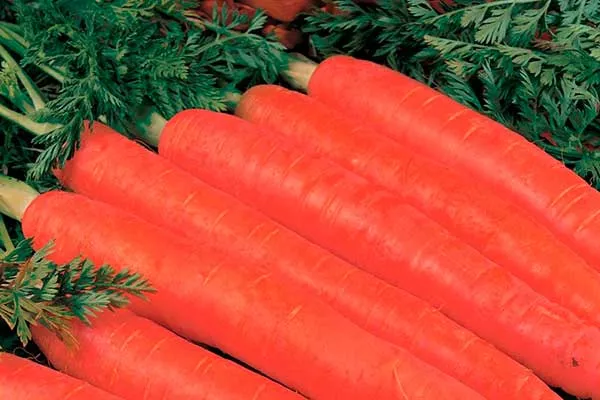
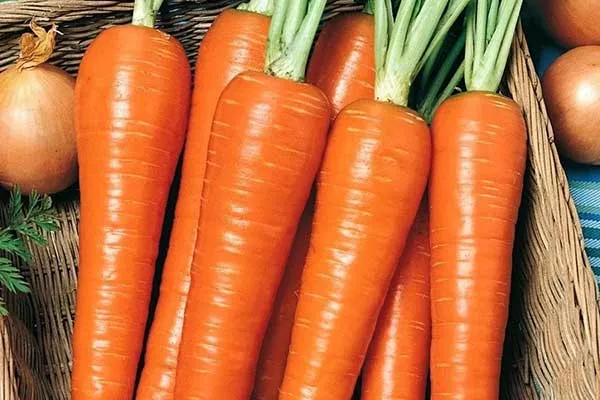
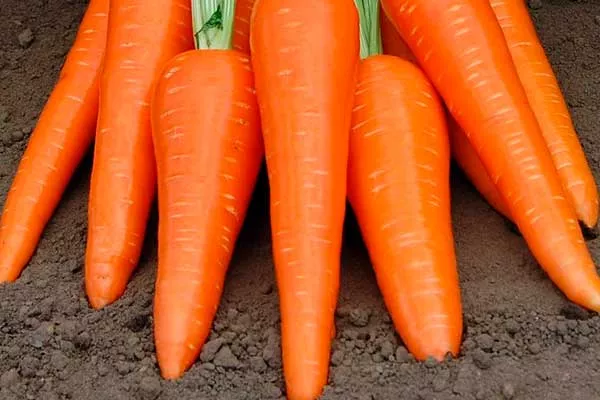
- The roots are colored a rich orange, and their shape resembles an elongated cone with a rounded top.
- The length of carrots can reach 22-25 cm, and the width at the base is 5-6 cm, while the weight of each varies from 100 to 165 g.
- The core is medium-sized and the flesh is juicy and sweet.
What regions is it best suited for and what are its climate requirements?
This variety tolerates frost well and is recommended for growing in various climatic conditions throughout our country.
What producers of Red Giant seeds are there?
In addition to its own seed product, Red Giant, the Moscow region agro-industrial enterprise Aelita also offers seeds from various brands:
- "Russian style";
- Timiryazev Nursery;
- "Seeds of Altai";
- "Demeter";
- “Lucky Seeds”;
- "Plasmas";
- "Gavrish";
- "Siberian Garden";
- "SeDeK";
- "Rostok-Gel";
- "Ural summer resident".
The main advantages and disadvantages of the variety
The Red Giant variety has several advantages that make it attractive to gardeners. These qualities include:
Among the disadvantages is average resistance to damage by carrot fly.
What is the difference from other varieties?
This carrot variety has the following characteristics:
- significant sizes;
- resistance to mild frosts;
- lack of tendency to fracture and form cracks.
Features of planting and growing
The Red Giant variety is particularly frost-resistant, allowing it to be sown in the fall, most often in early November. When planting this way, the seedlings should be covered with sawdust or straw to retain heat.
Preparing for landing
To ensure optimal germination, seeds require pre-treatment. Here's how to do it correctly:
- First, soak the seeds in water for a couple of hours. During this time, the good seeds will sink to the bottom, while the bad ones will float and be removed.
- Disinfect the remaining seeds in a weak solution of potassium permanganate, for which one hour is enough.
- Then thoroughly rinse the planting material with clean running water.
- Next, spread the seeds over a damp cloth and place them in a warm place to germinate for 6-10 days.
Feel free to use growth stimulants such as Zircon or Epin, which will speed up the process of sprouting and further development of shoots.
Site preparation occurs in the fall, including the thorough removal of plant debris and rocks. This is followed by deep loosening of the soil with the addition of organic fertilizers, wood ash, and a mineral supplement.
- ✓ The optimal soil pH should be in the range of 6.0-6.8 to ensure maximum nutrient availability.
- ✓ The depth of the arable layer should be at least 25 cm to ensure free development of root crops.
Soil requirements
The choice of a carrot planting site is limited to a site with loamy or sandy loam soil. It should be light enough to allow water and air to reach the plant roots.
Predecessors
The best predecessors for carrots are potatoes, legumes, cucumbers, tomatoes, and cabbage. Avoid planting carrots in areas previously occupied by beets, dill, parsley, and celery.
Timing, scheme and rules of planting
Sprouted seeds are planted in April-May, when the soil temperature reaches +7…+10 degrees. Here's how:
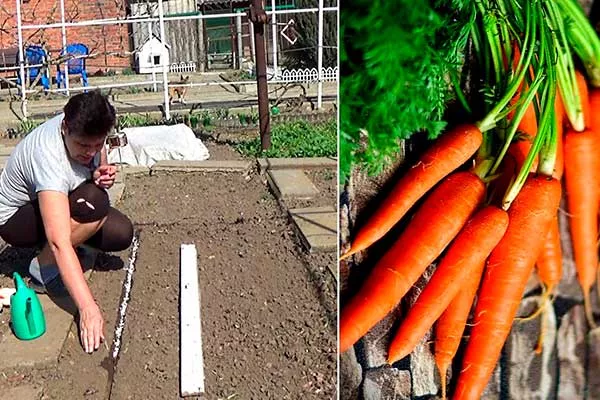
- In the prepared area, form furrows up to 2 cm deep and water them with warm water. The distance between rows should be 18-25 cm.
- Place the seeds at intervals of 2-3 cm, then sprinkle them with a thin layer of soil and lightly compact them so that the wind does not blow away the planting material.
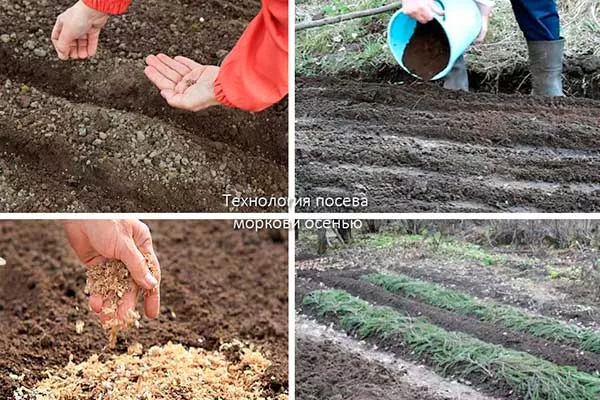
If preference is given to planting seeds for the winter, then this is done in October-November, when the soil temperature drops to +5-6 degrees.
Features of cultivation
When choosing a growing site, pay special attention to light: ideally, areas with full sunlight will develop more slowly, and the roots will not reach the desired size and will not be sweet enough.
When choosing a planting site for a variety that produces particularly long carrots, it's important to consider the depth of the groundwater table. If it's too close to the surface, the roots may rot in the soggy soil.
Care nuances
To protect young shoots from unexpected frosts, they are initially left under a protective light film, removing it only after the sprouts appear.
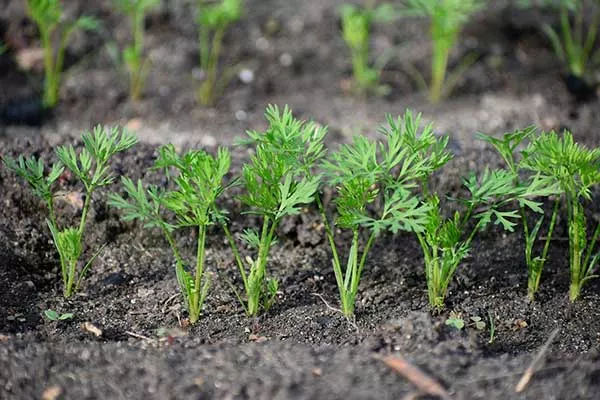
Once the seedlings have emerged, it is necessary to loosen the soil to prevent crust formation while simultaneously eliminating weeds that are beginning to grow actively.
Further care procedures are standard, but with some varietal features:
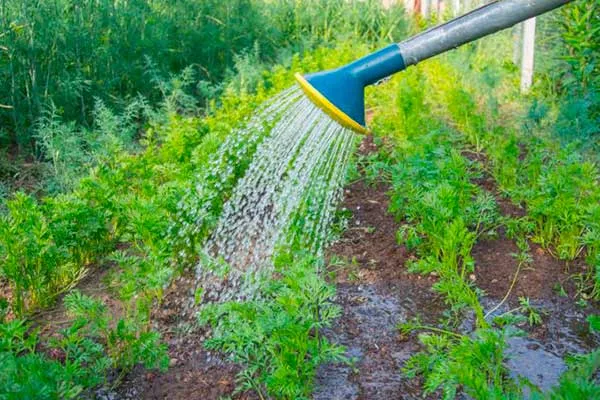
- Watering. Once the sprouts emerge, water the beds twice a week. During drought conditions, supplemental drip irrigation is recommended. Watering should be done in the morning and evening. Once the roots begin to form, water them once a week, gradually increasing the amount of water.
Watering should be regular to prevent cracking of carrots. Stop watering completely 15-20 days before harvesting. - Thinning. Particular attention is paid to the process of removing excess plants. In densely spaced plantings, the fruits will be small:
- The first procedure occurs when the plants reach a height of 8-12 cm.
- The second time, harvesting is carried out during the development of root crops, when the distance between plants increases to 5 cm.
- As the vegetables grow larger, the harvesting process is repeated, selecting the less healthy specimens for removal. There should be at least 8-10 cm of space between mature plants.
- Weed removal. This is carried out throughout the entire plant growth period until the root crops are harvested. Weeds reduce soil fertility, leading to poor growth of carrot plants. Therefore, regular weed control is extremely important.
- Recharge. 15-17 days after germination, apply a complex fertilizer mixture. You can use the following mixture: 30 g of regular superphosphate, 20-25 g of urea solution, and the same amount of potassium nitrate per 10-12 liters of water. Then fertilize as follows:
- During fruit ripening, add a mixture consisting of 15-20 g of potassium sulfate, 10 g of double superphosphate per 10 liters of water.
- A month before carrots are fully ripe, add boron and manganese to improve flavor: dilute 2 g of permanganate and 5-6 g of boric acid in 10 liters of water. Additionally, use organic matter, such as an ash solution.
Pest and disease control
This variety is resistant to many diseases, but with the wrong approach to agricultural practices, there may be a risk of certain damages:
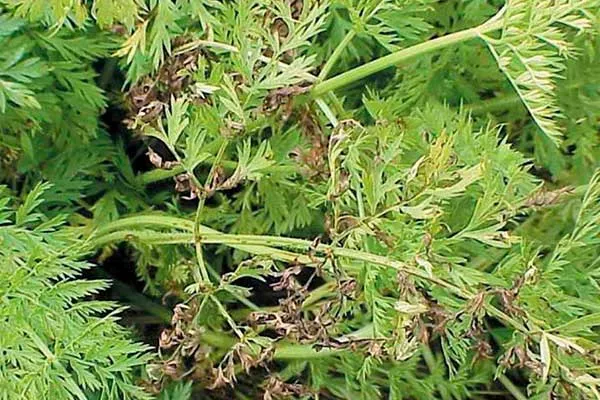
- Alternaria (black rot). One of the first symptoms of the disease is the appearance of dark brown spots on the leaves. On young plants, the coloring becomes almost black. Dry, black rot is observed on the roots.
To combat this rot, buy Rovral or Falcon. To prevent the disease from developing, treat the soil with a 1% Bordeaux mixture solution in the spring before sowing seeds. - Phoma (dry rot). This fungal infection first appears on the tops of the plants, then the leaves become covered with reddish-brown spots and begin to dry out. The disease then spreads to the roots, where grayish, dirty spots appear and rot begins.
To prevent the development of phoma, it is recommended to fertilize the soil with potassium solutions and spray with a 1% solution of Bordeaux mixture. In the early stages of the disease, a 1:1 solution of Maxim is used. - White rot. This disease attacks root vegetables during storage, causing them to become soft and covered with a white, fluffy coating that gradually promotes rotting. White rot spreads through contaminated soil, so beds are treated with copper-based compounds such as copper sulfate and Bordeaux mixture.
- Two weeks before sowing, treat the soil with a 1% solution of Bordeaux mixture to prevent alternaria and phomosis.
- After emergence, spray with biological preparations based on Bacillus subtilis to strengthen the plant’s immunity.
- In the 4-5 leaf phase, treat the plants with a solution of potassium permanganate (2 g per 10 l of water) to prevent white rot.
Among harmful parasites, there are only two types to be wary of:
- Carrot roots are vulnerable to attack by wireworms. These insects feed on the roots, creating a vast network of longitudinal tunnels. As a result, the plants slow down, the carrot yield declines, and the roots become unsuitable for both storage and consumption.
To get rid of wireworms, use specialized traps and plant green manure. Treat the soil with plant protection products such as Aktara and Bazudin. - Carrot fly lays eggs on plant leaves. The hatched larvae cause severe damage to the foliage, leading to crop loss and root desiccation. If pests are detected, spray or dust carrot plants with a mixture of ash and tobacco powder.
In case of mass reproduction of insects, the insecticide Intavir is used.
Harvesting and storage
The Red Giant variety is a mid-late variety, so its harvest begins in August. If grown in the fall, harvesting begins as early as July.
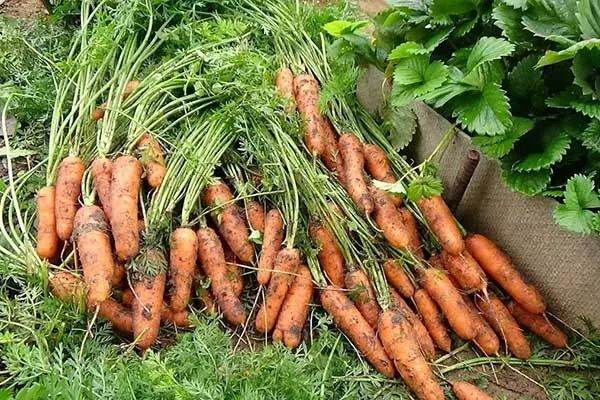
Briefly about the methods and timing of collection:
- Start digging when yellow lower leaves appear on the root crops.
- Remove the roots from the soil by holding the plant by the tops. If necessary, use a shovel or pitchfork.
- Clean the carrots from any remaining soil by hitting them against the surface, and cut off the tops with a knife or twist them.
- Place vegetables on a dry floor indoors to dry.
- After a week, sort the vegetables: separate the damaged ones for further processing, and put the whole ones into storage.
Storage features and shelf life:
- In a vegetable warehouse, maintain the temperature in the range of +1…+4 degrees and humidity within 87-90%.
- The rule of constant ventilation is strictly observed.
Compliance with these conditions allows the variety to be preserved at 97% of its original value.
What difficulties might arise when growing?
When cultivating the Red Giant, the following difficulties may arise:
- Root vegetables are often exposed. To prevent carrots from poking out of the ground, lightly hill the beds after the soil has become moist or after rain, covering the "shoulders" of the carrots.
- Excessive foliage growth and stunted root development. When applying nitrogen fertilizers, it's important to carefully calculate the nitrogen dosage. Excessive nitrogen in the soil can promote excessive foliage growth, which negatively impacts root development.
Tips from experienced gardeners
Experienced gardeners say that for successful fall carrot planting, the seeds must be dug in at least 3-4 cm deep. They also have other recommendations for beginners that are important to know when growing Red Giant carrots:
- To avoid overcrowding when growing carrots, gardening experts recommend using seeds packaged on tape. These are pre-spaced at the required distance. However, such plantings require careful tending, frequently loosening the soil to prevent crusting.
- If the area is dominated by heavy soil, add sand or peat to improve it, even though this variety is adapted to it.
- Try to use drip irrigation when the first green shoots appear to avoid washing away the seeds due to a strong flow of water during watering.
Reviews of the Red Giant carrot variety
The Red Giant variety has won the hearts of farmers and gardeners thanks to its magnificent, juicy, and aromatic fruits. It is easy to cultivate and suitable for growing in a wide range of climates. These carrots keep well throughout the winter. They can also be planted in the fall.