
The Autumn Queen is a late-ripening carrot variety. Its low maintenance and resistance to various diseases have made it one of the most popular. This variety has specific characteristics related to its appearance, taste, cultivation, and harvesting.
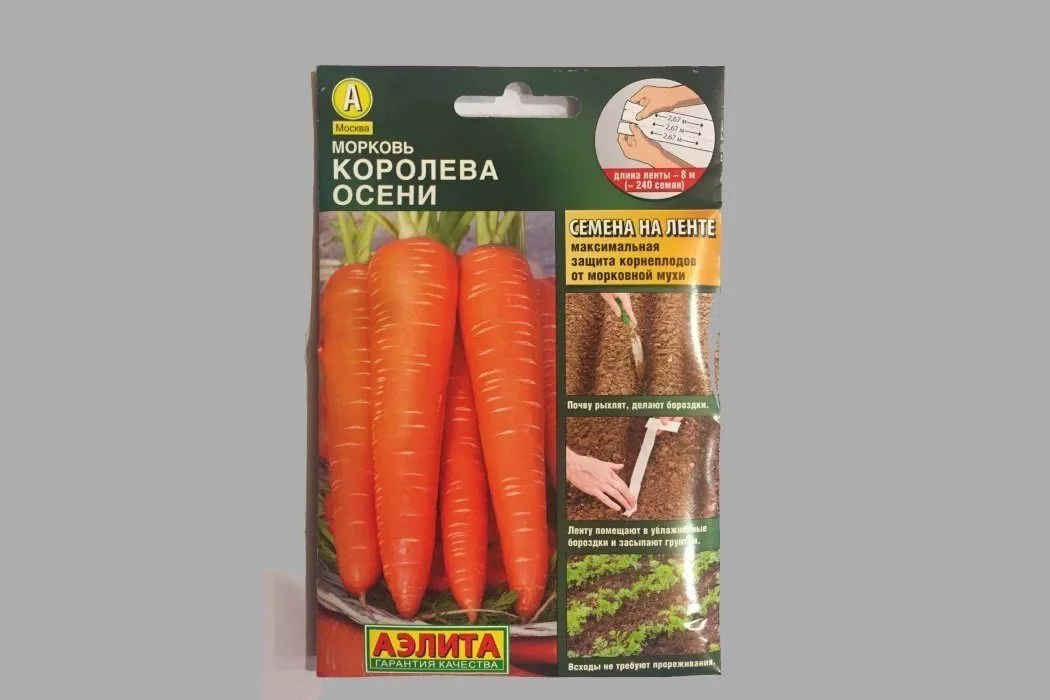
Carrot seeds Queen of Autumn
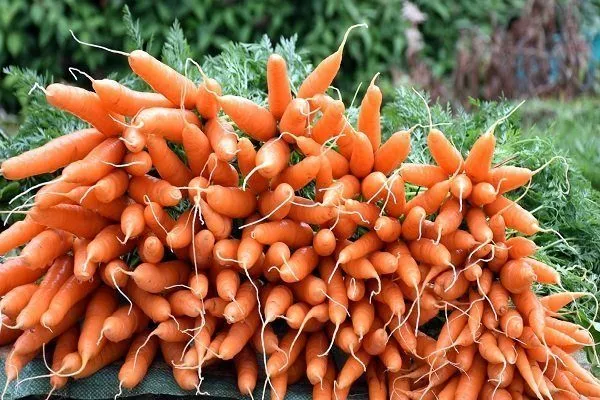
The Autumn Queen carrot is easy to care for.
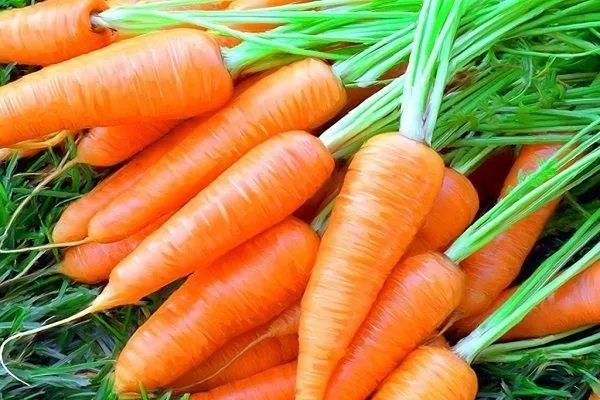
Carrot Queen of Autumn
Description of the variety
One of the distinctive features of the Autumn Queen variety is its high carotene content (12-15%). This gives the roots their characteristic orange color, although it's not particularly intense. This variety is late-ripening, with a growing season of 120-130 days.
The Autumn Queen is characterized by a spreading rosette of leaves. The leaves are medium-sized and light green.
The roots have a regular, elongated shape and can reach 30 cm in length. They weigh on average 0.16-0.2 kg. Sugar content ranges from 6-11%. Yields are up to 9 kg per square meter.
The Autumn Queen is a cold-hardy variety—it can withstand temperatures as low as -4°C. This allows for early sowing and harvesting even before frost. This property makes it possible to successfully grow carrots even in northern latitudes.
Advantages and disadvantages
The popularity of the Autumn Queen among gardeners is due to its many advantages:
- excellent taste characteristics;
- fairly large root vegetables;
- high seed germination rate, fruits ripen evenly;
- disease resistance;
- high yield;
- the possibility of long-term storage with preservation of taste qualities;
- Versatility – carrots can be eaten fresh, used in cold and hot dishes, and preserved in various ways.
These advantages are countered by several disadvantages of the variety:
- different sizes of root vegetables;
- when planting in dense soil, difficulties arise in extracting root crops due to their great length;
- The orange color is not too saturated.
Soil requirements
The soil for planting Autumn Queen should be prepared in advance. Light, fertile, and well-drained soil is preferred. If the soil is too heavy, there's a high risk of crusting, which hinders germination and can lead to deformed roots.
- ✓ The site should be protected from northerly winds to minimize the risk of frost.
- ✓ Soil should have a pH of 6.0-6.5 for optimal nutrient absorption.
The selected planting site should be dug over in late autumn. Fertilize the soil. Repeat the entire process in the spring. Ash and humus are good fertilizers; add them a few weeks before planting.
Avoid using fresh manure and nitrogen fertilizers. The Queen of Autumn dislikes high acidity, and using nitrogen will cause large amounts of nitrates to accumulate in the root crops.
The site for planting Autumn Queen should be level and well-lit. The bed should not be located near trees or in a low-lying area.
Landing rules
It's important to properly prepare the seeds for planting. They should be soaked in warm water for 24 hours, changing the water every 3 hours. After soaking, rinse the seeds and refrigerate them. This preparation speeds up germination.
You can soak the seeds for several hours and then leave them in a damp cloth for another 20 hours. This also ensures their swelling, which is necessary for accelerated germination.
Autumn Queen is planted in late April or early May. Planting as early as early June is also possible in cool climates or when a late harvest is desired. To determine the optimal planting time, consider local climate conditions and the crop's maturation time.
Landing can be carried out in the following ways:
- sowing with sand: you need to take half as many seeds; this option is attractive due to the uniform distribution of planting material, which makes further work easier;
- planting in a paste solution: Dissolve some starch in water, after it has swollen, add the seeds, and water the prepared area with this mixture from a watering can.
The soil should be watered before sowing the seeds. Autumn Queen should be planted in rows, spaced 15 cm apart. Furrows should be 1-2 cm deep. Seeds should be planted 0.5-1 cm deep.
For information on how to plant carrots, watch the following video:
Post-planting care
Caring for the Queen of Autumn after planting involves the following steps:
- loosening the beds and removing weeds - the soil is saturated with moisture, preventing crust formation;
- moderate and regular watering is necessary at any stage of crop cultivation, ensures evenness, juiciness and sweetness of root crops;
- thinning;
- regular fertilizing: organic and mineral substances.
Frequent watering is required during the first month. If the weather is dry, water the carrots daily. Once the seedlings reach 3-4 cm in height, reduce the frequency of watering to once every 1-1.5 weeks.
The first thinning is carried out simultaneously with reducing watering. It should be repeated when the fruit reaches the thickness of a pencil. After the second thinning, there should be 5-7 cm of space between the seedlings.
Thinning must be done very carefully to avoid damaging the root system. Otherwise, the root shape will suffer. If the crop is not thinned promptly, the planting density will make it thin and frail, unsuitable for long-term storage (it will quickly rot).
The Queen of Autumn requires periodic feeding. The first feeding is done when the seedlings are thinned. Nitrogen fertilizers can be used, but strictly in moderation. Fresh manure should be avoided, as this will affect the taste of the root vegetables, as well as their appearance.
When the green mass begins to grow actively, potassium fertilizer should be applied. This is also necessary when root crops begin to form.
With proper planting and subsequent care, the crop will emerge within two weeks. To prevent excessive weed growth and moisture evaporation, which can lead to soil cracking, a shelter made of polyethylene can be constructed.
How to achieve a bountiful harvest?
To ensure a bountiful harvest, it's important to follow all the rules for sowing and caring for the crop. The foundation for a successful harvest begins as early as the soil preparation stage.
One of the most important conditions for a bountiful harvest is proper watering. Frequent and excessive watering causes root vegetables to become too coarse and lose flavor, resembling that of forage varieties. Insufficient watering leads to wilting, insufficient sweetness in the roots, and even the loss of the entire crop. Proper watering is also important for the shelf life of vegetables.
Watch this video to learn about growing Queen of Autumn carrots:
Diseases and their prevention
The Autumn Queen is fairly resistant to various diseases, but the risk of such problems cannot be completely eliminated. The main concern is the possibility of infectious diseases and fungi, which can cause the fruit to rot and spoil. The following measures will help avoid this problem:
- proper crop rotation;
- proper preparation for planting - all plant debris must be removed in the fall, especially if there were any diseases;
- timely planting of seeds;
- regular use of potash fertilizers;
- timely loosening of the soil.
Among pests, the carrot fly and its larvae pose the main threat to the Queen of Autumn. A bronze tint to the leaves is a warning sign. If action is not taken promptly, the roots will become loose and bitter, making them unsuitable for consumption. The following measures can help prevent carrot fly infestations:
- timely loosening;
- elimination of stagnant water;
- The correct choice of planting site - it should not be shaded.
If it was not possible to prevent the appearance of the carrot fly, then its spread and mass damage to the crop should be stopped with insecticides.
Harvesting and storage rules
The Queen of Autumn harvest begins in mid-October. It's important to time the harvest correctly, as unripe roots will rot, while overripe ones are susceptible to various pests.
- ✓ The lower leaves begin to turn yellow and die.
- ✓ The diameter of the roots reaches 1.5-2 cm at the base.
It's important to prepare for harvesting. Stop watering a few days beforehand, and if the weather is dry, continue with a light misting. This preparation improves the taste of the root vegetables—they'll be sweeter and juicier.
Harvesting should be done in good weather—choose a sunny day. If the soil is light and loose enough, the roots can be removed by hand. If this is difficult, carefully dig up the crop to ensure several roots are contained within a single lump of soil. Carefully pull them out individually by the tops.
The harvested crop should not be cleared of soil or washed, as this increases the risk of various diseases. Be sure to trim the tops, leaving a half-centimeter gap from the growing point.
The trimmed roots should be laid out on the ground to dry. After this, the harvest should be kept in a dark place for 15 days, at a room temperature of 10-15 degrees Celsius. After this period, the harvest should be sorted, discarding any soft or damaged ones.
The Queen of Autumn carrots are ideal for winter storage, maintaining excellent nutritional value. They are best stored in a cellar or basement. The optimal temperature is 0-5°C, with a humidity of 90-95%.
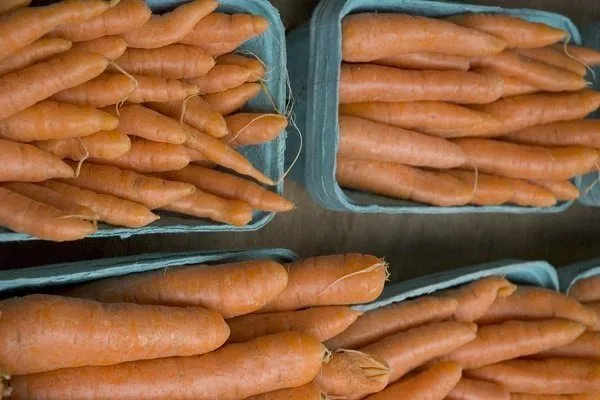
Carrots can be stored for up to 2 months in the refrigerator for eating. Home canning is another option for preserving the harvest.
The Autumn Queen is a popular carrot variety. It appeals for its flavor, large root size, disease resistance, and ease of care. Proper planting, preparation, and subsequent care ensure a bountiful harvest with a long shelf life.