
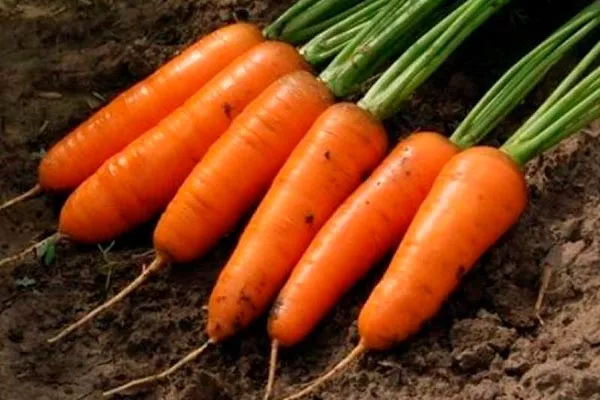
Cascade F1 is a hybrid carrot variety popular with Russian gardeners and farmers. It is beloved for its high yield, disease resistance, attractive root shape, and excellent flavor. It is grown in private gardens and fields. Commercial cultivation is possible thanks to its suitability for machine harvesting.
Breeding history
This high-yielding hybrid is the brainchild of Dutch breeders representing Bejo Zaden BV, a global leader in the production of elite seeds for improved vegetable varieties. It was approved for commercial use in 2006.
Description of the variety
Dutch carrot hybrids boast many excellent characteristics, and Cascade is no exception. Check out its botanical description and technical specifications if you plan to grow this variety in your garden.
Characteristics of the appearance of the plant and root crops
Cascade carrot plants are strong and fairly compact. They have the following external characteristics:
- "height" - 40 cm;
- semi-spreading rosette;
- dark green leaves: long, coarsely dissected.
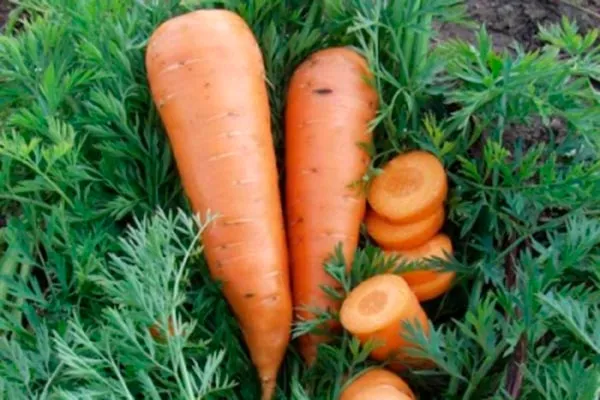
The hybrid belongs to the Shantane type. Its roots possess the characteristics typical of this varietal group:
- evenness;
- smooth surface without pronounced wrinkles;
- short size (carrots reach 12-15 cm in length and 4-6 cm in diameter);
- weight - 120-250 g;
- oblong shape with a blunt tip;
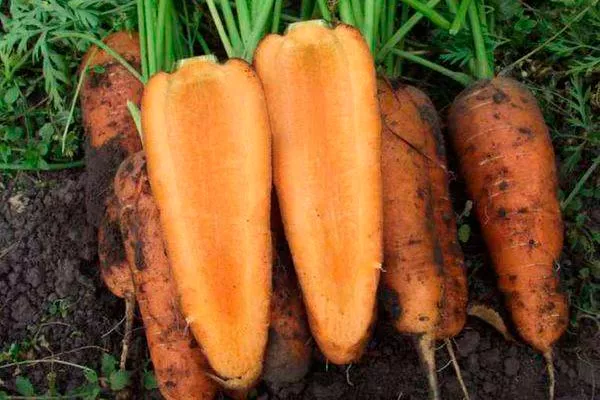
- rich orange color, equally bright on the outside and inside of the fruit;
- small in size core;
- dense pulp, not fibrous, not containing any voids, with a crunch and an abundance of juice in it.
Purpose and taste of tubers
In addition to its marketable appearance, hybrid carrots also boast excellent flavor. They are sweet, juicy, and crunchy, with a very aromatic flavor. Their sugar content ranges from 8.3-9.4%. Their dry matter content is 11.9-15.4%.
The Cascade hybrid's harvest is versatile. It's eaten fresh and cooked. Cooks use it in the following ways:
- added to salads, soups, vegetable stews;
- marinate;
- canned;
- dry;
- processed into juice or puree intended for baby food.
Chemical composition, trace elements and vitamins, beneficial properties
This Dutch hybrid is prized by gardeners for its high nutritional value and rich vitamin content. The tubers contain 16.5 mg of carotene per 100 g. They are also rich in other beneficial substances:
- tocopherol;
- ascorbic acid;
- vitamins B, K, PP;
- microelements (iron, potassium, calcium, phosphorus, magnesium, iodine and others);
- pectins;
- antioxidants.
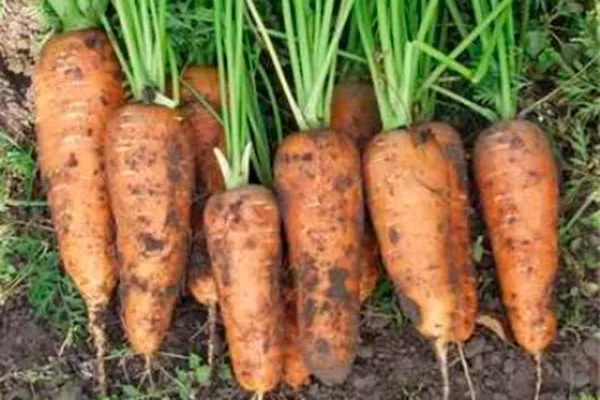
Cascade is a good choice for dietary nutrition and for including in a child's diet. This orange vegetable is a source of easily digestible carbohydrates, fiber, and essential amino acids. It is included in children's menus due to its high content of carotene, a growth vitamin essential for babies.
This product promotes good vision, healthy skin and mucous membranes, and improves intestinal motility. Give it to your child boiled or raw (puree, juice), combined with vegetable oils and sour cream. Introduce carrots to your child's diet with caution due to the possibility of an individual intolerance reaction.
Maturation
This vegetable variety belongs to the mid-season variety and hybrid category. Its harvest matures in 110-130 days. Gardeners begin harvesting the first red roots as early as July. They ripen en masse in the second half of summer and in September. The longer the carrots sit in the ground, the larger they become.
Productivity
With strict adherence to vegetable cultivation techniques and crop rotation rules, the hybrid shows high yields:
- 6-7 kg of root vegetables from 1 sq. m of carrot bed is the average figure;
- 25,000-39,000 kg per 1 ha - for industrial cultivation of vegetables;
- 45,000 kg per 1 ha is the maximum yield (recorded when growing Cascade carrots in the Moscow region);
- marketability rate – from 75% to 94%.
Soil requirements
This hybrid vegetable variety prefers loose, light, fertile soils with low acidity. It does not grow well in heavy clay soils. Loam and sandy loam soils are more suitable for it.
Necessary climatic conditions
The Dutch hybrid is approved for cultivation in the following regions of the country:
- Central;
- North-West;
- Central Black Earth Region;
- Volga-Vyatka;
- Lower Volga;
- West Siberian;
- Far Eastern;
- North Caucasian;
- Ural;
- East Siberian.
It grows and bears fruit successfully in all climatic zones not only of the Russian Federation, but also of Ukraine, Belarus, and Moldova.
Resistance to diseases and pests
Cascade, like most Dutch hybrids, is characterized by strong immunity. It is resistant to diseases (particularly blackleg and cercospora leaf spot), insect attacks, flowering, and root cracking.
What are the different varieties of Cascade F1 carrot seeds?
You can purchase seed for growing this Dutch hybrid from various manufacturers. The following agricultural companies supply it to the domestic market:
- "Search";
- Gavrish;
- "Bejo Zaden" (originator).
- ✓ High percentage of seed germination (more than 95%) when using granulated seeds, which is not mentioned in the article.
- ✓ Resistance to flowering and cracking of root crops, which is critical for successful cultivation.
Cascade seeds are available in both regular and pelleted varieties. The latter is more expensive, but it provides a higher carrot germination rate (over 95%) and makes planting easier.
Landing features
Gardeners grow vegetables using seed. Sowing occurs in the second half of spring. To obtain the earliest possible harvest, they resort to winter sowing (this is done after the soil in the previously prepared area has been frozen).
In areas with a harsh climate, as well as where winters often include thaws, autumn planting of Cascade is not practiced.
Preparing for landing
To speed up seed germination, pre-plant seed treatment. Use one of the following methods:
- soaking the seed material for 24 hours in lukewarm water (temperature +30°C);
- treating seeds with ash infusion and then placing them in the refrigerator for 2 days;
- contrast bathing: first, place the seeds in a canvas bag and dip them in hot water (temperature +50°C) for a couple of minutes, then in cold water;
- soaking in a solution of Epin with simultaneous bubblerization (oxygen enrichment).
Site requirements
Select a spot in your garden that meets the following requirements for planting hybrid carrots:
- well-lit by the sun;
- with loose sandy loam or light loamy soil with a pH of 5.5-6.6.
- ✓ The optimal soil acidity (pH) should be within 5.5-6.6, which is not mentioned in the article.
- ✓ The need to add sand or sawdust to black soil to improve the soil structure, which is critical for preventing root crop deformation.
If you plan to sow Cascade seeds in the spring, prepare the site in the fall. For winter sowing, prepare the site several months before the planned date. Follow these steps:
- Dig the soil to a depth of 30 cm;
- add sand or sawdust if you have black soil on your site;
- fertilize it with compost or humus if the soil is loamy or sandy (consumption rate is 3 kg per 1 sq. m).
Before planting, enrich the soil with mineral mixtures: potassium sulfate (15 g/m2) and superphosphate (30 g/m2). These will increase the potassium and phosphorus content in the soil and provide carrots with additional protection against viral and bacterial infections.
Predecessors
Grow vegetables where you had beds of zucchini, cucumbers, tomatoes, cabbage, garlic, onions, and beans last year. Carrots also grow well in former potato fields.
Timing, scheme and rules of planting
In spring, sow the seeds of this Dutch hybrid in garden soil from April 20 to May 10. Make sure the soil has warmed to 8°C. The optimal daytime temperature for planting is 15-18°C.
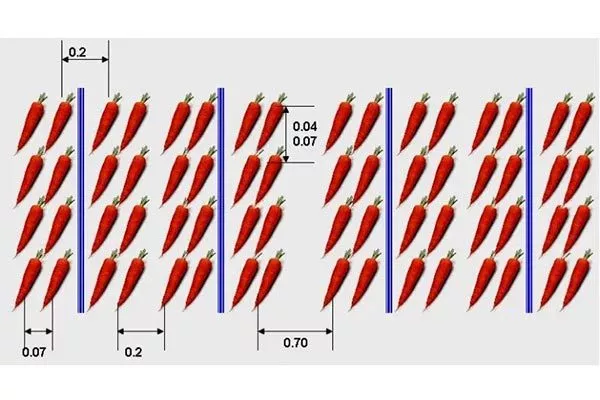
Plant Cascade seeds in long furrows (the soil should be moist), following the pattern:
- sowing step - 5 cm;
- seeding depth - 2 cm;
- the distance between rows is 20 cm.
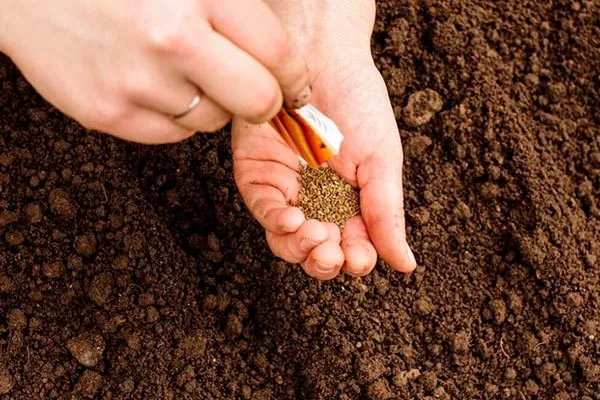
Before the seedlings emerge, cover the bed with plastic film to maintain optimal soil moisture. Once the seedlings emerge, remove the covering material. They will appear in 10-30 days, depending on the weather, soil type, sowing date, and seed freshness.
Carry out winter sowing in late October, when temperatures drop to +5°C. Plant the seeds to a depth of 3 cm. Mulch the area with peat. It's a good idea to add wood ash to the furrows during sowing—it's a powerful weapon against fungus and a soil acidifier.
Care nuances
Proper care of your carrot bed determines not only the quantity of your harvest but also its quality: the size, shape, taste, and juiciness of the roots. Pay particular attention to watering, thinning, and fertilizing.
Watering mode
Water the Cascade hybrid planting once every 7 days. Adjust the watering schedule depending on the weather and precipitation.
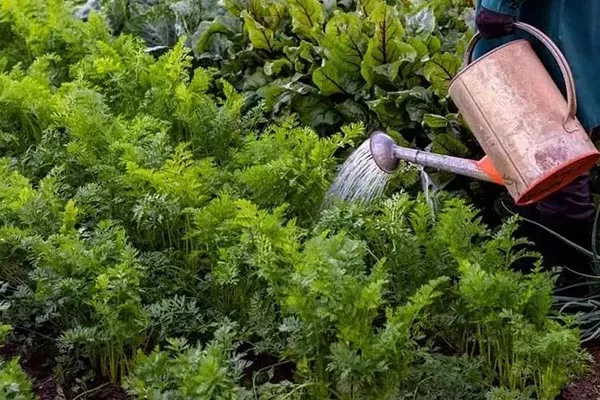
Adhere to water consumption standards:
- while the bushes are still small, use 3 liters of water per 1 square meter of the garden bed;
- as the root crops grow, gradually increase the rate to 10 liters per 1 sq. m;
- Water adult plants at a rate of 20 liters per 1 sq. m.
Use warm, settled water to water carrots. Perform this procedure in the morning or evening. Reduce the frequency of watering and make it less abundant 1.5 months before harvest. Stop watering the soil completely 14 days before the roots are fully ripe.
Thinning and weed control
To prevent the Cascade root crops from becoming deformed and becoming smaller, thin out the planting twice a season:
- First time Perform the procedure after the seedlings have developed 3 leaves (20-28 days after sowing). Leave a distance of 2-2.5 cm between the seedlings;
- The second procedure Carry out the first sowing 21 days after the first one. Increase the distance between carrot plants to 4.5-5 cm.
Thin out vegetable crops in the evenings. During the day, the carrots' odor will attract pests. Pull out excess plants by hand or use tweezers.
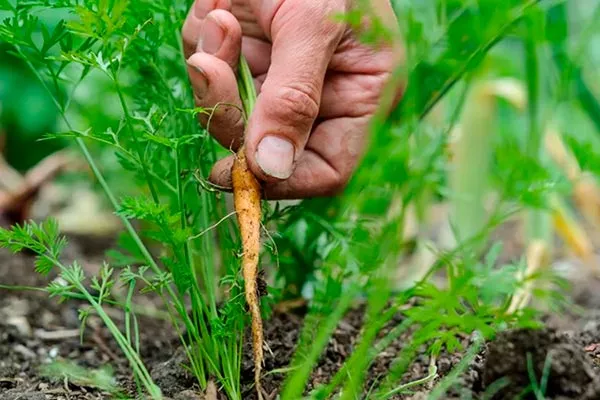
Don't forget to loosen the soil in the garden bed after every watering or rain to saturate it with oxygen. This procedure promotes normal root development.
Weeding is also necessary before planting, especially during the early stages of plant growth. Remember that weeds choke out seedlings, depriving them of nutrients and moisture.
Top dressing
To obtain a bountiful harvest, resort to applying fertilizers, following the scheme:
- First time Fertilize your carrots with Cascade when the seedlings reach 4-5 cm in height and have developed two pairs of true leaves. Use a solution of azophoska (14 g per 10 liters of water).
- Second time Water the ginger planting with the herbal infusion. Do this 14 days after the first feeding.
- Third contribution Apply fertilizer 14 days after the second application. Use nitrophoska, first dissolving it in water (7 g per 10 l).
- The fourth feeding Carry out the procedure 7-14 days after the third one. Water the carrot planting with ash infusion.
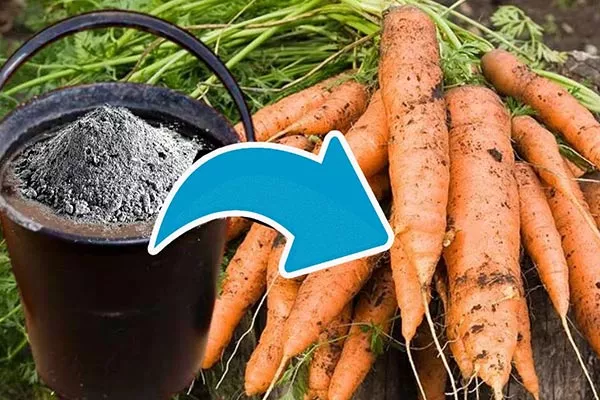
During the phase of active root growth, it would be a good idea to add potassium monophosphate in the form of an aqueous solution (30 g per 10 l).
When growing carrots in poor soil, this product will need to be applied twice. Apply the second time 14-20 days after the first.
Pest and disease control
The Cascade carrot has been bred to be resistant to a number of diseases, such as:
- black rot;
- Cercospora leaf spot;
- Alternaria.
Vegetable hybrids grown in unsuitable conditions and not receiving proper care are often affected by bacterial blight, septoria, phoma, and various rots.
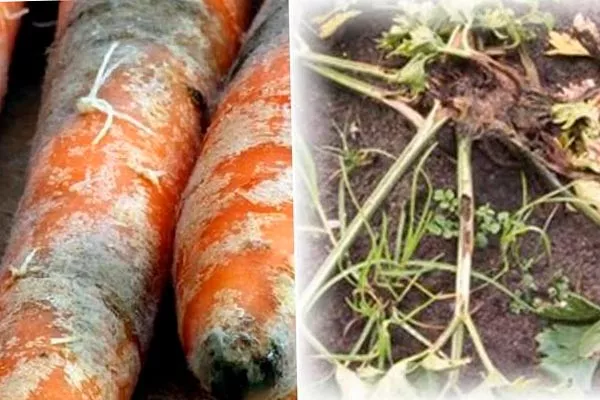
Prevention, which consists of agricultural measures, will help avoid its incidence:
- timely thinning of plantings;
- regular weeding;
- removing plant debris from the beds.
When initial signs of carrot infection are detected, treat the planting with Bordeaux mixture (1% concentration). Repeat the treatment 2-3 times, leaving 10-12 days between treatments.
Among the pests that plague vegetable crops, gardeners identify the following enemies:
- carrot fly;
- wireworm;
- slugs.
Insecticides such as Etafos, Revikurt, and Anometrin will help you control insects. Hand-pick slugs or set traps to catch them.
Harvesting and storage
One of the undeniable advantages of the Cascade hybrid is the suitability of its roots for winter storage. Under suitable conditions, they will last for many months without losing their flavor or attractive appearance.
How and when to collect?
The mass harvest of Cascade root crops, sown in late April, occurs in August. Gardeners accomplish this in one of several ways:
- manually, pulling the carrots out of the ground by the tops or digging them out with a shovel;
- mechanized.
To harvest the hybrid, choose a dry, clear day. Work toward evening. The roots accumulate sugars during the day and use them up at night.
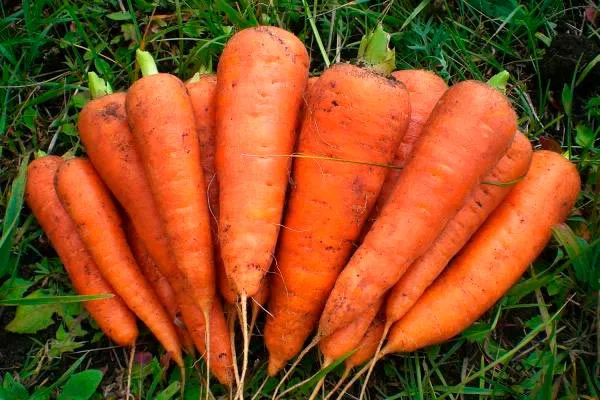
Place the carrots you've harvested in the garden in a shed or under a shed. Leave them to dry for 7-8 hours. Then transfer them to storage.
Storage features and shelf life of the hybrid
Before storing your orange vegetable harvest for winter, do some preparatory work:
- sort it out carefully;
- clean off any stuck dirt;
- discard damaged specimens;
- remove the tops from the carrots by cutting them down to the head;
- Place the root vegetables in wooden or plastic boxes, filling them with sand (bags or baskets are also suitable for storing vegetables);
- send it to the cellar or basement for storage.
Under suitable conditions, the Cascade hybrid's shelf life is 10 months. It stores well at 4°C and 80-90% humidity.
What difficulties might arise when growing?
Due to violation of agricultural practices or unfavorable weather conditions, gardeners cultivating the Dutch hybrid may encounter the following complications:
- deformation of root crops (the problem is observed with dense sowing or lack of timely thinning of plantings);
- carrot cracking (damage to the marketable appearance of the crop is caused by excessive watering and growing the vegetable in swampy areas);
- crushing of root crops, loss of elasticity (occurs due to lack of moisture).
To get high-quality, tasty vegetables, follow the recommendations of experienced gardeners and farmers:
- Do not add fresh manure to the carrot bed, as excess nitrogen will cause bitterness in the carrot pulp and lead to cracking of the roots;
- do not neglect pre-sowing seed treatment, as this crop has poor germination;
- do not use old seeds that have been stored for more than two years;
- to speed up their germination, resort to pre-sowing germination;
- set aside green manure fallow for the carrot bed - soil plowed after growing legumes and cereals;
- Grow vegetables after potatoes, as the soil remains free of weeds;
- sow carrots in the same place no earlier than 3 years later;
- Monitor the soil condition to ensure it is moistened throughout the entire length of the fruit;
- Store the harvest by sprinkling layers of carrots with onion skins to prevent them from rotting.
Positive and negative qualities
Cascade is a Dutch hybrid popular with domestic gardeners, beloved for its many advantages:
Vegetable growers consider the only significant drawback of this carrot variety to be the inability to collect seeds for further cultivation. This disadvantage is common to all first-generation hybrids.
Reviews of the Cascade carrot hybrid
Cascade F1 is an excellent choice for both private and commercial cultivation, a favorite among Russian gardeners. This hybrid is suitable for spring and winter sowing and produces a bountiful harvest. Its bushes are resistant to carrot leaf bolting and diseases. The root vegetables are characterized by high quality and shelf life.
This carrot variety is truly amazing—the fruits are delicious and keep well. And they're not particularly difficult to grow. I did encounter some cracking and small fruits, though. Thanks for the article—I got the answer to my questions (how to prevent this).