
The Dordogne carrot is a popular Dutch variety, popular among our gardeners. It is productive, resilient to a variety of challenges, and produces large roots that are popular in the agricultural market.
Breeding history
The Dordogne F1 carrot is a hybrid from Dutch breeders. Syngenta is the originator of this variety. It was developed in 2004 and entered into the State Register in 2007. The Dordogne hybrid can be grown in virtually all regions of the Russian Federation, including the northern ones.
Description of the variety
The Dordogne variety has an upright rosette of dark green, finely dissected, long or medium-sized leaves. The plants are vigorous, producing large, orange-colored roots. The carrots, when fully ripe, have a uniform texture.
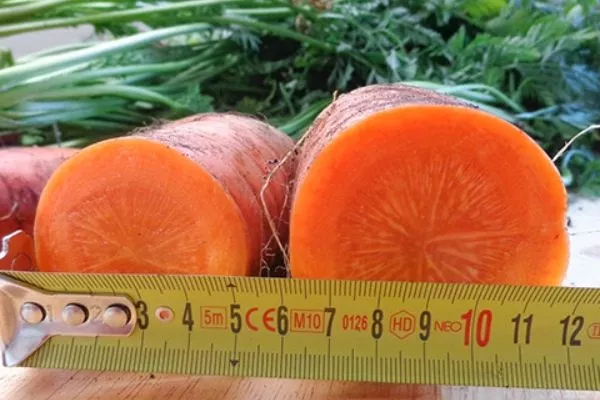
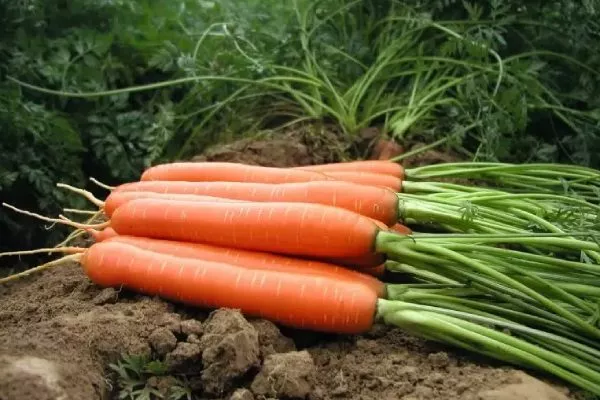
The roots are cylindrical, 18-20 cm long, with blunt tips and a smooth surface, and a bright orange core. They weigh between 80 and 130 g, and reach up to 6 cm in diameter. The top of the root does not turn green.
Taste and application
Dordogne carrots are sweet, juicy, and rich in flavor. These carrots are delicious in any form, eaten fresh, used in cooking, canned, and frozen.
Root vegetables retain their flavor and shelf life for 10 months. They are rich in sugars, carotene, and vitamins C, E, K, and B. This vegetable is also rich in beta-carotene (12%), which is converted in the body to retinol, a powerful antioxidant.
Yield and ripening
The Dordogne hybrid carrot is a mid-season variety. It takes 115-120 days from germination to harvest. In the south, carrots can mature in as little as 70 days.
The hybrid is distinguished by its high yield. When grown on an industrial scale, it reaches 350-520 centners per hectare or even more. When grown in home gardens, Dordogne produces up to 3-7.5 kg of carrots per square meter.
Pros and cons
Before planting Dordogne carrots in your garden, it's worth familiarizing yourself with all of their advantages and disadvantages. By evaluating them, you'll be able to determine whether this hybrid is suitable for your needs—selling, transporting, storing, etc.
Pros:
No defects have been found in Dordogne carrots.
Site requirements
The quantity and quality of the Dordogne F1 carrot harvest largely depends on planting. It's important to select the right site and plant according to the recommended growing method. Carrots grow best in well-lit areas. Shade and waterlogged areas are not recommended.
- ✓ The optimal soil pH level should be between 6.0 and 6.8 for maximum nutrient absorption.
- ✓ The soil must have good drainage to avoid water stagnation and root rot.
In the fall, the plot is prepared for planting by removing plant debris, digging, and adding fertilizer. The soil should be non-acidic. If it's too acidic, add slaked lime: 3-4 kg per square meter for sandy soil and 5-7 kg per square meter for clay soil. Sawdust is also added to heavy clay soils for loosening.
Planting dates
In the south and central Dordogne region, carrots are planted from early to mid-April, while in the more northern regions, they are planted in May. Planting occurs when the soil has warmed to at least +4…+6°C. Optimal temperatures for carrot growth and development are +18…+25°C.
Planting patterns
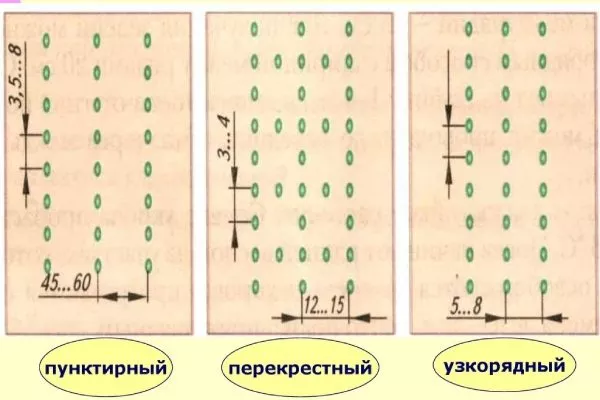
The seeds are planted in shallow furrows, 2 cm deep. The row spacing should be approximately 20-25 cm. The intervals between seeds should be 5 cm. The beds are pre-watered, and peat is added between the rows. Approximately 100-110 seeds are required per square meter.
Granulated seeds do not require preparation for planting; regular seeds are soaked in warm water for 24 hours. The Dordogne hybrid has a 95% germination rate. The following crops are considered the best predecessors for carrots: cabbage, onions, and cucumbers. Undesirable predecessors include beets, celery, and dill.
Care Features
To grow a lot of large and tasty Dordogne carrots, certain care is required.
- Three weeks after germination, apply a complex mineral fertilizer with a predominance of nitrogen to stimulate leaf growth.
- After 6 weeks of germination, use a fertilizer high in potassium and phosphorus to develop root crops.
Nuances of agricultural technology:
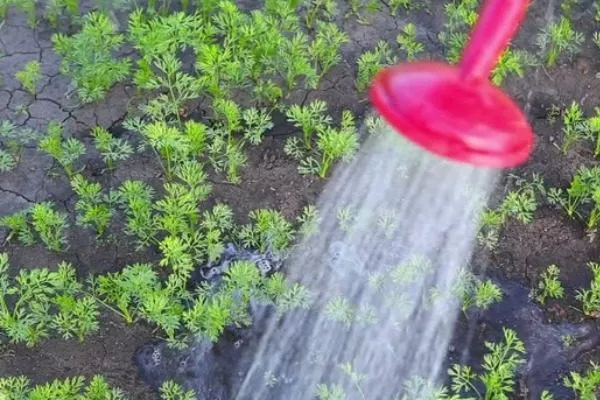
- Watering should be infrequent and should be done as the soil dries out. The recommended watering frequency is approximately once every 10 days.
- After each watering, the soil is loosened, weeded, and then mulched.
- The plants are thinned twice: when the seedlings emerge and a month later. Thin and weak shoots are carefully removed. Otherwise, the roots will not grow large and thick.
During the first thinning, there should be 4-6 cm between neighboring plants, after the second - 6-7 cm. - At the beginning of the growing season, add a mineral fertilizer solution: ammonium nitrate (30 g), potassium salt (15 g), and superphosphate (10 g) are diluted in 10 liters. After 3-4 weeks of planting, add diluted wood ash (450 g per 10 liters). Manure is not suitable as a fertilizer for carrots.
About diseases and pests
The Dordogne F1 hybrid has a high immunity, but if agricultural practices are improper, the risk of carrot infestation by pathogens and insects increases significantly. Preventive spraying with dilute fungicide and insecticide solutions helps prevent the spread of diseases and pests.
| Disease | Dordogne's resilience | Preventive measures |
|---|---|---|
| Alternaria | High | Treating seeds with a fungicide before planting |
| Powdery mildew | Average | Regular ventilation of plantings |
Among the insect pests, the most dangerous to Dordogne carrots are the carrot fly, the parasol moth, the mole cricket, and the root-boring wireworms. Pest control is achieved with folk remedies, such as sprinkling the soil with wood ash and spraying with garlic and tobacco infusions.
Reviews
The Dordogne carrot is deservedly ranked among the leaders not only among Dutch varieties but also among all varieties available to our gardeners and farmers. Its beautiful, flavorful roots, high marketability, and other advantages are successfully combined with high yields, low maintenance, and other qualities.