
The "Children's Sweetness" carrot belongs to the Amsterdam variety group and is a self-sufficient variety, not a hybrid. It is characterized by very high levels of carotene and sugar, making it suitable for baby food. It can be sown in different seasons—spring and fall. It has a good yield, but the maximum marketability only reaches 83%.
Introduction to the variety
This variety is an annual plant, also known as Berlicum, which produces roots during a single growing season. When replanting the roots the following year, growth will occur at the foliage, which then flowers and produces seeds.
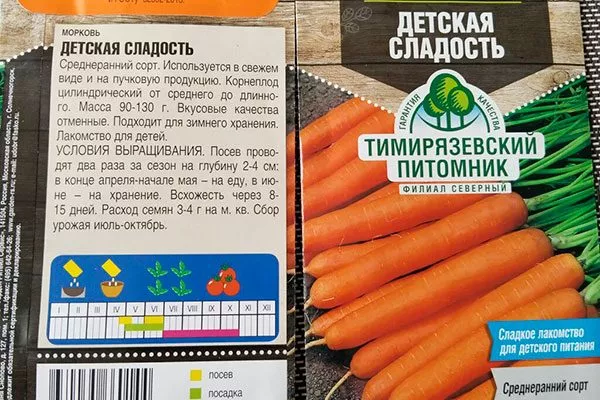
Peculiarities of origin
The "Children's Sweetness" variety is the product of extensive work by renowned Russian breeders Z. S. Vinogradov and A. S. Semin. It was created in 2007 at the Russian Seeds CJSC enterprise. Three years later, in 2010, it was added to the State Register of Breeding Achievements of the Russian Federation.
The crop is cultivated in the Central Black Earth Region and can be found in both private garden plots and large farm fields. The "Children's Sweetness" variety was developed from the "Amsterdamskaya" variety through the joint efforts of breeders.
Appearance and taste
This carrot variety is distinguished by its distinctive rosette of moderately wide, 24-25 cm tall leaves, which have a refined emerald green hue. Other varietal characteristics can also be used to identify this carrot:
- The leaves are small, medium-sized, and lack a distinct aroma. A distinctive feature is that they retain a greenish color and remain fresh even after the root has fully ripened.
- Carrot tubers are characterized by their uniform shape and size. The average weight of a single root is 90-135 g, and its length ranges from 18 to 23 cm.
- The shape of the carrots resembles an elongated cylinder with a slightly pointed-rounded end.
- The skin is very thin, slightly shiny and free from defects, with several thread-like roots.
- When ripe, the roots are uniformly colored in a rich red-orange tone.
- The pulp has a dense, juicy, crisp structure, devoid of bitterness and fibrousness.
- The flavor is distinctly sweet. The core is undistinguished in color and texture, being completely identical to the rest of the fruit.

Chemical composition and beneficial properties
One hundred grams of carrot contains the following nutrients: fructose – 12%, dry matter – up to 14.1%, beta-carotene – 20.8 mg. The energy value of this root vegetable is 34.5 kcal.
Macronutrients:
- potassium – 225 mg;
- calcium – 24.6 mg;
- phosphorus – 52 mg;
- magnesium – 37.4 mg;
- sodium – 18.4 mg;
- sulfur – 4.5 mg.
Microelements:
- iron – 0.76 mg;
- zinc – 0.37 mg;
- aluminum – 0.36 mg;
- manganese – 0.22 mg;
- boron – 0.23 mg;
- vanadium – 0.13 mg;
- copper – 0.72 mg;
- fluorine – 0.5 mg;
- molybdenum – 0.22 mg.
Vitamin composition:
- riboflavin – 0.97 mg;
- thiamine – 0.07 mg;
- riboflavin – 0.07 mg;
- niacin – 0.32 mg;
- folic acid – 0.12 mg;
- ascorbic acid – 0.7 mg;
- nicotinic acid – 1.24 mg;
- tocopherols – 0.93 mg.
Carrots are rich in carotene, a provitamin A essential for the growth and strengthening of the skeleton, teeth, and hair, and also promote healthy skin. The vitamins found in carrots boost the immune system and increase the body's resistance to infections.
Features of application
Carrots are among the sweetest of their kind. Their excellent flavor makes them ideal for children, where they are used as sliced roots, freshly squeezed juices, and purees. In cooking, they are used in a variety of vegetable dishes, including stews, soups, and salads.
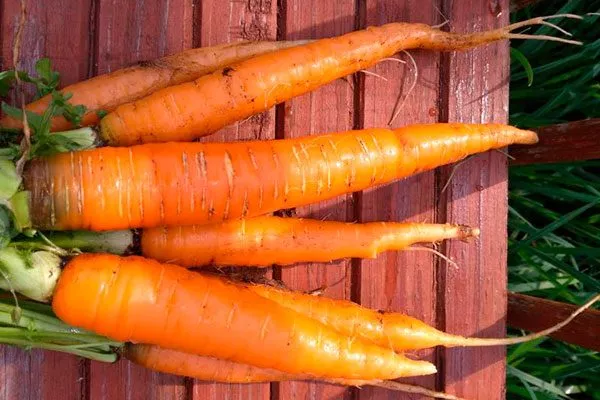
Carrots can be eaten fresh, pickled, frozen, canned along with other vegetables, or stored in a basement for the winter.
When ripe, the yield
The "Children's Sweetness" variety is a mid-early carrot. Its growing season lasts from 95 to 110 days. The first plants are dug up starting on July 15, although at this time the carrots have not yet reached their full sugary flavor. The main harvest occurs in August and September.
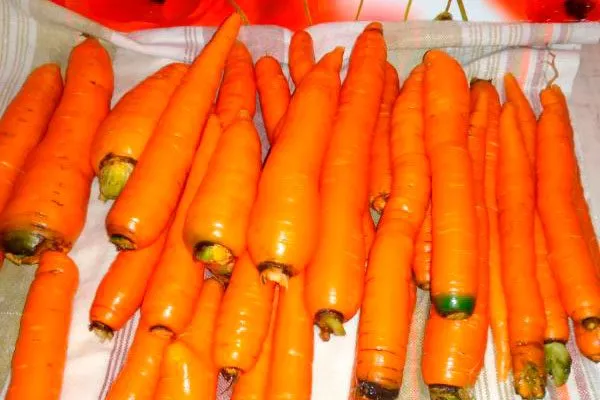
This variety is distinguished by its excellent yield. The average yield per square meter is 5-7 kg of juicy carrots. In commercial cultivation, the average yield reaches 285-370 centners per hectare.
Disease resistance
Seed treatment before planting, soil disinfection after harvesting vegetables, and spring soil preparation before sowing help strengthen the plant's defenses against various diseases and pests.
Regionality of the variety
This variety is ideal for growing in the Central Black Earth Region. It responds particularly well to the conditions of the Voronezh, Belgorod, Lipetsk, Kursk, and Tambov regions.
For optimal growth and preservation of the variety's characteristics, a moderate climate with warm summers and fairly long, not very frosty winters is necessary.
Other “children's” varieties
| Name | Carotene content (mg/100g) | Sugar content (%) | Ripening period (days) |
|---|---|---|---|
| Children's sweetness | 20.8 | 12 | 95-110 |
| Children's joy | 18.5 | 10 | 90-105 |
| Children's | 19.2 | 11 | 100-115 |
| Children's vitamin | 21.0 | 13 | 85-100 |
| Sweet tooth | 22.5 | 14 | 110-125 |
Breeders have created many sweet carrot varieties that are similar to the Children's Sweet:
- Children's joy. This variety is smaller in size in comparison, but has similar taste qualities.

- Children's. It is considered a mid-season variety and is distinguished by its increased content of vitamins PP, C, E, K, B, and A. The harvest consists of sweet and juicy root vegetables with a small core.
- Children's vitamin. This is also a mid-season variety, suitable for both fresh consumption and winter storage. The roots of this variety weigh up to 130 g.
- Sweet tooth. It is considered one of the highest quality sweet varieties, has a late ripening period and contains a significant amount of sugars and provitamin A.




Analogues of Children's Sweets
| Name | Carotene content (mg/100g) | Sugar content (%) | Ripening period (days) |
|---|---|---|---|
| Caramel | 17.5 | 9 | 100 |
| Sugar finger | 16.8 | 8 | 75 |
| Fun | 18.0 | 10 | 90 |
Identical varieties are those that are similar to Detskaya Sladka in terms of ripening time, juiciness, and sugar content, but do not carry the "detskaya" prefix. There are quite a few, but only a few are particularly popular:
- Caramel. It ripens in an average of 100 days, but the yield is almost half as much – only 3-4 kg per square meter. The shape is conical and smooth, the color is orange, the maximum weight is 150-170 g. The taste is not only sweet but also delicate.
- Sugar finger. It ripens in 75 days, with a maximum yield of 5 kg per square meter. It is shaped like a perfect cone, weighs approximately 100-110 g, and is orange in color, though the tip can be either blunt or pointed. The flesh is very juicy.
- Fun. This is a hybrid whose roots ripen in 90 days. The yield is a maximum of 4.5-4.7 kg per square meter. It has a cylindrical shape, an average weight of 70-80 g, and an orange-red color, but the core is bright red. It has a juicy flavor.
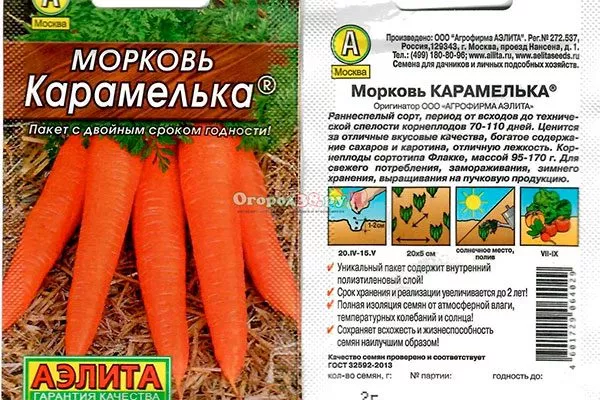
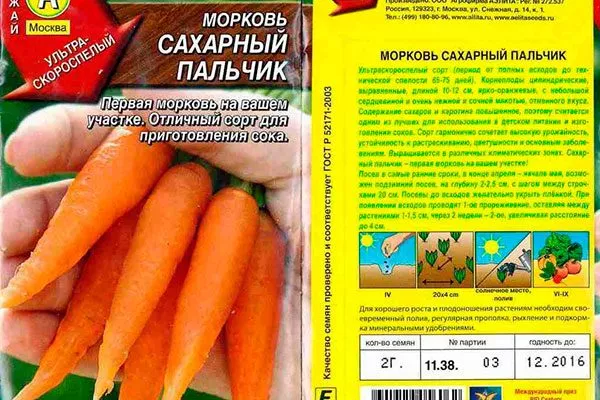

What are the different producers of the 'Children's Sweetness' carrot variety?
A review of various crops revealed that carrots of any variety have a relatively low germination rate, ranging from 55 to 75%. This rate decreases even further during long-term storage, making it crucial to purchase fresh, high-quality seed material.
- ✓ Check the expiration date of the seeds, as germination rate decreases significantly after two years of storage.
- ✓ Give preference to seeds in pellets or on tapes for easier sowing and care.
Seeds for the Detskaya Sladost variety are offered by several producers:
- "Aelita";
- "Gavrish";
- “Article”;
- “Lucky Seeds”;
- “Golden Hundred of Altai”;
- "Tales from the Garden Bed" etc.
This baby treat is available in the form of granules (dragees) and strips, which makes the sowing process and subsequent care much easier.
The main advantages and disadvantages of the variety
This variety has proven itself to be highly sought after. This is due to its many positive qualities, which include the following:
What is the difference from other varieties?
The Detskaya Sladost variety stands out among other crops for the following characteristics:
- high content of sugar and carotene;
- To maintain good sugar and carotene levels, a continuous supply of light is necessary;
- Optimal development of the variety is ensured exclusively on rich soils.
Features of planting and growing
This variety requires little care. By following proper cultivation practices and selecting a suitable site with suitable soil, impressive yields can be achieved. In temperate climates, carrots can be grown in the fall. In this case, the harvest is two weeks earlier than with spring sowing.
Preparing for landing
Only fresh seeds should be used for sowing, as germination rates for seeds more than two years old will be low. What to do:
- Sort the seeds, discarding light and damaged specimens.
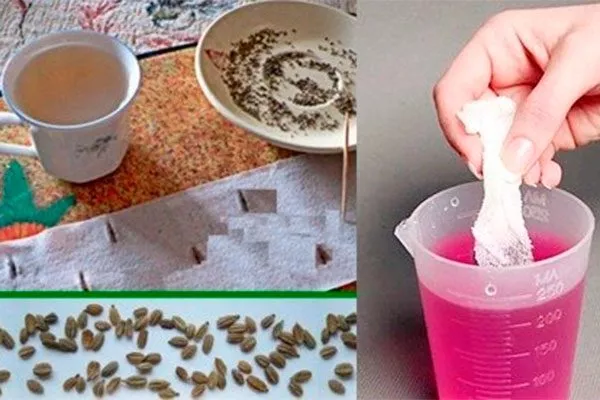
- Then soak them in warm water for two hours. Discard any unripe or unusable seeds that float to the surface, but leave those that sink to the bottom.
- Disinfect in a 3% hydrogen peroxide solution at a temperature of 40 degrees (15 minutes is enough).
- Wrap the planting material in a cloth soaked in a solution of wood ash (1 tablespoon of ash per 400 ml of water).
Soil requirements
Carrots are very sensitive to soil conditions. For successful growth, they require light, nutrient-rich soil. If the soil is predominantly clay, adding peat and compost is recommended. If the soil is heavy and turfy, sand should be added.
Soil preparation begins in the fall. All plant debris is removed, the soil is deeply mixed, and enriched with potassium and phosphorus compounds. In the spring, immediately before sowing, the soil is loosened again and dry charcoal is added.
Predecessors
When choosing a location for growing carrots, pay special attention to the plants previously grown in the area. Carrots thrive if legumes, grains, onions, garlic, cucumbers, potatoes, and tomatoes were previously grown there.
It is important to remember that it is not recommended to plant carrots in the same area twice in a row.
Timing, scheme and rules of planting
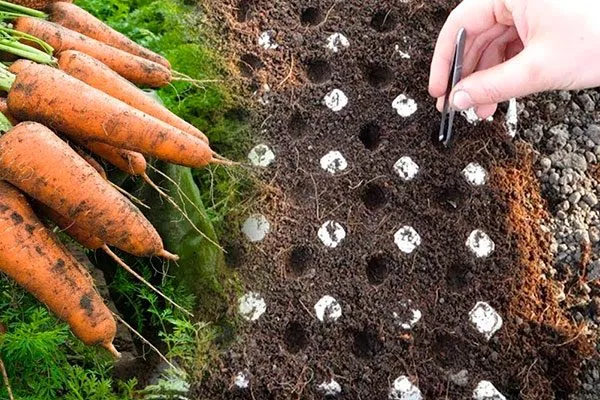
Spring carrot sowing occurs between April 20 and May 10, when soil temperatures rise and remain stable at 10-12 degrees Celsius. Planting is performed as follows:
- Form furrows in the prepared area. Leave 18-25 cm between rows.
- Wet the grooves.
- Distribute the seeds to a maximum depth of 2 cm with a spacing of 3 cm between them.
- Sprinkle the plantings with a thin layer of soil and compact it lightly.
Features of cultivation
The key is choosing a sunny location with light soil. It's also important to monitor the groundwater level to ensure the roots aren't constantly wet. The optimal depth is at least 150 cm. Overwatering the soil can lead to root rot.
Care nuances
When growing the Detskaya Sladost variety, remember that this vegetable prefers sunny locations, and even slight shade can affect its quality. If plants don't receive enough sun, the sugar and carotene content of the roots decreases. Yields also suffer in areas with insufficient light.
Care measures are reduced to the following actions:
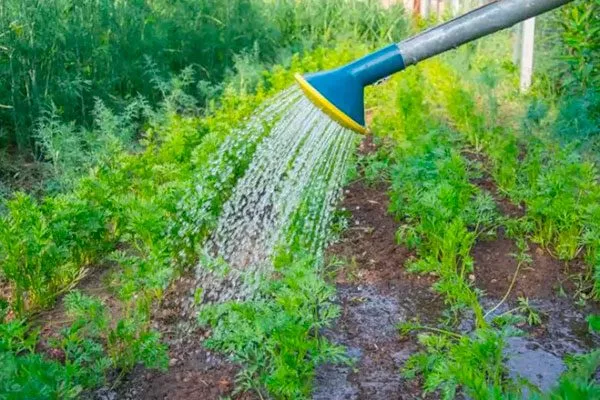
- Irrigation methods. The period from seeding to the emergence of the first green buds and during the first days of their growth requires regular soil moistening every three days. Water in the morning with a fine watering can to prevent the seeds from being washed away.
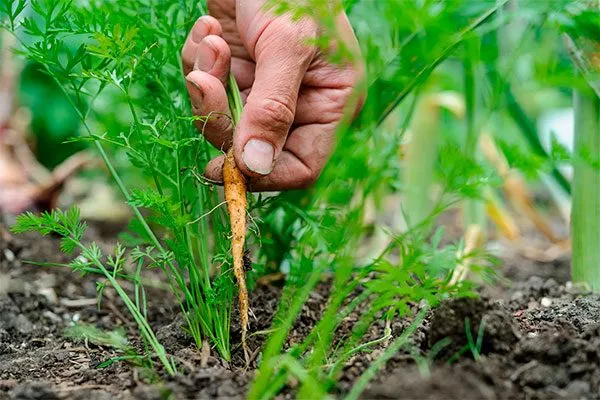
As the plants grow, the amount of water increases, and it's time to reduce the frequency to once a week. The depth of watering should correspond to the length of the roots. Watering should be stopped 15-20 days before harvest. - Thinning. Immediately after the first shoots appear in the fields, carry out the first thinning. Space growing plants 3-5 cm apart, and remove weak and underdeveloped specimens.
Repeat this procedure a second time when the root crops reach a diameter of 2-4 cm, after which there should be a distance of 6-8 cm between the plants. - Plant nutrition. Three weeks after the first shoots appear, you should carry out the initial feeding using urea, applying the solution under the root and be sure to do it in moist soil.
For the second fertilization, applied three weeks after the first, use potassium and phosphorus to stimulate root growth. The third fertilizer, aimed at providing potassium, involves using wood ash in dry or liquid form.
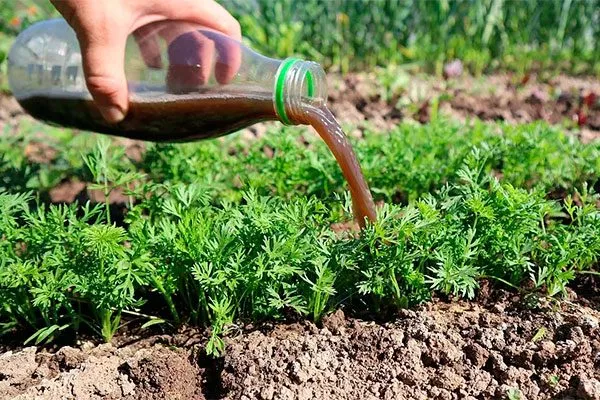
- Three weeks after germination, apply urea (10 g per 10 l of water) under the root.
- Three weeks after the first feeding, use potassium-phosphorus fertilizers (20 g superphosphate and 15 g potassium salt per 10 liters of water).
- A month before harvesting, fertilize with wood ash (1 glass per 1 m²).
How to combat diseases and pests?
If growing conditions are favorable, Sweet Baby carrots will not present any problems. Under other circumstances, the risk of disease and pest infestations increases significantly. What to watch out for:
- Fomoz. Dry spots with a dark border appear on vegetable plants, subsequently spreading to the root crops. To prevent the disease from spreading, fertilizers containing phosphorus and calcium are added to the soil. If the disease occurs, treatment with liquids from Rovral or Maxim is used.
- Alternaria. This is a disease characterized by black rot. Yellow marks appear on the leaves, they curl, and the fruit becomes covered with dry rot. At the first signs of infection, plants are generously sprayed with the fungicide Acrobat MC.
- Rhizoctonia. This is a velvety disease characterized by the appearance of gray spots on the roots, followed by their decay. To treat the disease, plants are watered with a copper sulfate solution.
- Brown spot. A fungal infection caused by improper growing methods. Initially, the leaves turn brown, and then their dryness leads to root rot. Treatment is with fungicides.
- Powdery mildew. White spores become visible on leaves and petioles, which then harden and turn into brown spots. As a result, the leaves dry out and fall off. Ash and fungicide treatments are used for prevention and treatment.
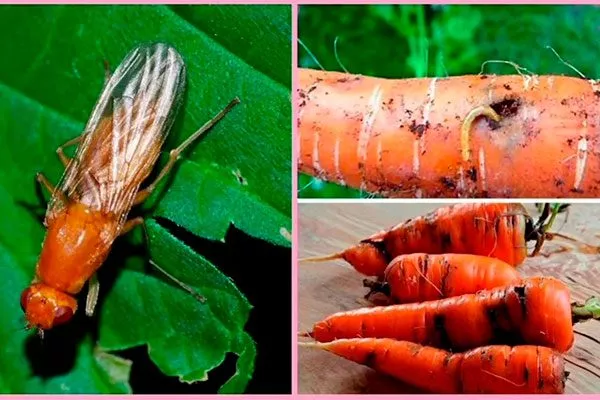
- Carrot fly. Its presence causes leaves to turn reddish-purple and curl. The larvae of this insect feed on root crops. The insecticide Inta-vir is used as a protective measure. The procedure is repeated at 10-day intervals.
- Mole crickets. These are soil-dwelling insects that feed on root crops. The main danger comes from the adults and their larvae, which, once exposed to light, actively destroy the roots. A mixture of mustard, pepper, and alcohol is used to combat them.
Harvesting and storage
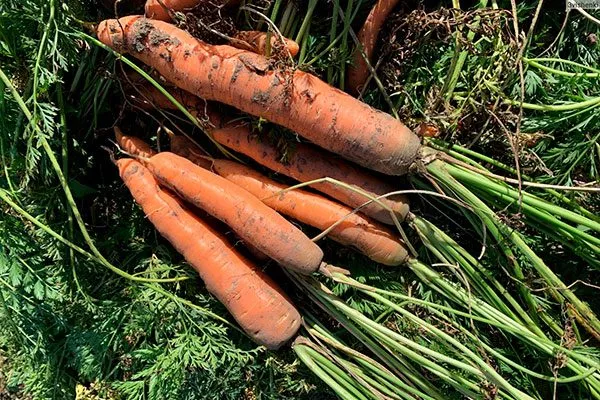
Harvesting begins in the last days of August or the first days of September. Root crops are ready to harvest when the lower leaves on the stems begin to yellow and die back. Harvesting is carried out under favorable, dry weather conditions. The harvested produce is first sorted, dried, and then prepared for winter storage:
- carrots are carefully removed from the ground using a pitchfork;
- cleared of any remaining soil and transferred to a room for drying;
- After this, they are sorted, choosing healthy and undamaged specimens;
- cut off the stems.
The temperature in the long-term storage room should be between 0 and +5 degrees Celsius, and the humidity should be between 90 and 95%. High humidity increases the risk of crop decay, so the room should be constantly ventilated.
What difficulties might arise when growing?
When cultivating this variety, the following difficulties may arise:
- As the roots develop, their bases protrude above the soil surface. When exposed to sunlight, these parts turn green, indicating the formation of solanine. This makes carrots bitter and unfit for consumption. To prevent this, regularly cover carrots with soil, or hill them.
- If you overwater your plants, rotting processes will begin to develop, so carefully monitor the soil moisture level.
Tips from experienced gardeners
To simplify the task of growing, use the recommendations of professionals:
- Experts do not recommend using pelleted seeds, as they require constant, abundant watering to dissolve the seed coat. They generally have a low germination rate.
- Avoid overcrowding before rooting, so mix carrot seeds with sand in a 1:1 ratio.
- Experienced gardeners warn: avoid intensive watering of plants after a long break, as this can lead to bursting of the fruits.
Reviews of the carrot variety "Children's Sweetness"
The "Children's Sweetness" variety is one of the most popular carrots, boasting high sugar and carotene content, making it an ideal ingredient for baby food, juices, and purees. This variety is easy to care for, has excellent shelf life, and is suitable for both growing in bunches and eating raw. It produces excellent yields, but has average disease resistance.