
Baby carrots are a popular vegetable among gardeners and healthy eaters. This variety combines excellent taste, high nutritional content, and surprising ease of cultivation. It gains increasing popularity each year due to its versatility. Proper care is crucial.
The idea of creating a domestic hybrid and when it appeared
This hybrid was created by Alexander Nikolaevich Khovrin, Sergey Vasilievich Maksimov, and Nikolai Nikolaevich Klimenko. It was approved for use in 2011. It belongs to the Berlikum and Nantes varieties and is suitable for both fresh consumption and bunch production.
Introduction to the variety
Baby is a shining example of a successful marketing idea. Surprisingly, many people actually believe that farmers grow such smooth and neat mini-carrots. In fact, they were created out of a specific need.

Characteristics of the appearance of the plant and root crops
| Name | Ripening period | Disease resistance | Carotene content |
|---|---|---|---|
| Baby Carrot | 90-100 days | High | 27.4 mg/100 g |
| Caracas | Early | High | No data |
| Carotel | Mid-early | Average | No data |
| Polar cranberry | Fast maturing | Cold resistant | No data |
The plant is characterized by a semi-spreading rosette of leaves. They are finely dissected, green, and medium-length. The roots are cylindrical with a blunt tip, medium in size, weighing from 91 to 180 g and up to 20 cm long. The bark and small pith of the roots are bright orange.

Purpose and taste of tubers
Carrots are suitable for fresh consumption and for the production of bunched carrots. They have excellent flavor. The flesh is juicy and tender, with a slightly sweet aftertaste, making them ideal for salads and fresh appetizers.

Its high carotene content (up to 27.4 mg per 100 g of raw material) adds to its nutritional value. Dry matter content ranges from 10.5% to 16.6%, and total sugars range from 8.5% to 10.8%, highlighting its sweet and rich flavor.
Ripening and yield
An excellent mid-season hybrid, harvested 90-100 days after germination. The yield is high – up to 10 kg of vegetables can be obtained per square meter.
What varieties of Baby carrot seeds are there?
Many manufacturers offer varieties of mini carrots. Among the most popular are Plasmennye Semenya, Agrofirma, Poisk, Agriko, Gavrish, and Bejo.
Why does a white coating appear on baby carrots?
If the vegetable sits for a while in an open package or on a plate, it may begin to dry out. The white film that forms on the surface is called "carrot blush" and is a normal sign of dehydration.
The common belief that this white coating is a chemical and harmful substance is a misconception. Some producers do use minimal chlorine solutions to quickly clean the vegetable, but these substances are used in quantities safe for humans and do not remain on the surface of the vegetable.
- ✓ The optimal soil pH should be in the range of 6.0-6.8 for maximum nutrient absorption.
- ✓ The soil must be well-drained to avoid water stagnation and the development of fungal diseases.
Tips for growing Baby carrots
This hybrid requires special drainage. If the soil remains wet for long periods, various fungi can develop. Frequent watering is not recommended.
When to plant and ripen Baby carrots
Sow seeds in spring, ideally in the first half of May. This is due to the variable weather in some regions, where frosts alternate with short thaws.
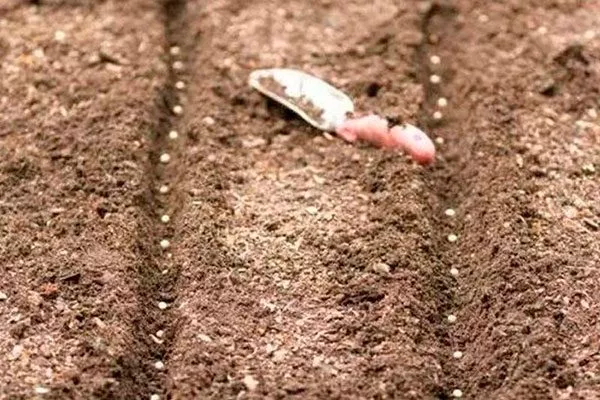
Use covering material to protect the plants. The crop's growing season is significantly shorter than that of conventional varieties. Given this timeframe, a harvest can be expected in early September.
Baby carrots are also grown as a winter crop, sown in the fall. Begin planting from mid-November until the end of the month. Sowing in October can result in the death of the first shoots at the first frost. The vegetable will easily overwinter, and seedlings are expected in the summer, in June.
Features of sowing
To ensure long-term storage and seedling survival, choose mid-season and mid-season varieties. The size of the fruits may create the impression that the distance between them needs to be reduced, but this is a misconception. Leave 2 cm between furrows, and the planting depth should be 2 cm.
Watering
Water the plants once every three days. Use approximately 3 liters of water per square meter. As the plants grow, gradually reduce watering to once a week, while increasing the volume to 15 liters per square meter.
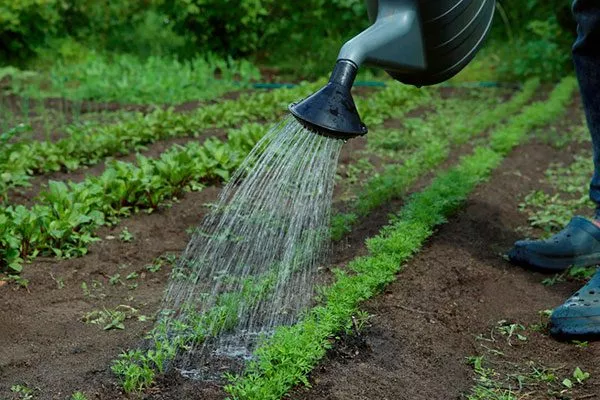
Stop watering ripe fruits a week or two before harvesting. The optimal time for watering is morning or evening to avoid heat.
What and when to feed
From planting to harvest, apply three fertilizing cycles. Follow these recommendations:
- When the first leaves appear, use nitrogen- and potassium-based fertilizer. To do this, dilute 40 g of ammonium nitrate in 10 liters of water.
- When tops appear, use a complex fertilizer, for example, nitrophoska, diluting it in 10 liters of water.
- During root growth, nutrients begin to redistribute to the roots. At this stage, use phosphorus, boron, and manganese to ensure juiciness and sweetness in vegetables.

About a month before harvesting, fertilize the soil with potassium, which will help completely eliminate nitrates.
Thinning
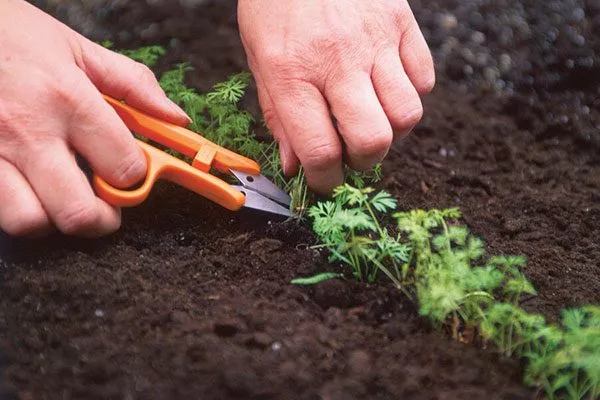
Thin the plants occasionally, but skip this process if using coated seeds. If you sowed seed by scattering, maintain a consistent seeding density. The ideal distance between seeds is 5 cm.
Loosening and weeding
Weeds can interfere with normal plant development. Weeding the beds is essential and should be done immediately after the first shoots appear. To reduce weed numbers, use soil-applied herbicides.
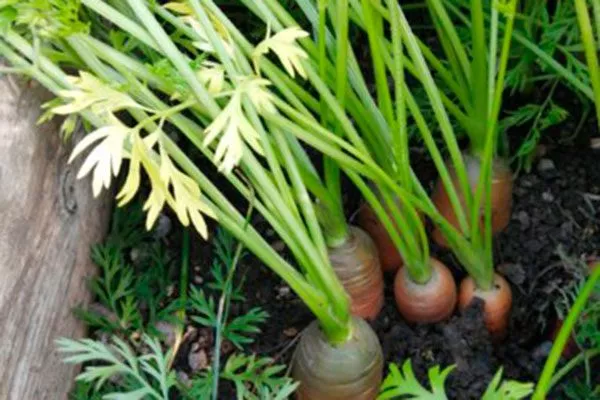
- ✓ Healthy leaves should be bright green without spots or plaque.
- ✓ Root crops should have a uniform color without signs of rot or damage.
Diseases and pests
Baby carrots can become diseased due to frequent watering or inadequate drainage. Weeds also negatively impact the plants. They often suffer from fungal diseases, easily identified by black or brown spots, white coatings, and darkened leaves.
For treatment, use the following methods:
- herbal infusions;
- Bordeaux mixture;
- copper oxide with chlorine;
- fungicides.
Storage
Early varieties should be harvested as quickly as possible after harvesting due to their poor storage qualities. To prevent spoilage, use one of the following methods: drying, freezing, or canning.
Analogues
There are several similar varieties of Baby carrots. One of them is Karakas, an early variety that can be harvested with a combine without the need for thinning. The mid-early variety, Karotel, can be sown even in frozen soil, and the fruits store and transport well.
Another Baby cranberry analogue is Polar Cranberry, a fast-ripening, cold-hardy variety. It has an unusual round shape, unlike the traditional vegetable.
Advantages and disadvantages
Before planting a hybrid, it's important to examine its positive and negative characteristics. Hybrids have many advantages:
- rich taste;
- high sugar content;
- the presence of vitamins and microelements, such as carotene;
- rapid ripening.
Reviews
Baby carrots are the true embodiment of gardening and culinary ideals. Their rich flavor, juicy texture, and rich vitamin and mineral content make them an indispensable component of a healthy diet. Their ease of cultivation and disease resistance make them suitable for both novice and experienced gardeners. The key is timely care.