
The Baltimore carrot is one of the most popular choices among gardeners due to its excellent qualities and unique characteristics. This variety is distinguished not only by its high yield, but also by its excellent root taste, disease resistance, and ease of storage. The key is to follow proper cultivation practices.
Introduction to the variety
The Baltimore carrot is a versatile variety suitable for a variety of processing. It's easy to grow, which is why it has received many positive reviews. It's important to research its characteristics before growing.
History of breeding
It was developed by Dutch scientists from Bejo Zaden BV in 2008. After conducting the necessary variety testing, the crop was added to the Unified State Register in 2010. The hybrid was developed with adaptation to various climatic conditions in mind.
Appearance of the plant and root crops
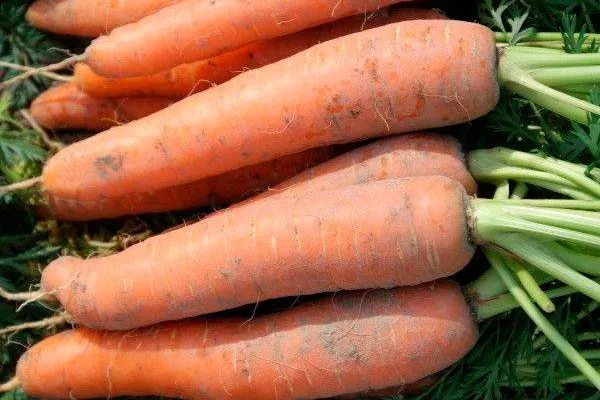
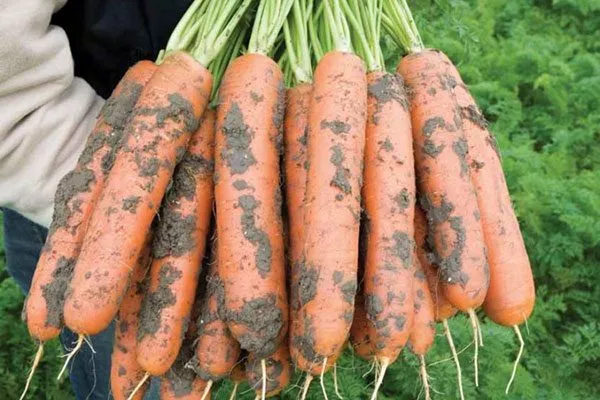
The rosette of leaves develops erect. The leaf blades are elongated and rich green. The dissection of the foliage varies from fine to medium. The roots reach 20-25 cm in length and 5-6 cm in diameter. They have a characteristic cylindrical shape with a blunt end.
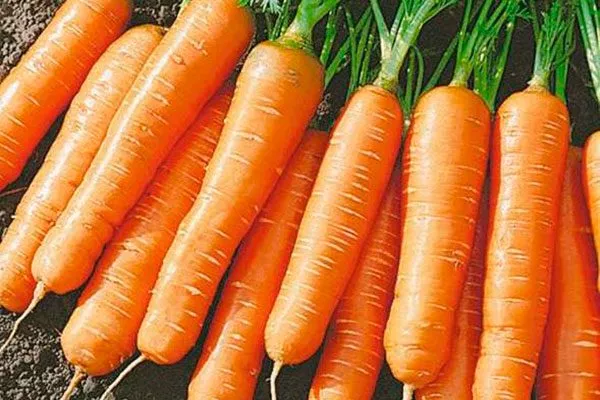
When fully ripe, the roots acquire a juicy orange hue. The surface is covered with a thin, delicate skin that is smooth and slightly shiny. There are subtle, light-colored eyes on the surface, but no filiform lateral roots.
Chemical composition and beneficial properties
100 g of the vegetable contains: 8-9.5% fructose, 11.6-12.4% dry matter, 23.7 mg beta-carotene. The energy value of one fruit is 26 kcal.
Macronutrient content in fruits:
- potassium – 200 mg;
- calcium – 27.6 mg;
- phosphorus – 57 mg;
- magnesium – 39.1 mg;
- sodium – 20.4 mg.
Microelement content:
- iron – 740 mcg;
- zinc – 420 mcg;
- aluminum – 330 mcg;
- manganese – 215 mcg;
- boron – 205 mcg;
- vanadium – 100 mcg;
- copper – 82.2 mcg;
- fluorine – 53.7 mcg;
- molybdenum – 21.6 mcg.
Composition of vitamins:
- vitamin A – 9.2 mg;
- vitamin B1 – 0.06 mg;
- vitamin B2 – 0.07 mg;
- vitamin B8 – 29.3 mg;
- vitamin B9 – 0.1 mg;
- vitamin C – 5.8 mg;
- vitamin PP – 1.2 mg;
- vitamin E – 0.9 mg.
Carrots have many beneficial properties:
- Contains a large amount of beta-carotene, which is converted into vitamin A in the body. It is essential for healthy vision, skin, mucous membranes, and the immune system.
- Rich in antioxidants such as carotenoids and vitamin C, which protect cells from free radical damage.
- Helps strengthen the immune system and increase the body's resistance to infections.
- Helps normalize bowel function and improve digestion.
- Slows down the aging process of the skin and improves its appearance.
Some studies show that regularly eating carrots can help lower blood cholesterol levels thanks to dietary fiber and antioxidants. Eating carrots also improves cardiovascular health thanks to antioxidants and other beneficial substances.
What cultivar type does it belong to?
The hybrid belongs to the "Berlicum-Nantes" cultivar type and has characteristic blunt-nosed roots. They are longer and wider than the "Nantes" cultivar.
Germination
The seeds have good germination, are characterized by high yield and have excellent taste and commercial qualities.
Ripening and yield
The hybrid has a medium ripening period. From germination to harvest, it takes 90-100 days.
Productivity
Productivity is high. With proper cultivation techniques, the yield per hectare is 335-605 centners.
Purpose
Carrots have a wide range of uses and applications. This is due to their beneficial properties and versatility:
- It is a valuable source of vitamins, minerals, and dietary fiber. It is included in many dietary and healthy nutrition programs.
- It is consumed raw in salads, appetizers, and as part of a raw food diet due to its pleasant sweet taste and crunchy texture.
- It's great for making side dishes, soups, purees, and other dishes. It retains its beneficial properties when boiled, baked, or stewed.
- Used for preserving in the form of sliced rings, canning or pickling.
- It is used to make tasty and nutritious juice.
- It is used to decorate dishes or as an ingredient in culinary experiments due to its bright color and shape.
All these factors make carrots not only a tasty and nutritious food, but also an important component of a balanced diet and a variety of culinary recipes.
Keeping quality
The harvest stores well and, if maintained at the correct temperature and humidity, can last until the next harvest. This variety is designed for long-term storage.
- ✓ High resistance to powdery mildew, but susceptible to dry, white and gray rot.
- ✓ Excellent transportability and quality retention during long-term storage.
Resistance to diseases and pests
The hybrid is resistant to fungal diseases such as powdery mildew. However, it is often susceptible to dry rot, white rot, and gray mold.
Frost resistance and transportability
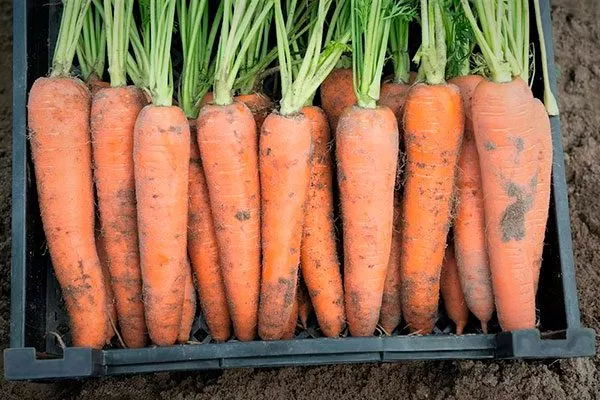
Baltimore tolerates cold well. The vegetables are resistant to mechanical damage and retain their shape, color, and flavor even after long-term storage and transportation. This makes the variety especially valuable for long-distance markets and industrial processing.
Suitable regions
The crop is grown in the Central, Central Black Earth, Northwestern, West Siberian, East Siberian, Far Eastern, Volga-Vyatka, Lower Volga, and Ural regions. The variety is popular in Belarus, Moldova, and Ukraine.
What makes it different from the others?
Characterized by a rapid ripening period, its roots are longer and thicker than those of many other varieties. Baltimore is more resistant to many diseases and pests, making it suitable for mechanical harvesting by tractor. The roots have a thin core, resulting in a long shelf life.
Advantages and disadvantages
Before planting a crop in your garden, study its positive and negative qualities. The hybrid has many advantages:
Landing
For a successful procedure, please adhere to a few basic requirements. Follow these recommendations:
- The culture prefers a sunny place for good growth and root development.
- Light, loose soil with good drainage is best. Carrot roots should easily penetrate deep soil layers without obstruction.
- Before planting, prepare the soil thoroughly. It should be loose and enriched with compost or humus to ensure good plant nutrition.
- Sow seeds at a depth of about 1-2 cm. Planting too deep may slow germination, while planting too shallow may result in poor root development.
- Leave about 5-7 cm between plants to give the roots enough room to grow.
- Once the seedlings emerge, weed and loosen the soil regularly to prevent weeds and ensure good oxygen supply to the roots.
- Remove weeds to prevent competition for nutrients.
- ✓ Soil pH should be between 6.0-6.8 for optimal nutrient absorption.
- ✓ The organic matter content of the soil should be at least 3% to ensure good structure and water-holding capacity.
Care
Carrots are considered an easy-to-grow crop, but they do require proper agricultural practices to successfully grow their roots. Take care of basic care:
- Watering. Apply the first watering a week before sowing to facilitate seed germination, adding potassium permanganate. After sowing, water using a drip irrigation system until seedlings emerge. In dry weather, cover the beds with transparent film. Water every 5 days while root crops are developing.
- Top dressing. Fertilize three times per season. Apply nitrogen and phosphorus fertilizers before sowing. Use potassium fertilizers during the formation period of vegetables.
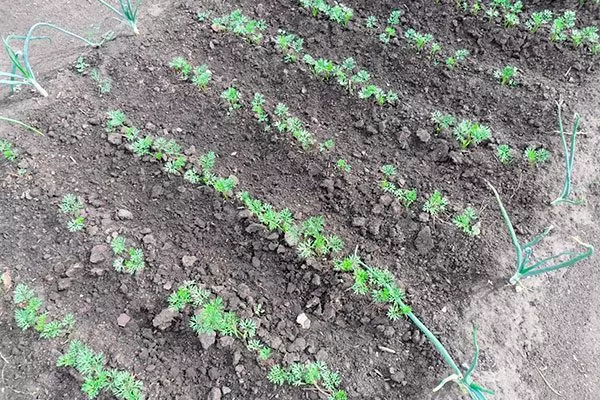
- Thinning. After 10-12 days from emergence, remove weak plants, leaving a 2 cm gap between the remaining ones. Perform the second thinning when five leaves appear, with an interval of 5-6 cm.
Weed regularly and break up the soil crust to ensure healthy carrot growth.
Collection and storage
Before harvesting mature root vegetables, water the area to facilitate removal of the carrots from the soil. This variety has strong, tall tops, making it suitable for mechanical harvesting.

Dry the vegetables for several days, then sort them. Remove any damaged ones to prevent infection. Trim off any tops completely. Bring the harvest indoors. Maintain optimal storage conditions: temperature from -2 to +2°C and humidity of 90-95%.
Diseases and pests
The crop is often susceptible to various diseases and pest attacks. Common problems and their management methods are listed below:
- Dry rot (phoma). A fungal disease that first attacks the above-ground parts of the plant, then the roots. The disease's development is facilitated by plant debris remaining in the soil. To prevent phoma blight, apply potassium and phosphorus fertilizers to the soil.
- White rot. The disease manifests itself as softening of the vegetable, with the formation of a white, fluffy coating. Potassium fertilizers and copper-based insecticides are useful for control.
- Gray rot. Fungal fruit disease. To treat and prevent, apply nitrogen fertilizer to the soil and treat the plants with a 1% Bordeaux mixture solution.
- Carrot fly. A pest whose larvae develop in the soil, feeding on root crops. For control, use chemicals such as Actellic, Decis Profi, and Shar Pei. Regularly remove weeds that can serve as shelter and reinforcement for this insect.
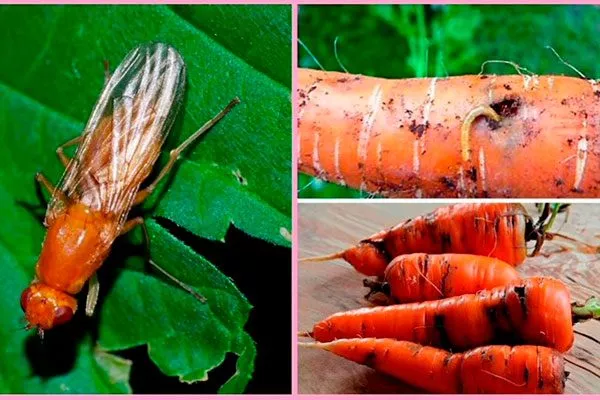
Effective disease and pest control requires a comprehensive approach that includes agronomic measures, the correct choice of fertilizers, and the use of chemicals when necessary.
Problems in cultivation and ways to solve them
This crop has specific growing conditions. Consider the following to ensure a high-quality harvest:
- Carrots prefer loose, well-drained soils. In heavy, dense soils, roots can become severely deformed due to difficulty in germination and root growth.
- Plants require adequate light. Without sufficient light, they may grow weak and fail to achieve the optimal root size and shape.
- Early carrots require timely harvesting. If harvesting is delayed, the vegetables may begin to crack in the soil, leading to a loss of juiciness and flavor.
- Regular watering is key. Extended periods without moisture followed by heavy watering can lead to cracking. It's important to maintain moderately moist soil, avoiding either drying out or overwatering.
- Regular loosening of the soil helps maintain its aeration and improve oxygen access to the roots. The soil crust that forms on the surface must be regularly broken up to avoid interfering with seed germination and root growth.
Adherence to these basic agricultural practices helps minimize the risk of disease and ensure a good harvest with excellent taste.
Similar varieties
| Name | Ripening period | Disease resistance | Keeping quality |
|---|---|---|---|
| Artek | Early | High | Good |
| Canned food | Average | Average | Excellent |
| Nandrin F1 | Early | High | Good |
| Napoli F1 | Average | High | Excellent |
| Nelly F1 | Early | Average | Good |
| Lydia F1 | Average | High | Excellent |
| Belladonna | Late | Average | Good |
| Tushon | Early | High | Good |
| Chocolate bunny | Average | Average | Excellent |
There are several varieties similar to Baltimore worldwide, distinguished by their high quality and resistance to cracking. Here are a few:
- Artek;
- Canning;
- Nandrin F1;
- Napoli F1;
- Nelly F1;
- Lydia F1;
- Belladonna;
- Tushon;
- Chocolate bunny.
All of these carrot varieties are excellent choices for growing due to their early maturity, high-quality fruit, and resistance to negative influences.
Reviews
Baltimore is a variety distinguished by its delicious flavor, high yield, and excellent transportability. This carrot boasts excellent disease resistance and uniform root formation. It is suitable for both open-field and under plastic covers, making it a versatile choice for gardeners.