
Zebrune is the name of a long, brown-coated French shallot variety known as banana onion. It has long been familiar to European farmers. It is also of interest to domestic gardeners due to its intense green production, the unusual appearance of the bulbs, their distinctive mild flavor, early maturity, ease of cultivation, and lack of tendency to bolt.
History of origin
Zebrune is an ancient French variety. It was already known to farmers in the Lancloitre region as early as 1940. After thirty years of cultivation on local private farms and its popularity with traders, it began to be cultivated on an industrial scale.
This variety of vegetable crop has other names:
- La Cuisse de Poulet du Poitou (meaning "Poitou chicken legs"), was launched in 1992;
- Echalion (Escalon), known since 1994 as the commercial name of the variety, under which it is included in European catalogues.
Description of the plant
This vegetable variety produces multiple bulbs. Each plant produces 5 to 10 bulblets. They resemble baked chicken drumsticks, hence the variety's second name, La Cuisse de Poulet du Poitou.
Zebrune shallots have the following characteristics:
- elongated spindle or torpedo-shaped (length 5 times greater than the width of the bulb);
- small size (length - 10-13 cm, width - 2-4 cm);
- weight - 40-70 g (can reach 100-130 g with enhanced agricultural technology);
- brownish-pink color of the outer dry scales;
- with white-pink, juicy scales, somewhat transparent, and distinguished by a delicate texture.
Plants of this variety produce vigorous foliage that quickly regrows after cutting. Gardeners enjoy them throughout the growing season. The abundant foliage does not negatively impact the bulbs' size or flavor.
Feathers are characterized by the following indicators:
- length - 50 cm;
- subtlety;
- rich green color, which turns into white at the base.
Taste characteristics and purpose
Both the bulbs and the greens of shallots are edible. The greens are juicy, tender, and delicious. The flesh of the turnips is soft, juicy, delicate, and piquant. Experts describe its flavor as subtle and subtly spicy, with a distinct sweetness.
The Zebrune variety has a universal purpose:
- the vegetable is eaten fresh, without heat treatment;
- Add fresh chopped to vegetable salads;
- used for preparing hot dishes;
- marinate;
- canned;
- used as a filling for quiche;
- added to sauces;
- make a seasoning for meat dishes;
- They make onion jam from it.
Ripening and yield
This variety is an early-ripening shallot. It takes 2-3 months (no more than 150 days) from the first sprouts to full maturity. Gardeners begin digging up the shallots in the second half of August.
The yield indicators of vegetable crops are as follows:
- Gardeners collect 2.5 kg of onion bulbs from 1 square meter of planting;
- 4 kg of harvest (turnips with feathers) is produced by 1 square meter of onion bed;
- Farmers obtain 30,000 kg per 1 hectare during industrial cultivation of onions.
Unlike many other shallot varieties, the Zebrune variety's harvest is easy to transport and keeps well. Under suitable conditions, the shallots can be stored until March. Their shelf life in a vegetable store is 8-10 months.
Resistance to diseases and pests
Plants of this variety are characterized by strong immunity. They are not afraid of frost and dampness. Even in such unfavorable conditions, they are not susceptible to root rot. They rarely get sick.
Zebrune onions are resistant to thrips, but their plantings are susceptible to onion fly. This pest causes a disease in the bushes, which manifests itself in the following symptoms:
- yellowing of foliage;
- its fading;
- rotting turnips.
Don't neglect prevention. Repel onion flies from shallot beds with ash, ground red pepper, and tobacco dust.
Growing regions
The La Cuisse de Poulet du Poitou vegetable variety thrives in temperate or warm climates. It is fairly frost-hardy and recovers quickly from short-term frosts, but is not suitable for cultivation in the harsh conditions of Russia's northern regions.
The variety shows excellent yield when grown in the following regions of the country:
- central;
- southern.
Soil requirements
To obtain a high-quality and abundant harvest of bulbs and juicy greens, allocate a plot of soil for planting shallots that meets the following requirements:
- loose;
- containing a significant proportion of sand;
- fertile;
- generously fertilized with humus;
- neutral in acidity.
Pros and cons
Landing rules
Domestic gardeners grow this vegetable crop, originally from France, from seeds in one of two ways:
- sowing directly into open ground;
- through seedlings with subsequent planting in the beds.
In both cases, sowing occurs at the same time—February-March. When sowing in open ground, the seedlings will need to be covered for the initial period. It is also possible to sow the seeds in a greenhouse.
The seed material will need to be prepared for planting. Follow these steps:
- Place the seeds in a weak solution of potassium permanganate.
- Keep them in it for 1 hour.
- Dry the seeds.
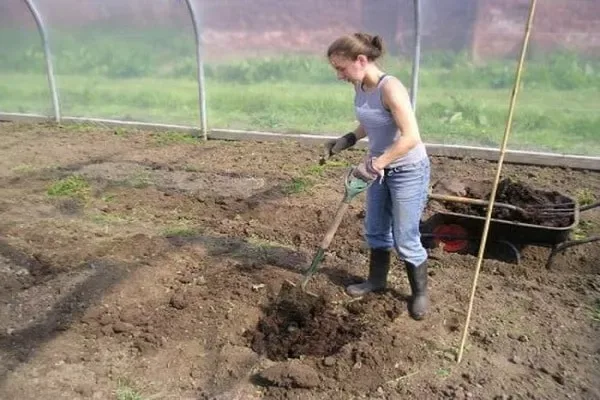
To grow French onion seedlings, use nutritious soil, adding a mixture of sand and humus. Sow the seeds according to the following procedure:
- Fill the containers with prepared soil.
- Make grooves in it, keeping a distance of 20 cm between them.
- Place the seed into the furrows, keeping a distance of 2 cm between them.
- Cover the planting with soil. Lightly moisten it with water using a spray bottle.
- Cover the seedlings with plastic film. Once the sprouts emerge, the covering material can be removed.
Water the seedlings as the top layer of soil dries out. Keep them in a bright room with a temperature of 15-18°C. After the plants have developed 3-4 shoots, thin them out. Remove weak shoots. Space the plants 8 cm apart. Repeat thinning after 30 days. Leave 20 cm between seedlings.
Transplant Zebrune shallot seedlings into open beds in early May. Select a site that meets the following requirements:
- well lit;
- with organically fertilized soil with a neutral pH;
- located next to beds where lettuce or other green vegetables are grown.
Care Features
To obtain a bountiful and high-quality harvest, follow the general rules of vegetable cultivation. Planting shallots requires the following care:
- WateringWater moderately but regularly. Continue watering until the stems have finished growing. During prolonged droughts, moisten the soil at least 2-3 times a week. If the season is rainy, reduce watering.
Stop using turnips completely one month before harvesting. This will stop the turnips from growing greens, and the bulbs will begin to accumulate nutrients more actively. - Loosening the soilAfter cutting the tops of the bulbs, loosen the soil around the base. Remember that bulbs sitting in compacted soil become very small. Loosening the soil prevents this problem.
This procedure allows the onion root system to receive sufficient oxygen for bulb formation and development. It should be performed not only after cutting the greens, but also after each rain and watering. Combine loosening with weed removal. - Top dressingFertilize the vegetable crop early in its development—after the plants have three leaves in the beds. Use a urea solution. After five onion tips have formed, apply a potassium phosphate fertilizer to the shallots.
Cleaning and storage
To determine when to harvest Zebrune turnips, examine the condition of the plants in the garden. Indicators of bulb readiness for harvesting are as follows:
- SkinIn ripe onions, it is distinguished by a rich brown color with a pinkish tint.
- FeathersThey dry out and lie down on the garden bed at the moment when the turnips are fully ripe.
Experienced gardeners harvest shallots in mid-August. To avoid damaging the bulbs when removing them from the soil, they use a pitchfork rather than a shovel.
After harvesting, dry the dug-up turnips outside under a canopy for several days. Then, move them indoors (or to a cellar or attic) to continue drying.
Store Zebrune onions under the following conditions for maximum shelf life:
- in a cardboard box or in a wooden crate;
- at low humidity;
- air temperature - no higher than +18°С.
Gardeners' reviews of the Zebrune onion
The Zebrune shallot is an early-ripening variety with many advantages. Its low maintenance and strong immune system make it easy to grow, even for a novice gardener. It's an excellent choice for those looking to grow a healthy vegetable with a delicate, sweet flavor, perfect for culinary delights like onion jam or traditional French onion soup.