
The Yaltinsky White variety is a salad onion that is a worthy representative of the Crimean collection. Like other Crimean varieties, it is distinguished by its juiciness and excellent flavor, but its cultivation requires special conditions—warmth and sun.
Breeding history
The Yalta White variety was bred by a group of breeders from Gavrish Breeding Firm LLC. Authors: S. F. Gavrish, E. A. Tiko, A. N. Logunov, N. A. Appazov.
The variety was added to the state register in 2017. It is recommended for cultivation in the North Caucasus region. In more northern regions, this onion is grown indoors.
Description of the Yalta White variety
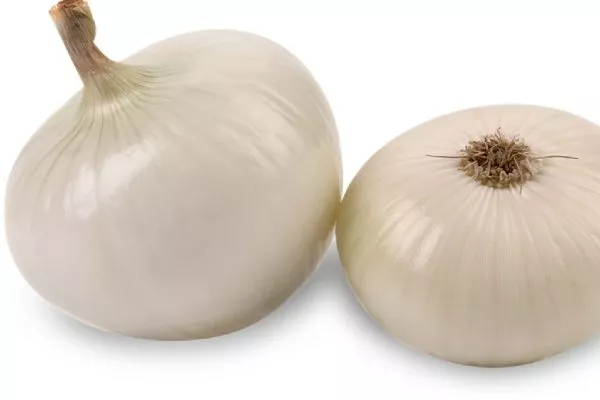
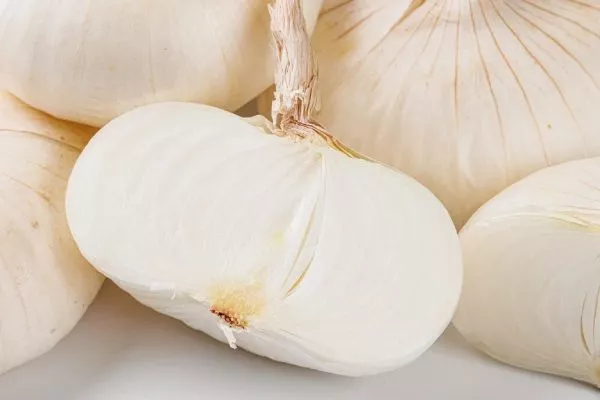
The Yaltinsky variety has large, dense, dark-green plumes with a thick, waxy coating. The greenery can reach a height of 1 m or more. The bulbs are large, flat-round, with dry, juicy white scales. The layers have a medium-dense structure. The average bulb weight is 100-140 g.
Purpose and taste
The Yalta white onion has a delicate, semi-sharp flavor with distinct sweet notes. This exceptional onion is versatile—it perfectly complements summer vegetable salads, stews, and other main courses, and it also pairs harmoniously with soups and other entrees.
Thanks to its high sugar content, Yalta white onions can be used in desserts. The sugar caramelizes, acquiring a surprising and unusual flavor.
Ripening and yield
Yalta white onions have a medium ripening period. From germination to bulb maturity and leaf lodging, it takes 135 to 150 days. Maturity by harvest reaches 90%. Full maturity is achieved only after a period of post-ripening.
This variety produces only one or two heads, producing only one or two heads. It is highly productive, yielding between 245 and 293 centners of onions per hectare. However, the greens develop slowly, requiring a considerable amount of time for the feathers to appear.
Pros and cons
Before planting the unique Yalta White Onion in your garden, it's helpful to familiarize yourself with all its advantages and disadvantages. This will help you decide whether you can grow this extraordinary onion in your specific climate and whether this variety is suitable for your intended purposes.
Pros:
Cons:
Planting dates
The exact timing of sowing or planting seedlings depends on specific climatic and weather conditions.
- ✓ The soil temperature for planting should be at least 10°C.
- ✓ It is necessary to provide protection from northern winds, which can reduce the temperature of the soil and air.
Recommended timeframes:
- The onions are planted in the ground at the end of April or the beginning of May. The main thing is that the planting is done in warm soil.
- Sowing of seeds is carried out in March.
- The seedlings are transferred to open ground in the first ten days of May.
Landing features
Proper planting is essential for the successful cultivation of any garden crop. This is especially true for the Yalta white onion, which requires specific growing conditions.
Landing features:
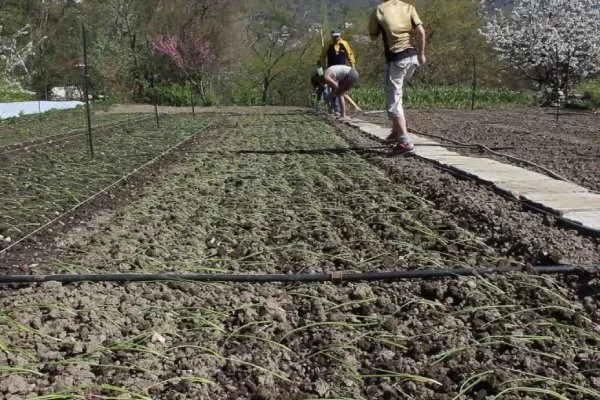
- The site should be well-lit. The soil should be fertile, rich in humus and minerals. Yalta onions require a soil pH of 6.5-7.0. You can test the soil pH using test strips (available at agricultural stores). If the acidity level exceeds the specified limits, pH-adjusting agents are added to the soil.
- Onions are planted in areas previously occupied by plants that don't require much nutrition for growth and development. The planting location should be changed every 3-4 years. The best neighbor for onions is carrots. It is not recommended to plant onions in areas where potatoes or beets (sugar and fodder) were grown.
- The soil for planting is prepared in advance, beginning in the fall. Organic matter, mineral fertilizers, and soil acidity adjusters are added during digging.
Growing and care
To obtain a large and high-quality harvest, Yalta white onion must be properly cared for.
- 2 weeks after planting, apply nitrogen fertilizer (10 g per 1 m²).
- During the period of bulb formation, add potassium-phosphorus fertilizer (15 g per 1 m²).
Care instructions:
- Watering. Onions are watered regularly, as the soil dries out. If there's not enough water, the onions will become more pungent.
- Loosening. After moistening, the beds are loosened, while weeding out the weeds.
- Top dressing. To ensure a good harvest, apply a special nitrogen fertilizer specifically designed for onions. If the soil lacks nitrogen, the leaves begin to turn yellow and dry out. In such cases, foliar feeding (spraying the leaves) is recommended. The crop is also fertilized with potassium and phosphorus.
Harvesting
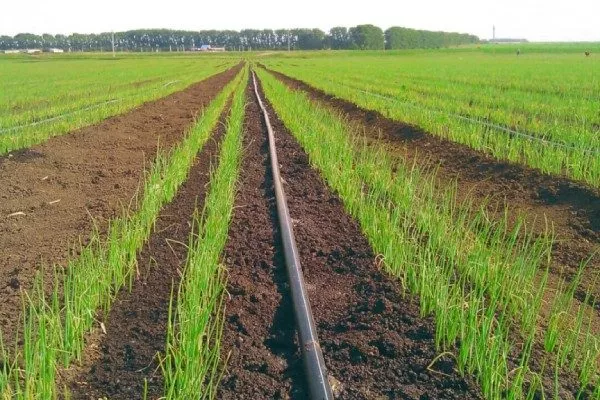
When the onion leaves (feathers) dry out and begin to lodge and break, it's time to harvest. Harvesting is done in dry weather. The bulbs, removed from the ground, are dried in a dry, well-ventilated area—for example, outdoors, under a canopy.
White Onion Reviews
The Yalta white onion is a true gardener's dream. But if you want to quickly and easily harvest large white onions, avoid the labor-intensive method of growing from seeds; plant sets instead. And if you don't pluck the greens, you'll get a harvest of very large white onions with an exceptionally pleasant flavor.