
One of the well-known southern onion varieties is Yaltinsky. It's an excellent choice for gardeners looking for a sweet-flavored red onion harvest for fresh consumption. Read on for more information on the characteristics, timing, and cultivation methods of this crop.
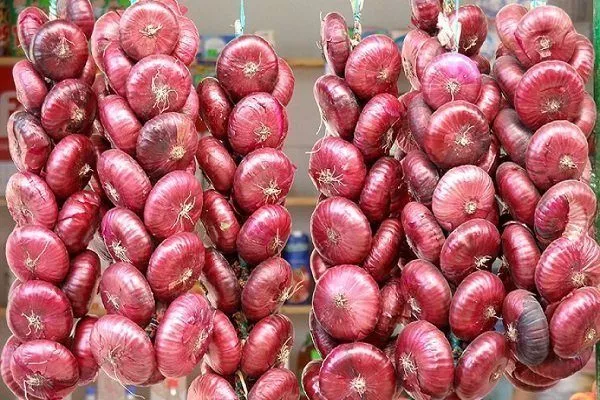
Yalta onion
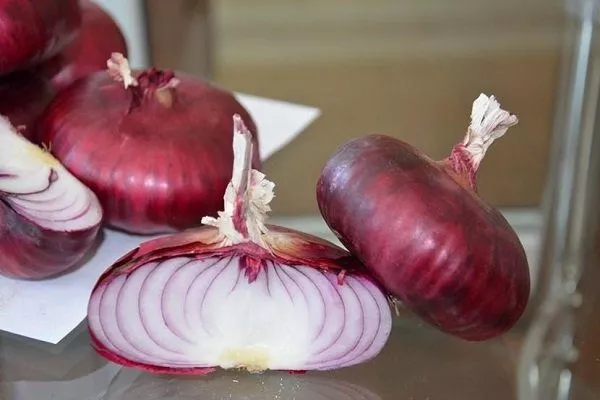
The taste of Yalta onions is sweet without bitterness.
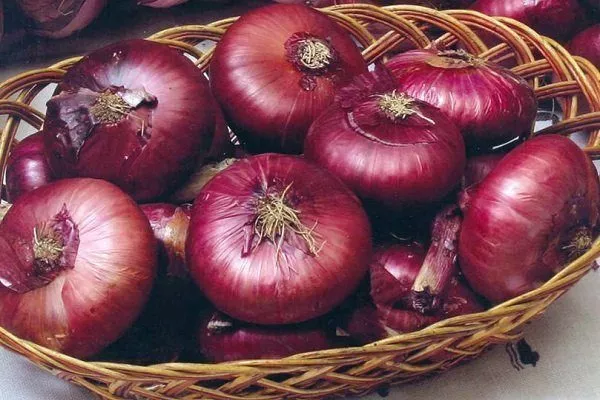
Yalta onion grows only on the southern coast of Crimea.
Description of the variety
In the 1950s, the Yalta onion was developed in the Nikitsky Botanical Garden. It is the result of artificially crossing several "foreign" crops brought to Crimea by travelers in the 19th century:
- flat and round purple varieties from the Portuguese island of Madeira;
- sweet varieties from Spain.
The qualities of the bred plant can be found in the table:
| Parameter | Description |
| Ripening period and yield | This is a mid-season variety—the bulbs reach maturity 150-160 days after planting. A 1-hectare plot can yield up to 80 tons of bulbs. |
| Feathers | The dark green feathers are large and covered with a waxy coating. |
| Bulbs | Unscrupulous traders often soak ordinary onions in an ink solution to pass them off as Yalta sweet onions. To avoid being deceived in this situation, pay attention to the following parameters:
|
| Purpose | Onions with sweet and juicy inner skins are most often sliced into rings and used raw in salads or as a garnish. They can also be baked or grilled until semi-soft, after being sliced into thick rings and drizzled with oil and salt. However, it's best not to heat-treat salad onions to preserve their nutritional properties. |
| Shelf life | Yalta onions are not suitable for long-term storage – ripe bulbs do not last longer than 4-5 months due to their high water and sugar content. |
Considering the shelf life and the fact that the harvest is collected until the beginning of September, it becomes clear that it is impossible to buy genuine sweet onions in late winter, spring and early summer.
For information on how to choose Yalta onions, watch the following video:
Where to grow?
Genuine Yalta onions can only be grown on the southern coast of Crimea, as they require a long summer season, as well as soil composition and moisture. Onion fields are primarily located in the following suburban villages on the southern coast of the Crimean Peninsula:
- landslide;
- Simeiz;
- Blue Bay;
- Zaprudny;
- Lavrov.
If this variety is grown in other climatic conditions, it loses its originality – sweetness and juiciness, and also acquires an uncharacteristic spiciness.
Agricultural technology
Crimean onions are considered a delicate variety, as improper cultivation results in dry fruits with thin, pale skins and bitter flesh. To prevent this, strictly follow all cultivation guidelines:
- Planting methodThis variety is grown not from sets, but from seeds using seedlings. If they are sown directly into open ground, the ripening period will be longer, and the bulbs will become bitter. Furthermore, if grown directly from seedlings, the yield will decrease from 200 to 100 centners per hectare, and the bulb's shape index (the height-to-diameter ratio) will increase.
- Sowing datesTo ensure a bountiful harvest, sow seeds for seedlings in late winter (the last ten days of February) or early March (between the 1st and 10th). After 1.5 to 2 months, the grown and strengthened seedlings can be transplanted into open ground. The optimal time for planting is late April to early May.
- LightingThe planting area should be well-lit by sunlight throughout the day to ensure the onions develop vigorously and develop their sweetest flavor.
- SoilThe main reason this variety fails to grow in other regions is unsuitable soil conditions. Onions will only achieve their full quality when grown in Tauride shales. This soil warms up very well during the day and gradually releases heat to the roots throughout the night. It's impossible to recreate these characteristics indoors, so it's essential to use the most fertile, loose, and fine soil possible.
- ✓ Soil pH should be between 6.0-7.0 for optimal growth.
- ✓ The soil must have high drainage capacity to avoid water stagnation.
Experienced gardeners note that Yalta onion thrives in rocky soil. In this type of soil, the bulbs aren't planted too deep, so they receive the necessary amount of sunlight, grow vigorously, and develop superior commercial qualities.
- PredecessorsAccording to crop rotation rules, onions should not be planted after other onion varieties. They also shouldn't be planted next to each other. Good predecessors include the following:
- potato;
- tomato bushes;
- cabbage;
- green.
Site preparation
The chosen location for planting seedlings must be prepared in advance, following the following guidelines:
- In the fall, six months before planting, plow the area to a depth of 40 cm and remove all weeds. Then, level the soil and destroy any plant debris. Complete all these procedures in October, otherwise the soil will dry out, which will negatively impact the onions.
- In early spring, fertilize the soil with ammonium nitrate and potassium salt if needed. Before planting onions, harrow the bed every 7-10 days to ensure the soil is as loose and soft as possible.
The seedlings are planted at the beginning of April, so by this time the bed should be in perfect condition.
Growing seedlings
To obtain a high-quality harvest of sweet onions, it's crucial to grow strong seedlings. In southern regions, seeds can be sown in a greenhouse or hotbed, but in other areas, it's best to grow seedlings indoors to ensure adequate light and warmth. This process can be divided into two stages, each requiring separate consideration.
Sowing seeds
The technology for sowing seeds for seedlings is as follows:
- Processing of seed materialTo disinfect, sort the seeds and soak them in a light pink solution of potassium permanganate for 30-40 minutes. Next, rinse them and soak them in a growth stimulator, following the instructions on the product. After soaking, drain the water and dry the seeds.
- Preparing the container and substrateAny container can be used for growing seedlings, but soil requirements are more stringent. It must be loose and fertile. To achieve this, mix equal parts turf and compost, then add 50 g of mineral fertilizer. Fill the container with the resulting mixture to a depth of about 14-15 cm and water thoroughly.
- SowingPlace the treated seeds into the soil to a depth of 1 cm, leaving a distance of 5 cm between them. After sowing, moisten the substrate with a spray bottle, cover with plastic, and store in a warm, well-lit place (for example, a south-facing windowsill).
For information on planting Yalta onion seeds for seedlings, watch the following video:
Caring for seedlings
To obtain strong seedlings capable of vigorous growth and producing sweet, juicy bulbs, it is necessary to provide proper care for the planting, which includes the following measures:
- Creating an optimal microclimateAfter sowing, keep the seed containers at a temperature of 20 to 25°C. After about 2-3 weeks, when the first shoots appear, provide the seedlings with a cooler temperature (no higher than 15°C during the day and 10°C at night); otherwise, they will stretch and weaken. Ensure that the containers are always well-lit. This may require the use of phytolamps or other lighting.
- WateringThe top layer of soil should always be kept moist, regularly misting it with a spray bottle. Reduce the frequency of watering as the time for planting the seedlings in their permanent location approaches.
- Top dressing. It is carried out twice during the entire period of seedling cultivation:
- 2 weeks after sowing, add mineral fertilizers to the soil (10 g superphosphate, 5 g urea and 3 g potassium chloride per 5 liters of water);
- 20 days after the first feeding, fertilize the soil with a solution of ammonium nitrate (1 g per 10 l of water).
- ThinningOnce the onion seedlings have grown a little, they need to be thinned out—removing weak plants, leaving at least 1 cm between healthy, strong ones. If you neglect this procedure, the seedlings will not gain strength.
- HardeningSeven days before planting, take the seedlings outside daily to allow them to adapt to the new growing conditions. The hardening time should be increased daily, so that by the end of the process, they've been outside all day.
By the age of two months, the seedlings will have 3-4 true leaves 15-20 cm long and a stem at least 0.5 cm high. At this stage, they are ideal for planting in the garden.
Planting seedlings in open ground
Mature seedlings need to be transplanted into prepared soil, following these instructions:
- Water the sprouts generously, carefully pouring water under their roots.
- Young plants should be slowly removed from the container and their roots and leaves should be trimmed back to about half their length.
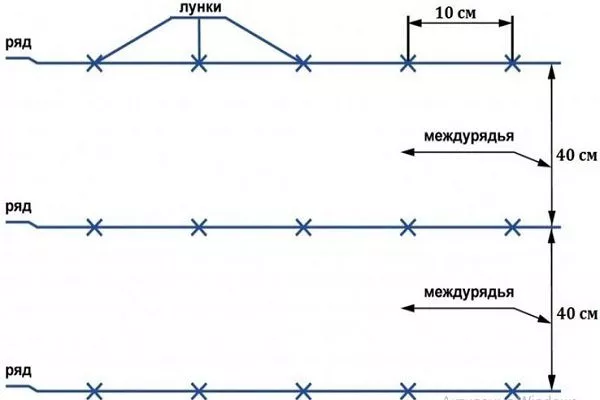
- Water the soil generously and plant the seedlings in a wide-row pattern:
- the distance between plants in a row is 8-10 cm;
- row spacing – 35-40 cm;
- the depth of the grooves is 4 cm.

By following these planting parameters, you can plant approximately 35 seedlings per 1 square meter of garden bed.
- After planting, cover the onion roots with soil, compact them carefully and water.
Planting care
To ensure that the efforts of preparing the site and growing seedlings are not wasted, onions need to be properly cared for after planting in open ground. This requires timely implementation of a number of agricultural practices.
Watering
It should be watered regularly to prevent the soil from drying out. If this rule is neglected, the Crimean onion bulbs will not be sweet, but rather spicy. Water the crop by sprinkling the spaces between the rows with settled, warm water (+20…+22°C).
Stop watering 20 days before the expected harvest date to improve the shelf life of the heads.
Soil cultivation
After watering, the soil should be loosened slightly to prevent a crust from forming on the surface. Failure to do so will deprive the plant roots of the necessary oxygen and moisture, preventing the formation of large, juicy onions.
Along with loosening the soil, you need to weed the bed, removing any weeds. If weeds are left in the area, they will shade the onion plants, preventing them from developing properly.
Top dressing
From the moment of planting until the end of July, seedlings need to be fed every 10-12 days, using the following nutrient compositions in turn:
- OrganicsTo prepare a solution, dilute mullein (1:5) or chicken manure (1:10) in water.
- Potassium-phosphorus fertilizerThe solution can be prepared from 20 g of potassium chloride and 40 g of superphosphate per 10 liters of water.
- The first feeding should be carried out 2 weeks after planting the seedlings, using potassium fertilizers to increase sweetness.
- The second feeding should be carried out at the beginning of the bulb formation, using phosphorus-potassium fertilizers.
When fertilizing onions, do not exceed the specified nutrient levels, as this will only harm the crop.
Protection from diseases
Yalta onions are resistant to various diseases, but if the soil is overwatered, they can become infected with fungal diseases, including root rot and downy mildew. Therefore, they need frequent but moderate watering. As a preventative measure, the crop can also be treated using the following schedule:
- in the seedling rooting phase – 1% Bordeaux mixture;
- 2-3 weeks after the first treatment – 0.4% solution of Arceride;
- 20 days after the second treatment – with Arcerid.
If signs of fungal diseases are observed, the planting should be treated with Bordeaux mixture or a fungicide (Ridomil, Arcerid, Aliette).
Harvesting and storage of crops
Harvesting should begin when the leaves have begun to lodging en masse. This period occurs later than for regular onions, often occurring in late August or early September. Don't delay digging up the ripe bulbs, as autumn rains can cause them to rot.
Mature bulbs can be easily dug up with a pitchfork or dug under the bulbs, then pulled out by hand. They are best consumed within a few weeks. If you plan to store the bulbs for up to 4-5 months, consider the following:
- the room temperature can be in the range of +10…+15°C;
- the air should be dry and humidity should be low (up to 50%);
- It is better to tie the heads into bundles using long shoots (they can be braided into “braids” to form an onion “bunch”) and hang them from the ceiling, preventing them from touching each other.
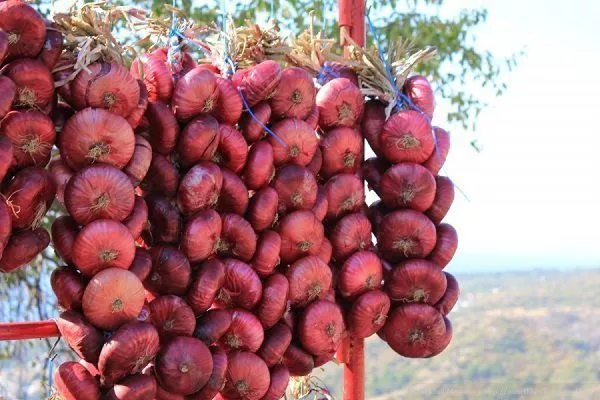
In its original form, the Yalta onion grows only in Crimea, but this sweet red vegetable can also be grown in other regions with warm climates and long daylight hours. It's a rather demanding crop and requires strict adherence to the above-mentioned agricultural practices. Failure to do so will result in reduced yields and the production of ordinary, pungent bulbs with poor shelf life.