
The Centurion onion variety was developed by Dutch breeders. Its seeds germinate well, and the plant does not bolt as it grows. Centurion is resistant to drought, high humidity, and sudden temperature changes, but requires specific conditions for its full development.
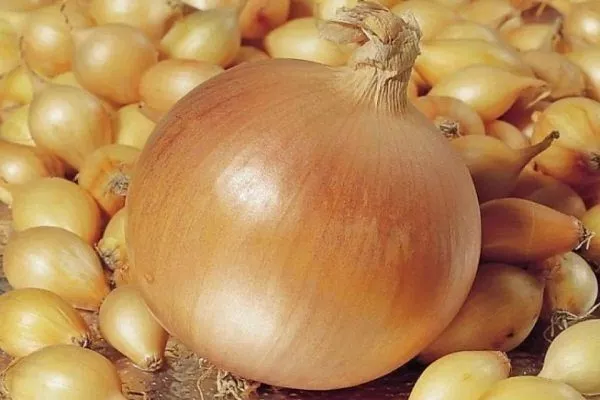
Onion Centurion is resistant to many pests and diseases
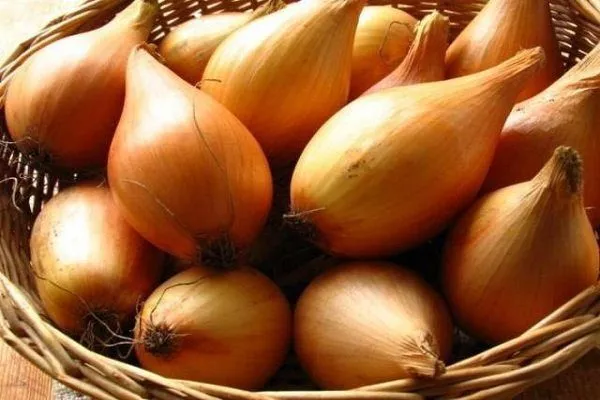
Onion Centurion is well stored and transported.
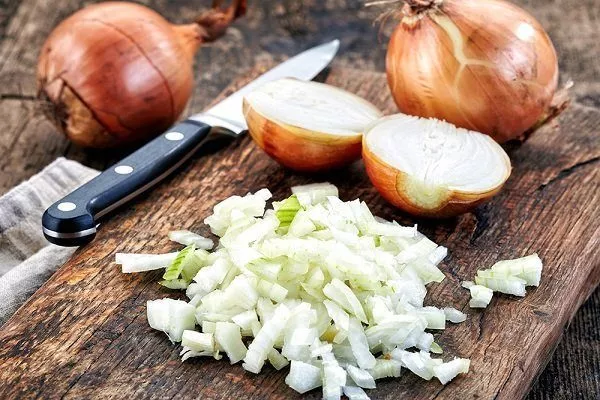
The Centurion onion has a medium pungency.
Description of the variety
Centurion is an early-ripening onion variety. Ripening takes 90 days. This is a high-yielding variety: up to 4 kg of high-quality bulbs can be harvested per square meter. This Dutch hybrid requires little care, yet boasts excellent flavor and resistance to many pests and diseases.
Key features of the Centurion bow:
- the weight of one onion is from 90 to 130 g;
- shelf life – high; under normal conditions (5-10 degrees) the harvest is stored from 6 to 9 months;
- frost resistance – sufficient, up to -4 degrees in the morning;
- taste – medium spiciness, piquant notes;
- shape – elongated, ellipsoid.
- ✓ The bulbs have a unique ellipsoid shape, which helps them to be better preserved during transportation.
- ✓ High resistance to bolting makes this variety particularly valuable for commercial cultivation.
The advantage of this variety is its resistance to bolting. Centurion is also valued for its weight loss during storage, which is no more than 5-7%, with rot and wastage not exceeding 4%.
The Centurion onion bulb has a narrow neck that dries quickly and a small base. This feature protects the crop from various diseases and reduces waste when used in cooking.
This hybrid can be grown both in home gardens and on an industrial scale. The vegetables are equally well suited for long-distance transport in nets and loose.
Centurion is suitable for eating raw, preserving, and adding to salads of boiled and fresh vegetables.
Reproduction
Onion Centurion is propagated in several ways:
- from seeds;
- from 40-50 day old seedlings;
- obtaining seed onions.
The first two methods produce annual crops. This propagation method is only applicable in southern regions, where the growing season is long.
Onion sets (a biennial crop) are grown by sowing nigella. Nigella takes a long time to germinate, so before planting, the seeds should be tested for germination and carefully selected: all seeds should be uniform in size and shape, dry, and black. To ensure better germination, it is recommended to soak the nigella in room-temperature water for 24 hours, then remove and dry. Planting should begin when the seeds become free-flowing.
The crop is harvested after the tops begin to dry and fall to the ground. For the next planting, select small bulbs, 1-2 cm in diameter. Larger sets are not used.
Preparing for landing
To ensure a good harvest, you need to select high-quality planting material. Onion sets require less maintenance, making them ideal for growing large quantities of onions.
Bulbs for planting should be dry, not rotted, and under no circumstances damp, free of scratches or blemishes. The skins of each bulb should rustle when touched with your fingers.
Before planting, you can disinfect the onions with copper sulfate. To prepare the solution, dissolve a teaspoon of the solution in a bucket of water.
- ✓ The optimal soil pH level should be between 6.0-7.0 to ensure best growth.
- ✓ The soil must be well-drained to avoid water stagnation and rotting of the bulbs.
The Centurion onion sets should be planted in light, loose soil. The area where you plan to plant them should be well-lit. It should be cleared of weeds, then fertilized with manure or compost. If necessary, reduce soil acidity. Peat or sand should be added to clay soil.
At the final stage, the plot is dug to a full shovel depth and the soil is leveled. All these steps are performed in advance, in the fall, after the harvest.
Landing rules
When choosing a time to sow the crop, consider the region's climate. If temperatures are consistently above zero, Centurion can be planted without fear of morning frost.
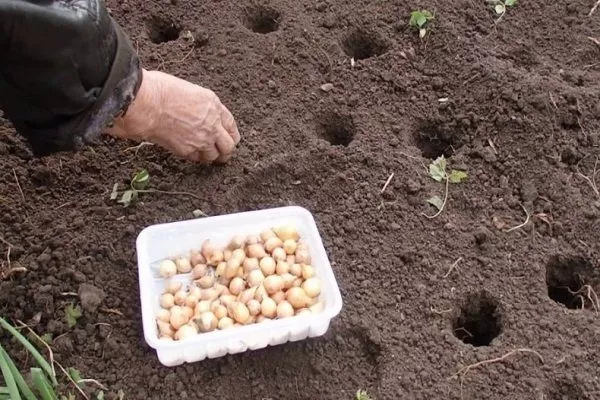
Transplanting
You need to pay attention to the following points:
- when sowing onions at temperatures of +2 degrees, seedlings will appear in a month, sometimes you have to wait even longer;
- at a temperature of +14-15 degrees, the onion will sprout in 14 days;
- Sowing the crop at +20-22 degrees guarantees the emergence of seedlings within a week.
Centurion onion seedlings are planted in the soil in the second half of April. During this period, the temperature is comfortable for the seedlings, making it easier for them to adapt to the new conditions. The seedlings should be placed in moist soil. The soil surface should be leveled with a rake. The distance between each row should be at least 30 cm. The furrow depth should be 4-5 cm. Before transplanting the seedlings into the soil, dip their roots in a mixture of manure and clay.
Each seedling should be spaced 15 cm apart. Don't plant the seedlings too deep; a 1 cm depth is sufficient.
After planting all the seedlings, you need to cover the rows with soil.
Planting with sets
If Centurion is grown from sets, it's recommended to plant it in late April. Gardeners do this in the evening, choosing a cloudy day.
Onion sets, like hybrid seedlings, are planted in rows, with a 20-cm gap between each row. The prepared bulbs should be spaced at varying distances between each individual. This distance depends on the size of the onion sets:
- if the diameter does not reach 1 cm, then there should be a distance of 5 cm between each bulb;
- if the diameter of the onion sets reaches 1.5 cm, then the indentation will be 8 cm;
- specimens with a diameter of 2 cm or more are located at intervals of 10 cm.
Plant the bulbs 3 cm deep, cover with soil and mulch.
Caring for the crop
Basic requirements for caring for the Centurion onion variety:
Watering
The beds need to be regularly watered during the growing season. This is essential for leaf growth. The recommended rate is 8 liters per square meter. As this period ends, reduce watering and stop 20 days before harvest.
Use warm water for watering. Be careful not to damage the feathers.
Weeding and loosening
These measures improve air circulation and accelerate the crop's development. They should be performed frequently—once a week or 10 days.
Weed removal
Pests retain moisture on the surface, which increases the risk of fungal diseases that negatively affect the condition of the crop and its yield.
Regular inspection of the beds
It is necessary to monitor the condition of the crop in order to notice the appearance of pests or the development of onion diseases in time.
Top dressing
The Centurion onion variety requires not only proper care but also fertilization. It's important to remember that you shouldn't use just one type of fertilizer, such as organic or mineral.
Excess organic matter promotes the development of fungal diseases, causing the planting material to rot in the soil. Applying too much mineral fertilizer can cause rhizome burn, which will negatively impact the taste of the harvest. The most suitable fertilizing regimen is alternating mineral and organic fertilizers.
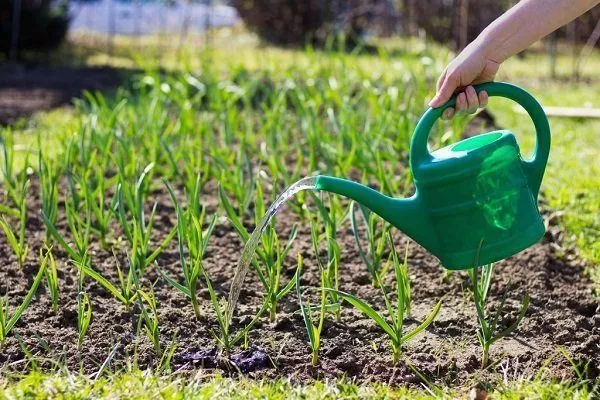
The first feeding should be done a week after planting the bulbs in the ground. You can use manure diluted in water or an organic fertilizer.
Nitrogen (ammonium nitrate) is applied in the spring, with 40% of the dose applied before planting and the remaining amount applied throughout the growing season, in 2-3 doses.
Potassium (potassium sulfate) is also essential for crop yield. The total amount should be divided into two parts: one applied to the soil in the fall, before tilling the plot, and the other applied during the growing season, divided into two applications.
Phosphorus (granulated superphosphate) is added in the fall before digging (up to 70% of the volume), and in the spring (30%) before planting the planting material.
It is not recommended to scatter fertilizers in dry form; they need to be prepared into a solution.
Helpful tips for growing Centurion onions
Tips from experienced gardeners on caring for the Dutch hybrid:
- the crop does not need to be hilled, it is enough to loosen the soil around it;
- as the stem dries out, you need to remove the roots and leaves, leaving up to 5 cm of false stem;
- It is not recommended to add fresh manure, as it attracts pests and slows down the development of the crop;
- Do not overexpose ripe bulbs, as secondary growth may occur;
- If infected plants are found, they must be removed and burned to prevent the disease from spreading to healthy crops.
Pest and disease control
The most common disease of Centurion onions is powdery mildew, which attacks the leaves of the plant. It's caused by high humidity. It's impossible to get rid of this disease, so it's important to carefully monitor your plants and take the following preventative measures:
- regular monitoring of leaf condition;
- scheduled treatment of crops with fungicides.
This onion variety is also susceptible to Alternaria wilt. This disease affects older leaves, while younger ones are rarely affected. Spots appear on their surface, and the leaf edges turn brown. If the disease progresses, the leaf dies completely. To combat the disease, the crop must be treated with special compounds called fungicides.
Centurion is resistant to the most common onion diseases – neck rot and downy mildew.
The most common pests of the Dutch hybrid crop are the onion moth and the onion fly. These pests lay eggs under the outer scales of the onion plant. The developing larvae burrow deep into the bulbs and eat away the flesh from the inside. The moth eats the greenery from the inside. Preventive measures include digging the plot to a full spade depth in the fall and sowing early. If pests have already established themselves in the beds, they should be treated with special insecticides.
Harvesting and storage
The signal to begin harvesting is when new leaves stop growing. The best time to harvest Centurion onions is the second half of July. Harvesting is recommended during hot, dry weather.
After harvesting, the bulbs should be laid out in a dry, well-ventilated, shaded area. Turn them periodically.
You can store the harvest for drying in the following ways:
- Laying in a circle. The bulbs should be on the outside, and the leaves should be inside the circle. The height should not exceed 50 cm. When laying the onions, avoid touching the opposite leaves. This arrangement allows the leaves to dry faster.
- In narrow long rows.
Once the harvest is completely dry, all bulbs should be cleared of soil and any dry leaves removed. Each bulb should be carefully inspected for moisture, scratches, mold, or signs of rot.
The bulbs need to be sorted into groups depending on their size:
- the smallest (up to 0.7 mm in diameter), not suitable for storage and used for planting in the soil in the fall;
- first class (7 mm-1.4 cm);
- second class (1.5 cm-2.2 cm);
- large (2.2 cm in diameter or more).
The harvested onion crop should be stored in special storage facilities. The premises must be ventilated. At home, onions can be stored in warm, dry places, such as the attic or basement. They can also be stored in perforated boxes, nylon mesh bags, or old stockings. Some gardeners store their harvested onions in bags or boxes filled with sand, noting that this reduces spoilage. The harvest can also be stored loose.
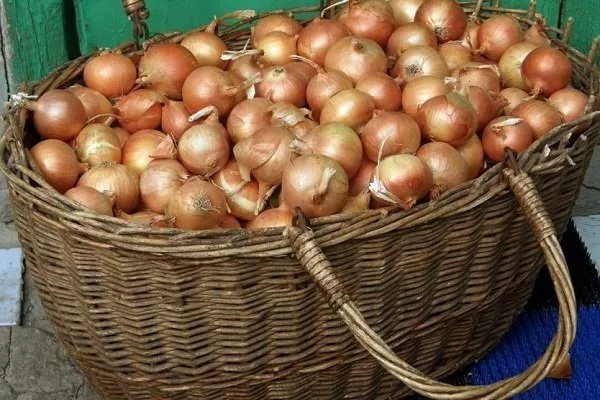
If you follow the rules for storing onions, they will successfully retain their appearance and taste for six months or more.
The Centurion onion variety is prized for its flavor, long shelf life, and excellent transportability. To achieve a high yield, it's important to properly prepare the seedlings and soil before planting, as well as provide adequate care for the growing plant.