
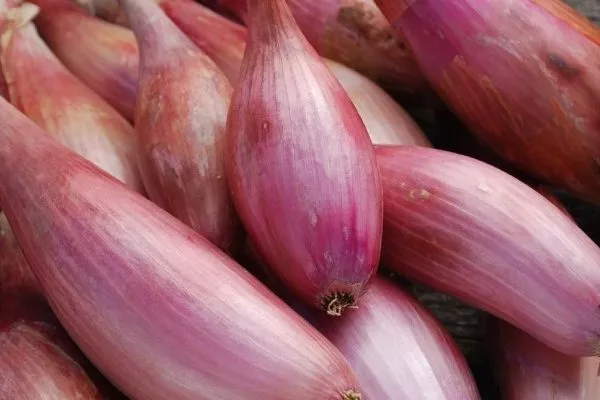
The Stilyaha onion is a tasty and productive shallot suitable for both garden and commercial cultivation in any type of soil. This shallot variety is productive, tasty, and suitable for mechanical harvesting.
History of creation and regions of cultivation
The Stilyagi variety is the product of the GAVRISH breeding firm. This versatile variety was approved for cultivation in 2015.
The variety is suitable for cultivation in almost all regions, including the Northern, Northwestern, Central, Volga-Vyatka, Central Black Earth, North Caucasian, Middle Volga, Lower Volga, Ural, West Siberian, East Siberian, and Far Eastern regions.
Description of the appearance of the plant and bulbs
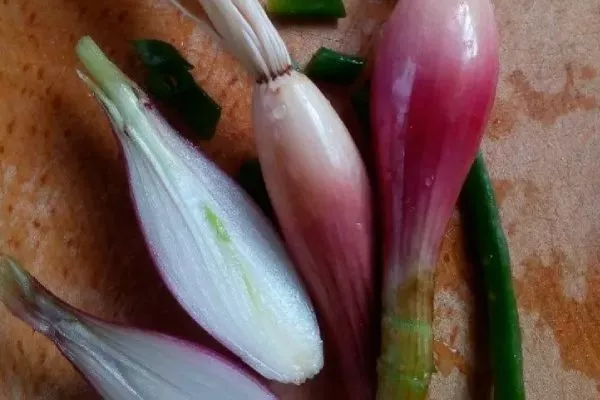
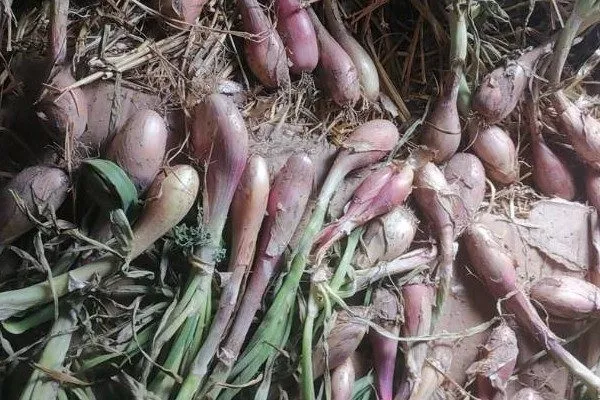
This variety has a medium-sized rosette with erect, dark, bluish-green leaves. The bulbs are elongated, elliptical (cigar-shaped). The succulent scales are white-pink, while the dry scales are light brown with a reddish tint. Each bulb weighs 80-100 g and is medium-dense.
Characteristics
The Stilyagi shallot is a medium-ripening variety. It takes approximately 125 days from germination to bulb ripening. The maturity rate is 95-100%. The average yield is 4.5 kg/sq.m.
For commercial cultivation, the seeding rate is 1 million seeds per hectare. The planting rate for forcing green onions is 5 kg of onions per square meter. Greens are ready three weeks after planting. The number of onions per nest is two.
Taste and purpose
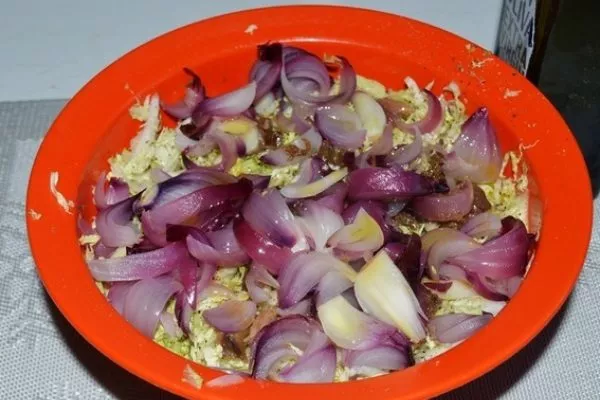
The bulbs of the Stilyagi onion are semi-sharp and juicy. This variety is ideal for use in a wide variety of dishes. Recommended for culinary use. Juicy Stilyagi bulbs are used for appetizers and salads, and they can also be frozen.
Pros and cons
The Stilyagi variety is relatively new, and many gardeners haven't yet gotten to know it. Therefore, before planting this shallot in your garden, it's helpful to weigh its advantages and disadvantages.
Pros:
Cons: the variety is not suitable for long-term storage.
How to plant
The Stilyaga variety is grown in two ways: as seedlings and as a turnip seed for an annual crop. Growing from seedlings produces the largest and juiciest onions. It is recommended to plant in an open, well-lit area.
Landing features:
- seeds are sown in the ground from the end of April to mid-May;
- seeding depth: 1.0-1.5 cm;
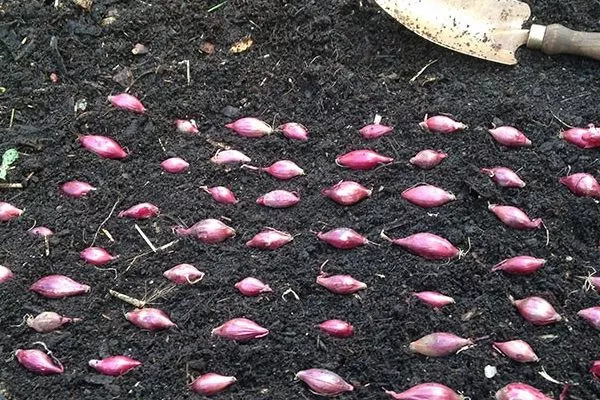
- the optimal planting pattern for onion sets is 20-30x5-7 cm;
- Optimal soils are fertile, well-drained.
- ✓ Soil pH should be between 6.0-7.0 for optimal growth.
- ✓ The soil should be well aerated, avoid areas with stagnant water.
The soil for planting is prepared in the fall. The soil is cleared of weeds and dug over, adding organic and mineral fertilizers. Compost or humus can be added at 5 kg per square meter, and superphosphate at 70 g per square meter. Next, form the beds and leave them until spring. Just before sowing, the soil needs only to be lightly loosened.
If shallots are grown by sowing onions, the seeds should be germinated in wet cheesecloth. The cheesecloth is immersed in water at a temperature of 22°C to 25°C for a couple of days.
Care Features
Shallots are very responsive to care, requiring regular watering, fertilizing, and loosening. Proper farming practices help achieve the highest yields.
How to care for shallots:
- Usually 3-4 waterings per season are enough if the summer is hot and dry.
- After watering, the soil is loosened, removing weeds at the same time. Loosening prevents crust formation, which prevents air from reaching the roots.
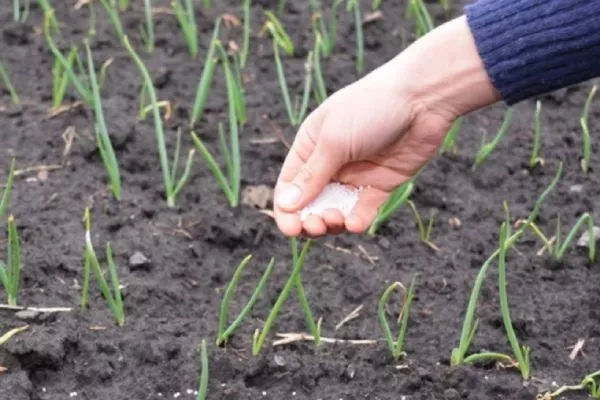
- Onions are fertilized twice per season. The first feeding is done in the spring, when the onions have three leaves. Use an infusion of the herb diluted with water 1:3, urea (1 tablespoon per 10 liters of water), to which 1/2 tablespoon of potassium fertilizer is added.
The second feeding is done at the five-leaf stage. During this period, the plant requires potassium and phosphorus. Shallots can be fertilized, for example, with monopotassium phosphate (1 teaspoon per 10 liters of water). If the soil is moist and the weather is damp, the granules can be simply scattered between the rows and incorporated into the soil.
Diseases and pests
The Stilyagi onion has a fairly high immunity, but with severe violations of agricultural practices and unfavorable weather conditions, there is a risk of powdery mildew (common and false), neck rot, rust, and some other diseases.
Popular insecticides are used to combat diseases, such as Gamair, Fitosporin-M, Bordeaux mixture, copper sulfate, etc. Folk remedies are also available, but they are more effective as a preventative measure. The following recipe is the most effective: mix milk (1 liter) with water (9 liters) and iodine (10 drops).
| Insecticide | Effectiveness against onion fly | Effectiveness against aphids |
|---|---|---|
| Karbofos | High | Average |
| Karate | Average | High |
| Decis | High | High |
The most dangerous pests for shallots include onion mites, onion flies, aphids, and onion thrips. To control them, insecticides such as Karbofos, Karate, Decis, or similar products are used.
Harvesting and storing onions
Shallots are harvested in dry weather. The harvesting time is when 50-70% of the greens have lodged. The bulbs are dug up along with their leaves and then thoroughly dried in the sun for two weeks. It's important to protect the onions from rain; they should be moved under cover promptly.
Before storing, trim the dry tops off the onions. Leave only a small stalk, 3-5 cm long. Store the onions in a dry place at a temperature of 0 to +3°C, first placing them in wooden crates or cardboard boxes.
Reviews
The Stilyagi onion is a promising shallot variety that deserves the attention of our gardeners. Its wonderful, semi-sharp flavor, combined with its juiciness, makes this onion a true culinary treasure. This shallot is quite hardy, easy to grow, and productive; even the most inexperienced gardener can easily grow it.