
The Stardust onion is an F1 hybrid developed by Dutch breeders in 1999. It has been grown in Russia for about 20 years and is cultivated in all regions of the country. It is a perennial variety. It produces a large number of greens in the first year of cultivation and bulbs in the second.
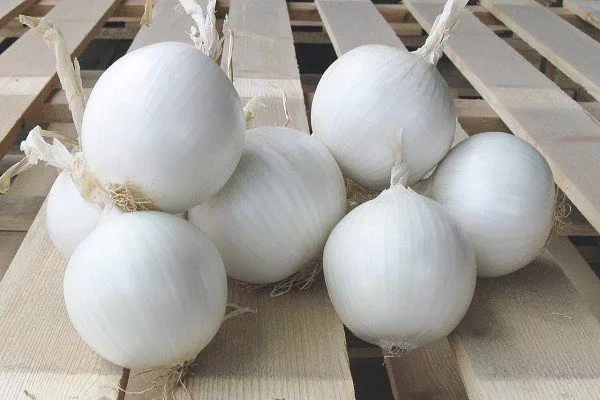
Stardust Bow
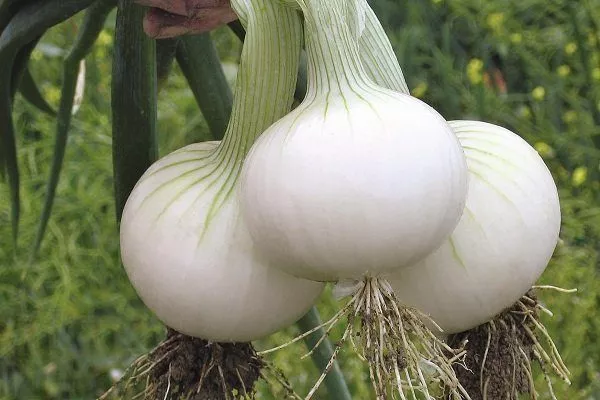
Stardust onion is easy to care for.
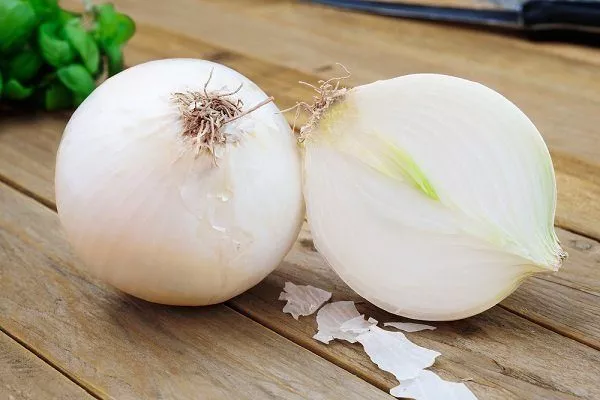
Stardust onions have a medium spiciness.
Description of the Stardust bow
The Stardust variety is characterized by intensive forcing of the plumose part in the first year of planting. To obtain full-fledged bulbs, the sets are planted in the second year. This is an early-maturing crop, so the sowing period is early May.
It is characterized by increased resistance to pests and diseases, is easy to care for, loves a lot of light, and does not tolerate very cold climates. shooting, therefore it reproduces in different ways.
Appearance
You can recognize the Stardust onion variety by its external and other characteristics:
- head shape – round, prismatic;
- husk color - white;
- taste - specifically onion-like with sweetness;
- spiciness – medium;
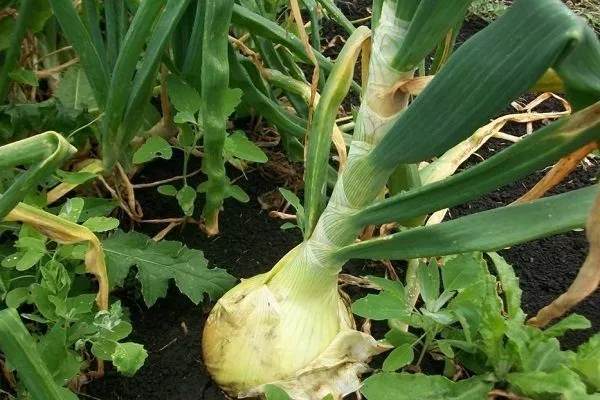
- bulb size – medium (weight from 40 to 60 g);
- color of greenery – rich green;
- The feathers have a waxy coating;
- rosette type – upright, lush;
- pulp color – white;
- neck - thickened;
- the adhesion of the scales is loose;
- the pulp is juicy.
The excellent taste can be spoiled by one thing: insufficient watering during cultivation. A lack of moisture leads to bitterness.
Reproduction
The Stardust variety is intended for propagation by seeds obtained from the shoots. However, many farmers and gardeners use bulbs, which are planted in the first year to produce green foliage. Therefore, Stardust can be propagated in two ways.
Ripening time and yield
Stardust onions reach full maturity 58-60 days after planting, provided proper cultivation practices are followed. Therefore, if planted in early May, the harvest begins in early July.
This variety is characterized by high yields. With bulbs weighing 40-50 g, up to 3-4 kg can be harvested per square meter (when grown for feathers). With bulbs weighing 50-60 g, the yield per square meter is 4-6 kg. This onion is a varietal, so it is possible to increase the number of bulbs and their weight.
Properties and composition
White onions have a high content of beneficial substances, which is why they are used in folk medicine as a healing agent.
Compound:
- vitamins – group B (1, 2, 6), C, PP, E, kaempferol;
- organic acids;
- glucose;
- glucinin;
- amino acids;
- flavonoids;
- phytoncides;
- micro- and macroelements – boron, fluorine, copper, phosphorus, manganese, calcium, potassium, iron, sulfur, magnesium, sodium, silicon, rubidium, molybdenum, cobalt, chromium.
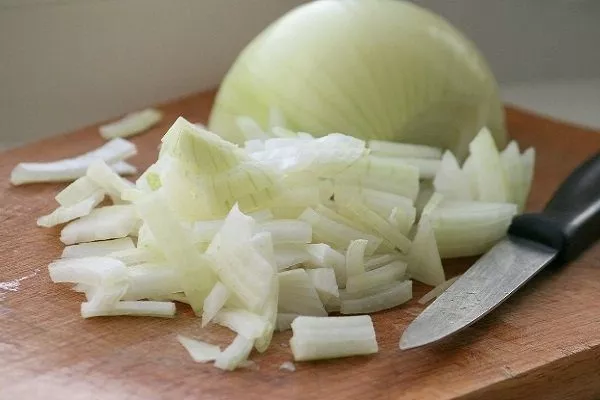
Thanks to its rich composition, the Stardust onion has a lot of mass useful properties, which allows the vegetable to be used in the following cases:
- Antibacterial action – destroys pathogenic microorganisms caused by viruses, bacteria, and other infections. These include respiratory diseases, diphtheria, tuberculosis, streptococcal infections, etc.
- Strengthening the immune system, thanks to which a protective barrier is built in the body.
- Expectorant effect – onion is used for pathologies of the upper respiratory tract.
- Saturation with useful vitamins in case of vitamin deficiency.
- Normalization of blood sugar levels in diabetes.
- Diuretic properties – for kidney diseases, edema.
- Removing harmful cholesterol from the body – in case of atherosclerosis.
- Skin whitening for pigmentation.
- Evens out skin tone, refreshes.
- Beneficial effect on the nasal passages during a runny nose.
Scientists around the world have conducted numerous experiments, which have revealed that freshly squeezed juice activates sperm production and has an aphrodisiac effect. And in ancient Egypt, white onions were considered the musk of the poor.
Pros and cons
Advantages Luke Stardust:
- excellent germination rates;
- high yield;
- minimal maintenance;
- disease resistance;
- use as a medicinal product;
- good shelf life and transportability;
- storage duration;
- the possibility of using both annual and perennial plants;
- excellent taste;
- ease of peeling the husk (since the scales are not tightly attached);
- early maturity.
Flaws:
- the need to buy seeds;
- if there is a lack of moisture, the taste becomes bitter;
- If over-watered, onions are susceptible to rotting.
Where is it used?
The Stardust bow has a wide range of uses:
- preparation of first and second courses, salads, appetizers;
- industrial drying;
- eating fresh heads and greens;
- preservation and pickling.
You can see the Stardust bow and learn its main characteristics in the video below:
Growing from seeds
Growing Stardust onions from seed is the primary propagation method, which requires preliminary preparation of the planting material. Seeds can be planted directly into open ground or using seedlings.
Pay special attention to the soil mixture—it must be fertile. For this purpose, it's best to purchase a special all-purpose soil mix from the store. Alternatively, you can mix garden soil with peat and compost. Before sowing, be sure to disinfect the soil by heating it in the oven for 10-15 minutes.
Seed preparation
Store-bought seeds don't need to be disinfected—they just need to be germinated. However, home-grown seedlings require special preparation, which involves several steps:
- Calibration, or rejection of material unsuitable for planting. Carefully inspect the seeds, removing any damaged parts. Place the seeds in warm water for 3-4 hours – healthy seeds will float to the bottom.
- Seed disinfection is a mandatory procedure, as seeds can contain pests, their larvae, and pathogenic microbes that cause diseases. Disinfection is carried out with a weak solution of potassium permanganate for 20 minutes.
- To speed up the germination process, you can soak the bulbs in a growth stimulant (these products are sold in stores).
- Warming. Pour water at 40 degrees Celsius over the seeds and let them soak for 30 minutes.
- Germination. Wrap the seed in a piece of gauze, place it on the bottom of a flat container (plate or saucer), and add a small amount of warm water. Be sure to cover the container with plastic wrap to create a greenhouse effect.
Until the seeds sprout, open the film daily to allow oxygen to enter. Otherwise, the seeds will become moldy. Airing for 20-30 minutes a day is sufficient.
Preparing containers
When developing the root system of onion crops, avoid elevated temperatures, as roots develop better at moderate temperatures. Therefore, seedling containers should have low thermal conductivity. Other requirements for container selection and preparation:
- the size must correspond to the installation location (window sill, table parameters);
- holes are made in the container on the sides and bottom to create drainage (liquid drainage);
- the container should be rigid, but light for ease of carrying;
- Before planting seeds, the container is treated with antiseptic agents.
You can plant seeds in plastic cups, peat pots or cassettes, wooden boxes, or plastic containers.
Planting seeds
The seedling sowing period is late February – early March. Step-by-step planting process:
- Place expanded clay stones in a prepared container in one layer;
- pour prepared soil on top (at least 15 cm), level the surface;
- make furrows 1-1.5 cm deep with a distance of 3 cm between rows;
- Sow seeds every 1-2 cm;
- sprinkle 0.5 cm of soil mixture on top;
- spray the surface with water from a spray bottle;
- cover with glass, lid or plastic wrap;
- Place the container on a sunny windowsill to allow seedlings to germinate (8-11 days is enough).
Care instructions
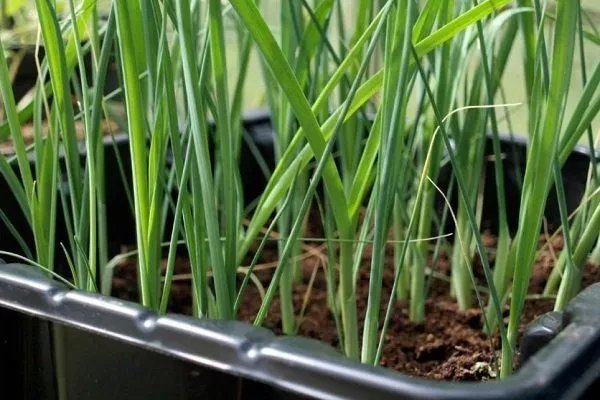
Until the first sprouts appear, be sure to care for the seeds: open the containers daily for ventilation, water them periodically with warm, settled water, and maintain a temperature of 22-24°C. Once sprouts appear, remove the covering and do not use it again. Further care consists of the following:
- Thin out if seeds were planted 1 cm apart. Leave 2 cm between them.
- The air temperature should not be below +18°C, above +20°C.
- Water as the substrate dries out – the soil should not be too wet or too dry.
- Stardust onions are sun-loving plants. They require 12 hours of daylight. While the seedlings are growing, light may be insufficient, so install lighting fixtures (LED, phyto-, or fluorescent lamps). Keep the distance from the lighting fixture to the seedlings 22-25 cm.
- Fertilize the plants a couple of weeks after sowing. Fertilize every 12-14 days. Ingredients: chicken manure (diluted with water 1:10), a mixture of 5 g potassium chloride, 20 g superphosphate, 10 g urea, and 10 liters of water.
- After three feathers appear, pinch the leaves back by 2/3 of their total height. This will prevent the seedlings from breaking.
- About 10 days before transplanting outdoors, harden off the seedlings to help them adapt to the new conditions. To do this, take the boxes outdoors daily, starting with 10 minutes and gradually increasing the time to 2 hours.
- ✓ Provide sufficient light for onion growth, at least 12 hours of daylight.
- ✓ Maintain air temperature within the range of +18°C to +20°C for optimal development.
Transplantation into open ground
Seedlings are planted in garden beds after 50-60 days. How to transplant:
- Water the seedlings generously in their containers. Carefully lift them out with a spatula. Then trim the roots back to 3-4 cm.
- Prepare the area—it should be well-lit and wind-free. Add humus or compost to the beds in the fall. In the spring, level the surface, pour hot water over it, and cover it with plastic wrap for three days.
- Before planting seedlings, scatter wood ash over the area and dig holes. Leave 20-30 cm between rows and 10 cm between seedlings.
- Place seedlings into the holes, cover with soil, and compact.
- At night, if frost is expected, cover the seedlings with plastic film.
- To maintain the moisture level in the holes, it is recommended to place mulch made of any natural material under the bushes - leaves, tops, weeds, hay, straw, sawdust.
Growing onion sets in open ground
Before planting the bulbs, prepare them by inspecting them for suitability (they should be free of damage, dark spots, signs of rot, or dryness). Be sure to remove the outer layer of the husk.
The bulbs are disinfected in a potassium permanganate solution, then washed and dried. Immediately before planting, the tops are cut off to speed up germination. It is recommended to trim the roots by 1/3 before planting, then place the bulbs in a mullein solution.
Selecting and preparing a site
The area for white onion sets should not be shaded or exposed to wind. Avoid nearby shrubs and trees. The preferred soil is black earth, sandy loam, or loamy, but with a neutral pH. If the pH is too high, the acidity can be neutralized with lime and wood ash. Clayey and heavy soil is unsuitable.
Site preparation rules:
- In the fall, immediately after harvesting, the plot is dug over to create a loose soil. Fertilizers—organic and mineral—are added to the soil. For each square meter, use 15 g of potassium chloride, 20 g of double superphosphate, 5 kg of humus, 8 kg of compost, and 0.5 kg of ash. If the soil is very poor, chicken manure can also be used.
- In spring, the garden is loosened, adding mineral fertilizers: ammonium nitrate (20 g per 1 sq. m), potassium chloride and superphosphate (the dosage is identical to the autumn feeding).
The landing process
After loosening the soil, level the garden surface with a rake, then dig holes according to a specific pattern: row spacing – 20 cm, distance between bulbs – 7-10 cm, planting depth – 4 cm. Then proceed directly to planting:
- Pour plenty of water into the holes and let it soak in completely.
- Plant the bulbs, cover with soil, and compact by hand.
- Sprinkle peat around the seedlings.
- To speed up rooting, humate is added in liquid form the next day, after which the area with the bulbs is mulched.
To grow onion sets for green foliage, the bulbs are planted close together, resulting in a high yield of plumes. 240-260 bulbs are planted per square meter.
Further care
When growing Stardust onions, not only the preparation and planting process is important, but also subsequent care, which largely determines the yield and germination of the planting material.
- ✓ Watering should be moderate to avoid rotting of the bulbs and the development of bitterness in the taste.
- ✓ Use mulching to retain soil moisture and reduce the frequency of watering.
Basic rules:
- Watering The soil should be moderately saturated to prevent it from becoming waterlogged or overdried. Average watering rates are once a week in moderate climates and every three days in extremely hot conditions. The recommended dosage for one square meter is 6-7 liters of water. Depending on the planting date, watering should be stopped completely around early July or late June (this is two weeks before harvest).
- Top dressing Fertilization is carried out three times per season. The first time, organic and mineral fertilizers are applied during the root growth period. Urea or saltpeter, slurry, or chicken manure are used. The second time, a complex composition is required to develop green mass—herbal infusions, wood ash, nitroammophoska, and other specialized mineral-based preparations (especially phosphorus, nitrogen, and potassium). The third time, top dressing is needed during the head formation stage, so superphosphate, potassium monophosphate, and wood ash are used.
- Weeding and loosening. The procedures are carried out after watering as the weeds grow.
- Mulching It is not necessary, but it is desirable, as it allows you to reduce the amount of watering and prevents the growth of grass.
Pests and diseases
The Stardust variety is generally resistant to diseases and pests, but under unfavorable conditions, they can be affected. Diseases and insects that attack:
- Downy mildew or peronosporosis. Signs include wilting of the foliage, the formation of light-colored spots, and a coating on the tops of the onions. As the disease progresses, the bulb is also affected. This fungal disease is treated with fungicides, but only if the onions are grown for bulbs. When the onion tops are the target, other methods are used. For example, completely stopping watering prevents further rotting. Potassium and phosphorus are added to the soil, which destroys the damaged elements.
- Gray rot It manifests as a putrefactive formation at the base of the neck and on the bulbs. Treatment is identical to the previous one, as this is a fungal disease.
- Bacteriosis – also a fungal disease, causing the head to rot, producing an unpleasant odor. Treatment is the same as the previous two options.
- Onion fly. Symptoms include damage to the feathers, as larvae are deposited there. The above-ground parts dry out and turn yellow, while the bulbs rot. Treatment involves chemicals (Aktara, Mukhoed, etc.) or folk remedies (wood ash, tobacco dust, moth solution).
- Onion thrips. The feathers change color and fade. Treatment involves destroying the affected bulbs and repelling the pest with tobacco dust, ground black pepper, and mothballs.
To prevent all pests and diseases, treat the soil and seed material with disinfectants and carefully inspect the bulbs before planting.
Harvesting and storage
The harvesting method depends on the purpose of cultivation. If you need the greens for personal consumption, they are cut as they grow. If the greens are being grown for sale, the plants are not cut but pulled out along with the bulbs, and then cleaned of any dirt.
Rules for collecting and preparing heads for storage:
- The weather should be sunny and warm, and a breeze is welcome, as the bulbs are laid out on the beds to dry.
- Try not to pull the roots out of the ground with force - this will damage the neck.
- Use a pitchfork or shovel to dig up the vegetable, then gently pull it out by the tops.
- Spread the heads out in a garden bed for 1-2 days, then shake off the remaining soil and remove the outer scales.
- The next step is long-term drying in a ventilated area. The onions can be laid out on the floor or a table, but be sure to turn them over once or twice a day. The best drying option is to tie the onions into small bunches and hang them. Drying time is 10-20 days.
- Next, trim the tops so that the neck length is 4-5 cm.
- The roots are also trimmed a little.
- After this, the onions are sorted—heads with damage, larvae, spots, and other defects are discarded. Very small onions are also set aside. These onions are not suitable for long-term storage; they are consumed immediately.
Storage conditions:
- Onions stay fresh in warm places for a long time, as they aren't exposed to high humidity. The optimal temperature is 18-22°C. Onions can be stored in wicker baskets, crates, cardboard boxes, or in a pantry. If you don't trim the tops, you can braid your hair, which are suspended.
- In a cool place—at temperatures between 0 and 3-4°C—vegetables should be stored in plastic or wooden boxes, sprinkled with sand or sawdust. The best location is a glazed balcony/loggia, cellar, or basement.
5 useful tips
Experienced gardeners are happy to share their experiences, so listen to their recommendations:
- For planting, use only high-quality material, be sure to disinfect it and follow all preparation rules.
- For rapid germination, the soil temperature should not be less than 10 degrees.
- Always disinfect the soil to kill pest larvae and weed roots. You can do this by pouring boiling water over the beds or spraying them with a potassium permanganate solution.
- Do not plant sets and seeds too deeply - this will slow down or even stop growth.
- When forcing feathers, watering is done more often than when growing for heads.
Reviews from gardeners
The most important thing for Stardust onions is maintaining a proper watering schedule. Avoid drying out or overwatering. Otherwise, this is an easy-to-grow plant that produces an excellent harvest every year. This onion is prized for its nutritional properties, excellent taste, and attractive appearance.