
The Stuttgarter Riesen onion variety has juicy flesh and a sharp flavor, and is a successful example of German selection. This onion is typically grown as a bulb and then planted in the summer to produce green onions. Growing this onion has its own unique characteristics.
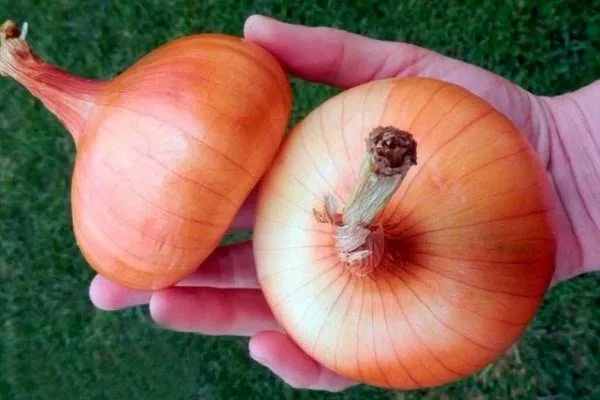
Onion variety Stuttgarter Riesen
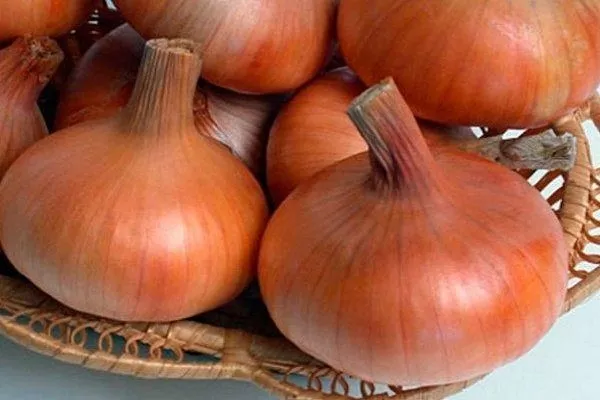
Frost-resistant Stuttgarter Riesen onion
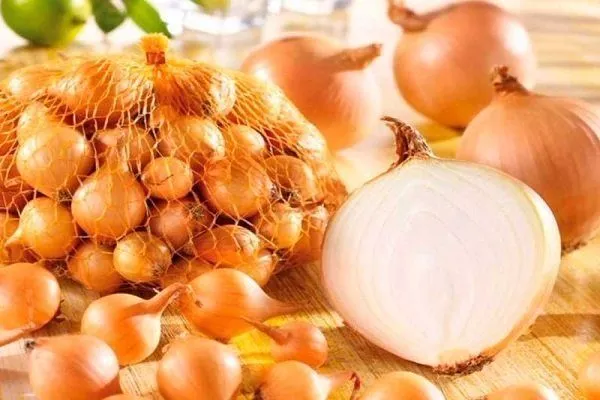
Stuttgarter Riesen onions have a sharp taste and a spicy aroma.
Description of the variety
Stuttgarter Riesen is characterized by a medium ripening time. Mature bulbs are round, slightly flattened, covered with a dense, slightly glossy husk. The color of ripe bulbs ranges from beige to yellow-orange, sometimes with a brown tint. The average weight of a single bulb is 90 to 160 g. In rich soils with ample watering, bulbs can weigh up to 250 g.
The tightly packed scales inside the head ensure excellent shelf life, allowing it to be stored well and retain its freshness for a long time. The feathers are long, dense, and juicy, with a beautiful, rich dark green color and excellent flavor.
Stuttgarter Riesen is relatively easy to care for and adapts well to the weather conditions of various regions of Russia. Growing it in greenhouses for greens during cold weather is also very popular and profitable. The ripening time for this vegetable will vary slightly depending on the climate.
Thanks to its excellent varietal qualities and simple cultivation techniques, this variety has earned well-deserved popularity. It is widely grown not only in Russia but throughout the world. The Stuttgarter Riesen onion is distinguished by:
- yield up to 8.5 kg per 1 sq. m;
- attractive presentation;
- wonderful taste;
- high content of vitamins C, B1, B2, B6, PP, E;
- long shelf life;
- sufficient frost resistance;
- resistance to common diseases.
The Stuttgarter Riesen onion variety is ideal for a variety of dishes, canning, drying, and freezing. Fresh, it has a classic, sharp flavor and a spicy aroma, essential in Russian cuisine.
Features of cultivation
It is not recommended to grow Stuttgarter Riesen onions in the same place for several years; it is better to change the site every season.
- ✓ Soil pH should be between 6.0-7.0 to ensure optimal nutrient absorption.
- ✓ The soil must be well-drained to prevent water stagnation and rotting of the bulbs.
For growing this vegetable, it's best to choose well-fertilized, fertile soils. A distinctive feature of this variety is that it can produce a good harvest even in poor, depleted soils. Although the bulbs will be smaller in size, their flavor will be fully preserved.
It is recommended to plant onions in the garden in places that were previously occupied by the following crops:
- tomatoes;
- cucumbers;
- legumes;
- cabbage;
- radish;
- zucchini.
However, it is not advisable to grow onions in the same areas after potatoes, as they will grow poorly and lack nutrients.
You can choose either autumn or spring for planting this crop.
There are 3 classic ways to plant onions:
- From seedsThis method is divided into autumn and spring sowing.
- SeedlingsThe seeds are germinated indoors and later transferred to the garden beds.
- SevkomSmall onion bulbs are planted outdoors in spring, late summer, or early fall. Winter onions typically produce larger bulbs, have a longer shelf life, and are more resistant to disease and insect damage than summer onions.
Growing from seeds
Winter onions grown from seed have a short maturation period—65-70 days from the first shoots appearing. This crop can be harvested much earlier than when planted in the spring.
- Test the seeds for germination by placing them in a damp cloth for a few days.
- Treat the seeds with a fungicide to prevent fungal diseases.
- Harden off the seeds by exposing them to varying temperatures for a week before sowing.
Sow seeds in early fall or late summer, starting around August 20th, to allow the plants time to grow and overwinter with a well-developed root system. This will help them survive frosts and allow them to grow quickly once warmer weather arrives. Onions planted in the fall are less likely to bolt.
Spring sowing can begin in April, when the threat of frost has passed.
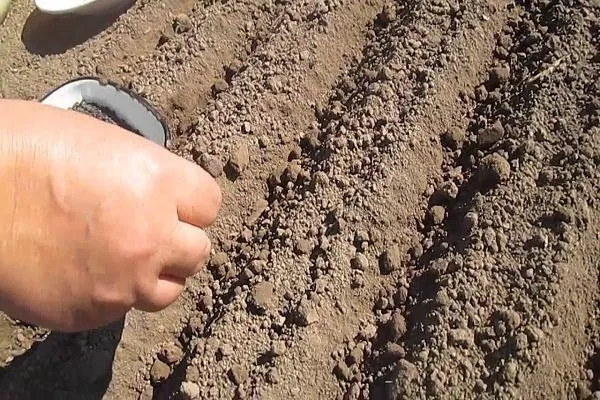
To make it easier to distinguish small seeds from the soil when sowing, they can be mixed with loose chalk. This will facilitate even distribution of the plants in the beds.
The procedure for preparing both winter and spring sowing is the same:
- Soak the seeds in room-temperature water for a day. This significantly speeds up their germination.
- After soaking, dry the seeds in the open air, laying them out on a paper napkin or clean towel.
- Make thin furrows in the soil, 2-3 cm deep, spaced 15 cm apart between rows. Then moderately moisten the soil.
- Sow the onions in furrows. Try to distribute the planting material evenly within the hole, 1 plant per 2 cm. Lightly sprinkle dry soil on top.
- Immediately after sowing, do not water the soil to prevent a crust from forming on the surface.
- After germination, thin the plants to allow them enough room to develop. Space the bulbs 7-10 cm apart.
Growing from seedlings
Stuttgarter Riesen can be sown for seedlings in early spring. Keep the seedlings in a bright room at room temperature. When the soil in the garden warms to 15 degrees Celsius, they can be planted outdoors. This method will yield an earlier harvest than sowing in spring.
Growing from onion sets
When planting onion sets, the ripening period of onion bulbs will be 100-112 days from the moment the first shoots appear.
For best results, choose medium and small onion sets that are uniformly colored and free of physical damage. Before planting, the onion sets:
- They are sorted, dried, and carefully inspected for pests and diseases. The harvest depends on the quality of the planting material.
- Soak in warm water for a day to activate germination.
- Before planting, disinfect the plants with a solution of table salt and potassium permanganate. Dissolve 2 tablespoons of salt in 5 liters of water and tint the solution with potassium permanganate until it's light pink.
Plant the onion sets in the garden bed 10-15 cm apart, carefully burying them about 3-5 cm deep, depending on the size of the bulbs. Leave about 20 cm between rows.
Growing onions for greens
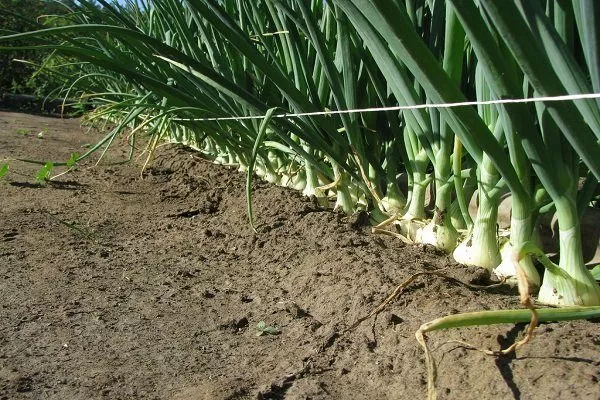
Stuttgarter Riesen onions are grown not only as bulbs but also for their green onions. Their dense, juicy, richly colored greens have a piquant, sharp flavor and a distinct aroma.
You can plant both onion sets and ripe bulbs for green shoots. In this case:
- When planting, make cross-shaped cuts on each bulb at the growth point;
- the bulbs are planted in the beds very densely, with practically no gaps;
- They also practice continuous planting, making wide rows with paths between them for ease of movement across the field.
Caring for the crop
Despite the low care requirements of onions, to achieve good results you need to take care of the plants.
Onion beds need to be regularly weeded and loosened to ensure that the plants have enough light and air to develop.
Plants need to be watered regularly. Avoid allowing the soil to dry out for long periods of time, as this can negatively impact the flavor of the onions and greens. Insufficient moisture causes the plants to look unhealthy, and the flesh and greens to become tough and excessively bitter.
Often, signs of a plant's depressed state appear due to a lack of certain microelements:
- nitrogen deficiency: the feathers become pale, unhealthy, and flabby;
- potassium deficiency: the plant gradually withers and becomes soft;
- Phosphorus deficiency: the onion darkens and dries out, starting from the tip of the leaf, and gradually dries out completely.
To feed the ripening vegetable, a traditional complex of fertilizers, both organic and chemical, is used:
- Before planting, it's advisable to add rotted cow manure or bird droppings to the soil. However, be sure to ensure that the organic matter is not fresh and shows no signs of insect infestation.
- After 14-6 days from the moment the first shoots appear, nitrogen fertilizer is added to the soil for better development of green mass.
- After 30 days, it's time for the second feeding. The plants are fertilized with a nitrogen-phosphorus preparation with added potassium.
- At the stage of the beginning of the formation of heads, a potassium-phosphorus mixture can be added to the soil in the beds.
- After harvesting, it is advisable to sow the area with green manure to restore the fertile layer.
Diseases and pests
The most common problems in the cultivation and storage of Stuttgarter Riesen onions arise from onion fly, neck rot and downy mildew.
Onion flies lay eggs in onion bulbs, causing damage and rot. This pest can be controlled with:
- treatment with disinfectant solutions;
- sprinkling the soil with ash and tobacco dust;
- alternating beds of onions with carrots, the smell of which repels the pest;
- autumn digging of the soil, as a result of which harmful insects and their larvae freeze to death in winter.
Neck rot and powdery mildew are common fungal diseases that affect bulbs during storage. To prevent them, thoroughly dry and sort bulbs before storing, and maintain optimal temperature and humidity conditions in the storage area.
Plants showing signs of disease should be burned to kill fungal spores. Preventative treatment of planting material with antifungal agents before the start of the growing cycle is also recommended.
Harvesting and storage
When stored for a long time under proper conditions, the Stuttgarter Riesen onion variety retains its beneficial properties. The vitamin and mineral content of the pulp remains high throughout the winter.
The Stuttgarter Riesen variety ripens in early to mid-autumn, depending on planting time and weather conditions. Onions should be harvested only in dry weather, after checking the forecast.
When harvesting, it's important not to damage the heads with a shovel or crush them. Any damaged areas can cause rot during storage.
The next stage of harvesting is high-quality drying. The bulbs are spread out on ventilated mesh trays or on a dry, level surface. Drying takes 7 to 12 days. The bulbs should be periodically stirred to ensure proper ventilation.
Onions should be stored in a dry, cool, and dark place. Fresh air must be available. Storage temperatures can range from 2 to 12 degrees Celsius, with a relative humidity of 70%. Avoiding sudden fluctuations is crucial. Onions can be stored in nets, vegetable crates, baskets, braids, or nylon stockings.
Growing Stuttgarter Riesen onions is a simple and hassle-free process for gardeners, and proper harvesting and storage will ensure a year-round supply of this tasty and healthy vegetable.