
To combine business with pleasure, you can grow chives in your garden. This plant will yield delicious green leaves with medicinal properties, and when it blooms, it will truly decorate the garden bed. This onion is easy to care for and will delight the gardener for years to come.
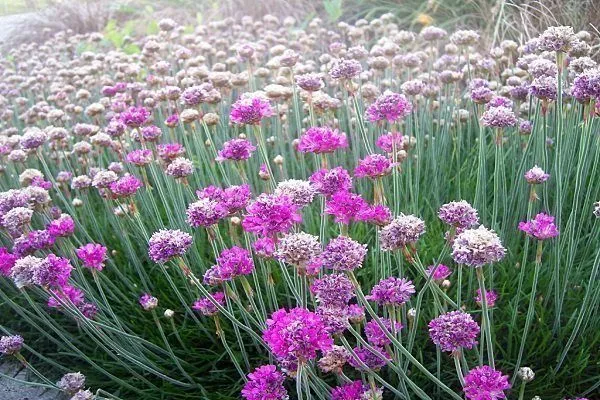
Chives are often used in landscape design.
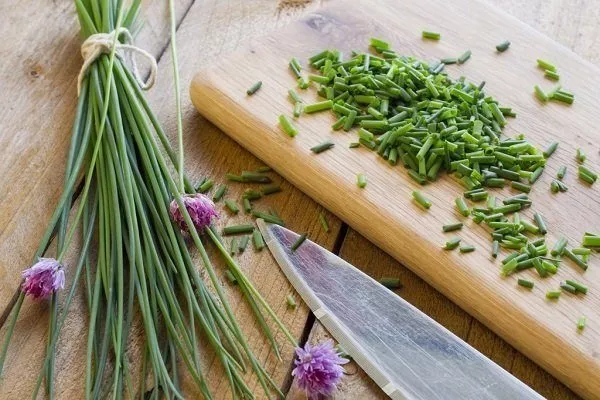
Chives are used to prepare salads and marinades.
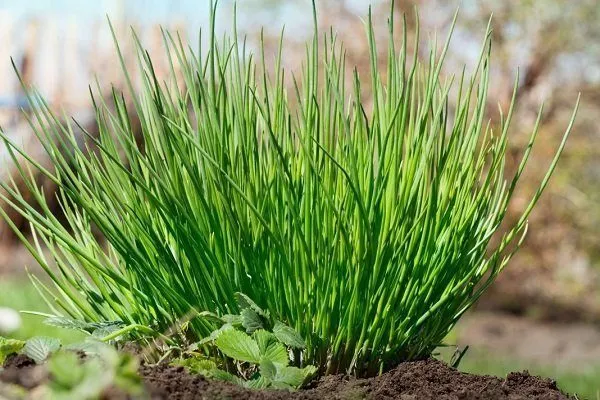
Chives are easy to care for.
Description of the bow
Schnitt onion's various names are "skoroda," "rezinetz," "sibulet," "winter bush," and "restaurant"—and that's not even a complete list of all the different varieties. It's also known as "Siberian chives," as it's often found beyond the Urals.
Schnitt translates from German as "cut onion." Regardless of its name, it is a perennial herbaceous plant of the onion family, cultivated as a medicinal and ornamental plant since the 16th century. Its use as a food crop is relatively recent. Its characteristics are listed below:
| Parameter | Description |
| Distribution area | Chives are found in the wild in northern China and Mongolia. They grow in river valleys and well-drained meadows where extreme frosts are rare.
The crop is grown on a large scale in Indochina, Europe, and North America. In Russia, this onion is most common in the Far East, northern regions, and Western Siberia. |
| Bloom | It begins in May and continues throughout the summer. Spherical inflorescences appear on the stalks. They consist of numerous umbels containing seeds. They can be any color, from purple to lilac to pink. |
| Plant characteristics | Chives are used to decorate gardens because they look very aesthetically pleasing and have the following structure:
|
| Characteristics of bulbs | The underground portion of the perennial plant acts as small false bulbs. They are ovoid, conical, or oblong in shape.
These fruits are colored purple-red (in some varieties - brown-white), covered with brown papery shells and ending in short rhizomes. These bulbs contain a large amount of amino acids, phytoncides, mineral salts, and vitamins (C, A, PP, B1, and B2). Their nutritional value is as follows:
|
| Seed material | In August, after flowering, the umbels produce a large number of small seeds, which later turn black. These can be used as seed the following season.
A flower stalk forms from each bulb in the second year after planting. In perennials, they appear annually. |
| Application | The bulbs have a pleasant taste, so they are widely used in cooking for salads and marinades. They are especially beneficial for cardiovascular diseases, colds, spring vitamin deficiency, and atherosclerosis.
Moreover, the vegetable has a positive effect on the functioning of the kidneys, liver, and gallbladder. Juice from fresh leaves can help reduce the unpleasant symptoms of hemorrhoids. This ornamental plant is also used in landscape design to add greenery to garden plots. Furthermore, this onion repellent repels onion and carrot flies and inhibits fungal spores that pose a threat to roses, fruit trees, and gooseberries. Its blooms attract plechs, which collect nectar from its sweet umbels. |
Types of onions
| Name | Intensity of stem formation | Leaf size | Frost resistance |
|---|---|---|---|
| Alpine (Russian) | High | Tender | Good |
| Siberian | Weak | Large and rough | Greater stability |
There are two subspecies of chives:
- Alpine (Russian)It produces more vigorous stems. Its bushes are covered with numerous delicate leaves, which immediately begin to grow back after cutting.
- SiberianUnlike the previous subspecies, it produces larger and coarser leaves. The bushes branch somewhat less strongly.
Both varieties of onion have good frost resistance, but the Siberian variety exhibits greater resistance to low temperatures.
During the growing season, the leaves of adult onions can withstand temperatures down to -8…-6°C, and young shoots – down to -4…-2°C.
Popular varieties
| Name | Ripening period | Productivity | Disease resistance |
|---|---|---|---|
| Bohemia | 3 weeks | 200 g per bush | High |
| Spring | 1 month | 6 kg per 1 sq. m | Winter-hardy |
| Honey plant | 3 months | Selective cutting | High susceptibility to downy mildew |
| Crocus | 2 weeks | Low | Resistant to spring frosts |
| Parisian | Early | Long dark green leaves | Pungent taste |
| Chemal | Compact | 7 kg per 1 sq. m | Frequent powdery mildew infestation |
There are approximately 20 chive varieties listed in the State Register of Breeding Achievements. The most popular are:
- BohemiaThe variety can be grown in the same location for up to four years. The first leaves can be harvested three weeks after the growing season begins. They have a pleasant, semi-sharp flavor. Bohemia produces a high yield of up to 200 grams of greens per bush. The variety exhibits disease resistance.
- SpringThe leaves can be cut a month after they begin to grow. The bushes will grow tall and vigorous. The leaves themselves are erect and covered with a thin waxy coating. They have a pleasant, mildly pungent flavor. This winter-hardy variety yields 6 kg per square meter after 3-4 cuttings.
- Honey plantThe leaves are ready for mass harvesting three months after they begin to grow. However, selective cuttings can be made throughout the summer. The dark green leaves with a waxy coating have a semi-sharp flavor. A disadvantage of the honey plant is its high susceptibility to downy mildew.
- CrocusAn early-ripening variety, the first leaf cuttings can be made as early as two weeks after the leaves begin to grow. They turn dark green and become covered with a waxy coating. This variety isn't known for its exceptional yield, which declines sharply after three to four years. Crocus is resistant to spring frosts.
- ParisianA pungent, early-ripening variety. It produces long, dark green leaves that are perfect for adding to salads and marinades.
- ChemalA fairly compact chive, its leaves reach up to 40 cm in length. They have a pungent flavor. A drawback of this variety is its frequent susceptibility to powdery mildew. The yield is high – up to 7 kg per square meter. A single plant can yield leaves weighing up to 600 g.
Planting methods and timing
This herbaceous plant can be grown in gardens as a perennial or replanted every 1-2 years. It can be cultivated in two ways:
- By direct sowing of seeds into the soilA more popular technique used for growing onions in a garden bed over several years. Seeds can be sown directly into unprotected soil.
- Through seedlingsA more labor-intensive technique that allows for an early spring harvest of succulent leaves in the very first year. Seedlings should be prepared approximately 25-30 days before planting, so that by the time they are transplanted to their permanent location, they will have developed leaves about 10 cm tall.
Regardless of cultivation method, chives can be grown either in spring or before winter. In the former case, planting should take place after the snow has completely melted, that is, from approximately the first half of March to the end of April. When planted in winter, sowing can take place from late September to early October.
- ✓ The optimal soil temperature for sowing seeds should not be below +5°C.
- ✓ To prevent young seedlings from freezing in regions with harsh winters, it is recommended to use agrofibre.
Preparatory activities
Before planting, both the soil and the planting material must be properly prepared. Let's look at how to do this step by step.
Soil preparation
Chives are undemanding of their predecessors, so they can be planted after almost any crop. It's advisable to plant carrots nearby, as these crops repel mutually dangerous pests.
The area itself should have moderate light. Avoid excessive sun exposure, otherwise the leaves will grow too coarse.
As for soil, onions prefer loose, well-drained soil. Moist, lime-rich sandy loam or loamy soils are ideal. Avoid growing onions in sandy soils, as they retain moisture poorly and are detrimental to the plant.
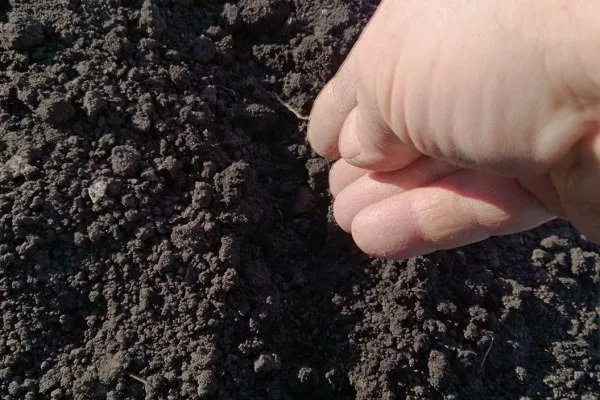
The designated area on the plot must be prepared in advance: for spring sowing, in the fall; for winter planting, in the summer. The following steps are required:
- Dig over the area and remove all weed roots. This should be done with the utmost care, as chives are often planted for many years.
- Lime acidic soils. Add sand to heavy clay soils, and 1 bucket of humus or 0.5 liters of compost per square meter to all other soils. As for mineral fertilizers, add 1 tablespoon of superphosphate and urea per square meter.
- In the spring, a few days before planting, fertilize the area with ammonium nitrate or urea (15-20 g per square meter). Then, water the beds generously at a rate of 2-3 liters per square meter and begin sowing.
Processing of planting material
Seeds, whether harvested at home or purchased, must undergo pre-sowing treatment. This involves the following:
- Pour warm water over the seeds and soak for 24 hours.
- Change the water regularly during soaking. This can be done 3-4 times.
- Remove the seeds, place them on a paper napkin or any fabric and dry.
Prepared seeds can be sown directly into the soil. After this treatment, they will germinate much faster.
When planting in winter, it is advisable not to soak the seeds, as they need to be placed in the soil completely dry.
Planting chives
Once all the preparatory work has been completed, you can begin planting the crop using the chosen method. We'll consider each option separately.
Direct sowing of seeds into the ground
The seeds should be sown into dug and loosened soil, following this pattern:
- width between rows – 15 cm;
- distance between holes – 5 cm;
- planting depth – 1-2 cm.
If the main harvest is planned for the second year and the plantings are to be removed, the seeds can be sown more loosely, with about 30 cm between rows. In strips, seeds should be sown closely, as they have a low germination rate.
After sowing, the furrows should be covered with soil and lightly compacted. Immediately before frost, the seedlings should be mulched using one of the following materials:
- sawdust;
- old newspaper;
- foliage;
- wood rot;
- spruce branches and rags.
When sowing in winter, the mulch must be raked away in the spring, immediately after the snow melts, so that the seeds can germinate.
When sowing chives with seeds in the first year, it is advisable to leave them alone so that by the next season they will get stronger and produce a good harvest.
Seedling method
This technology primarily involves growing strong seedlings in early March. The step-by-step instructions are as follows:
- Preparing the container and substratePrepare a spacious container about 20 cm deep and fill it with a nutrient-rich mixture of sand, humus, and turf ash. Leave 3-4 cm of space at the top. Carefully level the soil, lightly compact it with your palm, and water it generously with a watering can.
- SowingSow seeds, prepared as usual or soaked in a growth stimulant solution (such as Epine), at a depth of 1.5 cm, spaced 2-2.5 cm apart. Then lightly sprinkle them with substrate, spray with a spray bottle, and cover with glass or film.
- Creating an optimal microclimateWhen the first shoots appear on the 6th to 8th day, remove the covering material, move the seedlings to a sunny windowsill, and keep them at a temperature no higher than 18°C and humidity no lower than 70%. Drainage holes in the box as needed. If daylight hours are short (up to 12 hours), provide additional lighting.
- WateringWater the seedlings moderately as a dry crust appears on the surface of the substrate. The water should be warm.
- ThinningAt the stage of one true leaf, the planting should be thinned out, but it is best to sow the seeds more sparsely.
At the age of 50-60 days, seedlings with 2 true leaves should be transplanted into open ground, adhering to the following scheme:
- width between rows – 35-40 cm;
- the distance between seedlings in a row is 20-25 cm.
If the plant is actively growing, you can cut it 1-2 times in the first year. From the second year on, the onion will begin to flower, and the cutting frequency can be increased to 3-4 times per season.
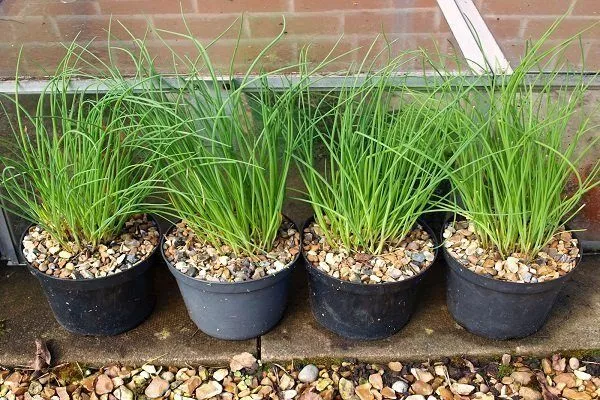
Chives can be grown on the balcony. The seedlings don't need to be transplanted into the ground. If you feed the seedlings 1-2 times a month with a solution of any complex fertilizer, you can begin harvesting the leaves as early as two months after the first shoots appear.
To learn how to sow chives for seedlings, watch the following video:
Planting care
Onions are unpretentious crops, but require timely implementation of basic agricultural measures.
Watering
The plant requires regular, abundant watering, although it can tolerate short-term dry soil periods. Water it thoroughly, but avoid waterlogging. Use settled, chlorine-free water.
If you delay watering, the onion leaves will become rough and lose their flavor. In this case, you'll have to cut off some of the harvest, water the remaining bed generously, then fertilize and water again.
Loosening and weeding
When grown for many years, these manipulations will only be necessary for 1-2 years. Subsequently, the plant will grow, form a dense turf, and begin to suppress weeds on its own. To prevent pests, it's still worth lightly loosening and weeding the soil after watering, removing all weeds.
Thinning
As soon as the seedlings develop 1-2 true leaves, they should be thinned out, leaving 8-10 cm between plantings in a row. During the second thinning, when the removed bushes are ready to be replanted, the distance should be increased to 15-20 cm.
If you plan to leave the onions in the same location for 3 to 5 years, leave 25-30 cm between the bushes. In this case, the distance between rows can also be increased to 40-50 cm.
Top dressing
There's no need to fertilize the crop during the first season. After the first harvest, you can feed the onions with the following fertilizers:
- mullein infusion (1:10);
- solution of bird droppings (1:10);
- wood ash (glass per 1 sq. m).
- The first feeding should be carried out 2 weeks after the emergence of seedlings, using a urea solution (10 g per 10 l of water).
- The second feeding should be carried out in the 3-4 leaf phase, using complex mineral fertilizer (20 g per 10 l of water).
- The third feeding should be carried out after the first cutting of greenery, using organic fertilizer (infusion of mullein 1:10).
It's best to apply this fertilizer after each cut. Afterward, rinse the plant thoroughly with clean water.
If there is no organic matter available, nitrophoska or azofoska can be applied to chives at a rate of 40-100 g per 1 sq. m. The second application of mineral fertilizers can be done only after 2-3 cuttings.
You can avoid fertilizing if the greenery grows actively every year.
Protection from diseases and pests
Proper agricultural practices will help protect your plant from diseases. In the worst case, they can be affected by:
- Downy mildew (peronosporosis)It attacks all parts of the plant, leaving behind large gray spots where garden dust accumulates. The leaves dry out rapidly, and eventually the entire plant dies. At the first sign of disease, the plant should be sprayed with a 1% solution of Bordeaux mixture with 50 grams of liquid soap added to a bucket of water.
- RustIrregular yellow-orange spots appear on the plant. The plant soon weakens and stops growing. To combat rust, affected plants should be treated with Topaz or Falcon.
If any signs of damage appear on the onions, immediately cut off the damaged areas and burn them. It's advisable to water the soil with 5% table salt, followed by clean water. In the worst case, a complete disinfection is required, followed by replanting the plants.
As for pests, spray the plantings with a solution of tobacco and liquid soap to repel them. Creosote-soaked materials can also be placed along the bed.
Propagation of chives by division
Under favorable conditions, chives grow vigorously, completely covering the soil. As a result, the crop's yield decreases, and older plants have difficulty growing their leaves. Furthermore, the leaves quickly wilt and develop an unpleasant flavor. To remedy this, the plant needs to be replanted, dividing the plants into several sections.
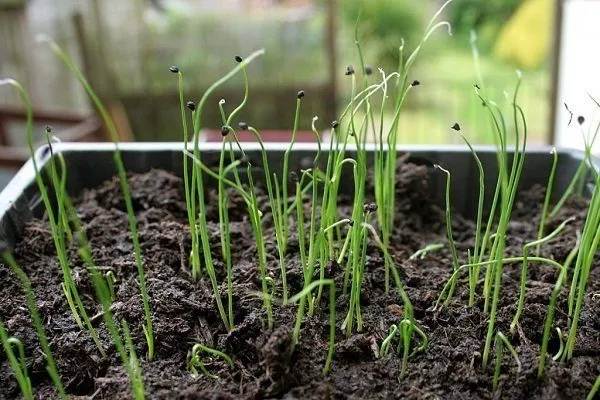
It's best to divide a plant when it's 2-4 years old, as it's vigorous and breaking apart the mother plant can yield numerous daughter plants. This procedure is best performed in the spring (no later than when the foliage begins to actively grow) or in early fall. Propagate in the following order:
- Water the bed generously.
- Dig up the plant with a shovel or pitchfork and remove it completely from the ground.
- Trim the leaves and roots of the dug out bush to a length of 12-15 and 5-7 cm, respectively.
- Break the bush into several pieces by hand or with a knife, leaving at least 8-10 bulbs on each.
- Immediately plant the resulting fragments in their new location, following the usual planting pattern. The optimal distance between them is 30 cm.
- Water the new planting generously, and in cold weather or before frost, mulch with peat or humus.
Transplanted plants will quickly produce new shoots.
Cutting greens and storing them
From the second year of cultivation, you can begin cutting the foliage. Depending on your needs, you can remove just a few pinnacles or almost the entire above-ground portion. Over the course of a season, you can make 2 to 4 complete cuttings of leaves that have reached a height of 25-40 cm.
The final harvest should be carried out no later than mid-August, so that the plant can accumulate the required amount of nutrients before the onset of cold weather.
If you don't plan to collect seeds, the young shoots can also be eaten along with the leaves. When harvesting, it's best to leave the short stems on the plant. During flowering, the stems become too tough and unpalatable, so when growing onions for food, it's best to remove the flowers immediately.
Harvested greens can be stored for up to 2 weeks. To extend this shelf life, place them in plastic containers or bags and store them in the freezer. The greens can also be dried.
Landscape design
Chives can be grown purely as an ornamental plant, planted in a strip in a flowerbed or as a border along a flower garden. By dividing a single mature plant, you can create a border up to 2 meters long. It will turn green in just seven days after planting, and with regular trimming, you can maintain the vibrant greenery of the border.
The plant not only decorates the garden plot, but its aroma also attracts beneficial insects to the garden – bees, bumblebees and butterflies.
This crop can be combined with low-growing flowers. These include:
- daisies;
- violas;
- primroses.
If the chives' leaves begin to turn yellow during flowering, the bushes should be completely cut back to a height of no more than 5 cm. New shoots will appear within 5 days, and the plant will quickly regain its attractive appearance.
Chives are both a vegetable and an ornamental plant, perfect for decorating your garden, and for harvesting their juicy, sweet-spicy, and highly aromatic green tips in early spring. Despite this versatility, this plant requires little care and can grow in the same spot for many years.