
The Shetana onion is popular among gardeners because it produces a high yield and is relatively easy to grow. This onion is rich in beneficial properties and requires little care, so even a novice gardener can grow it.
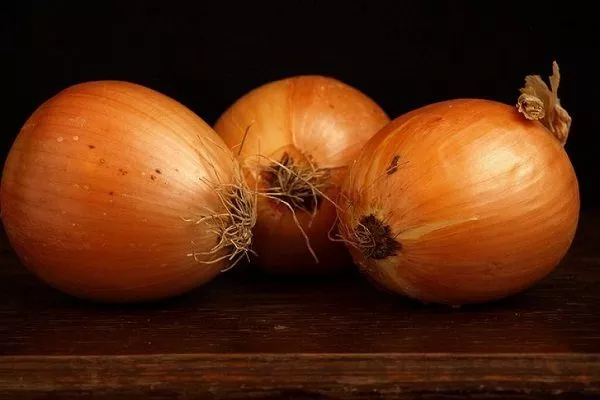
Shetan's Bow
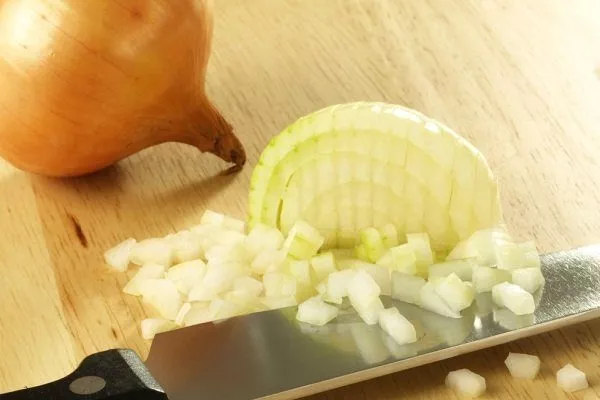
The Shetana onion has white and juicy flesh.
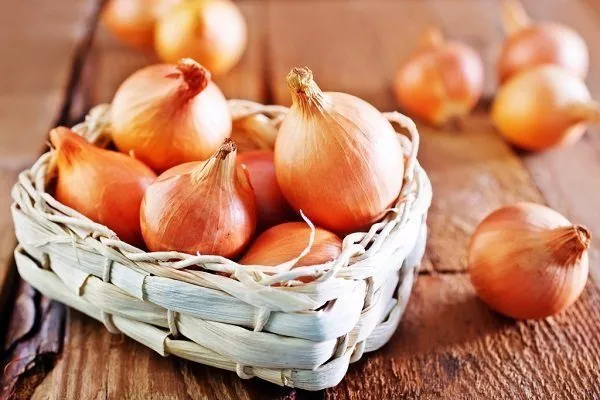
Shetana onion tolerates frost well
Description of the Shetan bow
This variety was bred in the Czech Republic specifically for outdoor cultivation. It tolerates frost well and ripens quickly.
Appearance
Visually, the Shetana onion is easy to distinguish from other onion varieties. It has a number of distinctive characteristics:
- The bulb has a round shape.
- The husk is a characteristic yellow color. The inside of the husk is whitish.
- The leaves are quite long and greenish with a bluish tint.
- The neck thickness is average.
- The flesh of the Shetana onion is white and juicy.
- The approximate weight of one onion is 45 g. If the vegetable is grown from sets, then the onion weighs more - from 65 to 85 g.
Taste qualities
Many gardeners choose the Shetana onion for its flavor. It has a distinctive, semi-sharp flavor, making it a versatile vegetable. Therefore, it is widely used in cooking for first and second courses, cold appetizers, and salads. It is also used for pickling, baking, and canning.
Ripening time and yield
The Shetana onion is a mid-early variety, so the first harvest can be collected approximately 2.5-3 months after planting. This ripening period is typical for seed sowing. If you plant sets (i.e., small, one-year-old onions) in the ground, the harvest will germinate much faster—in approximately 1-2.5 months.
Yields directly depend on the region where the variety is grown. For example, if onions are grown in central Russia, approximately 5,000-5,800 kg of produce is harvested per hectare. In southern regions, the yield is much higher – from 20,000 to 25,000 kg per hectare.
Composition and properties
Onions are rich in nutrients and microelements. They include the following components:
- Saponins are complex compounds of plant-derived glycosides.
- Onions contain both glucose and fructose.
- Pectin substances.
- Iron.
- Potassium.
- Fluorine.
- Vitamins in the form of ascorbic acid and tocopherol.
- Essential oils. They give the vegetable its characteristic aroma.
Shetan onion helps treat and prevent anemia. This property is due to its high iron content.
Potassium improves heart function and strengthens the heart muscle, while vitamins restore immunity. Onions are also a natural antiseptic and are used to treat colds.
Pros and cons
Many gardeners choose this variety due to its positive aspects, which include the following:
- the vegetable can be planted either with seeds or with sets;
- early and high yield;
- onions are frost-resistant;
- does not require special care;
- has a long shelf life, retains its marketable appearance and all its beneficial properties even after several months of storage;
- It can be grown for sale, as it withstands long-distance transport well.
Preparing for landing
To harvest a healthy and abundant crop of Shetana onions, careful preparation is required before planting.
Soil preparation
Prepare the soil in open ground in the fall. It's best to choose a sunny location for the bed. It shouldn't be flooded by groundwater, otherwise the entire crop could be lost.
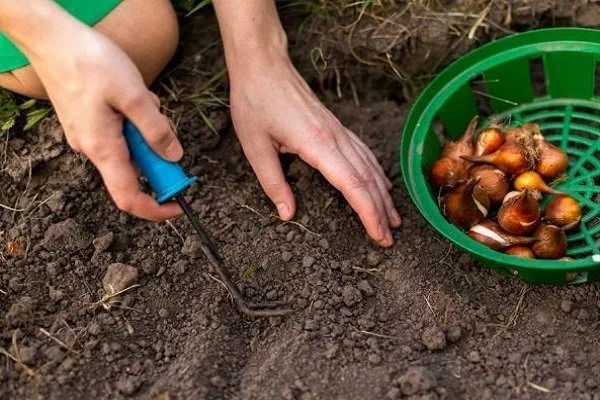
Shetan onions should be planted in areas previously occupied by nightshade crops. An excellent bed is one previously occupied by potatoes, cucumbers, greens, radishes, and tomatoes, as well as early cabbage varieties. Avoid planting onions in areas previously occupied by garlic, carrots, radishes, and other onion varieties.
Remember that this variety prefers loose, fertile soil with a neutral pH. If the soil is acidic, apply lime. This requires dolomite flour or regular ash.
- ✓ The optimal soil pH level should be between 6.0 and 7.0 to ensure best nutrient absorption.
- ✓ The soil must have good drainage to prevent water stagnation and rotting of the bulbs.
To determine your soil's acidity yourself, take a small amount of soil, dissolve it in a glass of water, and dip it into a litmus paper. If the paper turns red, the soil is acidic, and if it turns green, the soil's acidity is normal.
Before digging the soil, do the following:
- Add compost or humus to the soil (the use of fresh manure is unacceptable).
- Next, mineral fertilizers are added, which must contain three components: sulfate, potassium and complexes, for example, nitrophoska.
In addition, sand, turf soil, and peat are added to improve the quality of the soil.
Before planting seeds to obtain future seedlings, also prepare the soil in advance:
- Take the soil and disinfect it with potassium permanganate or a fungicide solution. Water the soil with these solutions.
- Next, mix the soil with sand, peat and humus.
If desired, the soil can be pre-steamed before planting the seeds.
Selection and preparation of seed material
It's best to purchase Shetana onion seeds and sets from specialized stores, as these are the only places where high-quality seedlings are sold. However, before purchasing, try to inspect the seeds and seedlings as carefully as possible.
To select high-quality onion sets, pay attention to the following:
- The seedlings should have all the characteristic features of an onion, that is, a yellowish skin and white, juicy flesh.
- Before purchasing, smell the bulbs. They should have a distinct onion scent. If they smell moldy, they're not suitable for planting and won't produce a harvest.
- Pick through the bulbs with your fingers. They should make a soft rustling sound. If there's no rustling sound, the seedlings are damp, which shouldn't happen.
- Avoid purchasing onion sets after winter. During frosts, the seedlings freeze, and after thawing, the bulbs will rot. Such planting material will not yield any results.
- If you don't plan to plant onion sets in the near future, you shouldn't buy bulbs with roots and leaves already appearing.
- The seedlings must be clean, without spots, scratches, or whitish coating.
- The ideal bulbs for planting are those that have a diameter of about 1-2 cm.
If you have a long time left before planting after purchasing the bulbs, dry them and place them in cloth or paper bags. Store them in a location where the temperature does not rise above 10-15°C. Humidity should be between 70 and 75%. If the bulbs have already sprouted, store them in the refrigerator, preferably on the bottom shelf or in the vegetable drawer.
Before planting, the onion sets must be prepared. This process begins two weeks before planting:
- Step one. Dry the seedlings and transfer them to a warm place. The temperature should be around 20°C.
- Step two. Eight hours before planting, keep the seedlings at a temperature of 30 to 35°C. This temperature can be achieved by placing a heater near the seedlings.
When choosing seeds, always pay attention to the expiration date of the planting material. Avoid buying seeds whose expiration date is near or during the planting season. Remember that Shetana onion seeds have a shelf life of 3-4 years. If you can count the seeds, keep in mind that there are approximately 200-250 seeds per 1 gram.
Seeds are also prepared before planting. This involves the following steps:
- Step one. Inspect the material and select the strongest, undamaged, light-colored seeds.
- Step two. Disinfect the seeds with a weak solution of potassium permanganate. Then, soak them in the solution for no more than twenty minutes.
- Step three. Place the onion seeds in a growth stimulant. Use "Zircon" for this.
Planting technologies and timing
Shetana onions are suitable for planting both in spring and before winter. Each season requires its own techniques. Planting timing also influences a high yield, and it's important to follow these guidelines.
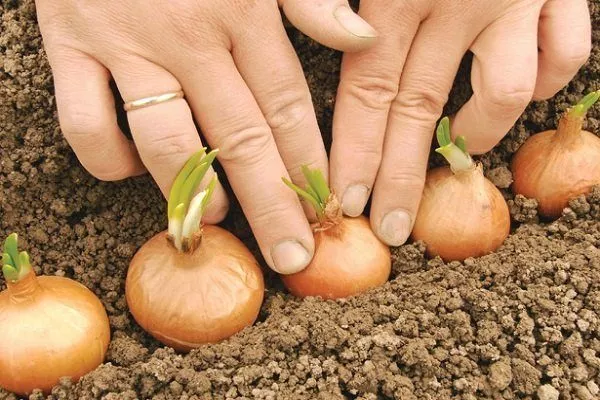
Winter planting
Winter onion planting depends on the region. But the key is to plant the onion sets 14 days before the onset of frost.
Pre-prepared bulbs are planted in the ground to a depth of 4 cm. The bulb diameter should not exceed 1 cm.
The soil should be ready for planting two weeks before the planting procedure.
After the seedlings have been planted, the soil is mulched—covered with any organic material, such as sawdust, wood shavings, or dried leaves. Alternatively, the soil can be covered with an inorganic material, such as small pebbles or gravel.
Planting onion sets in spring
Spring planting of Shetan onion sets is slightly different from winter planting. The vegetable is planted in May, when the soil has warmed up sufficiently. The soil and seedlings are prepared shortly beforehand. Two hours before planting, the future beds are thoroughly watered.
For spring planting, bulbs with a diameter of 2 cm are required. They are planted in holes to a depth of two centimeters. After planting, water the holes again. The soil is mulched.
When planting in spring and winter, ensure that there are approximately 5-7 cm between holes and 15 to 20 cm between rows. This ensures that the vegetable receives the necessary warmth and sunlight required for healthy growth.
Care instructions
To get a large and healthy onion harvest, you need to carefully care for the vegetable.
Watering
Newly planted onion sets are watered with small amounts of water as the soil dries. Once hot weather sets in, the onions are watered twice a week. Established onion sets require watering once a week.
Onions should be irrigated in the evening or early morning, when the sun is not as strong. Otherwise, the plants will suffer severe sunburn. If it rains, you can skip watering the beds. Stop irrigating the seedlings a couple of weeks before harvest.
Loosening and weeding
As soon as the first shoots appear in the beds, the soil needs to be loosened and weeded regularly. Carefully weed the area between the holes, being careful not to disturb the seedlings.
If weeds appear between the beds and around the holes, remove them by hand. Loosen the beds after watering or rain. Following this sequence will prevent weeds from growing and harming the future harvest.
Fertilization
During the harvest period, it's necessary to fertilize the soil. Three applications are required during the growing season:
- First feeding. It is carried out after the first shoots emerge, 14 days after planting. Nitrogen fertilizer is added to the soil.
- Second feeding This occurs 14 days after the first one. You will need organic fertilizer in the form of bird droppings. You can also use a solution of mullein (cow manure).
- Third feeding. This is done when the bulb is already forming. Use a mineral mixture containing high proportions of potassium and phosphorus.
- The first feeding should be carried out 14 days after germination, using nitrogen fertilizers in the amount of 20 g per 1 m².
- The second feeding should be carried out 14 days after the first, using a mullein solution in a ratio of 1:10.
- The third feeding should be carried out at the time of bulb formation, using a mineral mixture with potassium and phosphorus in the amount of 30 g per 1 m².
Pest and disease control
As mentioned earlier, Shetana onions are not resistant to downy mildew. The disease attacks the vegetable if there are sudden temperature changes or increased humidity in the garden.
Among other things, onions are susceptible to disease and pests due to improper preparation of planting material and planting in the ground.
If signs of disease are detected, do not spray onions with fungicides. After treatment with such agents, it is dangerous to eat them. Instead, use traditional methods. Whey is effective in a 1:10 ratio. The bacteria in the whey kill any fungal diseases on plants and are completely safe for humans.
Onion flies can also damage onions. It's not the adults, but their larvae, that are dangerous. Once they get into the soil, they eat the tops of the onions. To prevent this, spray the beds with strong-smelling products. Mint, valerian, and pine needle infusions are suitable for this purpose.
Harvesting and storage
Flattened onion leaves are the main sign that it's time to get out into the garden and harvest. But don't put it off too long, otherwise the bulbs will take root, making the vegetable impossible to preserve.
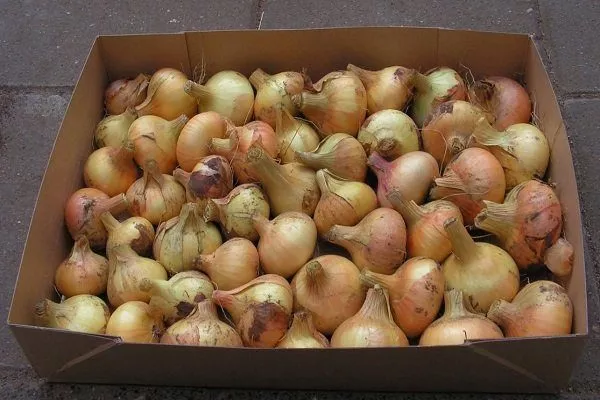
Shetana onions store well. However, this requires some care and adherence to a few rules:
- Once the harvest is complete, dry it in a sunny location. You can also spread the onions directly on the beds, lined with newspaper.
- Next, sort through the onion bulbs, discarding any that are blemished.
- Trim the leaves, leaving about 10 cm.
- Dry the onion vegetable for several more days at a temperature of +25 to +10˚С.
- Afterwards, store the harvest in boxes for permanent storage. Alternatively, hang the onions in nets. A basement, cellar, or apartment balcony is suitable for this purpose.
The room where the onion harvest is stored must be maintained at a constant temperature between 0 and 5°C. You can store it at room temperature, but make sure it doesn't fluctuate sharply. The room containing the onions should be regularly ventilated.
Helpful tips
Shetana onions are easy to grow and care for. However, despite this, consider these tips to help prevent disease, achieve a bountiful harvest, and ensure perfect flavor.
The main problem when growing onions is yellowing of the leaves. If this appears in July, don't worry – it's a sign of impending ripening. If the yellowing occurs earlier than this month, this is no longer normal. This indicates several problems:
- Parasites. To protect your onions from pests, regularly loosen and weed the soil in your garden beds. Carrots can help keep pests at bay once and for all. Plant them next to your onions, and their scent will repel any pests. Wood ash also helps. Add it to the soil in addition to your regular fertilizer.
- Insufficient nitrogen in the soil. To do this, apply fertilizer containing this component. Regular watering is necessary for nitrogen to be absorbed into the soil. However, if the weather is rainy, the nitrogen can sink too deep into the soil, and the onion root system will not receive the necessary component.
- Not enough moisture. If your onion leaves turn yellow, water them a little more frequently than recommended. Avoid letting the soil dry out, especially in hot weather.
Also, take note of the following helpful tips:
- To eliminate yellow leaves, use a mixture of table salt (half a cup), one ampoule of ammonia, and three handfuls of ash. Add all ingredients to 10 liters of water and mix thoroughly. Water once every 10 days until the yellowing disappears completely.
- You can prevent pests with this solution: 0.5 tablespoon iodine, 0.5 kg baking soda, and 2 packages of potassium permanganate. Add all ingredients to water (you'll need 5 liters). Then, dilute the resulting mixture with water at a ratio of 1:10 and water the onions.
- You can repel pests with sand and mothballs. Sprinkle the mixture between the beds.
Shetan onions often become bitter. This is due to insufficient watering. Be sure to irrigate the upcoming harvest, otherwise the dry matter content in the soil increases, causing an unpleasant taste. Fertilizers containing phosphorus are also needed to maintain the taste.
Reviews from gardeners
The Shetana onion is a wonderful variety of onion, popular among gardeners. Growing this vegetable is quite easy both in spring and winter. All you need to do is properly prepare the seed and care for it. Helpful tips from experts can help prevent diseases and even improve the onion's flavor.