
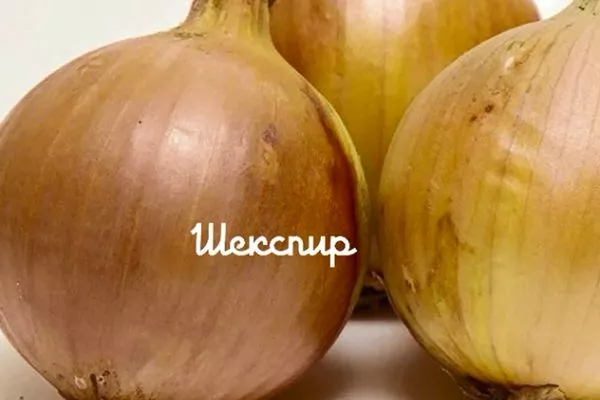
Shakespeare onion is a new onion variety intended for fresh use. Its main advantages are bolting resistance and frost tolerance. The winter crop is planted in the fall using turnips, while the sets are sown in the spring and even in summer.
Origin
In 2015, Dutch breeder David E. O'Connor completed the development of a new winter onion variety called Shakespeare. That same year, Allium Seeds UK Ltd, a British company specializing in agricultural crop sales, applied to register this variety with the Russian State Register.
After successfully passing variety testing, Shakespeare was officially registered for cultivation in the Central Federal District in 2019. This British company initiated the registration process.
Introduction to the variety
Onions have an unusual flavor and are considered a biennial plant, ripening 75 days after planting. They boast a 100% germination rate and abundant harvests.
External characteristics of the bush and fruits, their taste and purpose
Shakespeare is characterized by excellent keeping quality and the following varietal characteristics:
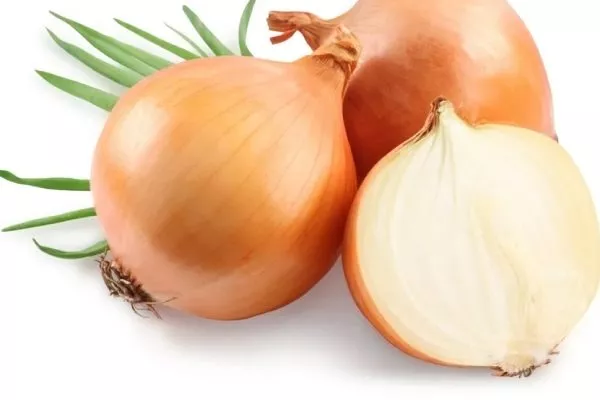
- the shape of the bulbs is regular and round;
- the head type can have one, two, or three rudiments;
- the color of the surface scales is yellow-brown, slightly gradient;
- the husks are arranged in two or three rows;
- the weight of one onion is about 100 g;
- the pulp is juicy and white;
- the neck of the tubers is of medium diameter;
- the density of juicy scales is at a high level;
- dry scales are firmly connected to juicy elements.
When ripe, the yield
By growing onions according to proper agricultural practices, you can reap a bountiful harvest just two months after the first green shoots appear. The yield can reach 3.3-3.5 kg per square meter. With large-scale cultivation, approximately 295-300 centners are harvested per hectare.
Chemical composition, trace elements and vitamins
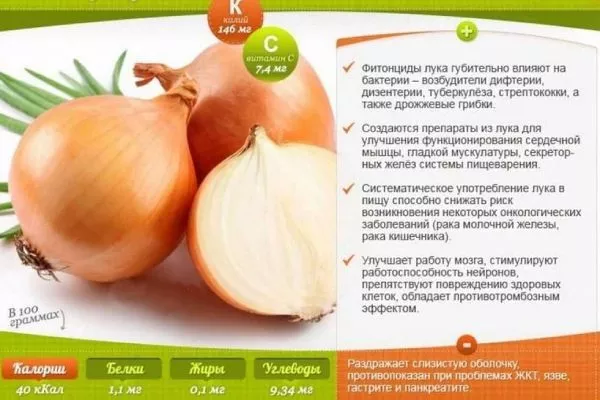
Onions contain beneficial phytoncides and vitamins that support the immune system. They are also rich in citric and malic acids, essential oils, and sugar.
If you look at the nutritional value per 100 g of product, you will see the following figures:
- caloric content – 41 kcal;
- proteins – 1.4 g;
- fats – 0.2 g;
- carbohydrates – 8.2 g;
- water – 86 g;
- dietary fiber – 3 g.
Chemical composition per 100 g includes:
- vitamin C – 10 mg;
- vitamin E – 0.2 mg;
- vitamin B6 – 0.1 mg;
- vitamin PP – 0.2 mg;
- vitamin B5 – 0.1 mg;
- calcium – 31 mg;
- magnesium – 14 mg;
- potassium – 175 mg;
- phosphorus – 58 mg;
- sulfur – 65 mg;
- iron – 0.8 mg;
- zinc – 0.85 mg;
- iodine – 3 mcg.
Onions not only add flavor and aroma to culinary dishes, but are also used medicinally as a preventative measure against colds and flu. They have beneficial properties for heart health, improving blood flow to the body and regulating cholesterol levels.
Eating onions helps stabilize blood pressure. Furthermore, Shakespeare onions stimulate gastric acid secretion and increase appetite.
Disease resistance
This variety has good resistance to various diseases. However, to prevent problems such as brown spot, powdery mildew, and downy mildew, it is advisable to apply copper oxychloride. This requires 30 g of the substance per 10 liters of water.
Onion flies can also be a problem. To combat them, it's recommended to spray tobacco powder over the crops.
Regions for planting
The bulbs have a strong skin, allowing them to withstand even low winter temperatures, making them suitable for cultivation even in the frigid Siberian climate. These bulbs easily tolerate temperatures down to -18 degrees Celsius, and if there's heavy snowfall, they can survive winter temperatures as low as -23 degrees Celsius.
The Shakespeare variety is ideal for cultivation in central Russia, including the Bryansk, Ivanovo, Kaluga, Vladimir, Moscow, Ryazan, Smolensk, and Tula regions. In practice, this variety also thrives in the Urals and Siberia.
Key advantages and disadvantages of the variety
The Shakespeare winter variety has a number of advantages for which it is chosen and appreciated by experienced gardeners.
Positive qualities of this variety:
The only downside of the Shakespeare onion is its limited shelf life, but this quality is also typical of other winter varieties.
How to plant Shakespeare onions in winter?
October is the ideal time to plant onions, while for seeds, you need to wait until late August. Initial planting dates may vary depending on the region's climate. For example, in Siberia, bulbs are planted closer to the end of September, while in the south, they are not planted until after October 15-20.
Features of planting work for this variety:
- Plant individually or in groups of 3-4 bulbs in a hole. The top of the bulb should be buried a maximum of 3 cm deep.
- The distance between rows of onions is 18-22 cm, and between individual holes – no more than 9-10 cm.
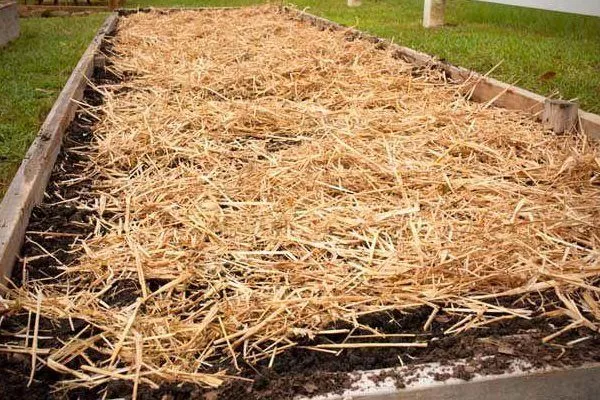
- After planting the onions, cover them with a layer of mulch made from a mixture of humus and peat, then cover them tightly with dry hay or a similar mulch material. In warm climates, additional insulation is not necessary.
- In the spring, remove the hay so that the bulbs can warm up better and begin to germinate under the influence of sunlight.
Avoid planting sites in low-lying areas to avoid flooding from melting spring waters.
Further care
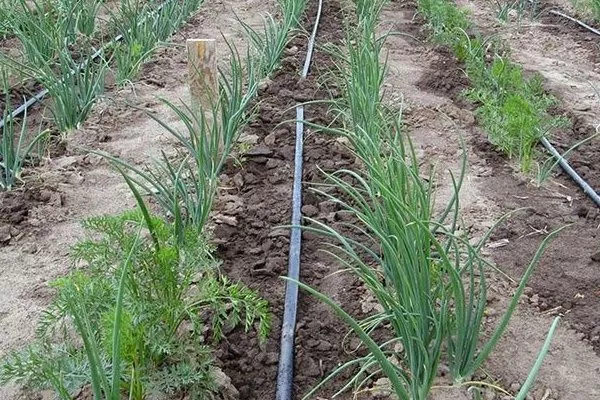
A key aspect of plant care is regular watering. In the spring, after the snow melts, soil moisture will be sufficient, so watering should begin after the hot weather stabilizes—in the south, this is mid-May. If there is frequent spring rain, the watering schedule may need to be adjusted.
Other parameters of care procedures:
- How to moisturize. For the Shakespeare variety, morning or evening watering is optimal. Spray water along the edges of the plantings to avoid the bulbs. In the lead-up to harvest, 20-25 days beforehand, avoid watering completely.
- How many times to feed? Three fertilizer applications are required during the season. The first is applied at the time of bulb establishment. Two weeks later, a second application, preferably containing potassium and phosphorus, is followed. The third application is applied 30-35 days before harvest; mineral complexes are most suitable.
It is preferable to use liquid fertilizers.
Caring for Shakespeare onions includes weeding and loosening the soil. Perform these tasks after watering. When mowing weeds, it's important to remove them by the roots, being careful not to damage the bulbs.
Harvesting and storage
Dig up the bulbs in dry, sunny weather. If it's rainy, be prepared for the bulbs to take a very long time to dry.
How and when to collect?
Onions are harvested approximately 2.5 months after the green shoots appear. Yellowing of the leaves indicates they are ready to harvest. A sunny, cool day is best for harvesting. The bulbs are removed from the ground with forks and lightly cleaned of any remaining soil.
Next, it's laid out on the beds for initial drying. After a few hours, it's moved under the shelter of a shelter, where it's allowed to dry completely. This process takes about two weeks, during which time the roots and foliage are removed.
Storage features and shelf life of the variety
To preserve vegetables for a long time, place them in a cool place, such as a cellar or basement, where the temperature should be between 0 and -1 degrees, and the humidity should be between 75 and 90%.
At home, it's best to maintain a temperature of 18-22 degrees Celsius and humidity around 70%. Good ventilation is essential to prevent rot and mold.
Methods of onion propagation
The Shakespeare variety is typically propagated by seed. Seed size varies depending on the desired outcome. Small seeds, less than 1 cm in diameter, are used to grow onions with an especially long shelf life. Planting larger specimens can result in a good harvest for spring consumption.
Difficulties in growing
Shakespeare onions are generally easy to grow, but beginners may encounter some difficulties. To avoid this, follow these tips from experienced gardeners:
- Monitor the soil moisture level – do not allow water to stagnate or dry out.
- Remove weeds promptly, as they can spread diseases and rob plants of nutrients.
- Protect your onion beds from winter frosts immediately before they arrive. If you cover them too early, before the onion plants have become consistently cold, they will not survive the winter well.
To ensure your onions bear fruit well, use this “simple” recipe:
- Fertilize your onions with yeast. Use 500 g of bread crumb.
- Fill it with 10 liters of hot water.
- Add 500 g of fresh green grass and the same amount of yeast by weight.
- Leave the solution for 48-50 hours.
- After this, use it to water your plants.

Reviews of the Shakespeare variety
The winter onion variety Shakespeare boasts good frost resistance and is ideal for autumn planting. This onion has gained popularity among gardeners due to its lack of bolting and ease of cultivation. With simple gardening recommendations, Shakespeare promises a truly impressive harvest.