
Setton is a Dutch onion variety. It has excellent characteristics and many advantages, including high yields. This can be achieved by following all cultivation guidelines, starting with preparing the planting material.
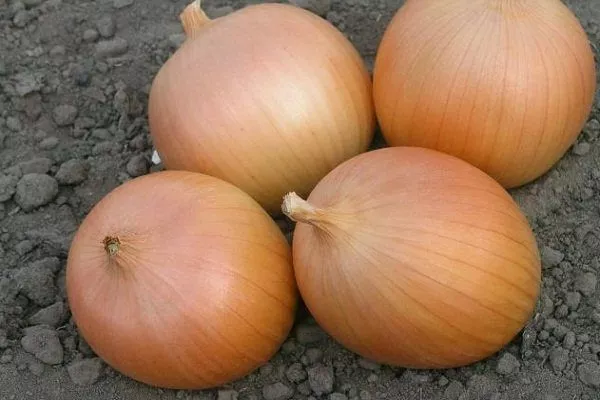
Bow Setton
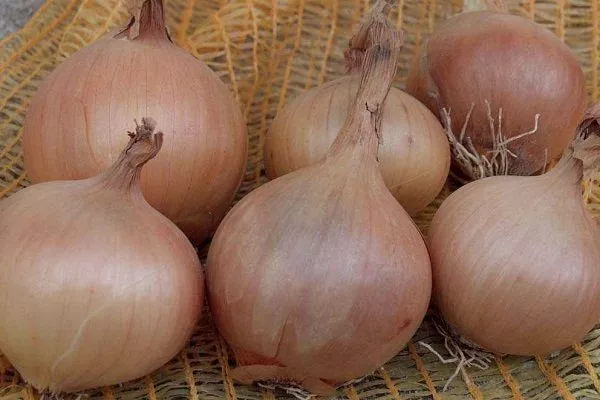
Setton onions have a semi-hot taste.
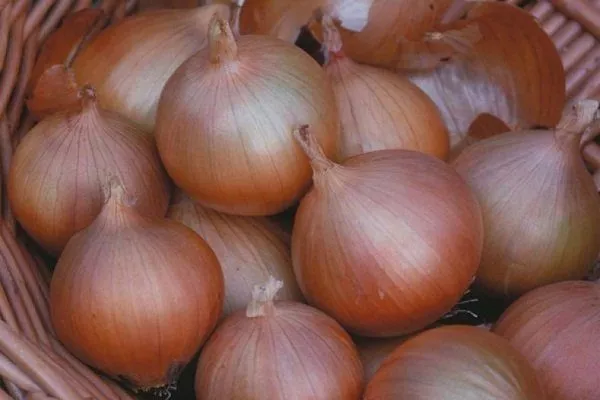
Onion Setton is disease resistant
Characteristics of the variety, advantages and disadvantages
Setton is a mid-late onion variety. It takes 110 days from germination to harvest.
Main characteristics of the culture:
- round shape of the bulbs, tapering towards the tail;
- narrow neck;
- average fruit weight – 110 g;
- feather height – up to 45 cm;
- dense yellow-brown dry scales;
- juicy white flesh;
- pleasant semi-sharp taste.
Setton is a biennial crop. The first year, the seeds produce sets, and the marketable turnips will only be produced the following year. This should be taken into account when choosing a planting method.
The basis for the development of Setton was another variety of onion - SturonThe following advantages were achieved as a result of selection work:
- undemanding to soil characteristics;
- high yield – up to 6 kg per 1 sq. m;
- ripening almost 100%;
- high resistance to the formation of arrows;
- cold resistance – in the absence of snow, the crop tolerates temperatures down to -15 degrees;
- high resistance to diseases;
- long-term storage – with proper organization up to 7-8 months without sprouting or rotting;
- good preservation of the sets - even during winter storage they do not dry out;
- versatility – onions are used fresh, for heat treatment, and for canning.
Optimal conditions for growing
Setton is considered an unpretentious variety, but to obtain all its benefits, certain conditions should be met:
- Well-lit areaThe beds should be located in an open, level area.
- Distance to groundwaterIt's best to arrange the beds on elevated ground or make them raised. If the groundwater table is close, ensure drainage is adequate.
- Optimal temperature conditionsSetton should be planted in open ground when the air warms up to 12 degrees.
- Compliance with crop rotation rulesOnions should not be returned to their original location for at least three years. They also should not be planted after other bulbous plants. It's best to choose beds after cucumbers, nightshades, and green manure. Garlic and carrots are poor choices for onions.
Setton can be grown in different types of soil, but to ensure a good harvest it must meet certain requirements:
- sufficient fertility;
- pH level 6.5-7;
- moderate moisture.
- ✓ The soil should be well drained to avoid water stagnation.
- ✓ The optimal soil structure is light loamy, providing good aeration for the roots.
Best for growing onions Loamy soil is suitable. During autumn digging, it is recommended to add organic matter. This can be rotted manure or humus. 3-5 kg of fertilizer is required per square meter. Another option is potassium-phosphorus fertilizer.
Landing
Setton is planted in open ground as seedlings or seeds. Each method has its own specific timing and specific requirements.
Seedlings
Growing Setton seedlings from seeds takes an average of 55 days. In northern regions, they should be sown in the last week of March or the first week of April. For southern and temperate regions, these dates can be shifted by 2-3 weeks.
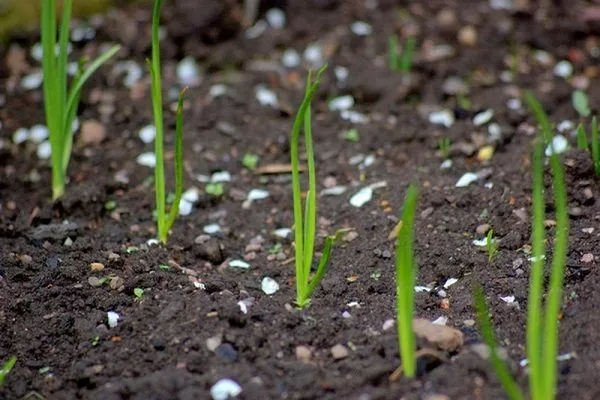
You need to act according to the following algorithm:
- Culling of planting materialSoak the seeds in warm water for 3 hours. Discard any seeds that float to the surface, as they will definitely not germinate.
- DisinfectionTo do this, you need to prepare a solution of potassium permanganate. It should be light pink, and be sure to wait until the crystals are completely dissolved. Soak the seeds in the solution for half an hour.
- Warming upAfter soaking in a potassium permanganate solution, the planting material should be rinsed and immersed in hot water for 40 minutes. The temperature should not exceed 45-50 degrees Celsius.
- CoolingThe seeds should be removed from the hot water and immediately placed in the refrigerator or cold water. Half an hour is sufficient.
- Germination of seedsThis step is optional, but it speeds up the process. The seeds should be placed in a damp cloth and moistened periodically. It will take no more than a week for seedlings to appear.
- Preparing containers for seedlingsYou can use boxes or containers; peat tablets and cassettes are convenient.
- Soil preparationYou can buy a ready-made mixture or prepare it yourself. The soil should be fairly loose. Make furrows in it, working them 1 cm deep. Leave 4-5 cm between rows.
- Sowing seedsThere is no need to deepen or compact them; it is enough to sprinkle a centimeter-thick layer of soil on top.
- Maintaining a temperature of 18-20 degreesWhen the first shoots appear, the temperature should be reduced. The optimal daytime temperature is 14-15 degrees Celsius, and the nighttime temperature is 10-12 degrees Celsius.
- WateringSeedlings need to be watered generously, but without allowing water to stagnate. Watering frequency should be adjusted based on soil moisture. It is recommended to water seedlings 2-3 times a week at first, then 3-4 times a week.
- FertilizerAfter two weeks, the seedlings will need fertilizing. Use liquid organic fertilizer. After two to three weeks, apply another fertilizing. This time, use mineral fertilizer.
- HardeningThis should begin 1-1.5 weeks before planting the crop outdoors. Initially, it's enough to take the seedlings outside for 15 minutes. At home, they can be placed on an open balcony or window. Gradually increase the time spent outdoors.
Before planting, the seedlings need to be watered generously. The beds need to be prepared in advance – loosened and leveled. Make furrows and water them thoroughly. Leave 20-30 cm between rows.
It is recommended to trim the roots and leaves of the plants. They should be shortened by a third. Carefully plant the bushes in the prepared furrows, leaving 10 cm between them. Carefully cover them with soil.
Onion sets
Sevkom Setton can be planted in spring or fall. Spring planting should be done at temperatures above 12 degrees Celsius. This typically occurs in early May, or in southern regions, late April. Planting can also be done immediately after the snow melts, if you use additional agrofibre or film.
Winter sowing is done in October-November. The exact planting time depends on the regional climate. Sets should be planted 2-3 weeks before the first frost, when temperatures drop to 5 degrees Celsius.
Regardless of the chosen sowing time, you need to prepare the beds in advance and follow the following algorithm:
- Culling of planting materialUse only strong bulbs free from disease and mechanical damage. It is recommended to sort the planting material into three groups by size.
- Warming up the seed onionsThe material should be kept for 1-2 weeks at a temperature of 40 degrees.
- DisinfectionUse a solution of potassium permanganate. Simply soak the onions for 15 minutes, then let them dry.
- Preparing the holes, deepening them by 4-6 cm. 10 cm should be left between holes, and 25-30 cm between rows.
- Planting onion setsThe planted bulbs need to be covered with soil.
When planting in winter, use a covering material. It can be removed in the spring when the weather warms up.
Caring for crops in open ground
Setton requires standard care, which consists of a range of procedures.
Watering
Setton should be watered regularly. Watering is especially important at the beginning of the growing season, before the bulbs begin actively growing. It is recommended to water the plant once a week, and double the frequency during dry periods. No more than 10 liters of water should be used per square meter.
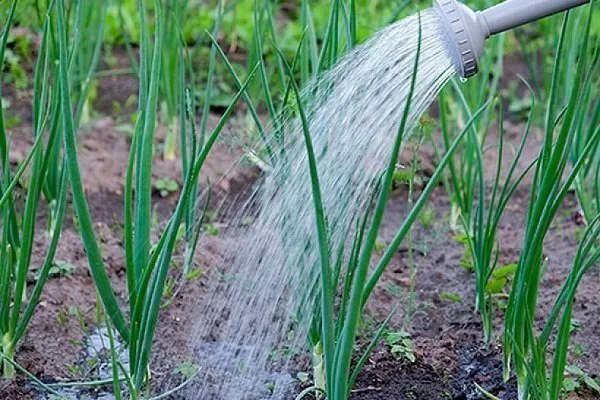
The bulbs begin to ripen around the beginning of July. During this time, watering should be moderate.
Watering should be stopped completely 2 weeks before harvesting.
Loosening and weeding
Loosening the soil makes it more breathable and helps it retain moisture longer. Loosening the soil should be done regularly, at least once every two weeks. It is recommended to do this after watering or heavy rain. Avoid loosening the soil too deeply; 3 cm is sufficient.
Weed control is essential for caring for any onion variety, including Setton. Weeding is best combined with loosening the soil. This work should be performed as needed.
Plant residues must be removed from the garden bed, and to prevent diseases and pests, it is better to burn them.
Top dressing
In addition to applying fertilizer during autumn tillage, several additional applications are required after planting the crops in open ground. The first application should be two weeks after sowing. At this stage, it's best to use organic matter. Liquid fertilizers are preferred. One liter of liquid is required per square meter.
The second feeding is carried out 3-4 weeks after the first fertilization. At this stage, it's best to use mineral fertilizers. Ammonium nitrate and potassium sulfate are effective. 15 g of fertilizer is needed per square meter.
Wait the same amount of time before applying the third fertilizer. This time, the fertilizer should contain calcium.
During the month before harvest, only natural fertilizers are allowed. Chemicals should be avoided during this period.
Pest and disease control
Setton can be affected by downy mildew, neck rot, and rust. Affected plants should be removed immediately and burned. Treat remaining plantings with a fungicide.
Copper sulfate is a fungal disease preventative. Spraying is done when the stems reach 15 cm. Dissolve 1 teaspoon of the solution in 10 liters of water and add 1 tablespoon of liquid soap. This amount is enough to spray 20 square meters; only the leaves need to be treated.
To combat the common pest, onion flies, dusting or spraying with tobacco dust can help. Mixing it with black pepper and ash is also effective.
Harvesting and storage
The optimal time for harvesting is late summer. Onions should be ripe but not over-ripe, so it's important to remember the ripening time for each variety. A sign that the crop is ready for harvesting is the mass lodging of the leaves. Harvesting should begin in good, dry weather.
The harvest should be stored in a dry, warm place. The optimal temperature is 0-4 degrees Celsius. The room should be well-ventilated, and the humidity level should not exceed 75%.
Seton is best stored using traditional methods, such as braiding it or stuffing it into nylon stockings. You can also use various containers, such as wooden crates, cardboard boxes, or special nets. Scattering the harvest on shelves is also effective and easy.
Onions in storage should be inspected periodically and spoiled specimens removed. This helps reduce crop losses.
- ✓ High resistance to bolting even with temperature fluctuations.
- ✓ Ability to be stored for a long time without loss of taste.
Growing Setton is no more difficult than other onion varieties. Following all the rules will ensure a good harvest and long storage. It's important to properly prepare the planting material and prevent diseases—some are only discovered during storage.