
The Seryozha onion is a hybrid Welsh onion with strong, thick false stems. It has a wonderful salad flavor and excellent growing characteristics. This onion will compete with onion varieties in the summer, significantly enriching the diet and providing green-lovers with a whole cocktail of nutrients.
History of creation and regions of cultivation
The Seryozha F1 variety is an interspecific hybrid obtained by crossing onions and Welsh onions. It was developed by breeders from Agrofirma Sedek LLC and NPP Sedek-Domodedovo LLC. The hybrid has been approved for cultivation since 2007.
Hybrid onion Seryozha successfully ripens in all climates of the country, in particular, it is recommended for cultivation in the Northern, Northwestern, Central, Volga-Vyatka, Central Black Earth Region, North Caucasian, Middle Volga, Lower Volga, Ural, West Siberian, East Siberian, Far Eastern
Description of the Seryozha chives
Onion 'Seryozha' has an upright, tall, and vigorous rosette, reaching a maximum height of 1.5 m. The leaves are bluish-green and covered with a dense waxy coating. The pseudostem, thick and long, lacks anthocyanin coloration. The scapes reach a height of 50-55 cm.
Bulbs (medium-sized) form when plants are sparsely planted. If plants are densely planted, bulbs are absent. The average weight of one plant is 200-300 g.
Purpose and taste
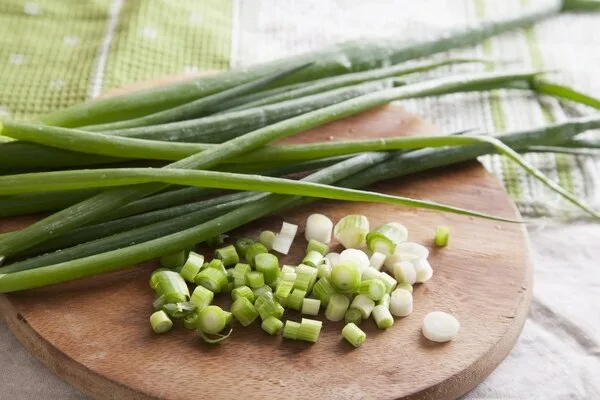
The leaves are juicy, have a very delicate texture, and a semi-sharp-sweet flavor. This salad onion is grown for its greens (springs) for fresh consumption. It is widely used in cooking, but mainly in salads. In terms of vitamin C content, the Welsh onion significantly surpasses the bulb onion.
Characteristics
The Seryozha F1 Welsh onion is an early-ripening variety. It takes 80 to 110 days from germination to harvest. This variety is characterized by good winter hardiness and high yield. One square meter yields up to 2.8 kg of onions.
Pros and cons
The Seryozha Welsh onion has many advantages and is virtually free of drawbacks. This domestic variety will satisfy even the most demanding gardener.
Advantages:
The main disadvantage of the culture is its increased need for light and its love of moisture-intensive soils.
Landing features
To get a bountiful and high-quality harvest of greens, it's important to plant Welsh onions correctly—at the right time and in the right location. They can be grown from either seeds or seedlings.
Landing features:
- The planting site should be well-lit, and the soil should be fertile, well-drained, and low in acidity. Welsh onions grow worst in low-fertility clay soils.
- It is recommended to cultivate the soil before sowing. In the fall, the soil is dug over, and fertilizers and other components are added to improve the soil structure and adjust the acidity. The optimal pH level is 6.5-7.5.
- In poor soils, organic matter and mineral fertilizers are added during tillage. Compost and peat are added to heavy loams, and black soil is added to sandy soils.
- Sowing of seeds into the ground is carried out in April (the exact timing depends on climatic conditions), when the soil warms up to approximately +10°C.
- The best predecessors for chives are legumes. It's not recommended to plant these onions after tomatoes, as this doubles the risk of fungal infections.
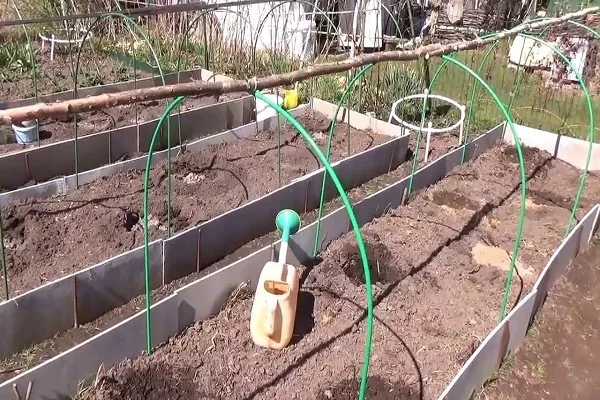
- It's best to prepare the soil in the fall for spring planting. If this isn't done in time, the work is carried out a week before planting. After digging, the area is harrowed and the beds are formed. The row spacing is 30 cm.
Growing onion seedlings from Seryozha
Welsh onions can also be grown using seedlings. This is commonly used to obtain an earlier harvest, as well as in regions with very late springs and short summers.
Features of growing batun from seedlings:
- The substrate used to fill the seedling containers is prepared from rotted manure and garden soil mixed in equal parts. Wood ash (150 g) and superphosphate (120 g) are added to the mixture.
- To prevent the development of pathogenic microorganisms that cause onion diseases, the soil is watered with a strong solution of potassium permanganate.
- Disposable plastic cups, clay dishes or containers can be used as planting containers.
- The day before sowing, wrap the onion seeds in damp cheesecloth. Before sowing, keep them in the refrigerator for two days at 6°C. Then dry the seeds and plant them in shallow furrows. The optimal depth is 1 cm. Leave 3-4 cm between adjacent seeds. Cover the seeds with soil and water with a spray bottle.
- The seeds take a long time to germinate—2-3 weeks. During this time, until the seedlings emerge, soil moisture must be carefully monitored. The seeds are periodically watered and ventilated. After germination, the seeds are moved to a well-lit area, and the plastic covering is removed.
- The seedlings are watered regularly, provided with supplemental lighting if necessary, and hardened off shortly before transplanting into the ground. Gradually, the hardening period is increased to 24 hours, after which the seedlings are planted in the ground.
- The seedlings are planted in rows, keeping intervals of 10-15 cm. After 3-4 days, the onions begin to actively grow.
How to care
To achieve a good harvest, Welsh onions require regular care. The Seryozha variety is easy to care for; it requires watering, loosening the soil, and responds well to fertilizing.
Care features:
- Nitrogen-containing fertilizers and phosphorus-potassium mixtures are typically used for fertilizing. After seedlings emerge, nitroammophoska or ammophoska, dissolved in water, are applied per square meter, respectively. Welsh leeks are fertilized twice per season.
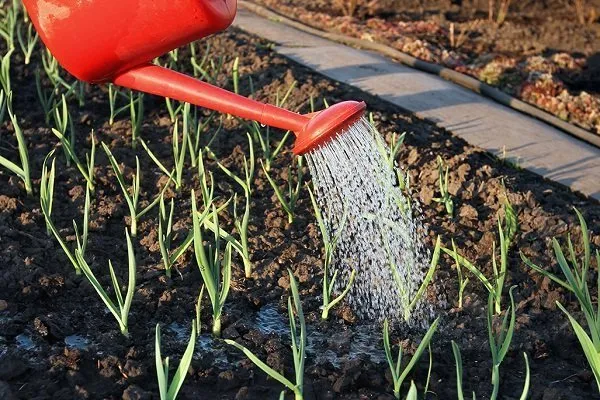
- Watering frequency is adjusted depending on precipitation. If it's hot and there's no rain, water the onions 2-3 times a week; during rainy weather, watering is suspended.
To ensure lush greens, gardeners can water chives more frequently—4-5 times a week. Avoid allowing the soil to dry out when growing green onions. - The beds are loosened approximately twice a week. While the surface soil is loosened, weeds are removed. Weed and loosen the turf in the evenings, being careful not to damage the surface roots.
- Thin the seedlings as needed. Leave about 5-7 cm between adjacent plants. If the plants are too dense, the onions will not develop properly.
- Around the end of June, trim the lower leaves. Only the young foliage is left so that the plant will continue to produce new leaves.
Welsh onions can be transplanted. To do this, carefully dig up the plant, being careful not to damage the roots, divide it into sections, and move it to the new location.
Diseases and pests
The Seryozha F1 onion is disease-resistant, but under unfavorable conditions, it can be susceptible to powdery mildew and downy mildew. These diseases cause the leaves to die. They can be controlled with copper sulfate, but environmentally friendly and safe biological preparations are preferable.
Among the most dangerous pests affecting Welsh scallions are onion weevils, onion flies, and onion moths. If chemical insecticides must be used, the greens should not be eaten for a period of time.
Harvesting and storage
Unlike onions and shallots, Welsh onions are grown primarily for their greens. They are harvested when they reach a height of about 20-25 cm. The cut is made at ground level, the leaves are tied into bunches, cooled, and stored in the refrigerator, wrapped in plastic.
Reviews
The Seryozha onion is an excellent choice for those who have decided to plant Welsh onions in their garden. This variety boasts excellent flavor, high yield, and resilience to various challenges.