
Red Baron is one of the most popular red onion varieties. It boasts an appealing flavor, can be grown in a variety of conditions, is easy to maintain, and is suitable for long-term storage. It's a salad variety, so it's especially good fresh.
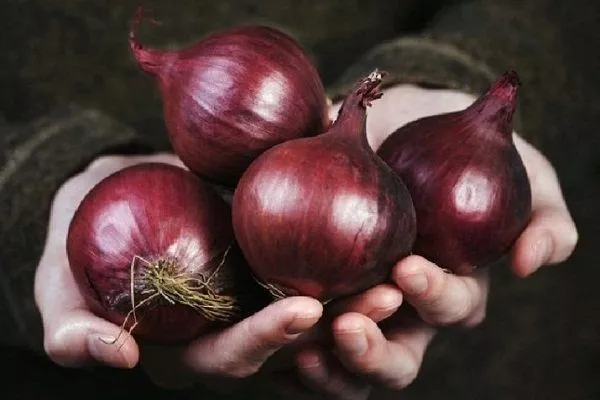
Onion Red Baron
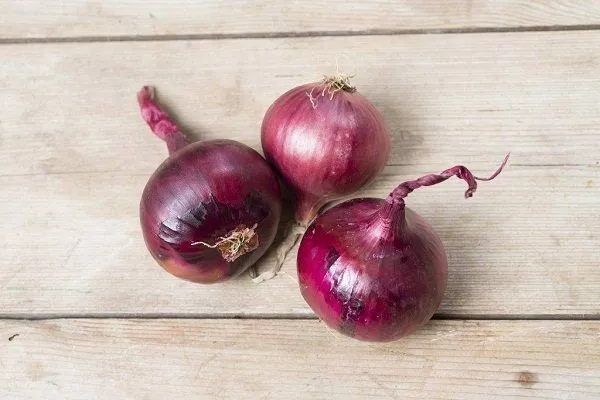
Red Baron has a sweet taste.

Red Baron has a long shelf life.
Characteristics of the variety, advantages and disadvantages
The popularity of the Red Baron bow is largely due to its characteristics:
- ripening period is mid-early – the harvest can be collected 3 months after planting;
- deep red dense husk;
- juicy and fleshy white-pink pulp with purple-red veins;
- round and slightly flattened shape;
- the weight of the bulbs can reach 120 g;
- The taste is sweet and slightly spicy, the aroma is pleasant.
Red Baron is noted for its high content of vitamin C and other beneficial elements. This variety also has other benefits:
- rapid ripening;
- good yield – up to 3 kg per 1 sq. m;
- undemanding to growing conditions;
- resistance to early frosts and droughts;
- good immunity, low susceptibility to diseases;
- long-term storage;
- versatility – can be used fresh, for canning, and heat treatment.
Optimal conditions for growing
To obtain a high yield of good quality, it is important to create optimal conditions for the crop:
- Stable weather for planting in open groundThe threat of night frosts should have passed, so work should be scheduled for fine days. Optimal daytime temperatures are 0-5°C, and nighttime temperatures should not drop below -3°C.
- A sufficiently illuminated and dry areaIt is better to choose a raised area or make raised beds.
- Compliance with crop rotation rulesOnions thrive after green manure, cucumbers, nightshades, and legumes. Any members of the onion family are undesirable predecessors. Also unsuitable is the plot after carrots and celery.
- ✓ Ensure the soil pH is in the range of 6.0-7.0 for optimal growth of Red Baron onions.
- ✓ Check the drainage of the area: water should not stagnate for more than 4 hours after watering.
Red Baron thrives in a variety of soil types, but adequate looseness and drainage are essential. It thrives best in light soil. Site preparation should begin in the fall.
When digging, you need to add per 1 sq. m:
- wood ash - glass;
- humus – 0.5 buckets;
- superphosphate – 2 tbsp. l.;
- peat – 2 buckets.
When digging in the fall, you can choose a different scheme:
- wood ash – 1 tbsp;
- compost or humus – 3 buckets;
- nitrophoska – 1 tbsp. l.;
- superphosphate or potassium nitrate – 1 tbsp.
In the spring, immediately after the snow melts, ammonium nitrate is used. One teaspoon of fertilizer per square meter is sufficient.
Landing
It's recommended to plant Red Baron when the soil has warmed to 4-5 degrees Celsius. This typically occurs in late April or early May in southern and central regions, and late May or early June in northern regions.
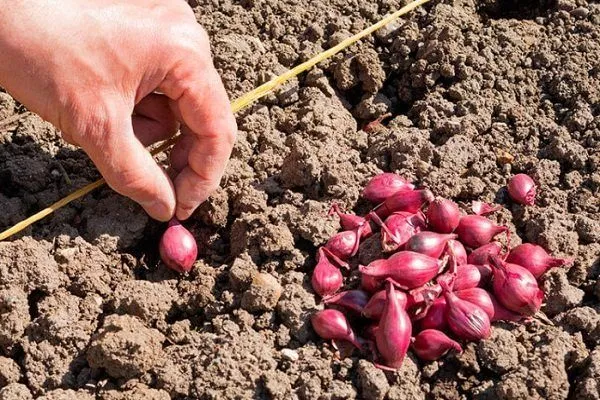
Seeds in open ground
Red Baron seeds can be planted directly outdoors. Follow these steps:
- Checking the germination of planting materialTo do this, simply place the seeds in warm water—any seeds remaining on the surface are not suitable for sowing.
- DisinfectionAt this stage, it's best to use a weak solution of potassium permanganate. Soaking the seeds in this solution for a quarter of an hour is sufficient.
- StratificationThis step speeds up seed germination. Place the seeds in hot water for half an hour, at a temperature no higher than 40 degrees Celsius. Then immediately place them in cold water for the same amount of time.
- Germination of planting materialPlace the seeds in a damp cloth and moisten it periodically. Sprouts will appear in about a week.
- Soil preparationIt should be dug over in the fall. In the spring, loosen and level the soil, making furrows 2 cm deep. Leave at least 15 cm between rows.
- Water the furrows and sow the seedsThere should be a distance of 1.5 cm between them.
- ✓ Maintain soil temperature at least 10°C to ensure seed germination.
- ✓ Provide the seeds with access to light immediately after the first sprouts appear.
Red Baron can be grown from seed for seedlings. Onions planted this way will not produce bolts. They don't store well, but are excellent for winter sowing. This is usually done in October to allow the crop to establish roots before frost. In southern regions, planting can be done as late as November.
Onion sets
If you're harvesting onion sets yourself, save the largest specimens for spring planting. Smaller specimens are best used for winter sowing, as they'll simply dry out over the winter.
In any case, you need to act according to the following algorithm:
- Culling of planting materialOnly strong specimens without mechanical damage or signs of disease should be left.
- Warming upThe seedlings should be kept at 40 degrees Celsius for at least 3 days. To prevent various diseases, this period can be extended to 2 weeks, and the temperature can be reduced to 35-38 degrees Celsius.
- Treatment with copper sulfateDissolve 1 teaspoon of the solution in 10 liters of water and soak the onion sets for 10 minutes. This treatment prevents fungal diseases.
- Soil preparationYou need to loosen and level the soil, and make holes. Dig the soil to a depth of about 4 cm, leaving 30 cm between rows and 15 cm between adjacent holes.
If you want to get juicy greens faster, then 3 days before planting you should trim the tops of the sets.
Caring for crops in open ground
Red Baron requires comprehensive care after planting. All steps are standard.
Watering
The plant needs to be watered regularly, especially during the first month after planting. Depending on the soil conditions, the recommended frequency is once every 5-7 days. During dry periods, increase watering to twice a week.
Two weeks before harvest, stop watering completely. Allow the bulbs to dry out.
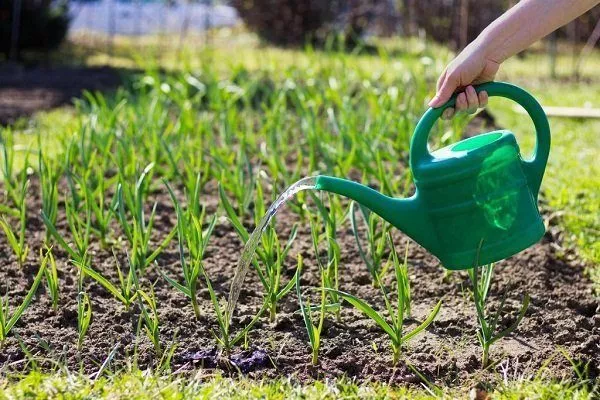
Loosening, thinning and weeding
It's essential to loosen the soil to ensure moisture and oxygen flow. It's recommended to loosen it after watering or heavy rain. Loosen the soil to a depth of 3 cm. This should be done every two weeks.
Thinning is usually required when planting from seeds or seedlings. This should be done when the first green shoots appear. Weak plants should be removed, leaving at least 6 cm between plants.
Weeds hinder crop growth and proper development, so it's important to remove them promptly. This can be done in conjunction with loosening the soil.
Top dressing
The first feeding should be done in the spring, especially if the plant is growing poorly. Use a mullein infusion; adding 1 tablespoon of urea per bucket is also helpful. The same feeding should be repeated when the bulbs reach approximately 4-5 cm.
You can use urea alone by dissolving 10 g of the product in 5 liters of water. This amount of fertilizer is sufficient for 1 square meter of plantings. As foliage grows, it is useful to apply urea along with nitrophoska. The fertilizer is used dry; 30 g is sufficient for 1 square meter.
Pest and disease control
Red Baron is relatively immune to disease, although it can be a problem. The most common disease is downy mildew, also known as peronosporosis. It appears as blurred, pale spots on the foliage, which gradually expand and may merge. The solution is to burn the affected plants and treat the surviving ones with a fungicide.
Of all pests, the most likely to be attacked is the onion fly. The larvae damage the crop by devouring it from the inside. Affected plants should be burned, and the beds treated with tobacco dust, ash, and black pepper. You can dust the crop with a dry mixture or make a solution for spraying. A solution of laundry soap will also help.
Another problem is root mites, which can lead to fungal diseases. To combat this pest, use Kelthane, mixing a solution according to the instructions.
To prevent diseases and pests, it is necessary to properly prepare planting material, follow crop rotation rules, weed the beds in a timely manner, remove and burn plant debris.
Harvesting and storage
The Red Baron harvest time depends on planting time and regional conditions. Typically, harvesting occurs in mid-August. In any case, the bulbs should be spreading along the ground, and the bulbs should be a rich red.
Dry weather is essential for harvesting. Dig the onions carefully, avoiding damage, then clean them of soil and allow them to dry. Trim the roots and tops. It's best to leave 5 cm of stems, or 10-12 cm for braiding. After harvesting, let the onions dry completely for a week outside or in a well-ventilated area. The harvest should not get wet.
Onions can be stored in various ways: in braids, bundles, nylon stockings, nets, wooden crates, and cardboard boxes. Except for braids and stockings, it's recommended not to store onions more than 30 cm thick to prevent the lower layers from rotting.
| Storage method | Maximum layer thickness | Optimal humidity |
|---|---|---|
| In braids | — | 60-70% |
| In the boxes | 30 cm | 50-60% |
| In the nets | 30 cm | 50-60% |
The storage area for the harvest should be dry and dark. The optimal temperature is 0-3 degrees Celsius. Under these conditions, the shelf life can be up to 1 year.
For more information on growing Red Baron onions, watch the following video:
Growing Red Baron is no more difficult than other onion varieties. Its low maintenance and disease resistance make gardening easier. When properly grown, it will produce a good harvest with a long shelf life.