
Onions are not only a tasty and healthy vegetable but also a beautiful crop often used in flower gardens. Of the nine hundred species of onions, only two hundred and ten are edible. All are valuable and recommended for regular consumption.
What types of onions are there?
Onions have long been a part of the human diet—they were domesticated over 4,000 years ago in Asia. This vegetable appeared in Russia in the 12th century and became so beloved by the local population that almost no dish was complete without it.
- ✓ Consider the climatic conditions of your region when choosing a variety.
- ✓ Pay attention to the variety’s resistance to diseases and pests.
- ✓ Decide on the purpose of growing: for greenery, bulbs or ornamental purposes.
Onions are biennial or perennial herbaceous plants and share one common feature: a rounded bulb composed of multiple skins. Some species are edible for all parts—the bulb, stems, and green tips. But some onions are grown for specific parts—the tips or, conversely, the bulbs.
Onion species, natural and cultivated, differ from each other:
- external qualities;
- taste;
- height of the above-ground part;
- flowering and ripening periods.
Our gardeners typically grow two or three varieties of onions, rarely more, and this is a shame—each variety is unique in its own way, with its own unique properties and qualities. Onions are used not only in cooking and folk medicine, but also in the cosmetics and pharmaceutical industries.
Popular varieties of onions
When preparing dishes, it's important to consider the type of onion used—their flavor and other characteristics vary so much that they can dramatically alter the flavor of food. Below are the most popular types of edible onions, with brief descriptions of their appearance, flavor, and other characteristics.
| Name | Ripening period | Frost resistance | Usage |
|---|---|---|---|
| Onions | Two-year-old | High | Bulbs, feathers |
| Shallots | Fast | High | Feather, bulbs |
| Leeks | Annual | Average | Stem, feather |
| Welsh onions | Perennial | High | Feather |
| Slime onion | Perennial | High | Feather |
| Wild garlic | Perennial | High | Leaves |
| Multi-tiered bow | Perennial | Very high | Feather, bulbs |
| Garlic | Two-year-old | High | Teeth, arrows, leaves |
| Rocambole | Perennial | High | Bulbs, leaves |
| Onion-uskun | Perennial | High | Greens, bulbs |
| Allspice | Perennial | High | Feather, floral arrows |
| Aging Buchu Onion | Perennial | High | Leaves, bulbs |
| Chives | Perennial | Very high | Feather, inflorescences |
- ✓ Leeks require hilling to whiten the stems.
- ✓ Welsh onions can be cut several times per season; they grow back quickly.
- ✓ Chives need regular watering and good lighting for decorative flowering.
Onions
Onions, along with bread, are undoubtedly among the number one staple foods not only in Russia but also globally. In India, with its billion-strong population, onions are considered a strategically important food, just like potatoes in our country.
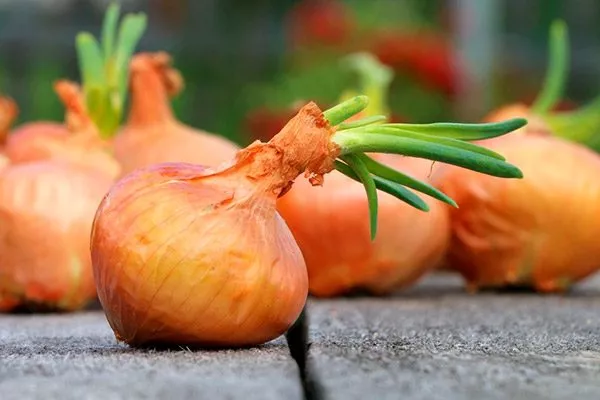
The classic onion bulb is spherical or slightly elongated and has a yellowish-brown skin. Purple and white varieties are classified into separate groups.
Features of onions:
- cultivation - in a two-year culture, first the seeds are grown, then the onion sets;
- the main goal of cultivation is to obtain bulbs consisting of juicy scales located on the bottom (shortened stem);
- the feather is edible, juicy, but somewhat rough;
- bulbs, depending on the variety, can be white or purple, bitter or sweet;
- It is distinguished by its high content of essential oils, which are not only a source of pungency and spice, but also bactericidal properties;
- yellow onions are hotter than light ones;
- white varieties have a mild taste and are not bitter;
- Red-purple varieties often have a pleasant sweet taste.
Latin name: Allium cepa.
Shallots
A perennial plant that forms nests of several bulblets (4-10). Each bulblet weighs no more than 30 g. They have a mildly pungent, sweet, and delicate flavor. In the spring shallot They are grown for the sake of producing juicy green plumes, not for the bulbs in summer.
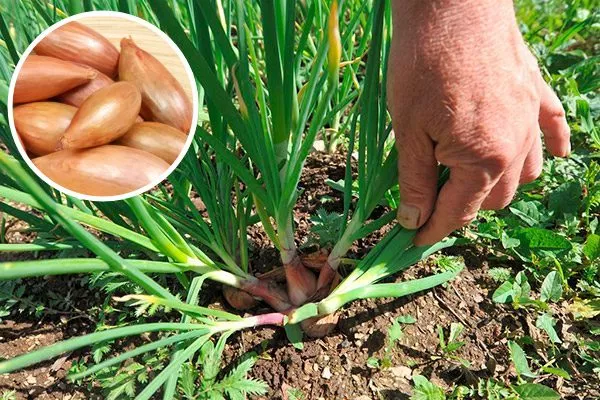
Characteristics of shallots:
- rapid ripening;
- high yield;
- good shelf life;
- planting is done in spring and autumn;
- dark green thin feathers are cut several times during the season;
- the onions have an elongated shape and are used to prepare various dishes;
- one plant produces up to 20-30 bulbs;
- prefers shady beds, fertile and moderately moist;
- An essential ingredient of French cuisine, finely chopped onions are sautéed in butter and used to make onion soups.
Latin name: Allium ascalonicum.
Leeks
This onion is prized for its thick white stem, located at the base of the plant. This is what leeks are primarily grown for. Their flavor is more subtle and sweet than that of onion varieties, and their aroma is more delicate. Young leeks are also eaten, but they become coarser with age.
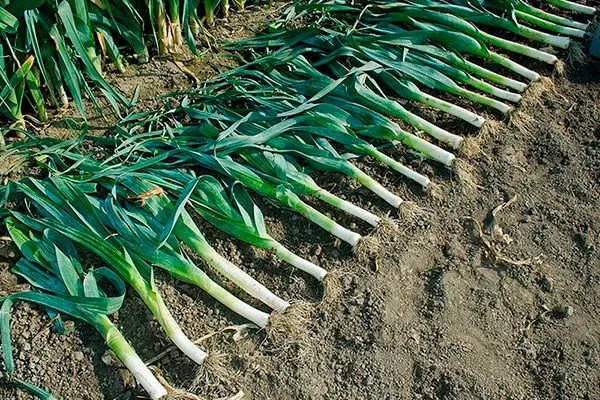
Features of leeks:
- the crop is annual and is grown using seedlings;
- has good shelf life;
- does not reduce vitamin C content during storage;
- the leaves are long and flat, resembling garlic leaves;
- has a higher yield than onions;
- grows well on loamy floodplain soils, but poorly on sandy and heavy loamy soils;
- requires frequent watering, loosening, hilling, and fertilizing;
- Stored with leaves and stems.
Latin name: Allium porrum.
Welsh onions
This species is perennial and is commonly known as the "pipe" or "Tatarka." It is widely grown in Siberia and other regions. It doesn't grow except in the Far North. Welsh garlic for the sake of the feathers, which are more tender and rich in vitamins than those of onion analogues.
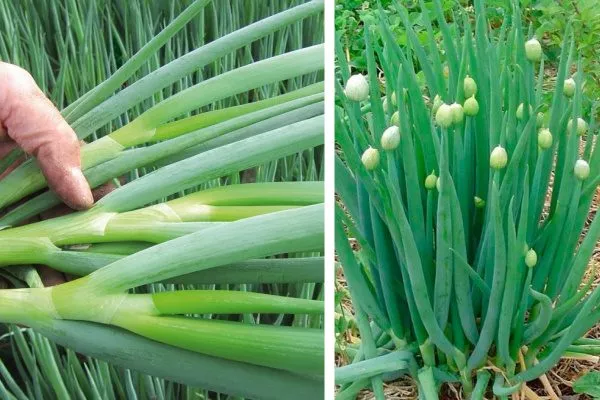
Features of Welsh onions:
- very high content of vitamin C;
- delicious in salads, soups and other dishes;
- as it grows, it produces branching green mass;
- grows well only in fertile soils;
- frost-resistant;
- You can harvest two crops per season - in early summer and in autumn.
Latin name: Allium fistulosum.
Slime onion
The slime plant has a second botanical name, drooping onion. It is a perennial and is grown for its young leaves, which appear in early spring, when there are no other greenery in the garden. It gets its name from the abundant slime that forms when cut. It is grown throughout Russia.
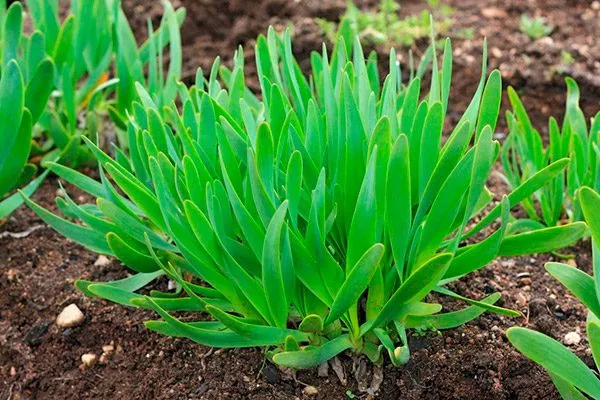
Features of the slime onion:
- the feathers are thick, smooth, fleshy, with rounded tips;
- leaf (feather) shape - flat;
- is distinguished by increased frost resistance and rapid growth;
- When flowering, pale pink inflorescences are formed, similar to the spherical heads of chives;
- propagated by seeds and division of bushes;
- useful for anemia, ulcers and gastritis with high acidity;
- has another name - ferruginous, due to the high content of iron salts;
- the diameter of the bulbs (cylindrical or shortened) is 1.5-2 cm.
Latin name: Allium nutans.
Wild garlic
Wild garlic is often called bear's garlic, due to its unusually wide tips, and is also known as victorious garlic or wild garlic. This perennial plant has an elongated bulb and tips up to 10 cm wide. Wild garlic grows throughout Europe, including in the wild. It is harvested in the spring—in forests, fields, and meadows.
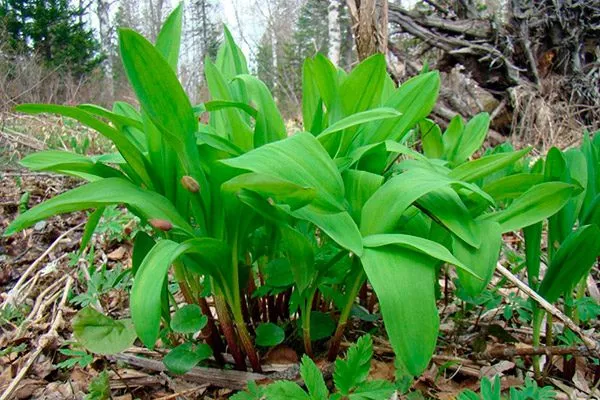
Features of bear bow:
- plant height - up to 30 cm;
- prefers shady areas;
- the leaves are cut off early in the spring, the entire bush at once, since after warming up the wild garlic becomes coarse and tasteless;
- the leaves are not bitter and have a strong garlic taste and smell;
- When growing at home, seed planting is used.
Latin name: Allium ursinum.
Multi-tiered bow
It's considered a leader in vitamin and phytoncide content. It has an unusual appearance: large aerial bulbs form at the ends of the stems. New stems grow from these bulbs, which also produce new flowers, and so on up to three or four levels.
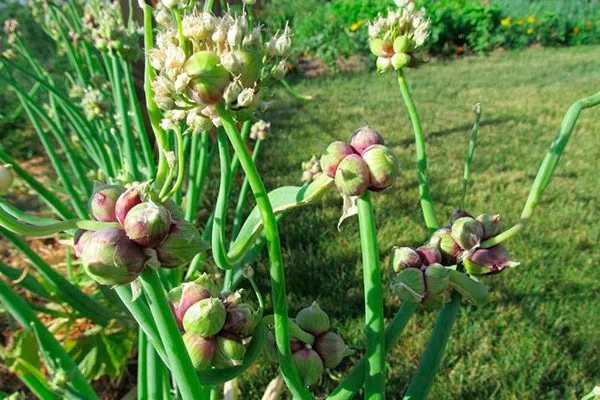
Peculiarities multi-tiered bow:
- The leaves are eaten fresh, and the bulbs are pickled;
- grows well in light and loose soils;
- hardy - can withstand cold and drought;
- able to withstand temperatures down to minus 50°C.
Latin name: Allium proliferum.
Garlic
Oddly enough, regular garlic is essentially an onion. It's the second most popular variety of the onion family after the bulb. Its botanical name, translated from Latin, means "sown onion."
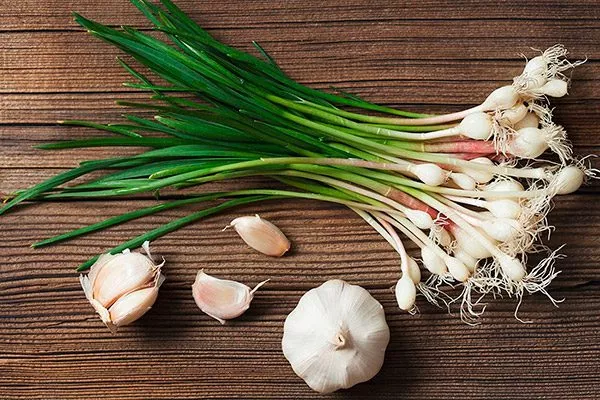
Features of garlic:
- is a perennial - in the first year, individual cloves grow, in the second - a complex bulb consisting of many cloves;
- leaves, shoots, and bulbs are used as food;
- no digging and replanting required.
Latin name: Allium sativum.
Rocambole
It's also called garlic onion for its combination of onion and garlic flavor. Other names for this perennial include horse garlic, elephant garlic, Egyptian garlic, or Spanish onion. rocambole It resembles a leek, but it has larger bulbs, which, like garlic, consist of several cloves.
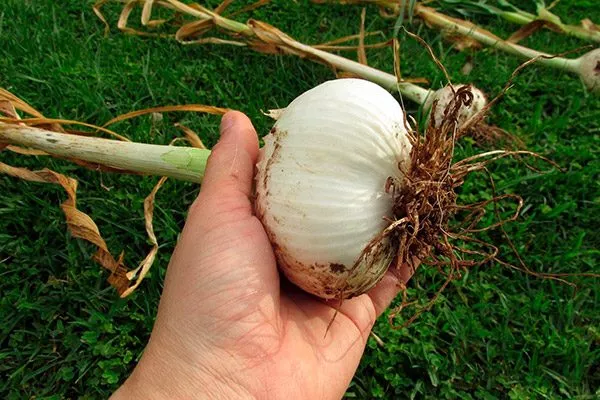
Features of Rocambole:
- They eat the bulbs and leaves;
- has a less pungent taste than garlic;
- high yield - one bed is enough to provide crops for a large family;
- the diameter of the bulbs with proper care is up to 15 cm;
- planting of cloves is done in spring;
- Rocambole is planted in October before winter, covered with a layer of mulch to protect against frost.
Latin name: Allium scorodoprasum.
Onion-uskun
It has flat, slanted leaves—just like garlic. But the onion blooms differently: it produces spherical yellow inflorescences crowning the ends of long stems. This relatively new variety of onion attracts buyers and gardeners with its piquant flavor and herbal aroma.
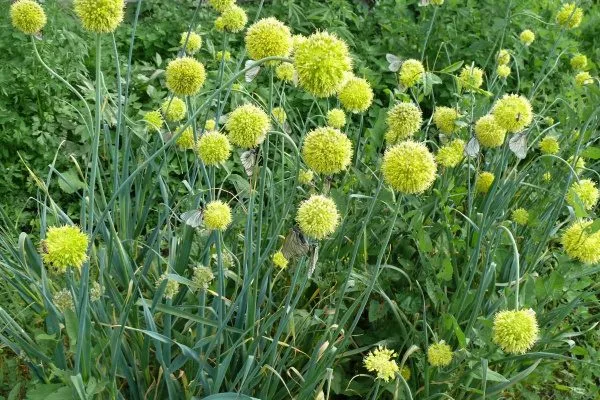
Features of the onion:
- smells like garlic;
- They are grown primarily for their greens, but the bulbs are also used for food, primarily in canning various vegetables;
- can be grown as an ornamental plant.
Latin name: Allium obliquum L.
Allspice
This variety owes its name to the aroma emitted by its inflorescences. Sweet chives have dense, fleshy leaves that reach 60 cm in height. This perennial plant can grow in one place for up to four years. Another name for this plant is Chinese garlic.
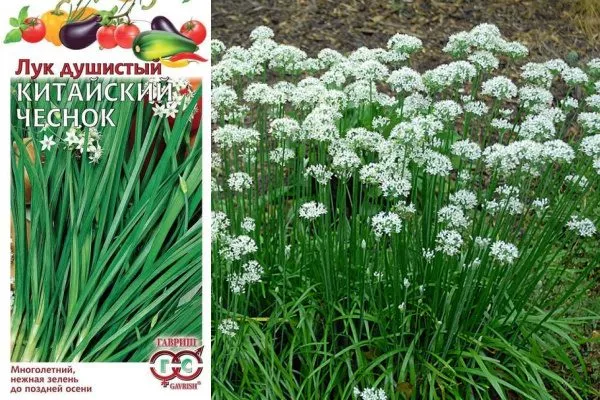
Features of fragrant onions:
- the taste combines onion and garlic notes;
- propagation is possible by seeds and bulbs;
- the greenery remains tender throughout the season, including late autumn;
- unpretentious and undemanding to soils;
- tolerates drought well, but to keep the feathers juicy, it needs abundant watering;
- 3-4 cuttings are carried out per season;
- green feathers are used as food - they are added to dishes and stewed as a side dish;
- flower stalks are preserved in marinade like wild garlic;
- withstands frosts down to minus 45°C;
- has a decorative effect - can be planted along paths and fences;
- The inflorescences are umbels-hemispherical, resembling white stars.
Latin name: Allium ramosum.
Aging Buchu Onion
This wild onion can be found in Siberia, growing primarily on mountain slopes. There are several species of Puchukhu: European, Transbaikal, Altai-Sayan, and Far Eastern. They all differ in leaf shape and length.
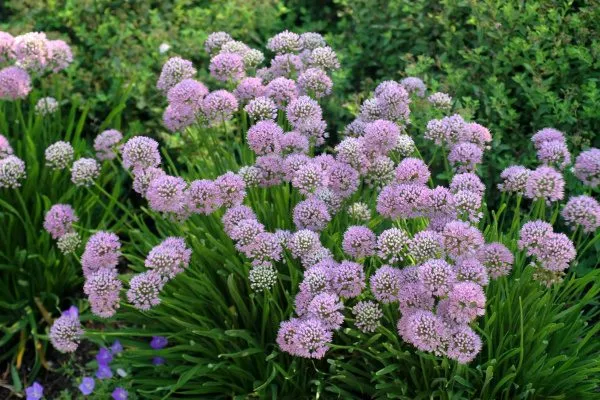
Features of Puchuk:
- greens are used to prepare first courses and salads;
- cutting is done in spring, since later the leaves become too bitter and rough;
- The bulbs are cut, dried and added as a seasoning to various dishes.
Latin name: Allium senescens L.
Chives
This perennial onion is not only edible but also decorative—it's planted in flowerbeds and gardens for its lilac-colored inflorescences. These are not only beautiful but also edible, used in salads along with the green tips. The plant is grown for its thin, slightly bitter green tips.
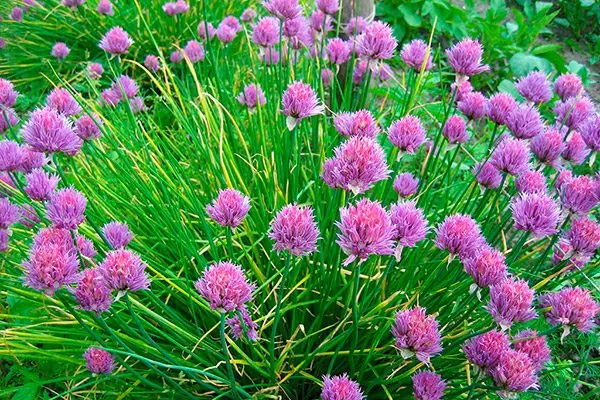
Features of chives:
- frost-resistant - can grow in the conditions of the Far North;
- requires regular watering and good lighting;
- in the second year it blooms with “umbrellas” consisting of small spherical heads - lilac, pink, violet;
- feathers are collected from 2-3 year old bulbs;
- greens are cut several times during the season;
- In the second half of summer the feather becomes coarser.
Latin name: Allium schoenoprasum.
Select onions to taste
Despite the abundance of onion varieties, our gardeners and summer residents most often grow onions, and housewives also buy them at markets and supermarkets. But even within a single variety, onions can vary in flavor. Therefore, when choosing onions for cooking, pay attention to variety.
Hot onion
Onion varieties with a pungent taste are generally those that have good shelf life and low yields.
Popular hot varieties:
- Chalcedony. A mid-season variety for universal use. Each bulb produces a single bulb weighing approximately 90 g. Yields reach 5 kg per square meter. The bulbs are positioned high above the ground, which reduces ripening time and simplifies harvesting.
- Timiryazevsky. A proven variety (bred in 1968) with a yield of 3.2-5 kg per square meter. Bulb weight is 50-70 g. It is an early variety and is suitable for drying. Average bulb weight is 45-80 g. Yield is 3.3 kg per square meter.
- Stuttgarter Riesen. An easy-to-grow early variety with flat-round bulbs. 4-7 kg of onions are harvested per square meter. The average bulb weight is 25 g. It has a shelf life of 4-6 months.
- Strigunovsky local. This variety is a folk-bred variety. Officially cultivated since 1943. Recommended for growing as a biennial crop from seedlings.
- Arzamas localAn early variety with bulbs weighing 70-90 g. Up to 3.2 kg of onions can be harvested per square meter. Susceptible to onion fly and can be affected by powdery mildew.
All of the above varieties belong to the classic onion group—those with yellowish-brown skins. However, it's recommended to look for semi-sharp onions among the colored varieties.
Semi-sharp onion
Semi-sharp varieties produce higher yields than hot varieties, but they require special harvesting and storage conditions. Semi-sharp onions are more easily damaged and spoiled during transportation.
The best semi-hot varieties:
- Carmen. Dutch onions with round, flat bulbs. Up to 2.5 kg of onions can be harvested per square meter. They weigh 50-120 g. The skin is purple, and the flesh is white with a red tint. Ideal for salads and cooking, they are shelf-stable and disease-resistant.
- Brunswick. It has cherry-red, flattened bulbs. Each bulb weighs 100-120 g. The flesh is white, with a raspberry tint. The yield is 3.2 kg per square meter. Planting with sets is recommended to prevent bacterial infections.
- Kaba. A late-ripening variety used primarily for salads. The bulbs are large, weighing up to 200 g. The scales are golden-yellow. Planting from seedlings is recommended. Not suitable for long-term storage.
- Spirit F1. A Dutch onion with good shelf life. Resistant to rot and sprouting. Grown primarily from seed. The bulbs are round, flat, and bronze. Yields up to 2 kg per square meter.
Sweet onion
Most sweet varieties are intended for eating without heat treatment; they are high-yielding but have poor shelf life. Sweet onions are grown primarily in the southern regions of Russia.
- Exhibition. A Dutch variety with very large bulbs, weighing up to 500-800 g. They are round and elongated, with golden scales and white flesh. Up to 4.3 kg of onions can be harvested per square meter. They can be stored for up to 4 months.
- Red Baron. A red variety with round, slightly flattened bulbs. The flesh is white and pink, with purple-red veins. Bulbs weigh 50-120 g. Yields up to 3 kg per square meter. Tolerates early frosts well.
- Caramel. It has elongated bulbs—up to 10 cm long. They weigh 40-60 g. The flesh is white, and the scales are purple. It's used for salads. Yields up to 4.3 kg per square meter.
- Yalta. A salad variety with virtually no bitterness. The bulbs are flattened, weighing 100-160 g. The scales are purple, and the flesh is light, with a lilac tint. This onion has a shelf life of up to 5 months. Yields 4-6 kg per square meter.
Varieties of large onions
Many housewives and gardeners prefer to work with large onions. They are especially convenient for canning, preserving, and preparing large quantities of food. Besides the aforementioned sweet Exhibition onion, several other large-fruited onion varieties are worth considering.
Large varieties:
- Russian size. This variety's bulbs ripen in August or September when grown from seedlings. Each bulb weighs 800-1000 g. Specimens weighing up to 3 kg are also found. The bulbs are round, golden-yellow, and the flesh is creamy-white.
- Globo. A late-season salad onion. Recommended for growing from seedlings, sowing seeds in March. The bulbs are flattened, with yellow skins, juicy, and sweet, reaching 800 g in weight. They lack a strong onion odor. Yields are 9-12 kg per square meter.
Globo bulbs should be eaten immediately; they are not suitable for storage as they are prone to sprouting. - White Wing. A hybrid onion with robust leaves and a root system. It produces round white bulbs, weighing up to 400 g. The flesh, like the scales, is white and very juicy. It grows in all climates. It has a shelf life of up to 5 months. It is a versatile onion.
Ornamental varieties
Most onions are perennials, capable of growing in the same spot for five years or more. By selecting varieties that bloom at different times, you can create a continuous-blooming flowerbed.
The best varieties ornamental onions with different ripening periods:
- Giant onion. It grows up to 180 cm in height. It blooms in May or early June with purple, ball-shaped inflorescences (15 cm in diameter). The leaves are elliptical.

- Round-headed onion. Another name for this plant is drumsticks. It has oval inflorescences (3 cm in diameter) that are pink or burgundy. Flowering begins in July or early August.
- The bow is beautiful. Another name for this onion is "pretty." It has small purple flowers gathered in loose, umbel-shaped inflorescences. This onion blooms in August.
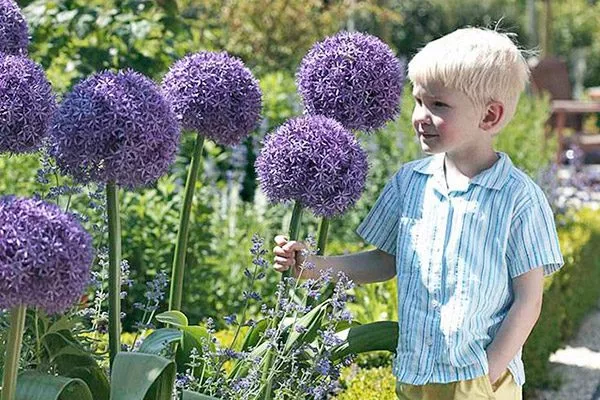
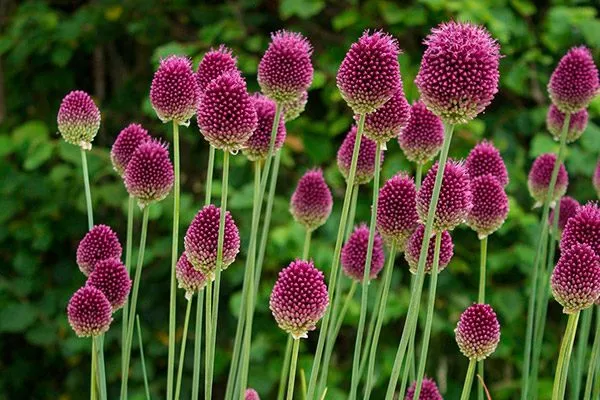
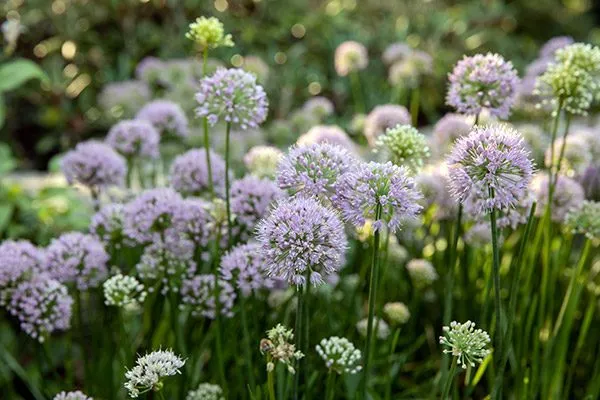
When creating flower beds and flower gardens, it's important to consider the height of the onions being planted. Depending on this height, their placement will be determined—front row, centerpiece, or background.
How to choose a variety by size:
- Low-growing varieties (up to 30 cm) - Karatavsky onion, Golden onion, Ostrovsky onion.
- Medium-sized varieties (40-60 cm) - Christoph's bow, Schubert's bow, Bowed bow.
- Tall varieties (70-120 cm) - Blue onion, Pskem, Oblique and Sicilian.
Colored onions
Colored onion varieties differ from regular onions—yellow-brown and golden-yellow—not only in appearance but also in certain qualities, primarily in taste and aroma.
Popular colored varieties:
- White onion. Its distinctive features include a slightly sweet taste and a lack of the characteristic harsh bitterness. Recommended varieties include Neman, Yalta White, Albion F1, and Sterling F1.
- Red onion. It's especially widely used in cooking, fried, pickled, and added to salads. It not only imparts a distinctive flavor but also adds a decorative touch. Its flavor is slightly sharper than yellow pepper. The best varieties are Red Brunswick, Red Baron, Brunswick, Campillo F1, and Black Prince.
The diversity of onions allows you to create a veritable breeding ground for this delicious and healing vegetable in your garden. Growing onions is easy, as they are hardy and undemanding, and their benefits are priceless—both culinary and medicinal.
Thank you for the informative article. It's a very interesting one, especially for those who enjoy experimenting and onions. It's very detailed, with illustrative photos—articles like this are so enjoyable to read!