
Leeks are also known as pearl onions. This variety is renowned for its distinctive flavor and nutritional properties. Growing them is easy if you provide the necessary conditions, including proper plant care.
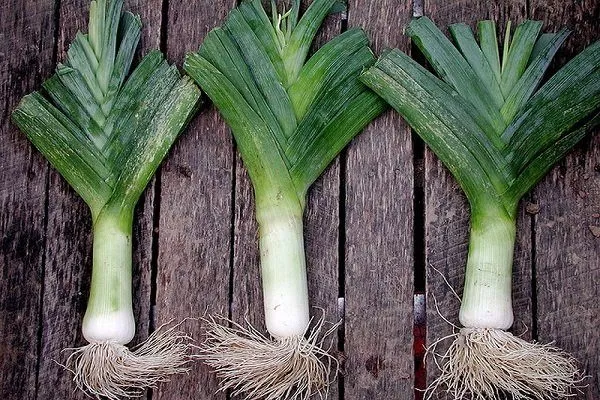
Leeks are also called pearl onions.
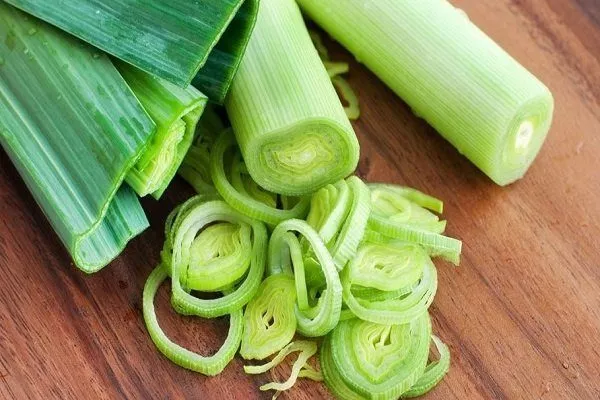
The flexible stem of the onion is used as food.
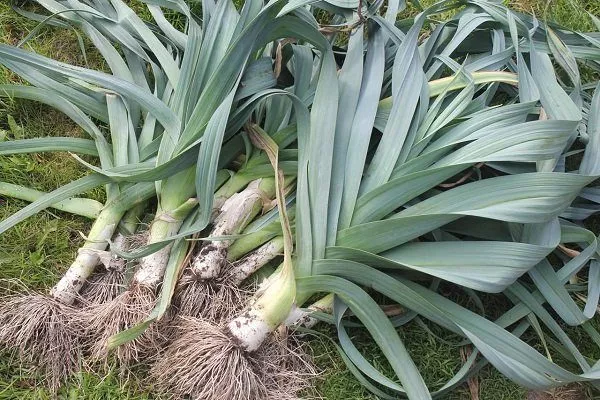
The leek is missing its bulb.
Characteristics of the variety
| Name | Duration of the growing season | Leg height | Leg diameter |
|---|---|---|---|
| Early varieties | 130-150 days | 12-45 cm | 3-8 cm |
| Medium grades | 150-170 days | 12-45 cm | 3-8 cm |
| Late varieties | 180-200 days | 12-45 cm | 3-8 cm |
Leeks are biennial plants. In the first year, a stalk with leaves develops, and in the second, flowering occurs, forming a stalk. This stalk can reach a height of one and a half meters. Once the stalk forms, the stem becomes unfit for consumption, so leeks are usually grown as an annual crop in gardens.
Leeks only became widely popular a few decades ago, although they were already known in Ancient Egypt, Rome, and Greece. The Romans considered them a food for the wealthy.
There are several varieties of leeks. They can be divided into three groups based on the length of their growing season. Early varieties mature in approximately 130-150 days, mid-season varieties in 150-170 days, and late varieties in 180-200 days. This means that the crop can take six months or more to mature.
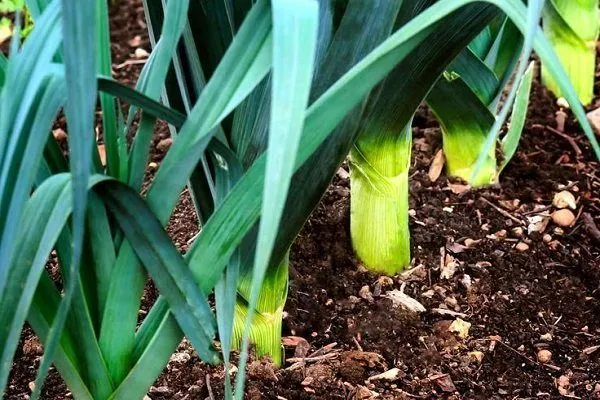
A distinctive feature of the leek is its lack of a bulb—instead, it has a white stalk, the color of which gives the plant its nickname, "pearl onion." This stalk is a thickened, false stem. The flexible stem with its long leaves is used for food.
The characteristics of leeks depend on the specific variety:
- leg height – 12-45 cm, diameter – 3-8 cm;
- the leaves resemble garlic, but are longer and wider;
- the leaves are dark green and have a light waxy coating;
- the average height of the leaves is 90 cm, they can reach a meter or more;
- average plant weight – 0.2-0.3 kg;
- in the first year at least 12 leaves are formed;
- flowering occurs in July-September, seed collection begins in mid-October - their germination remains for up to 3 years;
- The stems of young leaves have a pleasant, slightly spicy taste, which is more subtle than that of the related onion crop.
The appeal of growing leeks lies not only in their taste but also in their health benefits. They are beneficial for joint problems, anemia, high cholesterol, gastrointestinal disorders, and lung conditions. Leeks are also helpful for poor vision, colon cancer, and prostate cancer.
Optimal growing conditions and soil requirements
When growing leeks, it's important to consider the region's climate. In northern latitudes, early-season varieties should be used, while in the south, late-season varieties can be grown.
- ✓ The soil temperature for seed germination should be at least 2-5 degrees, optimally 20 degrees to speed up the process.
- ✓ To prevent diseases, ensure good air circulation around the plants, avoiding dense plantings.
At the initial stage of development, leeks require long daylight hours and intense lighting, so it is necessary to choose well-lit areas for planting, where there is sun all day.
It's important to remember crop rotation rules. Leeks are best planted after squash, legumes, winter crops, potatoes, or other nightshades. At least three years should pass between plantings of onions, including leeks, in the same area.
Seed germination requires a temperature of 2-5 degrees Celsius. The speed of germination depends on the temperature, but at 20 degrees Celsius, germination speed increases significantly. Foliage grows and develops well at 15-20 degrees Celsius.
Leeks prefer neutral soil. If it's acidic, lime or dolomite is used. This should be applied in the fall. If the soil is alkaline, peat moss should be added.
Leeks thrive in black soil, light sandy loam, or loamy clay. It should be sufficiently fertile. To improve this, you can use compost or rotted manure. 7 kg of such organic matter is required per square meter. Manure can also be applied in the spring, but in that case, the amount per square meter should be reduced to 2-3 kg.
In addition to manure, other fertilizers should be applied in the spring. The following is required per square meter:
- ammonium nitrate – 15 g;
- potassium salt – 15 g;
- superphosphate – 35 g.
Planting leeks
Leeks can be planted outdoors from seeds or seedlings. The latter method is usually chosen, although it is more labor-intensive.
Seeds
This option is only suitable for southern regions, as the crop has a very long growing season. Leeks should be planted from seeds after the threat of frost has passed, as frost is detrimental to the seedlings.
The optimal planting period for southern regions is March-April. It's important to consider the weather conditions of your specific area, as well as the characteristics of the chosen variety. If using a greenhouse or hotbed, planting should begin in mid-April. When planting in a garden bed under plastic, it's best to wait until the end of the month.
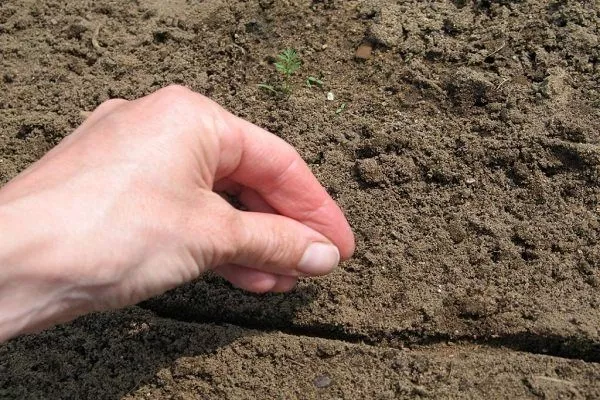
Planting leeks from seeds involves the following steps:
- Preparation of planting materialPlace the seeds in water heated to 45 degrees Celsius (113 degrees Fahrenheit) for a few seconds, then immediately plunge them into cold water. Afterward, keep the planting material in a damp gauze for several days, moistening it periodically. Choose a warm location—the temperature should be maintained at 25 degrees Celsius (77 degrees Fahrenheit). The seeds should germinate within a few days.
- Soil preparationIf all work was carried out properly in the fall, all that remains is to loosen the prepared area and level it.
- Formation of groovesLeave 65 cm between rows. Adjust sowing depth to soil characteristics: 2.5 cm in light soil and 1.5 cm in heavier soil. 1 g of seeds should be sown per square meter.
- Thin out the bedsThinning is carried out in two stages: first when 1-2 leaves appear, then when 3-4 leaves appear. After the second thinning, 10-15 cm should remain between adjacent plants.
Leeks can be grown from seeds outdoors as a biennial crop. In this case, planting occurs in late June. In October, the plants need to be earthed up and covered for the winter. Another option is to plant the crop in October. This allows for the emergence of seedlings in the spring. Both options are only suitable for southern regions.
Seedlings
This method is best used in temperate regions. It's also suitable for the south, if you want to harvest as early as possible. When growing outdoors, sowing seeds for seedlings begins in mid-February. The process follows this algorithm:
- Preparation of planting materialThe seeds are dipped in hot water (up to 45 degrees Celsius) for a few seconds, then in cold water. Then, they are placed in damp cheesecloth in a warm place to germinate. The temperature should be kept at 25 degrees Celsius, and the material should be moistened periodically.
- Preparing containers for seedlingsYou can use pots, boxes, containers, or cassettes. Fill the selected containers with soil—you can make your own or buy a ready-made soil suitable for this crop. In the former case, you'll need turf, compost, and humus. A peat base can also be used, adding additives such as dolomite flour, potassium sulfate, double superphosphate, and urea.
- Forming furrows for seedsThere should be a distance of 4-5 cm between them. The seeds should be planted 1-1.5 cm deep.
- Sowing seedsThe soil in the prepared containers should be moist. The seeds should be covered with soil.
- Germination of seedsUntil sprouts appear, keep the containers with the planted seeds covered with plastic. Maintain a temperature of 23-24 degrees Celsius. The container location should be well-lit.
- Lowering the temperatureThis should be done after the first sprouts appear. First, remove the plastic film—the seedlings no longer need to be covered. The optimal temperature range during the day is 15-17 degrees Celsius, and at night, 10-12 degrees Celsius. These temperatures should be maintained for a week.
- Increasing the temperatureDaytime temperatures should be 17-21 degrees Celsius, and nighttime temperatures should be 12-14 degrees Celsius. These new temperatures should be maintained until the seedlings are planted in the ground.
- ThinningThis work should be carried out one month after planting. Leave 2-3 cm between adjacent plants.
- PickingAt this stage, the seedlings are transplanted into pots or cups. The diameter of the containers should be no more than 4 cm. This step is optional. Some gardeners skip it, citing poor transplantation and delayed growth. Pricking out is not necessary when planting seeds in peat pellets or pots.
- Shortening of leavesThis stage is usually combined with pricking out. The length should be shortened by a third. Opinions vary regarding the necessity of shortening the leaves. Some experts believe this measure is only necessary if the roots are damaged and for summer planting. In the latter case, the leaves are shortened to reduce the area where moisture evaporates.
Leek seedlings should be fed every two weeks. Compost tea is effective for this purpose. Leeks require 10-12 hours of daylight, so supplemental lighting should be used for the seedlings.
Growing leek seedlings takes approximately 1.5 months. They are ready to be planted in the ground when 3-4 true leaves appear. By this time, the stem diameter should reach 0.8 cm, and the leaves should be 15-17 cm long.
The area for planting leek seedlings should be prepared in the fall. In the spring, no digging is required; simply loosen the soil and level the beds. Follow these steps:
- Make furrows and grooves, deepening them to 15 cm.
- Sprinkle the bottom with ash, then water generously.
- Cut the roots by a third of their length and treat them with a mixture of clay and cow dung - mix them in equal parts.
- Place the seedlings in the prepared furrows and cover with soil. Fill the furrows only halfway with soil—the resulting trench will provide good wind protection.
- Water the bed. The furrows have already been watered, so don't use too much liquid.
- Provide shelter. This is necessary if the weather is still cool. Any covering material can be used.
There are two options for planting leeks from seedlings: double-row and multi-row. In the double-row approach, leave 15-20 cm between seedlings and 30-35 cm between rows. When planting in multi-row, leave 10-15 cm between adjacent plants and 25 cm between rows.
The distance between rows can be increased to accommodate other crops. This could include onions, carrots, beets, cabbage, celery, or strawberries—these are all acceptable neighbors.
Leeks have a long growing season, so after planting in the ground, it takes 2-3 months for the stem to increase in diameter.
Caring for a plant in open ground
The success of crop cultivation, that is, the qualitative and quantitative characteristics of the harvest, largely depends on proper care. This care must be comprehensive.
Watering
Leeks require regular watering. Water generously, but not excessively. Use warm water. After transplanting outdoors, avoid watering for the first three days, then every five days.
During hot, dry periods, watering frequency should be increased. An average of 12 liters of water is required per square meter of planting.
Top dressing
Fertilizing isn't essential for growing leeks, but it's important to remember to ensure a bountiful harvest. In addition to spring soil preparation, fertilizer is applied 2-3 times per season. Organic and mineral fertilizers are used, and alternating them is effective.
The first feeding is done three weeks after planting outdoors. Cow manure or poultry manure are effective. For the former, use 8 parts water to 1 part fertilizer; for the latter, use 20 parts water.
Weeding and loosening
Weed removal is essential. This should be done manually, as chemical weed control methods are harmful and affect the eco-friendliness of the product.
Loosening the soil is important for crop development because it aerates the soil, ensuring the plant receives sufficient oxygen and moisture. Loosening should be done every 1-2 weeks, preferably after watering.
In addition to loosening the soil, hilling is also necessary. When planting the seedlings, half of the trenches weren't filled with soil, so they need to be gradually filled. This work should be carried out once the crop begins to grow.
Pest and disease control
When growing leeks, as with any other crop, it's important to regularly inspect the crops for diseases and pests. Potential problems include:
- Onion flyA major pest that appears from mid-May. The fly lays eggs on leaves and in the soil, and the hatching larvae consume the central part of the plant, causing it to wither and rot. Insecticides or tobacco dust mixed with black pepper and ash are used against the pest. A folk remedy is used as a dusting or as a spray solution.
- Downy mildewThis is a fungal disease, also known as downy mildew. Oval spots appear on the leaves and quickly spread. The disease can be controlled with fungicides.
- MosaicThe disease is viral and transmitted by aphids. Yellow, longitudinal spots appear on the leaves, and plant growth slows. Affected plants should be removed and burned.
- RustA fungal disease. Bright yellow, pad-like spores can be seen on the leaves. Gradually, they begin to darken and then turn black, causing the plant's leaves to dry out. Fungicides, most commonly Fitosporin, are used to combat the disease.
Harvesting and storage
Leek harvesting should be done in stages. The first stage occurs in the first half of September. It's best to harvest only a few plants, rather than all of them, to allow more space for the remaining plants. The final harvest can be done during frosts—the mature plants are not susceptible to them.
If you plan to store the harvest for a long time, dig up the onions carefully to avoid damaging them. After digging, remove the soil and partially trim the roots—the bottom of the onion should not be touched.
There are various ways to store your harvest. If you want to keep your plants fresh, here are some options:
- FridgeOnly firm leeks are suitable for this storage method. They should be peeled, the roots trimmed, and cooled at freezing temperatures. Then, immediately place the leeks in perforated plastic bags and refrigerate. Leeks will keep this way for up to 5 months.
- River sandIn this case, the crop should be stored immediately after harvesting. The bottom of the box should be filled with sand to a depth of at least 5 cm. Place the leeks vertically, covering them with damp sand to a depth of 15 cm. At freezing temperatures, the crop can be stored in sand for up to six months.
When storing fresh produce, it's important to inspect it periodically to remove spoiled items. Without this precaution, shelf life is significantly reduced, and losses increase.
There are other options for storing leeks: drying and freezing. In both cases, the plants should be thoroughly washed, dried on a wire rack, and sliced into thin slices. Dried leeks should be placed in sealed jars. For freezing, the prepared leeks should be placed in tightly sealed bags or containers; there is no need to defrost them for cooking.
This video explains how to plant, grow, harvest, and store leeks:
Leeks can be grown in any region, provided you choose the right planting method. The quality and quantity of the harvest depend on following the proper care guidelines, which are all fairly simple and standard.