
Irrigation is one of the most important agricultural practices when growing onions. It's important to know how to irrigate in greenhouses and open ground, when to do it, and how much to apply. Following these guidelines will help you grow a good, healthy harvest.
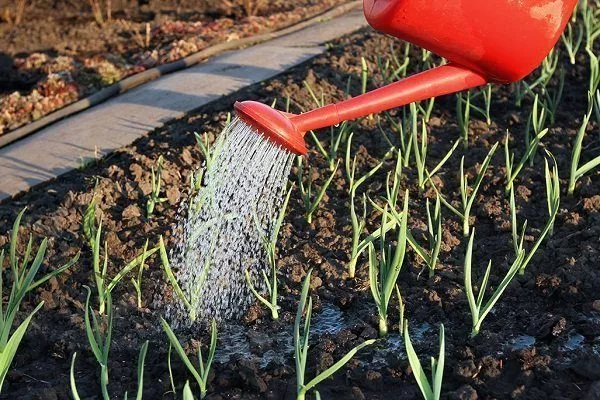
When to start watering?
Onions need to be watered from the moment they are planted, but it is important to water them in moderation, otherwise the plant will be attacked by various fungi that develop in conditions of excessive water.
- ✓ Use only settled water to avoid shocking plants from temperature changes.
- ✓ Water hardness should be minimal, as high salt content can negatively affect the development of onions.
In spring, water your onions when the sun has dried the soil after the winter. As soon as greenery and foliage begin to emerge, you can water the plant.
General rules
Watering is essential, as the plant reacts instantly to any changes in climate and soil. If the bulb sits in dry, dehydrated soil for a long time, it simply stops growing foliage and nourishes the tuber itself.
To harvest a quality crop, follow the rules for watering your garden beds, which include the following points:
- make sure that water does not get on the bulb itself and its leaves;
- the soil should be saturated with water to a depth of 20 cm;
- make sure that no soil crust appears;
- For irrigation, use water with a temperature of +14 to +17 degrees;
- water the beds in the evening;
- The most effective irrigation method is a drip system;
- Stop watering a few weeks before harvest.
From the moment of planting, onions are watered for approximately two months, and the frequency depends on the level of soil moisture and weather conditions.
In the greenhouse
To harvest onions as early as possible, they are planted in greenhouses. Greenhouse conditions allow for growing onions at any time of year, but the key is to consider watering requirements:
- moisten the soil before planting, and for better moisture retention, mix the soil with sawdust;
- On the day of planting, water the first time with a warm, weak solution of potassium permanganate;
- after a week, water the beds using the ecological biopreparation Fitosporin M (1 tbsp. per bucket of water);
- subsequent watering is carried out only if the soil dries out (the water temperature is +17 degrees);
- Next, based on the temperature values, determine how often you need to water: at +15-20 – once every 10 days, above +25 – once every 4 days;
- Check the quality and condition of the soil and, depending on this, determine the required volume of water.
- ✓ Maintain air humidity in the greenhouse at 60-70% for optimal onion growth.
- ✓ Ventilate the greenhouse after each watering to avoid condensation and the development of diseases.
By following these simple conditions, you will be able to harvest in 25-30 days.
In open ground
Watering onions in open ground is more complex than in greenhouses, as soil moisture is easier to control. Exposure to sun and wind causes open ground to dry out more quickly, which directly impacts onion yield. To ensure a consistent annual harvest, it's recommended to keep a watering schedule.
The first time the soil is watered, it should be immediately before planting. This watering is necessary to settle the soil, preventing the onions from floating on the surface. Use approximately 20 liters of water per square meter.
After this, make furrows for the onions and water them, then proceed to planting them. Cover the onions with soil and water for the first time. Use water with added Fitosporin or potassium permanganate to disinfect the soil:
- Fitosporin added in the amount indicated on the drug packaging;
- potassium permanganate diluted in water to form a pale pink solution.
Don't water the onions until the green tips (5-10 cm) appear. Then, water the plants until the water drains into the soil, and loosen the soil the next day.
In the future, water no more than once a week and pay attention to weather conditions:
- in dry, arid weather, onions need to be watered once a week;
- After heavy rains, water the beds no earlier than a week after they have ended;
- If the weather was hot but there was a light rain, water according to the schedule, as if there had been no rain at all.
After the bulbs begin to form and the shoots break off, mandatory watering is carried out, since when arrows are formed, the bulb practically stops filling, and all the moisture goes into this very arrow.
Next, based on the onion's maturity level, you should determine when to stop watering completely.
Methods of watering onions
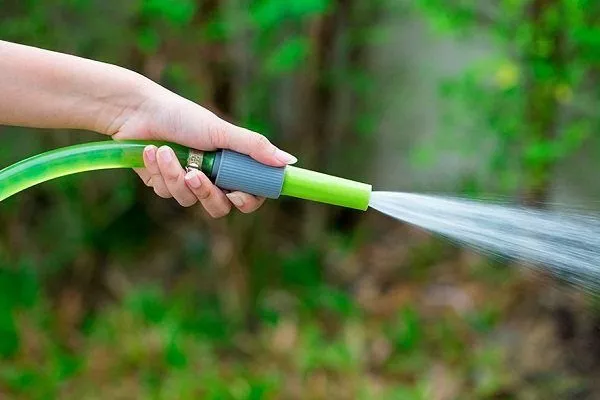
Watering with a hose is dangerous, as the strong stream of water can expose the bulbs, leaving them vulnerable. You also want to avoid eroding the soil, so consider your watering method carefully:
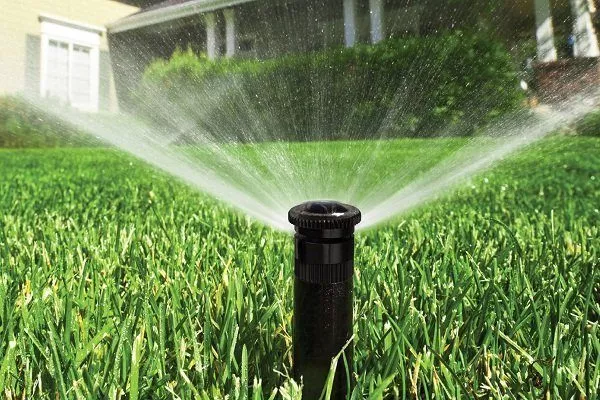
- Sprinkler – a more gentle method than a regular hose, but even this method can harm your crops by washing out the seeds.

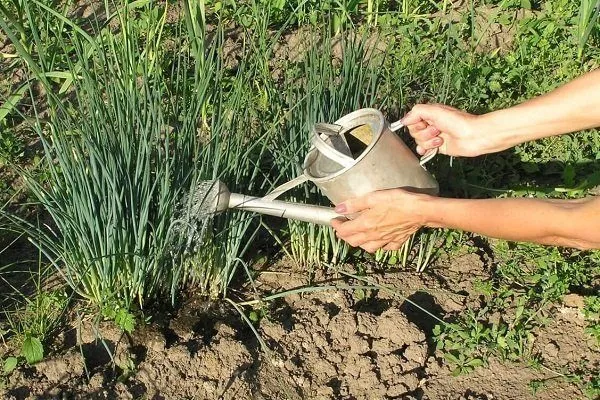
- Watering can - a simple tool that is used when watering onions grown for greens, but if you are interested in turnips, then water between the rows.
- Hose. You can also use a hose, but be careful with the pressure level - it should be low, and make a furrow between the rows in the beds themselves into which you pour water.
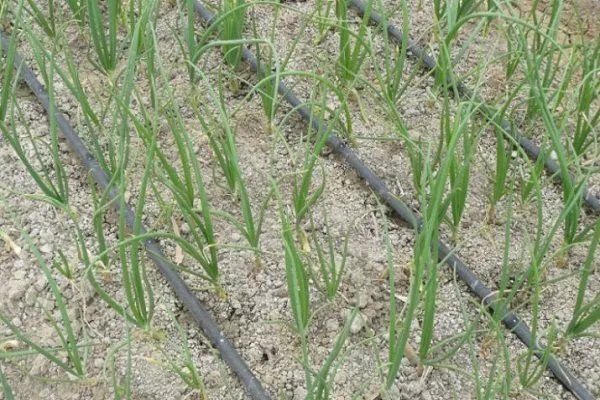
- Drip irrigation system. It's best to lay a hose with small holes every 8-10 cm along the entire length between the rows. This way, watering is carried out between the rows, and this is sufficient for the onions, eliminating the need to make side laterals to deliver water directly to the roots.
Features and standards of irrigation
Let's consider the need for watering at different stages of planting and crop ripening, since each period has its own characteristics.
After landing
Irrigation rates and amounts depend on the weather and onion planting methods. The scheme is as follows:
- Sowing seeds. The soil is watered well before planting, and then simply adjusted based on the weather and soil drying - several times a week at the beginning of the growing season in May-June, after which watering stops.
- Onion sets for winter. The soil is not touched at all, not watered or moistened.
- Onion sets in spring. To root and form the bulbs, it is enough to water the beds twice a week with a water consumption of 6-10 l/sq.m.
At the beginning of growth
Once the bulbs have taken root and begun to grow, the need for watering decreases slightly, but watering should be done as needed and according to weather conditions.
In case of frequent and heavy rains, onions do not need to be watered, but in dry weather with a temperature of +25-30 degrees, it is recommended to water every 5-7 days.
When ripe
As onions ripen, watering should be reduced, as this will impact the shelf life and flavor of the harvest. Therefore, a few months after planting, watering intensity should be reduced depending on the variety.
Before harvesting
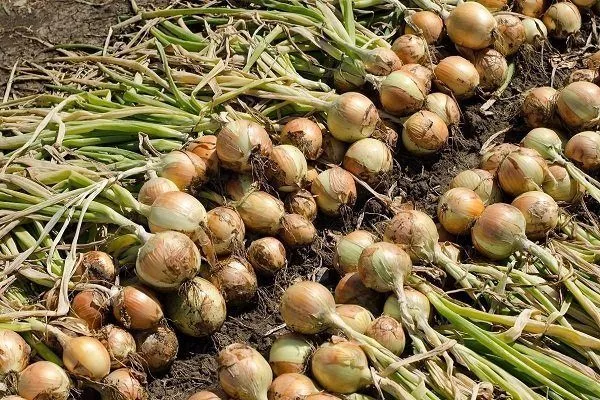
A couple of weeks before harvest, stop irrigation completely. The harvest must be made from dry soil, otherwise the subsequent drying process will be delayed, and the bulbs themselves will have a poor storage quality.
What mixtures are used for watering?
Onion leaves can turn yellow and dry out. Many gardeners believe this is due to insufficient watering during hot weather and overwater their gardens, which causes even more damage. The most common cause is onion fly larvae, which eat the onion roots, causing yellowing and wilting.
Watering onions with salt water helps combat this problem. A solution is prepared from table salt and clean water. Three waterings are performed per season, every 10 days:
- The first watering is done when the leaves have grown 5-7 cm. The solution is made weak: 300 g of salt is dissolved in 10 liters of water. Half this amount is used per square meter. Watering should be done at the roots.
- During the second watering, the amount of salt is increased to 400 g.
- During the third – up to 600 BC.
If the first watering helped control the onion fly, you can continue with the remaining two waterings at 300 grams. After each watering with salt water, be sure to water the onions with clean water as well.
When to stop watering?
As harvest approaches, watering is gradually reduced. This helps maintain the required humidity until the neck of the onion begins to constrict (it becomes thinner and softer) and the tips begin to gradually flatten.
When the onion greens are actively falling to the ground, watering is stopped completely, approximately 2-3 weeks before harvest. It's important to monitor the weather during this period—if it rains when the onions are ready for harvest, protect the bed from precipitation.
Otherwise, secondary growth may begin, accompanied by repeated bolting, and this will negatively affect the quality and quantity of the harvest.
Danger
If you violate the watering regime, certain consequences may occur.
Overflow
When irrigating onions, keep in mind that overwatering is quite dangerous for bulbous crops. If the amount of water exceeds the recommended amount, the risk of pathogenic bacteria developing increases significantly, which affects the shelf life of the onions after harvest.
In addition, onions that are oversaturated with moisture rot, making the bulbs inedible, which negates all your efforts.
Lack of moisture
A lack of moisture has one significant drawback: the plant can significantly slow down or even stop developing altogether. Therefore, timely and regular watering is crucial.
Proper Watering of Onions (Video Tips)
This video will teach you the basic rules for watering onions:
Planting onions involves several stages, and watering plays a crucial role in this process. While the bulbs are growing, whether in open ground or a greenhouse, the soil should be well prepared and watered. The better and more efficiently the soil is watered, the faster the bulbs will establish themselves.