
Fertilizing onions for bulb development is a necessary part of agricultural practices. It accelerates bulb growth, increases their size, and improves yield and nutritional properties. When applying fertilizer, it's important to strictly adhere to the timing and dosage, as both a nutrient deficiency and an excess of nutrients can cause irreparable damage to the vegetables.
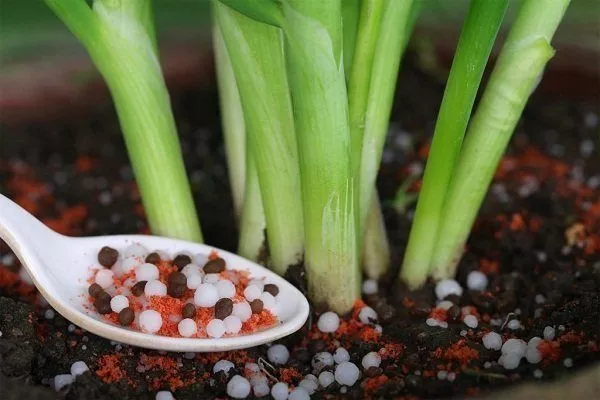
Timing and quantity of fertilizing
Onion crops are fed strictly according to the timeframe after planting; this not only ensures the bulbs form to the desired size, but also produces a lush green mass – the feathers.
- ✓ Optimum water temperature for fertilizer solutions: 20-25°C.
- ✓ Minimum distance from the stem for applying fertilizer: 10 cm.
Specific timing of fertilizer application:
1The first feeding is necessary for the growth of greenery.
For this purpose, nitrogen fertilizer is applied after the seedlings emerge, approximately two weeks after planting.
What can be done:
- water – 10 l, saltpeter – 30 g, superphosphate – 40 g, potassium chloride – 20 g;
- Vegeta preparation – 2 tbsp. l., urea - 1 tbsp. l.;
- slurry – 200 ml, water – 1 bucket.
2The second feeding forms a turnip.
Phosphorus-potassium substances are applied 15 days after the first application of fertilizers.
Fertilizer options:
- sodium chloride – 30 g, superphosphate – 60 g, nitrate – 30 g, water – 10 l;
- herbal decoction – 1 glass, water – a bucket;
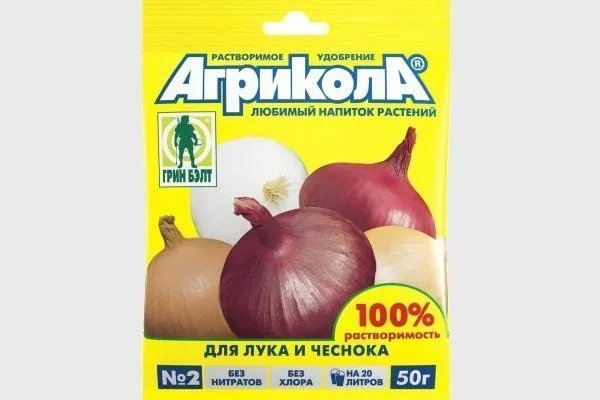
- Agricol-2 – 200 ml, water – 9-10 l.
3The third feeding forms and enlarges the head, accelerating its growth.
For these purposes, minerals are required in large quantities (in particular, phosphorus), which are added after the head increases in diameter to 4 cm.
What is used:
- water – bucket, superphosphate – 60 g, potassium chloride – 30 g;
- water – 10 l, superphosphate – 1 tbsp, Effecton preparation – 2 tbsp;
- wood ash infused for 3 days – 250 g, boiling water – 10 l.
Apply 10-15 liters of fertilizer per 5 square meters, injecting it into the root system. Be careful not to let the mixture come into contact with the green parts of the plant, as this will cause foliage burn.
What to fertilize onions with for bulb growth?
To reduce the amount of fertilizer required, follow crop rotation guidelines, which is what agronomists do when growing onions for bulbs. However, this is impossible in home and garden settings due to the small size of the plots. To restore fertility and nutrients, the soil is fertilized with green manure, or natural green manure, starting in the fall.
How to do it:
- after harvesting the crop (August-September), sow barley or peas;
- When shoots reach a height of 25 cm, cut them off and bury them in the soil where you will plant the onions;
- at the end of September, plant rye in the same place;
- In spring, deeply plow the area.
During this time, the green plants will give the soil all their nutrients, thanks to which the onions will grow more actively.
Onion crops require essential nutrients. Experts have found that 300 centners of the vegetable grown per hectare requires the following:
- potassium – 75 kg;
- lime – 48 kg;
- nitrogen – 81 kg;
- phosphoric acid – 39 kg.
In percentage terms, potassium is required at 50%, phosphorus at 30%, and nitrogen at 100%. Based on this, the dosage of applied minerals is determined based on the soil composition in a particular region.
Organic fertilizers
Organic matter refers to naturally occurring materials that enrich the soil with essential micronutrients. Examples include chicken manure, cow dung, and herbal infusions. These should be applied twice a season to promote head growth—in late spring and summer. Experienced gardeners also fertilize the soil in the fall, after harvest.
- ✓ The liquid manure should be light brown in color and should not have a strong ammonia smell.
- ✓ Wood ash must be completely cooled and sifted to remove large coals.
Features of organic fertilization during the first feeding:
- Liquid manure. To prepare it, take 250 grams of fresh mullein and a bucket of warm water. Mix thoroughly and let it steep for 8-12 days. This amount is enough for 5 square meters.
- Bird droppings. Dissolve half a kilo of dry manure in 10 liters of water and let it sit for 2-3 days. Spread the resulting solution over a 10 square meter area.
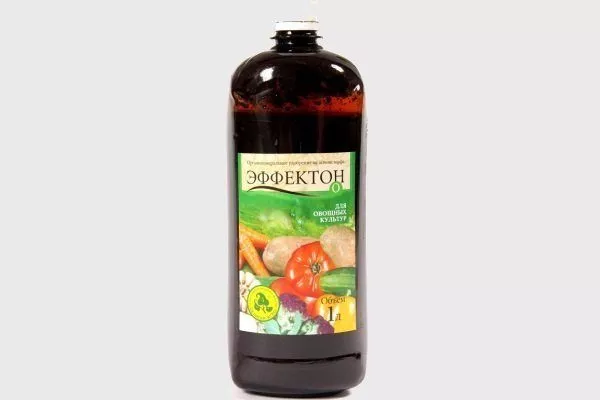
- Store-bought medications – Effecton-O, Agricol. Use according to instructions.
How to fertilize the soil for the second time:
- Prepare an herbal infusion. Nettle, comfrey, and dandelion are good choices. Chop 1 kg of freshly picked herbs, add 10 liters of warm water, and leave in a warm place for a week. When feeding, dilute the strained infusion with water in a 1:1 ratio.
- Use organic humate-based products – Gumi-Omi, etc.
Autumn fertilizing includes digging up the garden with humus and wood ash.
Herbal infusions can be prepared not only from comfrey, nettle, and dandelion, but also from any weed, milkweed, clover, chamomile, burdock, sedge, and chickweed.
Minerals
Among the most important minerals for growing bulbous plants are the following:
- Nitrogen. It is used during the first feeding to form the green part of the plant; it is not used to enlarge the head. This is because the growth of the feathers inhibits bulb development. Nitrogen fertilizers include the following: ammonium carbonate, ammonium nitrate, ammophos, and urea.
- Potassium. It's intended for the second growing season, as it forms and compacts the head. Ingredients: potassium salt, potassium nitrate, potassium magnesium sulfate, and potassium chloride.
- Phosphorus. It accelerates growth and increases the size of seed heads, so it is used at different stages of the growing season. Ingredients: superphosphate, phosphate rock, nitroammophoska, Thomas slag, and precipitate.
The most common recipes for mineral fertilizers (each case requires 10 liters of water):
- Urea infusion is saturated with nitrogen and is essential for proper and timely head formation, since feather growth affects the development of the bulb (take 2 tablespoons of urea and Ideal);
- superphosphate – 60 g, potassium chlorine – 20 g;
- urea – 1 tbsp, Vegeta – 2 tbsp;
- superphosphate – 2 tbsp. l.;
- ammonium nitrate and salt - 1 tbsp each, potassium permanganate - 2 crystals;
- nitrophoska – 2 tbsp. l.
Folk remedies
There aren't many folk recipes for growing onions, but they all boast versatility, high efficiency, and natural ingredients. Remedies:
- Ammonia. Fertilizing is done three times. First: let 10 liters of water sit for a couple of days, add 3 tablespoons of ammonia, and water the beds immediately. Second: add 5 tablespoons of a pharmaceutical solution to the same amount of water, plus 50 grams of brown laundry soap. The third time, apply the same mixture.
- Wood ash It can be used in both dry and liquid form. In the first case, the ash is scattered between the rows. In the second case, 1-2 cups of ash are required per 10 liters of water.
- Yeast fertilizer For head growth: gently warm 10 liters of water, dissolve 100 g of live yeast and 20 g of granulated sugar, and add a glass of wood ash. Leave the container with the mixture in a warm place to ferment for 2-3 days. Before watering, dilute with water in a ratio of 1:5.
- Stale bread. To increase bulb size, prepare a highly concentrated starter: 500 g each of fresh yeast, bread crumbs, and wood ash per bucket of warm water. Additionally, chop 1 kg of weed. Mix the mixture thoroughly and place in a warm place to ferment. Let it sit for 3 days, stirring occasionally.
Complex fertilizers
Mixed fertilizers contain substances of different origins. These can include organic and mineral compounds, various preparations, etc. What is recommended:
- Water – 10 l, urea – 1 tbsp, liquid manure – glass.
- Superphosphate – 20 g, potassium salt – 10 g.
- Complex store-bought preparations: Agricol-2, Chisty List, Gummi, Reflex, Cytovit, Fertika Lux, Effecton.
Fertilizing features depending on the planting period
Onions are classified as spring or winter onions, depending on the planting period. When planting in spring, the first feeding is done a couple of weeks after planting the sets, the second 14 days later, and the third approximately 20 days later.
Winter planting is carried out before the first frost. Fertilizing is carried out as follows:
- Before planting the planting material (2 weeks), phosphorus-potassium substances are added.
- The next fertilization of winter crops is carried out after the snow melts. For this, use liquid organic matter (mullein, chicken manure, herbal infusions). It is advisable to add ammonium nitrate.
- After the feathers have grown, a head growth stimulator (Plantafol) is added.
- After 15-20 days, the beds are fertilized with the following solution: ammonium nitrate - 1 tbsp., superphosphate - 2 tbsp., potassium sulfate - 1 tbsp., water - 10 l. This composition can be replaced with nitrophoska (1 tbsp. per bucket of water).
- The next fertilization is in 2-3 weeks. Use a mixture of water (10 l), potassium salt (1 tbsp), and superphosphate (2 tbsp).
Helpful Tips
Novice gardeners, due to their inexperience, often make mistakes that lead to negative consequences. To avoid this, follow these tips from experienced farmers:
- Don't apply organic fertilizers fresh—be sure to dilute them with water and allow them to ferment. Otherwise, the plant will suffer severe burns and the heads will slow down.
- Do not exceed the recommended dosage when adding organic matter - this will result in the growth of green mass, not the bulb.
- If fertilizer gets on the greens, immediately rinse the leaves with water.
- Increasing the amount of mineral substances is only permissible on sandy and clayey soils.
- If organic matter and minerals are added at the same time, the amount of the former should be 1/3 more.
- Apply dry mixtures only after watering the soil - this way they are absorbed faster and better.
- Fertilizer is poorly absorbed when the soil acidity is high or low, so it should be neutral.
For information on what and when to apply the first fertilizer to onions, watch the following video:
Reviews of onion fertilizers
If you apply proper fertilizer to onion bulbs to promote bulb growth, they will grow large, healthy, and uniformly. Be sure to consider the variety being grown, the soil composition, and the regional climate, as these factors determine the fertilizer dosage, frequency, and type.