
Onions can be affected by various diseases and pests, causing the plant to rot and turn yellow. This problem can also be caused by improper agricultural practices or storage practices. Below are some examples of rot problems and their solutions.
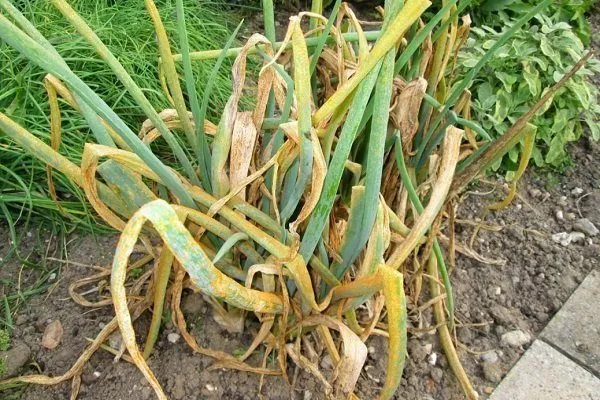
Agronomic causes of yellowing and rotting of onions
Yellowing leaves and rotting onions don't always indicate disease or pest infestation. Poor fertilization, poor watering, or unfavorable weather conditions can also be the cause.
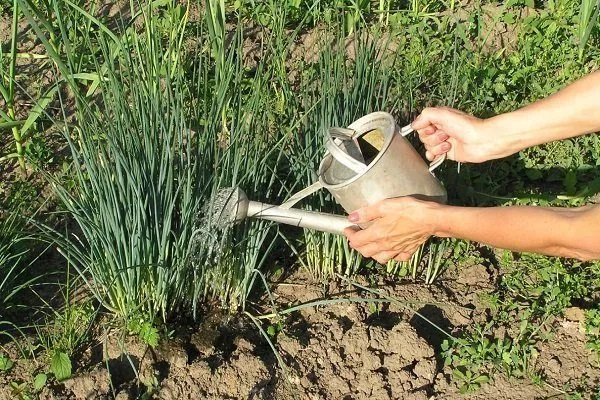
Excess moisture
Onions are quite moisture-loving crops. During periods of intensive growth and development, they require maximum irrigation. The rate of development of the tops and bulbs depends on the amount of soil moisture. However, already in the second growing season, excess moisture leads to the development of putrefactive bacteria.
- ✓ The optimal watering depth for onions is 20-25 cm, so that moisture reaches the root system.
- ✓ The water temperature for irrigation should not be lower than 18°C to avoid stress on plants.
Preventive measures:
- compliance with irrigation technology;
- stop watering 2-3 weeks before the planned harvest
Ways to combat excess moisture:
- in case of heavy rainfall, cover onion plantings with film;
- build drainage trenches - fill the bottom with sand, which serves as drainage, plant onions on the sand and sprinkle with a layer of soil (this method is ideal for clay areas).
Excess or lack of fertilizers
When growing onions, as with other crops, maintaining a balance of nutrients is crucial. A deficiency or excess of any of these nutrients has a negative impact on the plant.
Signs:
- nitrogen deficiency causes onion greens to become soft, pale and fall off;
- phosphorus – slows down plant growth, leaves become variegated, bulb ripening is inhibited;
- potassium – the leaves turn slightly yellow, the tops curl and die off, the lower leaves become corrugated, turn brown and dry out, the bulb forms thin scales;
- copper – thins the feather, makes the color pale, slows down the growth of the plant, thickens the neck of the onion;
- zinc – leads to dwarfing of plants, leaves curl and spread out on the surface;
- boron – the feathers become sharper, young ones turn yellow, and older ones become grey-blue-green.
Reasons:
- nitrogen deficiency causes excessive watering, increased soil moisture;
- phosphorus – observed on clayey, poorly drained soils;
- potassium – is caused by the fixation of the element by the soil, aggravated by high humidity followed by heat;
- copper – most often observed in peatlands, with excessive application of manure;
- zinc – occurs on soils with acidity pH 7.5-8;
- boron – most often observed in closed ground.
Preventive measures:
- carefully select the site, control the acidity of the soil;
- do not add manure or humus;
- strictly adhere to the quantity and timing of application of mineral fertilizers;
- organize soil drainage and removal of excess moisture.
Ways to combat excess or deficiency of microelements:
- If micronutrient deficiencies occur, apply wet fertilizers with the nutrients the plant needs. The fertilizer is diluted in a bucket of water according to the instructions.
- If plants are severely depleted, the fertilizer solution is made more concentrated than for scheduled fertilization, but not more than 1%. The plants respond immediately.
- If there are too many micronutrients, it's virtually impossible to help a plant. Water partially washes away excess micronutrients from the soil, so watering is the only solution.
Failure to observe crop rotation
The key to a bountiful harvest of any crop is proper crop rotation. Each crop grown on a plot has its own impact on the soil. By carefully selecting predecessor crops, you can minimize the impact of diseases and pests.
The main condition when organizing onion crop rotation is to return the crop to the same place no earlier than after 3 years.
Signs:
- decreased resistance to diseases and pests;
- looseness of bulbs;
- susceptibility to decay.
Reasons:
- planting onions in the same place more than 2 times in a row;
- selection of a predecessor with diseases and pests typical for onions.
Preventive measures:
- Select predecessor crops that have been generously fertilized with organic fertilizers. Potatoes, cucumbers, cabbage, legumes, and greens are the best.
- Avoid planting onions after radishes, celery, carrots, and leeks.
- Carefully select crops to plant alongside onions. Carrots are the best companion for onions, and parsley, celery, and marigolds also work well next to onions.
Unsuitable weather conditions
Rain causes bulbs to rot, foliage to wilt, and heat causes the stems to yellow and dry out. This is caused by excess moisture or dry soil.
Preventive measures:
- moderate watering when the weather gets hot;
- use of covering material in rainy weather (as far as possible).
Causes of bacterial and fungal origin
Numerous bacterial and fungal diseases significantly reduce onion yields. Various types of rot and bacterial infections affect the leaves, bulbs, and roots.
Cercospora leaf spot
The disease is believed to be caused by the imperfect fungus Cercospora duddiae Welles. It overwinters in plant debris and seeds and is spread by wind and raindrops.
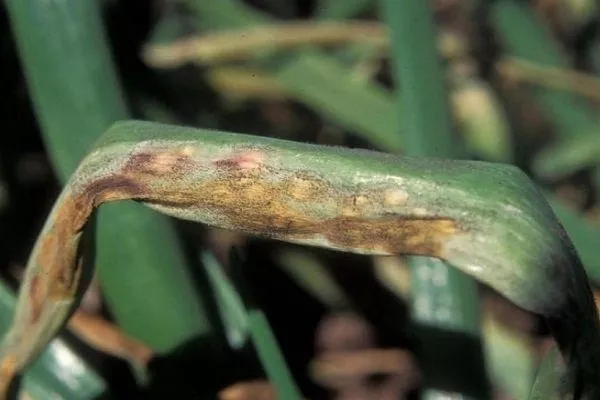
Signs of the disease:
- on the leaves there are sharply defined round or irregularly shaped spots of a grayish-brown color with a yellow border;
- The leaves turn yellow and gradually die off, reducing yield.
Reasons:
- wind and raindrops spread the infection during the growing season of plants;
- failure to maintain cleanliness in the beds (plant residues are present);
- use of contaminated seed material.
- ✓ The bulbs must be firm, without mechanical damage or signs of rot.
- ✓ The neck of the bulb should be dry and tightly closed, which indicates good storage quality.
Preventive measures:
- use high-quality planting material;
- treatment of planting material with fungicides;
- compliance with crop rotation;
- treatment of seedlings with copper-containing preparations;
- removing diseased plants from the garden bed;
- timely weeding;
- heat treatment of planting material by heating the seeds at a temperature of 40-45 degrees for 6-8 hours.
Treatment:
- Preparations Fitosporin, Fito-plus, Bordeaux mixture, copper sulfate;
- An infusion of fermented grass is also used. Chop the grass (without soil), fill half a bucket with it, and add hot water. After a few days, strain and apply to the garden beds.
- Fermented milk products are diluted 1:10 with water and processed in the evening.
Do not use onion remains in compost heaps or as fertilizer. At the slightest sign of rot, affected onions should be disposed of outside the garden beds.
Bottom rot (Fusarium)
The causative agent of the disease is the phytopathogenic fungus Fusarium oxysporum f. Sp. It develops at high soil temperatures.
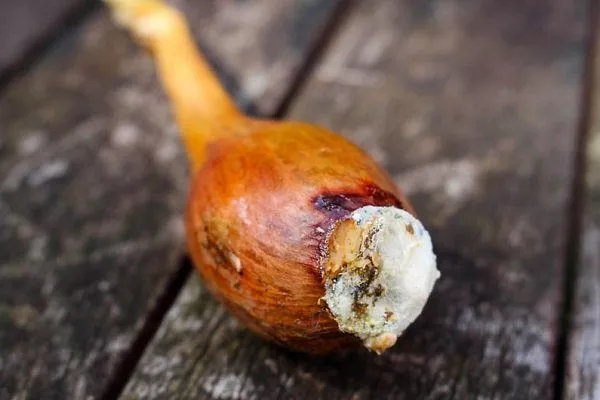
Signs of the disease:
- curled and yellowed leaves;
- the root system turns brown and becomes hollow in places;
- in the section on the lower layer of the bottom there is a watery brown spot;
- the root system may rot, the bulbs are easily removed from the soil.
Reasons:
- moving contaminated soil on equipment;
- contaminated irrigation water or planting material (onion sets);
- damage to roots, bottoms or bulbs by onion fly larvae or other insects.
Preventive measures:
- planting resistant varieties;
- compliance with crop rotation;
- control of fertilizer application;
- Before storing, treat onions with Fitosporin;
- cleaning the bulbs from the top layer of scales;
- seed treatment in a solution of Fundazol or Quadris;
- Once a week, replace the irrigation water with a solution of any fungicide;
- In autumn, the soil is treated with preparations such as Ridomil-Gold and Acrobat-MC.
Treatment The diagnosis is complicated by delays. Most often, the disease is discovered only after irreversible consequences have begun. Therefore, it is essential to follow preventative measures.
White rot
White rot of onions is caused by the pathogenic fungus Sclerotium cepivorum Berk. It not only attacks crops but also poses a threat to the harvested crop during storage.
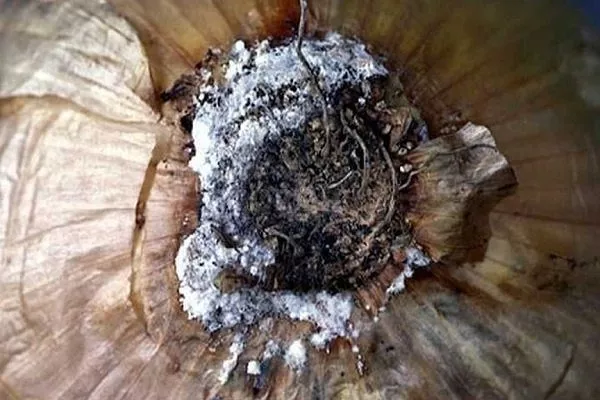
Signs of the disease:
- the seedlings turn yellow and die;
- a white fluffy coating of mycelium (mycelium) appears on the roots and scales;
- wet rot develops, and “poppy seeds” – sclerotia – appear on the surface of the affected area.
Reasons:
- disruption of the irrigation system or rainy summer;
- use of infected and poor-quality planting material;
- untimely removal and destruction of infected plants from the field.
Preventive measures:
- compliance with crop rotation;
- maintaining humidity during the onion growing season;
- use of healthy and high-quality planting material;
- Planting material should be treated with copper-containing preparations.
During treatment Water the onion beds with whey – dilute 1.5 teaspoons of copper sulfate in 1.5 liters of whey and add 3.5 liters of water. In extreme cases, use systemic fungicides:
- Fundazol;
- Hom;
- Ordan;
- Privikur.
Neck rot
Neck rot is caused by the Botrytis allii spore. In high-humidity conditions, the spores proliferate on dead and decaying plant debris. In warm and rainy weather, the spores are spread widely by wind and raindrops.
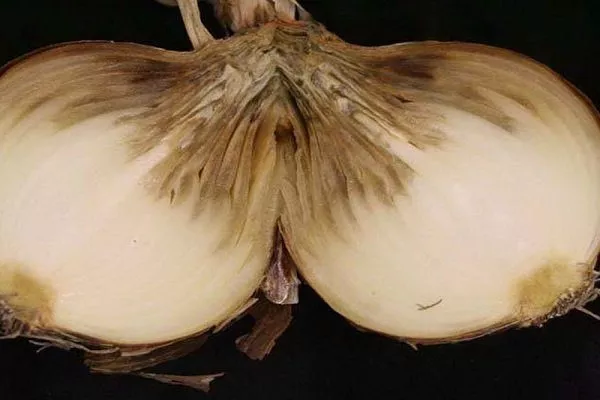
In most cases, the disease is detected 1-2 months after storage.
Signs of the disease:
- the affected cervix is soft and porous;
- there are sunken spots on the upper scales;
- the bulbs become covered with grey mold with black spots;
- the scales wrinkle;
- the bulb dries out.
Reasons:
- wet summer, watering during the period of bulb ripening;
- excessive application of organic and nitrogen fertilizers;
- failure to comply with agrotechnical sowing dates (early planting of onions is recommended);
- thickening of crops;
- failure to comply with cleaning deadlines (lateness in cleaning work often coincides with inclement weather);
- Violation of storage conditions.
Preventive measures:
- application of manure and nitrogen fertilizers under crops;
- compliance with planting deadlines;
- do not allow plants to become too dense;
- compliance with cleaning deadlines;
- preparation for storage (dry, remove dried leaves);
- destruction of plant residues after harvesting.
At the first signs of neck rot, water the beds with a 1% Bordeaux mixture (100 g diluted in 10 liters of water). Also, water with Quardos (8 ml diluted in 10 liters of water).
Downy mildew (peronosporosis)
One of the most dangerous diseases. It is caused by the phytopathogenic fungus Peronospora destructor. During wet weather, rapid development and sporulation occurs. Wind and rain spread the spores widely.
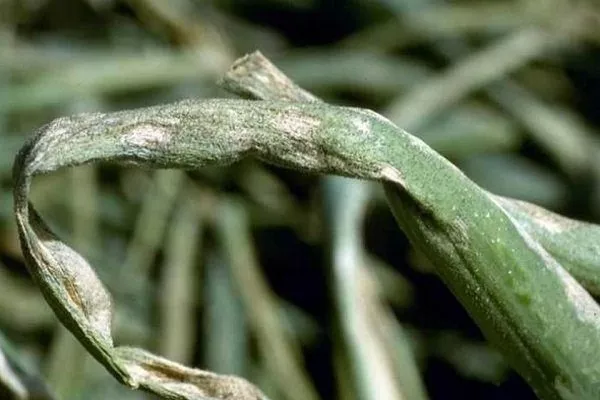
Onions can be affected at any stage of the plant's growing season. The disease reduces yield, impairs ripening, and impairs shelf life.
Signs of the disease:
- in the first 4 weeks, the feathers of such onions develop poorly, turn pale, then turn yellow and become curved;
- In dry weather, the leaves become covered with pale green oval spots; in wet weather, with a grey-purple coating (fungal spores).
Reasons:
- overwatering;
- adverse weather conditions;
- accumulation of post-harvest plant residues on the site.
Preventive measures:
- use high-quality planting material;
- treatment of planting material with fungicides;
- compliance with crop rotation;
- treatment of seedlings with copper-containing preparations;
- removing diseased plants from the garden bed.
To combat powdery mildew, the beds are treated at intervals of 7-8 days with the microbiological preparation Fitosporin-M (15 ml/10 l of water), 1% copper oxychloride, Bordeaux mixture or a mixture of copper sulfate.
Folk remedies are also used:
- Wood ash, weed infusion (pour any weeds into a bucket, leave for 5 days, strain and water the plantings).
- Dairy products containing lactic acid bacteria are detrimental to fungal spores. For irrigation, dilute whey or sour milk in water 1:10.
Pest infestation
Pests pose a major threat. Even minor damage to the bulb can lead to disease, yellowing, or rotting. These pests not only damage the crop but can also cause food allergies in humans.
| Name | Size | Color | Period of activity |
|---|---|---|---|
| Onion mite | 0.5 mm | White | All year round |
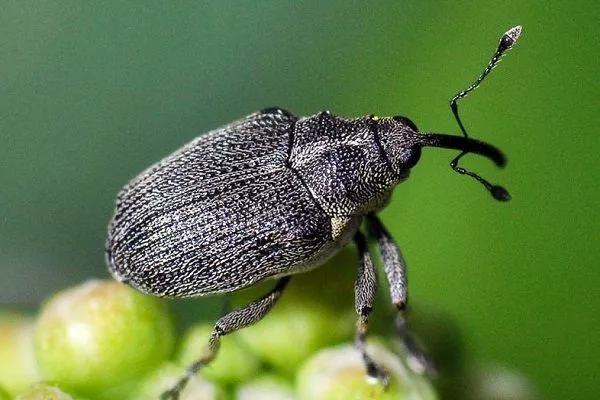
| Onion weevil | 2-2.5 mm | Black | May-June |
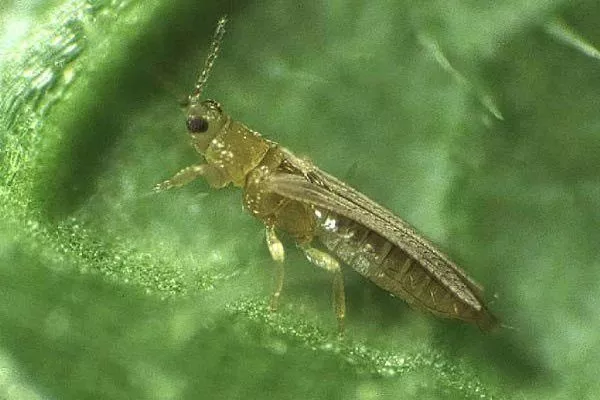
| Onion thrips | 0.8 mm | Brown | June-August |
| Onion fly | 5-7 mm | Grey | May-July |
| Onion and stem nematode | 1-2 mm | White | All year round |
Onion mite
A pest of the arachnid class, the flour mite family. A very tenacious insect, the onion mite can survive for long periods without food or feed on decaying plant matter. At low or high temperatures, it enters a state of suspended animation. Its powerful sucking mouthparts draw moisture from the onion scales.
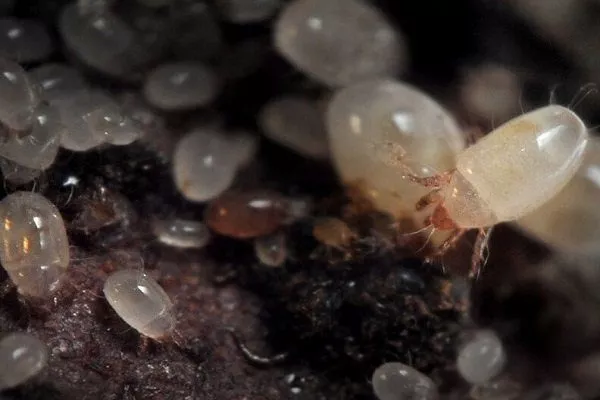
Signs of the disease:
- stem deformation;
- the appearance of light spots on the leaves;
- at the time of “occupation” of plantings by females, the plants become covered with a “plaque” – the bodies of mites;
- the bulb becomes dehydrated and shrivels;
- Plants are often affected by rot and mold.
Reasons:
- failure to carry out measures to process planting material;
- ignoring sanitary treatment of storage facilities;
- accumulation of plant debris in the garden;
- failure to comply with the disembarkation deadlines;
- Violation of agricultural practices for soil cultivation.
Preventive measures:
- creating a grass barrier;
- treatment with herbal decoctions of nettle;
- autumn digging of the soil;
- disinfection treatment of storage areas;
- warming up the planting material for one week;
- treatment of seed material with colloidal sulfur before planting.
Combating onion mites with folk remedies and general-purpose insecticides doesn't produce noticeable results. Using single-action insecticides, the mites develop immunity.
Onion weevil
The onion beetle is a black beetle 2-2.5 mm long. It uses its elongated proboscis to suck the sap from the plant. The larvae eat the onion from the inside.
Signs of the disease:
- the plant becomes covered with silvery spots and dies;
- At high humidity an olive-colored coating is observed.
Reasons:
- failure to comply with agricultural practices for crop care;
- failure to provide sanitary conditions in the garden (accumulation of plant debris).
Preventive measures:
- planting onions in well-ventilated beds;
- loosening and weeding the beds;
- watering the space between rows with water with the addition of ground hot pepper, wood ash, and dry mustard;
- treating the soil with a mixture of wood ash, red pepper or dry mustard (2:1);
- treatment of plantings with Karbofos (60 g per 10 l of water);
- plant chives between the beds as bait (as the infestation progresses, the bait is cut off and removed from the bed);
- clearing away plant debris from garden beds in autumn.
Methods of control:
- During the growing season, treat with a solution of Karbofos (60 g per 10 liters of water). One liter of solution is enough for 10 square meters of plantings.
- In the evening, lay out strips of burlap (10 cm wide) and wrap them around the bulbs. In the morning, remove the strips, which could entangle the pests.
Onion thrips
The onion thrips (Thrips tabaci) is a small, brown insect, 0.8 mm long, with fringed wings. The larvae are greenish and wingless. The thrips and their larvae feed on onion juice.
They overwinter in the upper layers of soil or plant debris. Females lay eggs in early spring. The larvae feed on the same food sources as the adults. Thrips are most active during hot, dry weather.
Signs of the disease:
- there are whitish and silvery spots on the leaves;
- the leaves become curved, turn yellow and wither.
Reasons:
- failure to observe crop rotation;
- violation of agricultural practices;
- Violation of sanitary measures for preparing seed material for planting.
Preventive measures:
- compliance with agricultural practices;
- thermal disinfection of planting material (keeping in water at 40-45°C for 10 hours);
- soaking planting material in a sodium nitrate solution for 24 hours;
- drying onions before storing at a temperature of 35-37 degrees for a week;
- cleaning up plant debris from the garden;
- placing traps between plants;
- planting marigolds around onion beds;
- treating the beds with celandine infusion (insist cut celandine stems in water for 48 hours).
Methods of control:
- lay out cardboard strips painted blue and coated with pest control glue;
- treat the plantings with an infusion of onions and garlic (1 tablespoon of chopped onions or garlic per 1 glass of water);
- Infuse tobacco leaves in a small amount of water, strain the infusion and leave it for another 3 days, dilute it in water 1:2 and treat the plantings.
Onion fly
A gray insect resembling a common housefly. It lays eggs in late May in the outer scales of the onion bulb, plant, or soil. The larvae feed on the fleshy scales of the onion. Over the summer, three offspring of the fly grow, and the bulb rots. The larvae are the most dangerous threat.
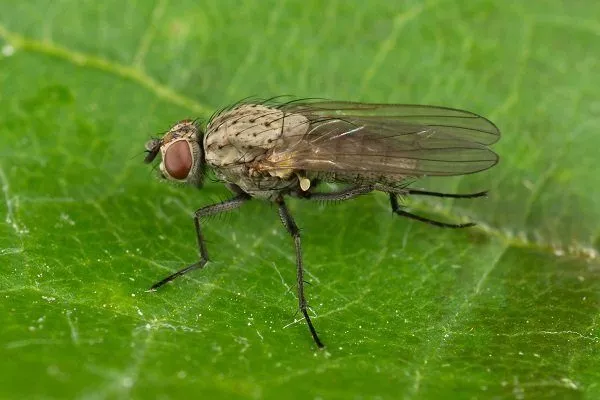
Onion fly larvae live not only in onions, but also in garlic and flower bulbs.
Signs of the disease:
- the bulb rots;
- leaves turn yellow and die;
- a putrid smell appears in the beds.
Reasons:
- failure to observe crop rotation;
- violation of agricultural practices in the form of autumn digging;
- infected planting material;
- neglect of disinfection of planting material.
Preventive measures:
- planting onions next to carrot beds (the specific smell of carrots repels onion flies);
- soaking seeds in a saline solution before planting;
- watering with a solution of table salt;
- regular loosening of the soil;
- pollination with tobacco infusion (400 g/10 l of water, leave for 48 hours, boil for 2 hours, strain and add another 10 l of water, add 100 ml of liquid soap and carry out the treatment 3-4 times during the growing season);
- destruction of plant residues;
- late digging of the soil;
- liming the soil after digging and before planting.
Methods of control:
- spraying plantings with infusions with a strong smell: mint, pine needles, valerian, tomato leaves, wormwood, lemon balm;
- sprinkle the plantings with ash or tobacco dust, preferably after rain;
- Water the onion beds with a saline solution in 3 stages: the first watering - when the plant reaches 5 cm, the second - after 2 weeks, the third - 3 weeks after the second treatment.
Onion and stem nematode
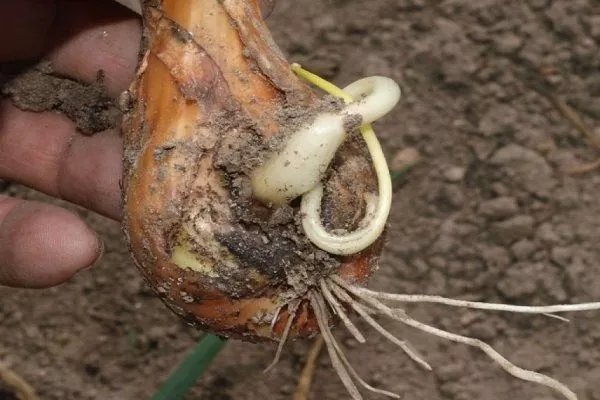
Nematodes are a family of parasitic roundworms that lay eggs in bulbs. The developing offspring feed on the bulb's sap, causing the plant's death.
Signs of the disease:
- swollen and curved false stem;
- in cross-section the bulb is loose, the fleshy scales have a granular structure;
- uneven thickening of scales;
- the scales turn white and then become brownish or gray;
- The bulbs are moist and have a garlicky smell.
Reasons:
- use of planting material infected with nematodes;
- nematode-infested soil;
- use of contaminated equipment (hoes, plows, harrows);
- infected remains of previous crops, weeds.
Preventive measures:
- maintaining crop rotation, returning crops affected by nematodes to the same place no earlier than after 3 years;
- soil treatment with a solution of Carbation (200 ml per 1 sq. m);
- selection of healthy, nematode-free seeds for planting;
- subject the seed material to heat treatment by immersing the bulbs in water at a temperature of up to 50°C for 8-10 minutes;
- watering for 2 weeks with a light pink solution of potassium permanganate;
- timely weeding of crops from weeds;
- adding dolomite flour to the soil to deoxidize it;
- To make the soil looser, add peat and sand;
- during the growing season, 2-3 treatments with Abamectin.
Methods of control:
- Folk remedies for the control of nematodes are limited to heat treatment of planting material and crops.
- Treatment with chemicals is effective:
- Carbation;
- Chloropicrin;
- Nemagon;
- Methyl bromide, etc.
Why do onions rot during storage?
Onions often rot not only during the growing season but also during storage. If you notice rotten or yellowed parts, sort through the harvest and remove any damaged bulbs. Also, eliminate the factors that caused the problem.
Bacterial soft rot
The causative agent is the bacterium Dickeya chrysanthemi or Pectobacterium carotovorum subsp.
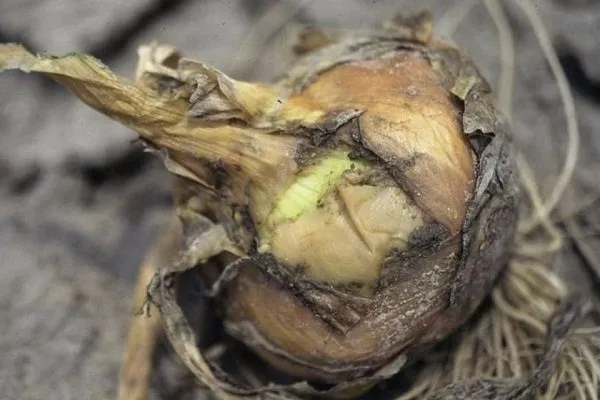
Signs of the disease:
- spots from light to brown are formed around the root collar;
- the fabric becomes soft and releases liquid when pressed;
- there is a specific smell;
- in the section, healthy scales alternate with affected ones;
- The rot spreads from the center of the bulb, and after a while all the scales become slimy.
Causes of the disease:
- poor choice of planting variety;
- failure to comply with the watering, temperature and nutrition regime.
The bacteria penetrates into the bulb through:
- mechanical damage to bulbs during soil cultivation or during harvesting and transportation to the storage location;
- damage to the bulb caused by insects or sunburn.
Preventive measures:
- compliance with crop rotation (this was discussed above);
- culling of affected bulbs before planting;
- compliance with agricultural rotation techniques (sowing time, depth and distance of seed placement, watering and fertilizing regime);
- compliance with harvesting rules (harvest onions in dry weather during the period of mass lodging and yellowing of the feathers);
- Only healthy bulbs should be stored;
- maintaining the appropriate level of humidity and temperature during storage, as well as sanitary conditions in the premises.
Black mold (aspergillosis)
The disease is caused by the fungus Aspergillus niger. It is spread through the air by contact.
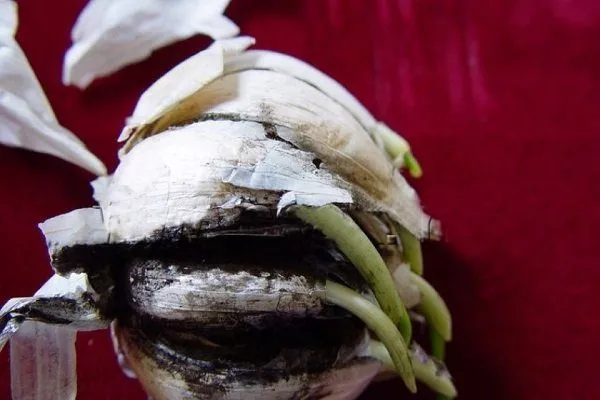
Signs of the disease:
- blackening appears in the cervical area;
- the onion becomes soft;
- The scales dry out and black rot appears between them.
Causes of the disease:
- unripe bulbs and bulbs that are not properly prepared for storage are susceptible to the disease;
- violation of storage conditions (high temperature and humidity, poor ventilation).
Preventive measures:
- treatment of planting material with fungicides;
- treating crops with Bordeaux mixture 3 weeks before harvesting;
- compliance with temperature and humidity conditions in storage areas;
- avoid damage to the bulbs in the form of abrasions.
Green mold (penicillosis)
Caused by pathogenic fungi of the genus Penicillium, the disease occurs in warm, humid environments and appears 2-3 months after onion storage.
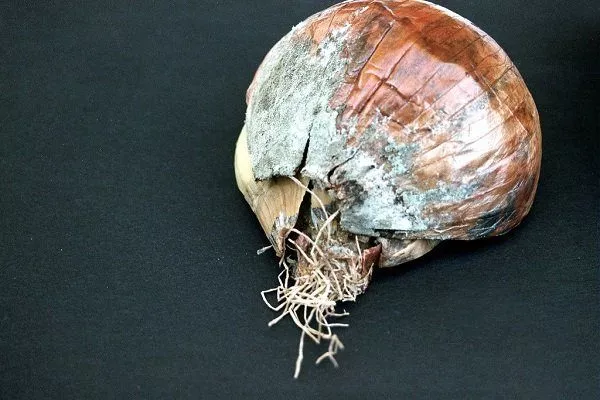
Signs of the disease:
- a wet, pale yellowish spot appears on the bulb, gradually becoming covered with a blue-green coating;
- there are yellow-brown or gray watery spots on the cut of the bulb;
- a musty, moldy smell appears.
Causes of the disease:
- mechanical damage;
- sunburn;
- frozen bulbs;
- high humidity during storage.
Preventive measures:
- drying the harvest before storing;
- maintaining humidity conditions during storage;
- Avoid mechanical damage or frostbite to the bulbs.
Anthracnose
The disease is caused by the fungus Colletotrichum circinans. Heat and moisture promote the growth of this fungal disease. Wind and rain also carry it around the site. The disease continues to develop in storage.
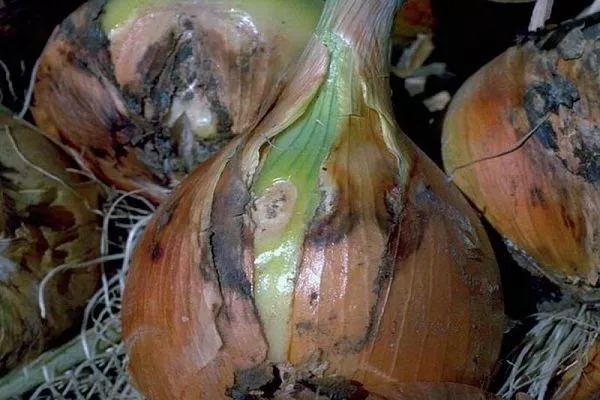
Signs of the disease:
- concentric rings are formed around the neck of the bulb;
- small yellow spots appear on the inner scales;
- the bulb wrinkles and sprouts.
Reasons:
- use of low-quality planting material;
- failure to observe crop rotation;
- poor preparation of crops for storage;
- Violation of storage conditions.
Preventive measures:
- planting onion varieties with golden and red covering scales;
- use of high-quality planting material;
- compliance with crop rotation;
- compliance with cleaning deadlines and methods;
- treatment of planting material with fungicides.
An experienced gardener will give advice on what to do when onions turn yellow in the following video:
When growing onions, remember that the sooner the cause of a crop problem is identified, the better the chances of saving the harvest and preventing soil contamination. Strictly adhere to the recommended treatment times for diseases and pests to prevent them from damaging the plants.