
The Parade onion belongs to a group of feather-shaped varieties known as Welsh onions, so it doesn't form bulbs. Despite this, this variety is quite popular, especially among healthy eaters. Parade's uses are versatile, both in terms of harvesting and in terms of climate zone requirements.
What is attractive about it?
This Welsh radish was developed through hybridization, making it a hybrid variety. The developers achieved remarkable results: rapid adaptation, vigorous growth, excellent flavor, and increased fruit production.
How did the hybrid come about?
Parade was developed by Dutch breeders at the end of the last century. It was registered in Russia in 2000, so the hybrid has long been known among gardeners and farmers. The agricultural company Bejo Zaden is considered the originator.
Benefits of the hybrid based on its composition
Parade has good taste and contains:
- proteins and healthy fats;
- carbohydrate compounds;
- vitamins A, C, E, K, PP, B;
- amino acids;
- minerals: potassium, calcium, phosphorus, magnesium, sodium, zinc, copper, selenium, iron, manganese.
By consuming this batun, you can restore metabolism, strengthen the immune and cardiovascular systems, normalize kidney function, and remove toxic deposits.
When ripe, the yield
Early ripening is typical for Parade—from the formation of the primary shoots to the harvesting of the feathers, a minimum of 45 and a maximum of 60 days elapse. This time lag is determined by the growing conditions and climate zone.
Other aspects:
- During the growing season, you can harvest up to 2-4 crops from each bush – onions are capable of quickly restoring their greenery.
- For better growth, the vegetable needs to be regularly moistened and nourished.
- The main harvest takes place in July-August.
- The optimal time for cutting is when the height of the feather exceeds 50-60 cm, and its thickness reaches 1.5-2.3 cm.
- The yield per square meter is up to 8.5 kg of greens, but the average parameters are usually 4.5 kg.
Resistance to pests and diseases
The hybrid is considered resistant to downy mildew, the main enemy of the batun, but if agricultural practices are not followed, the risk of fungal attack (powdery mildew, gray mold, and the like) increases. The green onion is susceptible to mites and onion flies.
To control the disease, use fungicides and insecticides; as a preventative measure, use 1-3% solutions of Bordeaux mixture.
Characteristics of the bulb, description of the plant's appearance, taste qualities
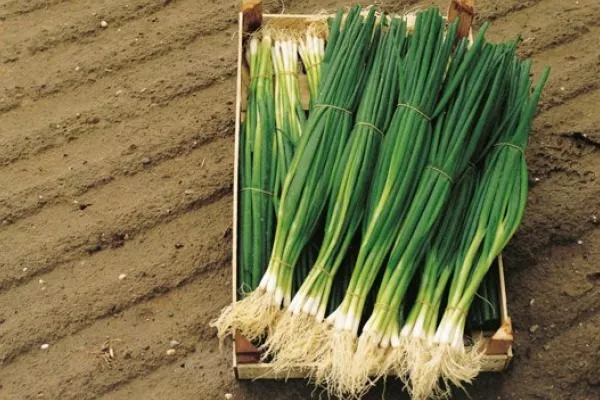
This variety devotes itself entirely to leaf development, resulting in a strong mass forming in place of the normal bulb, which subsequently transforms into a false stem. The white false stem, approximately 10-12 cm long, along with the green stem, is the plant's main source of nutrition.
Other external and other characteristics of the variety:
- The plant has a strong, erect foliage consisting of long, tubular leaves reaching 60-65 cm in length. They grow rapidly and abundantly throughout the growing season. Their color is a rich, dark green with a slight, bluish-gray waxy coating.
- The plant's root system is well developed, but the main part of the roots is located at a shallow depth, about 10-118 cm below the soil surface.
- The hybrid's feathers have a pleasant, moderately spicy aroma without a harsh aftertaste, but with a hint of sweetness. At peak ripeness, the leaves are juicy, crisp, and tender.
Advantages and disadvantages of the Parade variety
The Parade onion variety has gained recognition among Russian gardeners for its numerous advantages. They highlight the following qualities:
The Parade variety has no serious drawbacks.
How to plant and grow correctly?
Parade is distinguished by its versatility – it can be sown both in open ground in beds and in greenhouse conditions, using both seedling and non-seedling methods.
Preparing for landing
No seed preparation is required for planting onions directly in the garden. However, if you choose the seedling method, soak the onions in a growth promoter (Kornevin, Epin, Heteroauxin, etc.) before sowing. Leave the bulblets there for 24 hours.
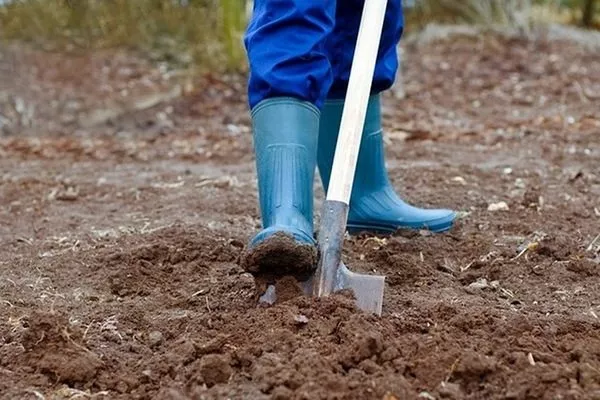
Garden bed management, as in greenhouses, involves digging the soil a couple of spadefuls deep in the fall and incorporating 10-12 kg of organic matter, a little phosphorus, and potassium into the soil. In the spring, before planting, the soil is enriched with nitrogen.
When growing seedlings in boxes, first disinfect the soil by soaking it in a 2% solution of potassium permanganate. After a week, it's a good idea to add potassium chloride to the soil.
Soil requirements
This variety thrives and promises a bountiful harvest in any soil. However, it's best to choose a site with a loose, well-drained soil structure and a pH between 6 and 7.
Predecessors
The best predecessors for planting the Parade variety are cucumber, tomato, legume and potato crops.
Planting technologies
Depending on the cultivation method, there are specific timing and planting guidelines for onions. The seedling method is most often used in cold climates.
Onion Parade for greens in open ground
Early May is the ideal time to sow onion seeds directly into the soil. To grow onions, follow a specific procedure:
- First, dig up the garden bed.
- After this, fertilize with nitrogen (35-40 g per 1 sq. m).
- Then level the ground and dig small furrows to a depth of 1.5-2 cm, while maintaining a distance of 6-8 cm between rows.
- Sprinkle the furrows with fine sand or chalk for better orientation when sowing seeds.
- Plant the seedlings every 5-6 cm, but to increase the chance of germination, you can plant two seeds per cell. Keep in mind that the germination rate of onions does not exceed 80%.
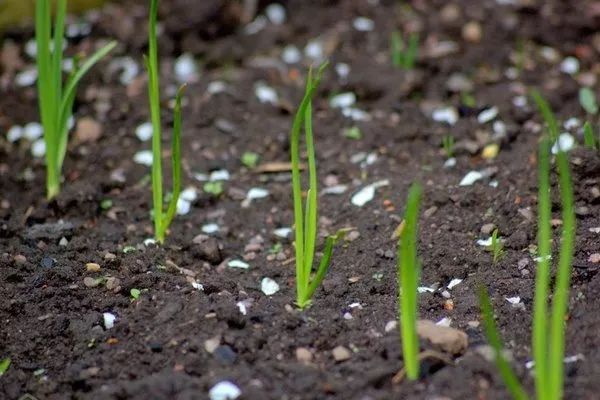
- Cover the seeds with a thin layer of soil and water using a sprayer or a watering can with small holes.
- The final stage is to cover with a covering cloth, which is removed after the first green shoots appear.
Caring for onions grown in garden beds requires regular watering, loosening the soil, and fertilizing. Fertilize after the danger of frost has passed. At this point, you can apply a weed infusion. To do this:
- Pour chopped herbs into a container.
- Fill it with warm water to the very top.
- Let it sit for a couple of days.
How to grow Parade onions using seedlings?
To plant seedlings, sow the seeds between March 1 and 20. To speed up germination, it's recommended to soak the seeds overnight in water, periodically replacing the water with fresh, warm water. After soaking, follow these steps:
- Prepare boxes with fertile substrate.
- Make holes 5-6 cm apart, 1 cm deep, then water them with warm water.
- Sow the seeds, lightly covering them with soil, and moisten again with a spray bottle.
- Cover with plastic wrap and place on a light windowsill where the temperature is maintained between 18 and 25 degrees.
- When the first green shoots appear, remove the cover and move the boxes to a place where the temperature does not exceed 16 degrees.
Onion Parade: growing in a greenhouse
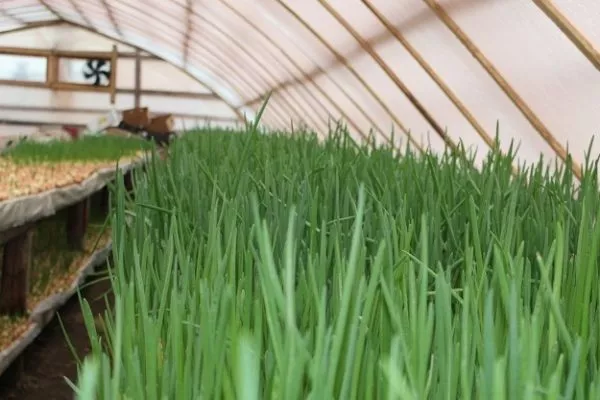
In an unheated greenhouse, onions can grow from spring to fall. In a heated greenhouse, you can grow greens year-round.
Main steps:
- To grow onions in containers, take wooden or plastic boxes measuring 60-70 by 40-50 cm.
- Disinfect the soil by treating it with a two percent solution of manganese and covering it with dark film.
- After a week, remove the cover and enrich the soil by adding 15 g of potassium chloride and 20 g of superphosphate.
- Then fill the boxes with the resulting substrate, water and place them on stands.
Sowing is carried out identically to previous technologies.
Care Features
Care procedures are standard and do not depend on the growing method. The only exception is that greenhouses need to be ventilated to prevent stagnant moisture, which can lead to rotting.
Watering mode
Parade's root system is poorly developed, so special attention is paid to its moisture. Water is added to the soil approximately once a week to prevent it from drying out deeper than 3-5 cm.
Loosening the soil and weeding
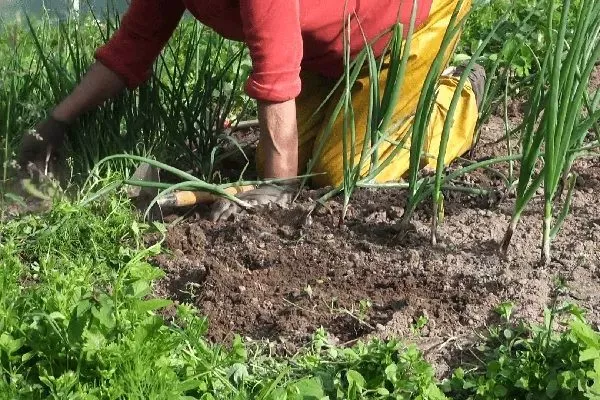
Weeds drain nutrients from the soil, which hinders healthy onion growth. Therefore, regularly clear your beds of unwanted weeds. To prevent their growth, you can mulch the spaces between rows with straw, sawdust, or agrofibre.
Top dressing
Fertilize plants in the morning during dry weather, avoiding contact with the leaves. In a greenhouse, apply fertilizer as needed. If the leaves have become pale and thin, water the plants with a urea solution or Kristallon in 10 liters of water, using 15-20 g.
Difficulties in growing
When growing the Parade variety, the following difficulties may arise:
- Onions can go dormant in high temperatures (above 27 degrees Celsius). To stimulate growth, it is recommended to water with cold water.
- If the humidity level is insufficient, the leaves may dry out and have a general negative effect on plant development.
- The risk of damage from insect pests increases if any variety of onion is grown near the Parade onion.
Harvesting and storage
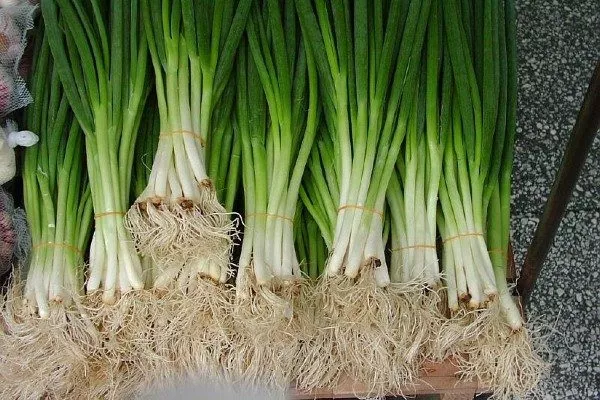
Parade allows for harvesting several times per season, and when grown in heated greenhouses, year-round. The greens are harvested as they ripen and stored in cool conditions for extended periods.
How and when to collect?
By mid-summer, you can enjoy your first vegetables, either by pulling the bulbs whole from the ground or leaving the roots and trimming the leaves. You can harvest greens from the field 3-4 times per season, with 30-45 day intervals.
Storage features and shelf life of the variety
To preserve the flavor of green onions, carefully wrap them in plastic wrap with ventilation holes cut in it and refrigerate them. Under these conditions, they will stay fresh for about a month.
Tips from experienced gardeners
Experienced farmers and gardeners are happy to share their experiences with newcomers. Regarding the Parade variety, they recommend the following:
- The soil around the onions must be regularly moistened. Although they can tolerate short-term drought, it's best to prevent it from occurring.
- Any plants affected by disease or pests should be destroyed by burning to prevent the problem from spreading throughout the area.
- Before sowing bulbs, it is recommended to treat the soil with boiling water to destroy fungi and insect pests.
- Watering onions should be done in the morning so that the leaves have time to dry before evening, thus eliminating the possibility of bacteria proliferation due to humidity.
- It should not be planted near onions, as they often become a target for flies, which can move to the leeks, causing damage.
Reviews of the Parade onion variety
The Parade variety is mid-season and is successfully grown throughout Russia. Breeders have successfully engineered it to be resistant to bolting, diseases, and pests. This, combined with its easy care and pleasant flavor, makes Parade one of the most sought-after Welsh onion varieties.