
Every year, more and more gardeners are planting onions before winter. This technique allows you to harvest the fleshy onions in early spring, and with the arrival of summer, you can plant other annual vegetables in your garden. Let's explore how to properly grow winter onions and which varieties to use for winter planting.
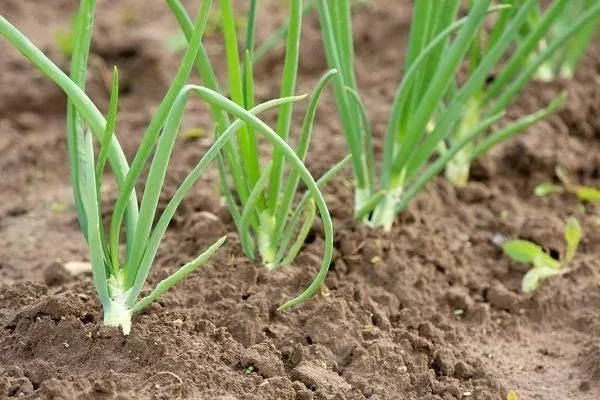
Advantages and disadvantages of winter planting
Many gardeners traditionally sow their crops in the spring, but relatively recently, in the early 1990s, vegetable growers began cultivating winter onions. This technology offers a number of advantages, which also reveal its essence. They are as follows:
- For fall planting, you can use the smallest sets. They often don't survive winter storage well and spoil before planting, rotting and bolting. Thus, winter planting allows you to save planting material, eliminating the hassle of storing it.
- During the winter, small bulbs accumulate enough nutrients to begin growing vigorously after the snow melts and the soil warms, but they lack the strength to produce shoots. This allows you to harvest the first green tips for salads as early as May, and large turnips in July or early August.
- Winter varieties ripen approximately 30 days earlier than onions planted in spring.
- If onions are grown exclusively for greens, they can be harvested early in order to plant another crop in the same place, with the exception of other varieties of onions and garlic.
- Winter planting does not require watering until about mid-May, since the soil contains enough moisture to nourish the planted onions until spring.
- Ripe bulbs are larger in size than those sown in spring. This is because many gardeners miss the favorable time for spring planting, preventing the bulbs from fully ripening.
- Crops planted in the winter are more resistant to fungal diseases and bolting. Most often, the plant bolts if the bulb absorbs excess moisture. These bolts should be removed immediately, otherwise they will drain all the liquid from the fruit. This will prevent the bulbs from growing to their full size.
As for the disadvantages of winter onions, gardeners highlight two points:
- lower yield compared to spring planting, since not all bulbs germinate;
- worse shelf life.
Meanwhile, today there are a large number of winter onion varieties with almost 100% germination rates. Furthermore, there are late-ripening varieties whose harvest can be stored for at least 8 months. Therefore, with a wise approach to autumn onion planting, these shortcomings can be completely mitigated.
Popular winter varieties
If you sow onions in winter, which typically grow in southern regions and require warmth and long daylight hours, you'll only get a meager harvest in the spring. To avoid this, choose early-ripening winter varieties that can tolerate frost and form bulbs with 12 hours of daylight. We'll look at these varieties below.
| Name | Ripening period | Productivity | Frost resistance |
|---|---|---|---|
| Arzamas local | Mid-season | 3.2 kg/sq.m | High |
| Danilovsky | Mid-season | Not specified | High |
| Radar | Late | 25-35 t/ha | Very high |
| Red Baron | Late | 60 g/ha | Average |
| Kip ValF1 | Mid-early | Not specified | High |
| Senshui | Early | Not specified | High |
| Struton | Mid-season | Not specified | High |
| Strigunovsky | Early | 3.5 kg/sq.m | High |
| Centurion F1 | Mid-early | 4 kg/sq.m | High |
| Shakespeare | Not specified | Not specified | Very high |
| Stuttgartenriesen | Early ripening | Not specified | High |
| Ellan | Early ripening | Not specified | High |
- ✓ Resistance to bolting at low temperatures.
- ✓ Ability to form a turnip in short daylight hours.
- ✓ High frost resistance, especially in winters with little snow.
Arzamas local
A nationally bred onion variety, approved for cultivation throughout almost the entire country since 1943. Suitable for growing as a biennial crop from sets. This mid-season variety takes approximately 68-86 days from mass emergence to leaf lodging. Up to 3.2 kg of yield can be harvested per square meter.
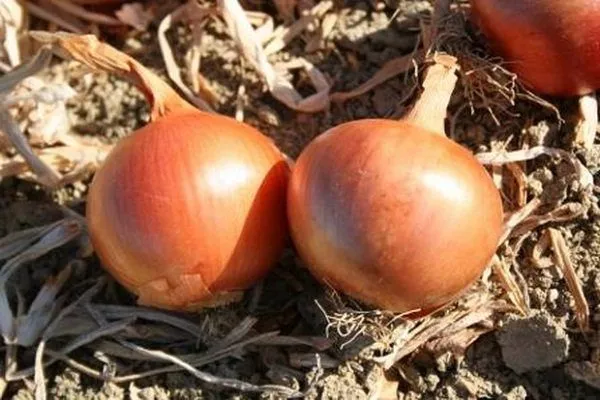
Mature bulbs have the following characteristics:
- average weight – 40-80 g;
- round-cubic shape;
- dry scales of dark yellow color with a brown tint;
- juicy white flesh, spicy in taste, which can sometimes have a greenish tint at the neck.
The variety is frost-resistant, but susceptible to downy mildew and is affected by onion fly.
Danilovsky
This variety has a mid-season ripening period: when planted as sets, the growing season lasts 13-14 weeks, and when sown from seeds, 16-17 weeks. It was developed in the Danilovsky District of the Yaroslavl Region and is grown in many CIS countries. In Russia, it is also suitable for cultivation in the Urals and Siberia, as it is suited to regions with short summers.
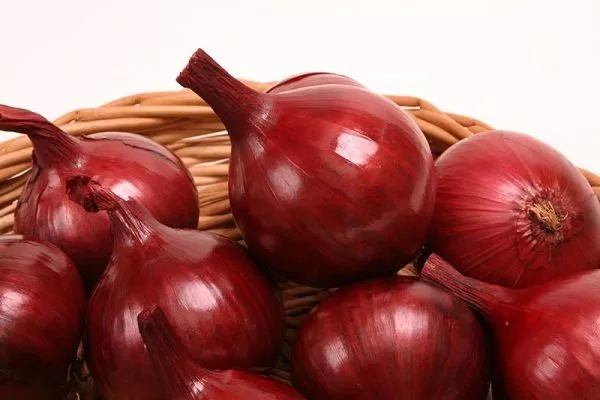
This variety produces only 1-2 bulbs per cluster. They weigh 80-100 g, but can reach up to 160 g under favorable conditions. The fruits are flat or round-flat and have juicy, light purple flesh with a red tint. They are covered with dry, dark red scales. The onion has a semi-sharp, mild, and slightly sweet flavor.
Unlike the previous variety, Danilovsky is resistant to downy mildew.
Radar
A late-season onion variety with a high yield—25-35 tons per hectare. Radar is a winter variety, making it frost-resistant. The plant's ability to withstand freezing temperatures depends on the depth of snow on the ground. If the snow depth is deep, the onion can withstand temperatures as low as -23°C, while if it's thin, it can withstand temperatures as low as -15°C.
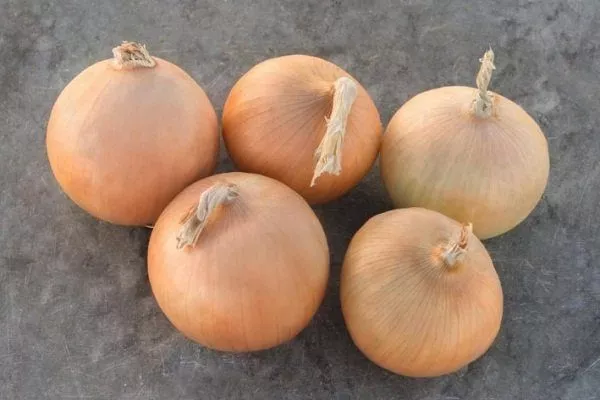
The bulbs are large, weighing on average 150g, but some weighing around 300g. They are round and flat in shape and covered with dense, light-yellow scales, ensuring their long-term storage.
The radar is resistant to various diseases and shooting, and is also practically not subject to pest attacks.
Red Baron
A late-ripening red onion. It produces semi-sharp fruits with the following characteristics:
- weight from 50 to 130 g;
- round shape, slightly flattened at the top and bottom;
- red or dark purple dry scales and pulp of the same color.

To obtain the largest fruits, this variety should be grown from seedlings. Yields are 60 g per hectare.
Red Baron Not susceptible to downy mildew, root rot and fusarium.
Kip ValF1
A mid-season variety that is increasingly popular among gardeners. Its name translates from English as "well-kept." Indeed, this hybrid has excellent shelf life. It produces round, flat bulbs with dense, high-quality, dry scales of a shiny bronze color. These bulbs weigh on average 100 to 150 g.
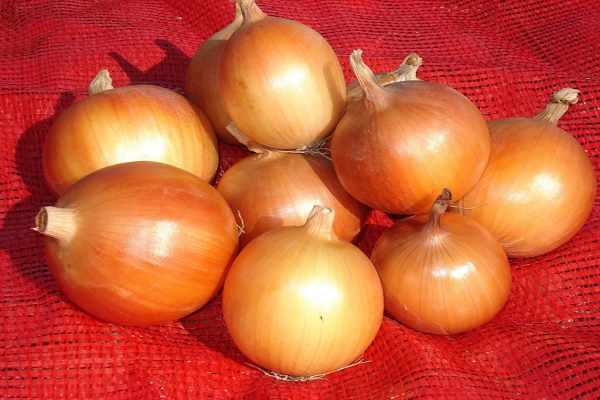
The hybrid is resistant to bolting, tolerates cold winters well, and is immune to many diseases and garden pests, including onion flies and nematodes.
Senshui
An early-ripening variety with good yields and good shelf life (up to 6 months). It produces round bulbs, but flat ones are also available. They have dense, yellow-brown scales and white, pungent flesh.
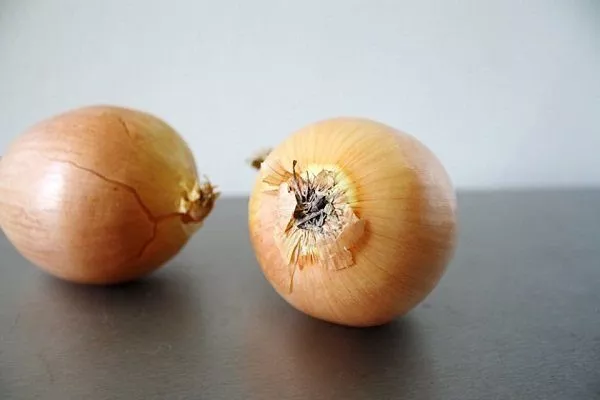
The variety is virtually immune to insect attacks and exhibits resistance to fungal diseases, including powdery mildew.
Struton
A mid-season variety distinguished from other winter crops by its distinct, tangy flavor. The fruits are elliptical in shape and covered with dry, golden-brown scales. They weigh 70-180 g on average. They can be stored for up to 8 months without losing their flavor or marketability.
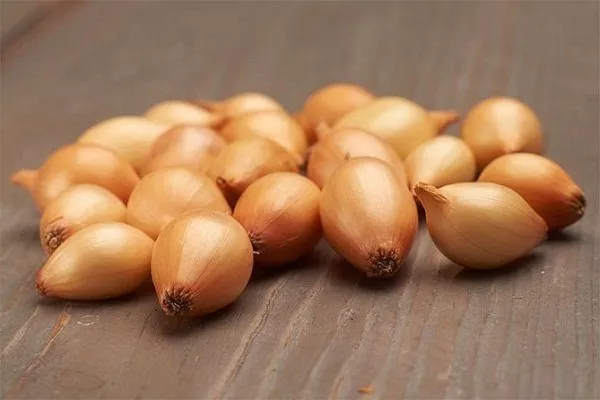
Struton is virtually immune to pest attacks and fungal diseases. The plant rarely produces bolts.
Strigunovsky
This early-ripening, high-yielding variety yields up to 3.5 kg of bulbs per square meter of plot with the following characteristics:
- weight – 45-80 g;
- shape – round with a slight taper at the bottom and top;
- dry scales are dense, yellow in color with a pink or brown tint;
- The pulp is white and juicy, with a sharp taste.
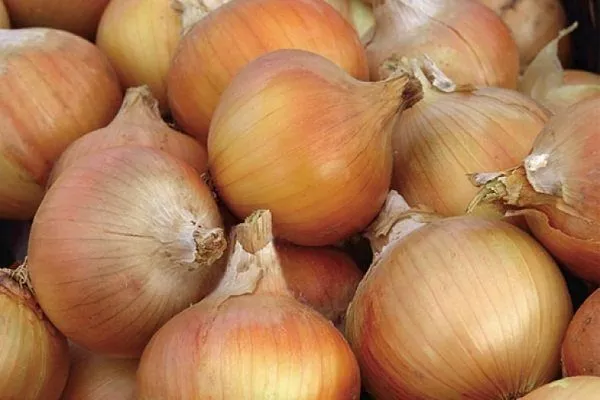
The variety has a high germination rate—from 50 to 98%. With proper storage, the harvest can last almost until the following season.
In some years, the crop is heavily attacked by pests and affected by diseases.
Centurion F1
A mid-early hybrid with excellent shelf life (over 8 months). The fruits are round and elongated, weighing approximately 110-160 g and covered with a golden-brown skin. The flesh itself is white and juicy, with a tangy flavor.
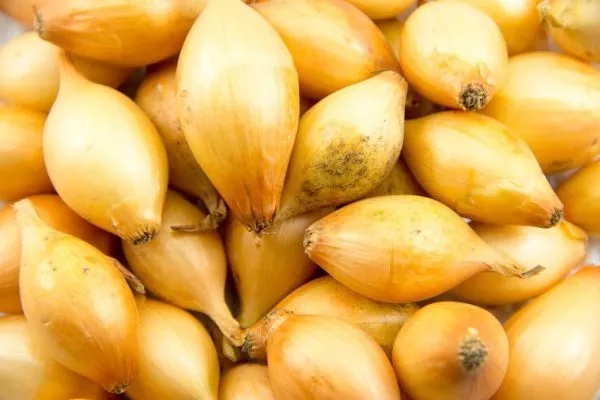
The variety also boasts good yields. Up to 4 kg of fruit can be harvested from 1 square meter of garden bed. On an industrial scale, this figure is 300-400 centners per hectare.
Hydride is resistant to major onion diseases and does not have the ability to shoot arrows.
Shakespeare
Among winter varieties, this is a favorite among gardeners, as it has the greatest frost resistance. Unlike Radar, it can withstand temperatures down to -18°C and below, even in the absence of snow cover. After snowfall, the plant will not be harmed by even lower temperatures.
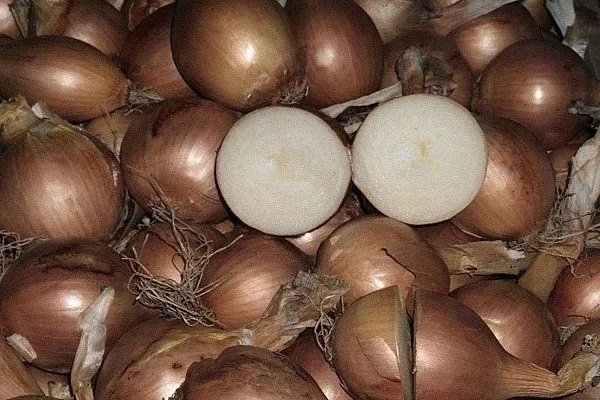
Shakespeare produces large fruits weighing an average of 100g. They are round in shape, have dry, brown scales, and dense white flesh with a semi-sharp taste.
The variety does not produce shoots, but is weakly resistant to diseases.
Stuttgartenriesen
An early-ripening variety bred in Germany, it produces flat or round-flat fruits with dry yellow and slightly brown scales, although white specimens are also found. The flesh itself is always white, with a sharp flavor and the highest vitamin C content of any onion variety.
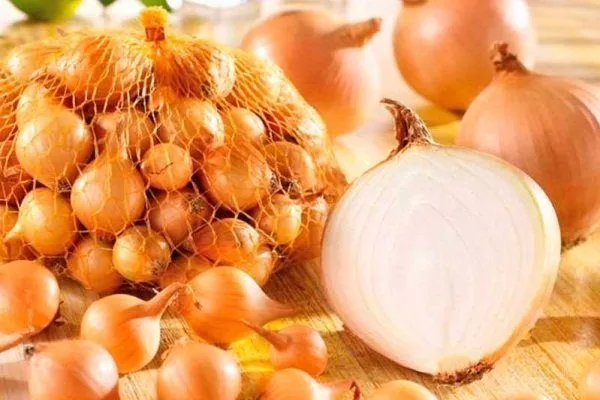
This variety is valued for its large bulbs, weighing from 100-150 g to 250 g. They have a long shelf life.
Stuttgartenriesen has a significant drawback: it is often affected by downy mildew and, somewhat less frequently, by neck rot.
Ellan
An early-ripening winter variety characterized by good germination and excellent flavor. The round bulbs with dry, straw-colored scales weigh 100-150 g and have white flesh with a sweet taste. Ellan can be eaten as early as June, when spring onions and garlic are still growing and the previous year's harvest has been exhausted.
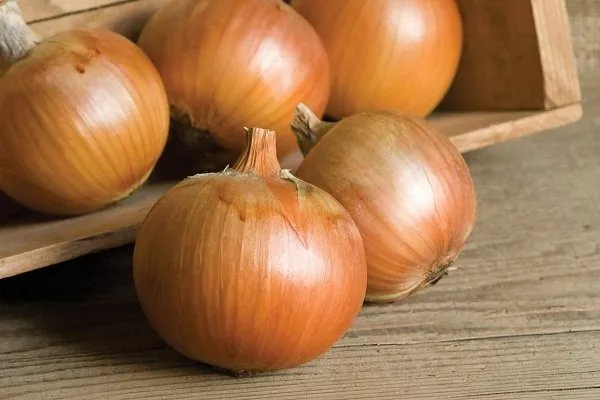
The variety is resistant to downy mildew and tolerates cold well.
An overview of the best winter varieties from Holland is provided in the video below:
Planting dates
To ensure an early onion harvest, it's crucial to time your winter onion planting correctly. This factor depends on specific weather conditions, so determining favorable planting days should be done on a case-by-case basis. The following guidelines should be followed:
- planting work must be carried out before the arrival of real winter, that is, before frost;
- 3-4 weeks should pass from the time of planting until the onset of frost, so that the plant has time to fully take root in the soil (weather conditions change every year, so you should monitor the forecast);
- The best time for planting is when the temperature is stable, between +4 and +6°C (planting should not be started before this time, otherwise the number of shoots will increase significantly in the spring).
Given the above, it's clear that planting times will vary by region. For example, in central Russia, including the Moscow region, the optimal period is October to early November. However, some varieties should be planted before the end of August—between the 15th and 25th. These plants have a long growing season, allowing them to become thoroughly established before the cold weather sets in. The key is for the seedlings to develop 4-5 leaves and a 5 mm diameter crown before frost.
The lunar calendar can also help determine favorable days for planting winter crops; according to it, onions should not be planted during a full moon.
How to grow onion sets for winter planting?
Experienced gardeners prefer to grow their own sets from frost-hardy onion seeds (nigella) purchased from a specialty store. This process can be divided into several stages:
- Determining sowing datesIn early spring, immediately after the snow melts and the soil warms, begin sowing nigella seeds. Typically, the best time to sow is around late March or early April.
- SowingSeeds can be sown densely in strips spaced 5-6 cm apart at a depth of 1.5-2 cm. The recommended seeding rate is 35-40 seeds per square meter. The row spacing should be wide to allow for easy weeding. For this purpose, a 35-40 cm gap can be left between strips.
After sowing, the nigella seeds should be covered with sifted soil to a depth of 2 cm. This should be lightly rolled to prevent wind erosion. Finally, mulch the crops with humus, compost, or straw. - Caring for cropsAfter the first shoots emerge, the bed should be watered for the first time. Subsequently, this procedure should be carried out only when a crust appears on the soil surface. After heavy rain, the soil should be loosened slightly to allow air to reach the plant roots. Weeds should also be removed. The bed can also be fertilized, but only before the seedlings emerge.
The planting should not be heavily fertilized, otherwise the bulbs may lose all seed properties.
- Harvesting onion setsOnion sets are often ready for harvesting in late July or early August. By this time, their leaves turn yellow, dry out, and fall over. All the sets should be dug up immediately and left in the garden bed to dry. Once the bulbs are dry, their leaves can be easily and quickly peeled off by hand.
- Sorting bulbsThe collected bulbs must be selected and sorted. Large bulbs (over 1 cm in diameter) should be placed on one side, and small bulbs (up to 1 cm in diameter) on the other. Any damaged bulbs must be removed.
For autumn planting, use sets smaller than 1 cm. Larger rhizomes can be planted in the ground in the spring.
Site selection and soil preparation
The onion sets need to be planted in the right location, otherwise you can forget about a large harvest of large bulbs. The site should be selected taking into account several parameters:
- IlluminationThe planting site should be located in a sunny location. It should also be well protected from wind and drafts.
- Passage of inland watersWet soil, especially in winter, will lead to rotting and death of the plants. To avoid this, it's best to plant onions in a part of the garden that doesn't flood in the spring or is located on a hill. If the area is close to groundwater, drainage is essential to ensure adequate drainage.
- SoilThe best areas for planting onions are considered to be those with humus-sandy soil or with a predominance of humus loam.
- The worst predecessorsOnions should not be planted in the same location for more than two consecutive seasons. The crop can be returned to the same location only after 4-5 years. It is also not advisable to grow onions after oats. Failure to follow this rule could result in the soil becoming contaminated with pathogens that can survive frost and ruin the entire crop. To protect against nematodes, onions should also not be planted after:
- potatoes;
- parsley;
- celery;
- alfalfa;
- clover.
- The best predecessorsIt is desirable that the following crops have previously grown on the designated area:
- cereals (all except oats);
- legumes (peas, beans);
- cereals (rye, corn);
- various types of lettuce and cabbage;
- beet;
- carrot;
- tomatoes;
- cucumbers
- rape.
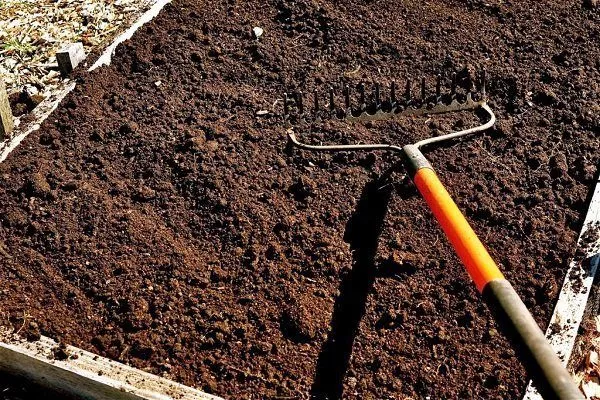
To improve the soil structure and increase its fertility, it is worth planting green manure before onions, mow it down about 30 days before planting the sets and work it into the soil.
The selected plot should be prepared in advance, beginning in the summer (about a month before winter planting). It should be dug over and fertilized with compost. If compost was added to the previous crops, this step can be skipped, as by the time the onions are planted, it will have already enriched the soil and acquired a uniform texture. Never add fresh manure to the onion sets, otherwise the bulbs will be loose, and the green mass will significantly outweigh them.
- ✓ Check the soil pH, the optimal level is 6.0-7.0.
- ✓ Add compost or humus one month before planting.
- ✓ Avoid fresh manure, which can lead to weed growth and diseases.
Along with humus, the soil can be fertilized with the following fertilizers (per 1 sq. m):
- 20-25 g of superphosphate;
- 10-15 g of potassium salt;
- 30 g of Ammophoska.
Immediately before planting, the soil should be watered and left for a couple of hours to dry. Then, it should be lightly loosened, weeded, and leveled. A pinch of wood ash can also be added to the holes when planting.
Planting onion sets
Sorted onion sets can be planted in prepared soil. The specific planting pattern depends on the crop's intended purpose.
On the turnip
On the day of planting, you need to prepare furrows in the garden bed, following this pattern:
- the width between rows is from 12 to 15 cm (depending on the diameter of the bulbs: the larger it is, the further apart the rows should be placed);
- the distance between small bulbs in a row is from 5-6 to 10 cm (should be such that the feeding area is sufficient);
- The depth of planting the sets is 4-5 cm (if you plant the sets at a shallower depth, then in the spring the bulbs will stick out from the ground and will suffer from the cold).
The necks of bulbs cannot be cut off when planting in winter.
Place the dried bulbs in the prepared rows, then cover with light soil—a mixture of garden soil with humus or sand. The finished planting should be mulched before the expected cold weather sets in. The following materials can be used as mulch:
- dry leaves or humus;
- straw;
- chopped tops of legumes;
- fallen needles;
- flower stems;
- sawdust;
- pine needles;
- small branches (after pruning apple trees, raspberries).
On frosty days, the plantings can be covered with white agrofibre. This will help the onions survive winters with little snow and temperatures dropping to -20°C.
On the greens
If onions are grown for greens, a slightly different technique is used. First of all, you can use larger sets—those suitable for spring planting. The planting pattern also needs to be adjusted:
- width between rows – from 15 to 20 cm;
- the distance between sets in a row is from 9 to 12 cm;
- The planting depth of the seed onions is 4-6 cm.
The planting area must be insulated with a layer of mulch made from dry leaves or fallen pine needles. Otherwise, all the seeds will freeze and will not germinate in the spring.
Caring for winter onions
To successfully complete the cultivation of winter onions, proper care is essential during the growing season. This involves a number of agricultural practices and protecting the crop from diseases and pests.
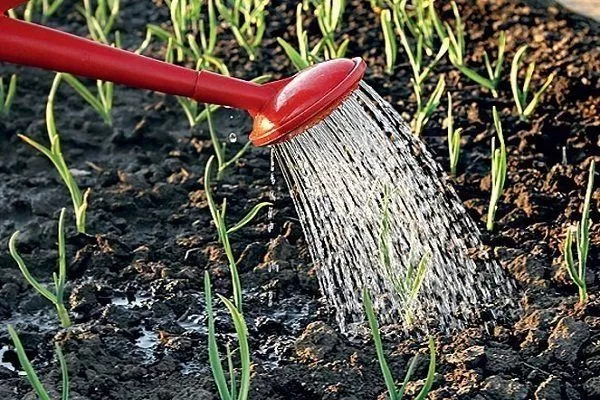
Agrotechnical measures
As the plant develops, the following manipulations need to be carried out in a timely manner:
- WateringWater the beds moderately as they dry out. Avoid overwatering, as stagnant moisture will cause the bulbs to rot. If the fall is dry and there has been no precipitation for a long time (about 20 days), water the onions several times.
- LooseningWhen the first shoots appear, 18-20 days later, loosen the soil for the first time. This should be done regularly thereafter – after snow melts, heavy rains, or watering.
In soft soil, the bulbs will gain mass and grow large, while in hard soil, they will remain small, resembling garlic in size. Carefully loosen the soil to avoid damaging or infecting the bulbs. - WeedingWeeds should be prevented from growing in the garden bed, as they can choke out the tender young onion shoots. Therefore, as you loosen the soil, you should also weed the bed.
- HillingTo prevent the bulbs from freezing and to keep them under the soil, hill the bushes 5-7 cm deep before the onset of winter.
- Top dressingThis is only done if the soil is severely depleted. If fertilizer has been applied, then additional feeding is not necessary. In this case, the rule is: it's better to under-fertilize than to over-fertilize.
The problem is that too much fertilizer will lead to rapid growth of green mass, but the bulbs will be small and loose, unsuitable for long-term storage. They will have to be dug up immediately, eaten, or thrown away. If the soil is depleted, you can fertilize it 2-3 times using the following schedule:- in the spring, after the soil has warmed up and the first shoots have appeared, carefully loosen the bed and water with a solution of mullein or diluted chicken manure (these are nitrogen additives that will accelerate the growth of onions);
- When the first green leaves appear, feed the onions with immunomodulators or growth stimulants, for example, Plantafol solution (use the preparations strictly according to the instructions on the package);
- In summer, in June or July (at the stage of bulb formation), water the beds with a solution of wood ash (this is not only a good fertilizer, but also an effective pest repellent).
Winter onions shouldn't be fertilized in the fall, as this can cause the bulbs to immediately begin growing and won't survive the winter. The most you can do during this period is add a little ash and humus to the bed. This will improve soil fertility but won't speed up the bulbs' ripening.
- Mulch removalIn early spring, immediately after the snow melts, remove the mulch layer from the garden bed. To prevent frost damage, cover the plantings with white non-woven fabric at night.
Protection from diseases and pests
To protect your crops from diseases and pests, follow crop rotation rules. Additionally, consider the following preventative measures:
- plant carrots, calendula or marigolds between the rows;
- twice, at intervals of 8-10 days (at the end of June and mid-July), scatter a mixture of tobacco dust, mustard and ash between the rows.
However, even if such measures are taken, the following may pose a danger to onion planting:
- Onion flyIt appears in gardens in mid-May, laying eggs on onions and the surrounding soil. At least two generations of the pest can attack crops over the summer. Their larvae burrow into the bulbs and cause them to rot. To control the fly, treat the crop with organophosphates (imide, thiacloprid) or apply granular preparations (Bazudin, Fosfamide) to the soil.
- Downy mildewIt attacks onion beds in the fall. After infection, plants become stunted, dry out in dry weather, and become covered with a gray-purple coating in wet weather.
As a preventative measure, onions should be treated with contact fungicides (copper oxychloride, Oxychom) every 12-14 days. In cloudy weather, this interval should be reduced to 7-8 days. If the plant does become infected, it should be treated with systemic fungicides (Acrobat MC, Ridomil MC). It is advisable to alternate these treatments.
When growing onions for green leaves, you cannot treat the plantings with pesticides.
Harvesting and storage
Once the bulbs reach maturity, they should be removed from the garden. The following signs will indicate this:
- dry turnip scales have acquired a color characteristic of a particular variety, for example, orange, purple or red;
- the leaves fell down.
Some gardeners deliberately place leaves on the ground to speed up the ripening of the bulbs. However, it's best to wait until the natural ripening process is complete, otherwise the quality of the fruit may suffer.
When harvesting, ripe onions should be carefully dug up with a pitchfork or shovel, shaken free of soil, and air-dried. For storage, it's best to store onions with completely dry leaves and roots. Unripe onions and onions with thick, juicy necks should be eaten immediately, as they don't store well.
An experienced gardener will reveal the secrets of growing winter onions in the following video:
A wide range of winter onion varieties with high cold tolerance are available today. They can be planted before winter to yield an early harvest of bulbs from late June to early August. These varieties are easy to grow and require only timely implementation of basic agricultural practices.