
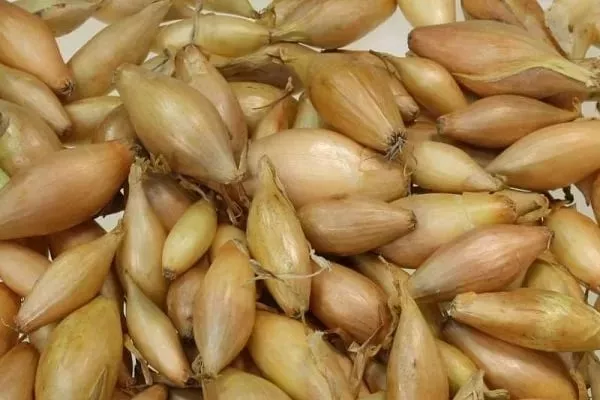
Olina onions can be grown as an annual crop using seeds or as a biennial using sets. Despite its Czech origins, this variety is very popular in our country, as it is considered resistant to almost all adverse conditions. It can be grown in both open beds and greenhouses, and can be planted in autumn and spring in any climate zone.
Introduction to the variety
The onion scales of this variety are particularly dense, ensuring high stability during cultivation—up to 90–95%. Under standard storage conditions (temperature 2–5°C, humidity no more than 70%, sheltered location), the onion tubers retain their quality for six months. Olina onions are highly transportable, allowing them to be shipped over long distances.
Origin
Olina is one of the most sought-after onion varieties developed in the Czech Republic. This crop was developed under the auspices of the renowned agricultural firm MORAVOSEED. Researchers HORAL JIRI and KLAPSTE PETR were the creators of this variety.
After successfully passing all required variety testing in Russia, the Olina variety was included in the official register of breeding achievements in 1997. The originator of the crop is M.V. Aleksashova, an individual entrepreneur from Moscow.
Chemical composition, vitamins, beneficial properties
Onions are known for their ability to kill bacteria and are often used to prevent colds and runny noses. A chemical analysis of the onion's chemical components, Olin, shows the following parameters per 100 g of product:
- calcium – 31 mg;
- phosphorus – 58 mg;
- sodium – 18 mg;
- magnesium – 14 mg;
- potassium – 175 mg;
- cobalt – 0.8 mg;
- manganese – 0.23 mg;
- copper – 85 mcg;
- fluorine – 30 mcg;
- The vitamin composition includes:
- B1 – 0.05 mg;
- B2 – 0.02 mg;
- B5 – 0.1 mg;
- B6 – 0.2 mg;
- B9 – 53 mcg;
- C – 10 mg;
- E – 0.2 mg.
- caloric content – 41 kcal;
- proteins – 1.7 g;
- fats – 1.2 g;
- carbohydrates – 10.5 g;
- water – 87 g.
Onions also contain essential oils, sugars, and fruit acids such as malic and citric acid. Applying a fresh onion compress can be effective in treating minor burns and cuts.
Ripening period and yield
Olina is distinguished by its early maturity. On average, it takes 2.5 to 3 months from planting to harvest. The exact ripening time depends on the cultivation method:
- when sowing seeds - from 65 to 95 days;
- when planting with sets - from 60 to 85 days.
The yield is small, ranging from 1.5 to 3.2 kg per square meter. To increase yield, it is recommended to grow Olina onion sets, which will allow yields to reach up to 5 kg.
In industrial conditions, the yield can reach from 270 to 310 centners per hectare, which is 50-100 centners higher than the standards of the Bessonovsky local variety.
Disease resistance
This variety is resistant to diseases such as fusarium, yellow dwarf, and mosaic. However, it is susceptible to fungal infections such as powdery mildew and root rot.
Description of appearance and taste
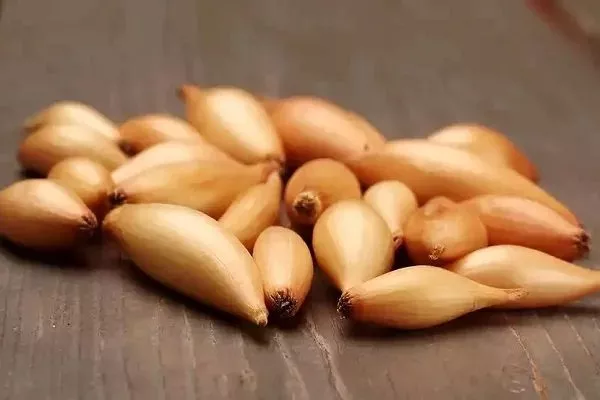
The bulbs of this variety are round and medium-sized. They are characterized by:
- The weight of each can vary from 40 to 935.
- The outer layer is golden in color, while the inner layers are transparent and whitish.
- Mature bulbs are characterized by high density.
- This variety is classified as a medium-nested variety, where each nest usually contains two or three bulbs.
- All bulbs have an even shape and excellent shelf life, making them resistant to long-distance transportation.
- The upper part of the plant is light green in colour, its leaves are tubular and covered with a light waxy coating.
- The taste of ripe bulbs is moderately spicy and pleasant.
Application
Olina is a variety used in many culinary recipes. Both the bulbs themselves and the above-ground portion of the plant are used for food. The bulbs can be eaten fresh or used in cooking and preserves.
The greens are used to create a variety of salads. This variety is cultivated both for personal consumption and for commercial purposes.
Landing region
This vegetable variety thrives in the climate of the central and middle Volga regions of Russia. This zone includes the Bryansk, Vladimir, Ivanovo, Kaluga, Moscow, Ryazan, Smolensk, and Tula regions, as well as the Republic of Mordovia, Penza, Samara, and Ulyanovsk regions, and the Republic of Tatarstan.
The main advantages and disadvantages of the variety
Olina has a number of attractive characteristics, but the following stand out in particular:
Despite its advantages, this variety has one drawback: a short shelf life. However, if you follow all the rules, the bulbs can be kept in good condition for up to six months.
Features of planting and growing
Growing Czech onions is no more difficult than growing domestic onions. However, it's important to pay attention to certain varietal characteristics and aspects to achieve the best possible results.
Preparing for landing
Before planting seeds, carefully inspect them for rot, damage, and pathogens. Don't ignore these other rules:
- Two weeks before planting, heat treat them at a temperature of +40 to +45 degrees for 7-8 hours.
- Before planting, soak the bulbs in a solution of potassium permanganate for 30 minutes, and then treat with biofungicides for 90-120 minutes.
- It's important to remember crop rotation rules when growing agricultural crops. The best predecessors for onions are:
- cereal crops, except oats;
- cabbage;
- mustard;
- rape;
- legumes.
- Predecessor crops such as oats, garlic, onions, and cucumbers should be avoided.
Soil requirements
Onions grow best in light, nutritious soils with a neutral pH ranging from 5.5 to 6.4. Soil pH can be determined using soil test strips. Weed seeds should be kept out of the soil, as they can slow down the plant's growth.
Timing, scheme and rules of planting
Growing this variety is possible using two methods:
- direct sowing in the field or through seedlings;
- by planting sets directly into the garden bed (for two-year-old plants).
Gardening experts tend to believe that direct seeding requires less effort than the seedling method, which is considered more labor-intensive.
Growing from seeds
Growing onions from seed requires more effort, but ultimately pays off with savings. The planting process is easy to master, even for beginners. Here's what to do:
- First, warm the seeds in a weak solution of potassium permanganate for 30 minutes. Then place them in warm water for a couple of days, remove them, and let them dry on a paper towel.
- Next, place the seeds in a damp cloth and place them in a small container. Leave them at room temperature for 6-10 days, moistening the cloth regularly.
- For planting, use a soil mixture consisting of two parts turf and one part peat, sand, and humus. Chill this mixture in the freezer or bake it in the oven for 15-20 minutes to kill pathogens.
- Then pour the substrate into a container with 10-12 cm high sides. Create furrows with a 4-6 cm interval between them. Using a fork knife, place the planting material to a depth of 0.8-1 cm with a 3-4 cm interval between them.
- After planting, lightly sprinkle the soil on top and moisten with water. Cover the containers and keep them at a temperature of 20-24 degrees Celsius. Be sure to cover them with glass or plastic film.
- Ventilate and water regularly. When the first green shoots emerge, remove the covering and move the onions to a room with a temperature of 15-17 degrees Celsius.
- Two weeks before transplanting into open ground, move the pots with plants to a balcony or outside, where the young plants are hardened at +10-13 degrees.
Beginning in early May, the process of planting Olina onion seedlings in open ground begins. By this time, the seedlings should already have at least three fully formed leaves. When planting, maintain 2-3 cm intervals between plants and the same planting depth, with a distance of 45-55 cm between furrows. It is recommended to prune the onion leaves and root shoots by a third.
Planting onion sets in spring
April and May are the ideal time to plant onion sets in gardens and fields. For the Olina variety, it's especially important to ensure consistently warm and dry weather at planting time. Agricultural recommendations call for careful soil preparation:
- Clean, dig and fertilize the soil in advance using compost or humus.
- Two weeks before planting, select heads without signs of rot or damage, up to 2.5-3 cm in size.
- Warm the bulbs for 5-7 hours and treat with any fungicide for 40-50 minutes.
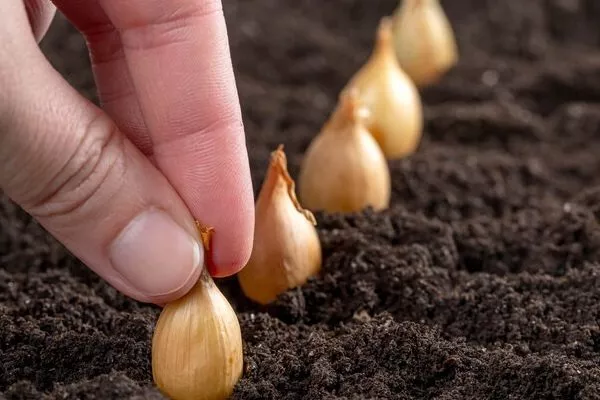
- Place the seedlings in the ground to a depth of 1.2-1.6 cm.
- After planting, carefully cover the bulbs with soil and water them thoroughly.
- Protect planting areas with mulch, preferably made from natural materials such as sawdust, pine needles or straw.
Is it possible to plant before winter?
Olina is a winter crop. The best time to sow this onion variety is when the air temperature reaches +5°C. In the southern regions, sowing begins in early November, in the central part of the country – in October, and in the northern regions, planting occurs in September, shifting the time by 2-3 weeks relative to the southern regions.
When planting before winter, place the seeds 2-2.5 cm below the soil surface. After sowing, protect the bed from cold and high humidity using a thick layer of dry grass or fallen leaves for mulch.
Olina onion care recommendations
The variety does not have any special requirements, but key aspects of care must be strictly followed.
Watering mode
It's important to carefully monitor soil moisture levels, avoiding both excessive drying and overwatering. Other considerations:
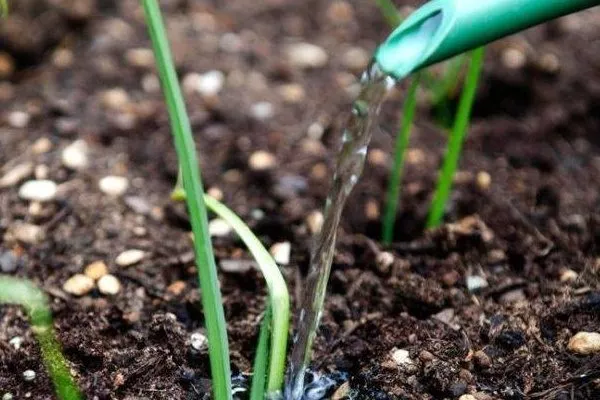
- During the first month after planting, onions especially need sufficient moisture, so it is important to avoid dry soil.
- Water the bulbs once every 10-12 days, but in high temperatures and dry weather this interval is reduced to 5-7 days.
- At the beginning, moisten the soil to a depth of 8-10 cm, but as the bulbs grow, increase the volume of water, irrigating the soil to a depth of 20-28 cm.
- Please note that watering should be done in the morning or evening. Apply water around the bulb to avoid wetting it.
- Stop watering the onions 3-4 weeks before harvesting.
Loosening the soil and weeding
These manipulations are critical when growing the Olina variety:
- Weeds should be removed approximately every 15-20 days. Weeds increase moisture in the bed, which can lead to the development of fungal diseases. If weeds are not removed, the bulbs will grow with thick, juicy necks, which makes drying difficult and reduces their shelf life.
- To ensure the bulbs receive adequate nutrients, it's important to loosen the soil regularly. This reduces weeds and provides the bulbs with more space to grow. To prevent the soil from sticking together, it's recommended to loosen the soil after each watering.
Top dressing
During the entire growing season, onions need to be fertilized at least three times. When choosing fertilizers, avoid those containing nitrogen, as they promote increased growth of the leaves, which leads to the formation of small bulbs.
The selection and calculation of fertilizers is carried out according to the following scheme:
- First Fertilizing is carried out 2-2.5 weeks after the emergence of green shoots, when the plant height reaches 2-2.5 cm. Urea is used as a fertilizer, diluted in 10 liters of water for every 55 g. The solution is poured near the roots.
- Second The fertilization stage is carried out 21 days after the first. This time, a mixture of 40-50 g of superphosphate, 10-12 g of potassium salt, and 20-25 liters of water is used. The solution is applied near the roots.
- Third Fertilizing is done a month before the bulbs are ready for harvesting. At this point, phosphorus-potassium mixtures are used, applying them strictly according to the instructions.
The first feeding is aimed at stimulating the root system and leaf development. The second and third feedings are necessary to provide nutrition to the bulbs and encourage their growth.
Pest and disease control
The variety is vulnerable to the following problems:
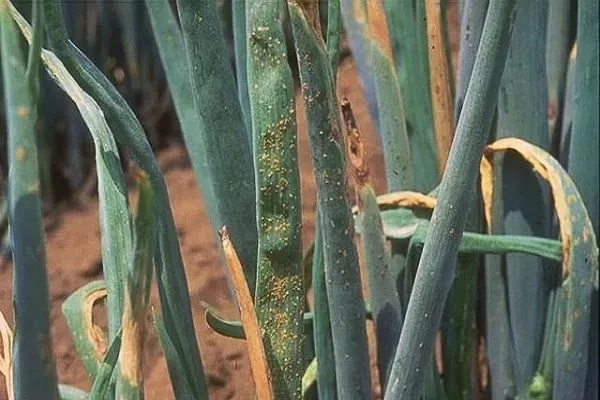
- Root rot. It appears as yellowish spots or dry tissue on the leaves. For protection, use a solution made from 1 tablespoon of copper sulfate and the same amount of soap suds per 10 liters of water. Plants should be treated when they reach a height of 10-14 cm.
- Powdery mildew. It damages leaves and bulbs. To combat and prevent this disease, dust the plants and soil with wood dust or tobacco powder.
Among the most serious enemies of onion crops, it is worth highlighting:
- Onion fly. This pest lays its eggs directly into onion crops, after which the larvae begin to eat the onion necks, preventing their development. Mulching and the insecticide Fitoverm are used to control this harmful insect.
- Small worm-like nematodes. They pose a threat because they feed on onion juices. To avoid them, it's important to strictly follow crop rotation and treat the seeds before planting.
- Thrips. Insects cause wrinkles on the bulbs beneath the scales, causing significant damage. Their presence can be identified by yellowing foliage that begins to deteriorate from the top. Controlling these pests can be difficult, so special attention should be paid to preventative measures.
Use only tested and treated seeds, follow crop rotation and do not over-water the soil.
Harvesting and storage
Harvest in dry weather, carefully digging up the bulbs with a shovel and removing them from the ground. Store onions according to standard storage guidelines – in cool, loose conditions, in natural sacks or wooden crates.
How and when to collect?
This variety is considered an early-ripening variety. Harvest time is in late August or early September. The bulbs are ready when the tops have already yellowed and become slightly dry.
Dry, clear weather is best for harvesting. Onions can be dug up with a shovel or carefully pulled by hand. The harvested crop should be dried in the sun in a cool place for a week.
During the drying process, the bulbs should be turned periodically to ensure complete drying. At this time, any roots and stem debris should be removed.
Storage features and shelf life of the variety
After the initial drying, the onions should be left for another week to dry in a heated room. Then, the harvest is stored in layers in wooden or plastic boxes. Nets or fabric bags can be used for storing the onions.
Olina bulbs should be stored in a dry, ventilated place at a temperature of 0 to -1 degrees Celsius and a humidity of 75-90%. If stored correctly, the bulbs will retain their quality for 6-7 months.
Difficulties in growing
When growing this crop, the following difficulties may be encountered:
- infection with fungal diseases;
- the need for regular monitoring of soil moisture levels.
Tips from experienced gardeners
Recommendations from gardening experts:
- Onion crops can be fed with yeast extract. To do this, dissolve 100 g of fresh yeast in 10 liters of water and leave for 60-80 minutes to ferment. First, water the seedlings with plain water, then apply the prepared yeast solution.
- Before planting, it's advisable to soak the seeds in a concentrated salt solution for three hours. To do this, add 2-2.5 tablespoons of salt to 500 ml of water. Afterwards, treat the onions with a solution of potassium permanganate.
Reviews
The Olina onion has won the hearts of many farmers and gardening enthusiasts. Its uniformly developing, medium-sized bulbs are consistently highly rated. The variety is distinguished by its early maturity and resistance to various diseases. By following simple farming practices, ensuring a harvest of this variety is easy.