
Properly treating onions before planting ensures a good harvest. This procedure is complex, as it involves sequentially soaking the planting material in various disinfectants, including salt and potassium permanganate. These disinfectants will be effective if you follow all the onion preparation guidelines and the recommendations of experienced gardeners.
Why is pre-sowing treatment necessary?
Some gardeners immediately plant their planting material in the ground after purchasing it, tend to it well, and hope for a bountiful harvest, but the results leave much to be desired:
- the bulbs turn out small;
- signs of decay are visible on the soft heads;
- The germination rate is low due to the death of most of the onion seeds or sets.
- ✓ Make sure that the bulbs are not mechanically damaged.
- ✓ Check for signs of disease or pests.
Fortunately, such consequences can be avoided by pre-planting onions. For this purpose, experienced gardeners traditionally use two readily available products:
- Potassium permanganate (potassium permanganate, potassium permanganate)Regardless of whether the planting material used for onion cultivation is store-bought or home-grown, visual inspection reveals no signs of infection. Therefore, to ensure the safety of seeds or sets, they must be disinfected. A solution of potassium permanganate is used for this purpose, which works as follows:
- affects fungi and their spores, providing an antifungal effect (helps protect future harvests from gray mold, powdery mildew, late blight and other fungal pathologies);
- protects seed material from wintering pests, producing an antiseptic effect;
- ensures the full growth and development of the crop, as it is a foliar fertilizer that allows the plant to receive the necessary minerals.
- SaltIt helps cleanse the seed from surface contaminants (dust, chemicals), and most importantly, it serves as an excellent preventative against pests that pose a threat to crops. These include:
- onion fly;
- thrips;
- pliers;
- nematodes.
After treatment with salt and manganese, the planting material becomes resistant to harmful microorganisms and can withstand aggressive environmental influences.
What planting material should be processed?
Before soaking seeds or onion sets in any disinfectant solution, they must be prepared for the procedure by following the following sequence:
- Inspect and select quality seeds or sets. Discard any that are too soft or damaged, as they will not produce strong seedlings. For the same reason, discard completely dried seeds.
- If the bulbs have not sprouted feathers, it is advisable to "trim" them to speed up this process - carefully cut off the dry husk, as it releases substances into the soil that inhibit the germination of the heads.
However, inexperienced gardeners can damage the roots or cut the neck too far when "stripping" the onion sets. Therefore, if you lack experience, it's best to hold off on this method—subsequently, soaking the dry neck will soften it, making trimming unnecessary. - Sets stored at low temperatures after planting will go into the arrow and does not form a large head. To avoid such consequences, dry and warm the bulbs in the spring, following this procedure:
- place the seed material near a radiator or other heating device and keep it for 14-20 days at a temperature of +20°C;
- 8-10 hours before planting, warm up the seed material at an elevated temperature (+35…+40°C).
- If you skipped the previous step or need to warm the bulbs more quickly, you can use an alternative method. It involves soaking the bulbs in hot water (45…50°C) for 10-15 minutes. After this, immediately soak the bulbs in cold water for the same amount of time and then dry them. This method takes less time but produces virtually the same results.
You shouldn't dry the seedlings longer than the specified time, otherwise they will be too dry and won't yield a good harvest.
Warmed onions will root better and produce fewer bolts. This procedure also helps prevent neck rot and powdery mildew. To prevent bolting, some soak the onion seeds in a baking soda solution, but this is less effective than pre-sowing warming.
Salt treatment procedure
Before planting, the selected and warmed seedlings must first be treated with salt—sea salt or regular table salt. This is done in several stages:
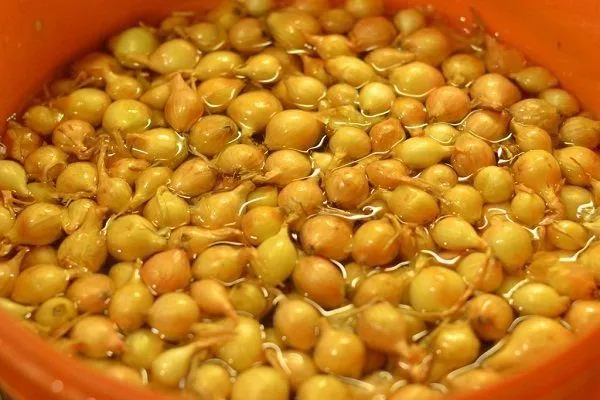
- Moistening of planting materialOnions lose a lot of moisture during storage, so it's best to moisten them first by placing them in plain water for 2 hours. This will make disinfection more effective.
- Preparation of saline solutionDissolve salt in warm clean water at a rate of 1 tablespoon per 1 liter of water.
- SoakImmerse the planting material in a saline solution for 2-3 hours.
- FlushingAfter soaking, rinse the bulbs or seeds thoroughly, changing the water several times.
If the onions have not been treated with a saline solution, then this composition can be sprayed on the onion beds:
- Dissolve 300 g of salt in a bucket of water.
- Pour the prepared mixture over the onions.
- Wash off the salt from the plant feathers by spraying them with clean water.
This type of watering can be done once per season. More frequent watering will be more effective in controlling the onion fly, but the soil will become too saline. This will cause the plant to lag behind in development or even stop growing altogether. The salt itself will be difficult to wash out of the soil and will persist for a long time.
The procedure for processing with potassium permanganate
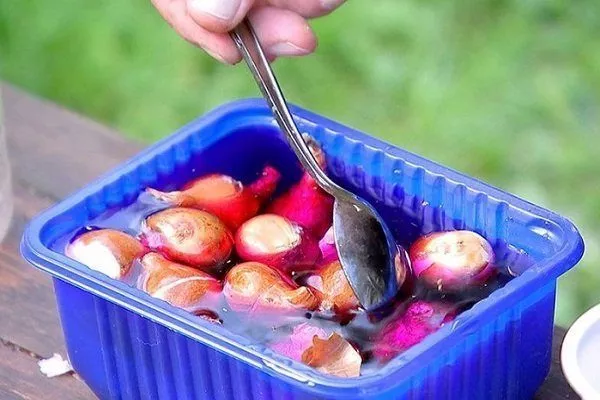
After soaking in a saline solution, you should begin treating the planting material with potassium permanganate. Depending on the condition of the seeds or sets, you can use a solution of varying concentrations, which will determine the soaking time. We'll discuss these options separately.
Method No. 1
This method involves using a medium-strength solution. The rules for this method are as follows:
- The active ingredient concentration is 1%. Therefore, you need to prepare a dark purple potassium permanganate solution. To do this, dissolve 10 g of potassium permanganate in 1 liter of water.
- If it is not possible to accurately weigh the powder using scales, you can assume that 1 level teaspoon contains 6 g of potassium permanganate.
- The measured amount of powder must be dissolved in warm water.
- The time for soaking bulbs or seeds in the solution is 40-50 minutes.
This treatment will help if the planting material has fungal infections or is infected with mold.
After this treatment, the onions should be immediately rinsed with warm water and dried for planting, or left under plastic wrap for 6-8 hours to allow the roots to develop. When planting, be extremely careful not to damage the newly formed roots, as this can significantly slow the bulbs' survival rate.
Method #2
This technology requires compliance with the following rules:
- use a weaker solution - 35-40 g of potassium permanganate per 10 liters of water;
- increase the soaking time to 2-3 hours;
- Before immersing the onion seedlings in water, first place them in a stocking so that they can be easily removed from the solution later;
- After soaking, rinse and dry the planting material.
The second method is gentler on the seeds or onion sets, so there's less risk of damaging them. However, experienced gardeners prefer a more aggressive approach to destroy all microbes and viruses on the onion surface.
Method No. 3
The most aggressive technology, which implies the following rules:
- increase the concentration of the active substance as much as possible – up to 20-25 g per 1 liter of warm water (the result should be a dark beetroot-colored solution);
- reduce the soaking time to a minimum – 15-20 minutes.
After soaking, the onions may darken. In any case, they should be thoroughly washed and dried.
This treatment should only be used if there is a suspicion of onion infestation with onion fly larvae, powdery mildew spores, or other dangerous diseases. This solution is very strong, so it effectively disinfects onions. The downside is that it can also damage the seeds and reduce their germination rate.
Helpful tips
When treating onions with salt and potassium permanganate before planting, it's worth considering the advice of experienced gardeners. They include the following:
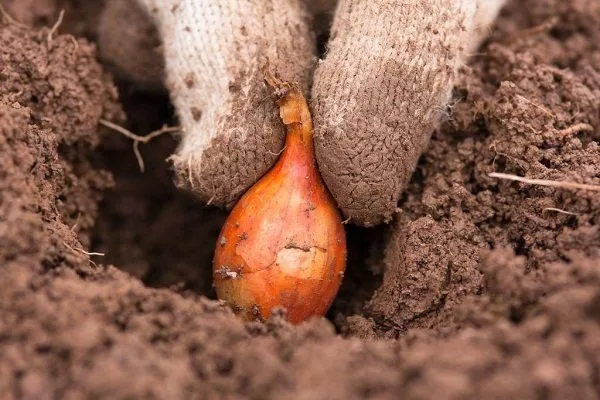
- Soak the sets or seeds immediately before planting to increase their chances of good germination.
- Be especially careful with pre-planting treatment of onions in regions with frequent rainfall and, as a result, dampness. Under such conditions, the risk of infection increases significantly, so treatments that stimulate the development of immunity are essential.
- When preparing solutions, strictly adhere to the dosage of the active ingredient; otherwise, its excess will harm not only pathogenic microflora but also the planting material itself, preventing it from sprouting – the root system ovaries may “burn” before they even form.
- To prevent the onion sets from rotting, avoid soaking them in the prepared solution for too long. The soaking time in either solution should be no more than 2-3 hours. When combining the two procedures, the time spent on both should not exceed 2 hours. Of this, approximately 1.5 hours can be allocated for the saline solution, and 30 minutes for the potassium permanganate solution.
- Soak the bulbs immediately before planting them in prepared, warm soil. If you disinfect them and then leave them in plain water for a few more days, they will be exposed to the bacterial environment for a second time.
- Prepare the soaking solution immediately before processing to prevent the development of bacteria that are harmful to onions.
- Soaking the seedlings before spring planting is essential. Moistened sets will quickly establish themselves and begin to grow in warm soil.
- If you plan to plant onions before winter, this treatment is not recommended. This is because the water-saturated sets will sink into the soil (around September or October), which will freeze rather than insulate with each passing day. This can cause them to rot or freeze, which will negatively impact the plant's yield.
- The previous rule may not be relevant for southern regions, where the soil retains heat for a long time even in autumn. However, winters here are not characterized by heavy snowfalls, so it is necessary to properly insulate the garden bed for the winter season in advance.
- Pre-sowing treatment effectively combats bacteria and viruses, but even after soaking, not all harmful microorganisms will be destroyed. Pathogens that have already penetrated the seeds or sets may survive. Therefore, preventative measures are required to protect onions from diseases and pests.
Pros and cons of soaking
Despite the emergence of new specialized pre-planting onion treatments, many gardeners prefer to use readily available products such as salt and manganese. Their benefits include the following:
- promote the parallel formation of heads and feathers, which allows you to get a good harvest of both greens and elastic bulbs suitable for consumption;
- disinfect the planting material, as a result of which the sets develop immunity to pathogens and temperature changes, that is, they get sick less often;
- They help protect the soil from seed-borne diseases by preventing the rotting process.
Soaking has no drawbacks, but if the procedure isn't carried out correctly, the entire planting material can be ruined. Here are some common problems novice gardeners encounter:
- the sets quickly lose their quality characteristics, acquiring an unnatural softness;
- In the area where the roots of the system are formed, traces of decay are observed.
To prevent such consequences, it is necessary to act strictly within the framework of the above instructions.
You can also learn about pre-planting onions from the following video:
Before planting, onions require proper treatment, which can be done with salt and potassium permanganate. While a salt solution will protect onions from soil pests, including onion flies and nematodes, a potassium permanganate solution will protect the planting material from fungal spores. However, this should be approached with the utmost care, as there is a significant risk of error.