
Myachkovsky 300 is a domestic onion variety with a long history. Gardeners value it for its early maturity, excellent yield, attractive appearance, salad flavor, and resistance to downy mildew. It is grown both from seed and from sets.
History of selection
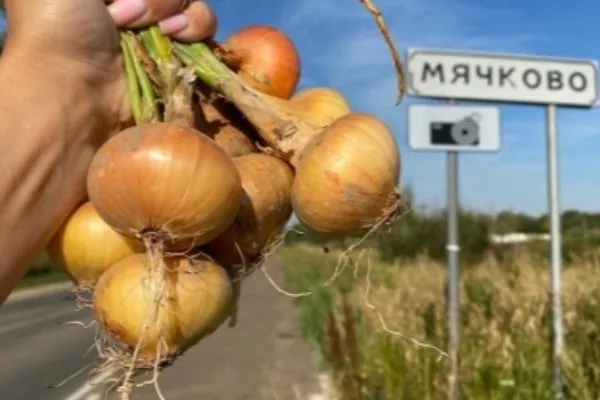
This variety of the vegetable was developed by the All-Russian Research Institute of Selection and Seed Production. Its staff worked to improve local varieties, including the Myachkovsky variety. The latter has been known since 1924 as the creation of folk artists from the village of Myachkovo (Moscow Region), who crossed yellow onions with a southern variety.
Research institute staff improved a local variety and developed a crop that produces a harvest of turnips in one year in the central climate zone—Myachkovsky 300. Its authorship belongs to:
- Vorobyeva A. A.;
- Ershov I. I.;
- Kiseleva V.I.;
- Vinokurova Z. Ya.;
- Vlasov V.D.;
- Nedoshivkina V. A.;
- Vinogradsky A. M.;
- Bakhteeva A.V.
Their achievement was added to the Russian Federation State Register in 1985. It is intended for cultivation in the following regions of the Russian Federation:
- Northwest;
- Central;
- Volga-Vyatka;
- Middle Volga;
- Lower Volga;
- Ural.
Introduction to the variety
Despite its long history, this vegetable variety has remained relevant. It can compete with many modern varieties.
External characteristics of the bush and berries, their taste and purpose
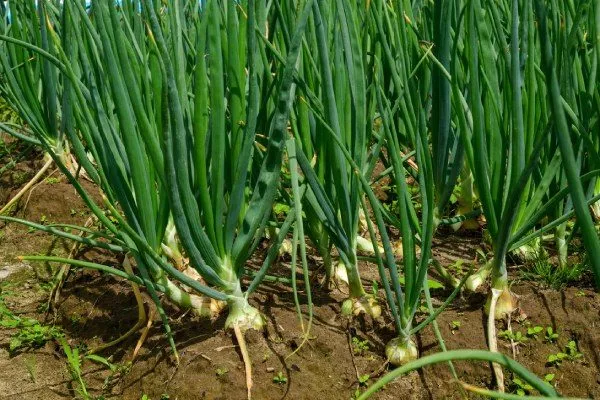
Myachkovsky 300 is a weakly branching variety. When grown in the garden, it produces one shoot (occasionally two lateral shoots). Its foliage has distinctive features:
- large size (up to 65 cm in length, 2.5 cm is the wide part);
- tubular structure;
- pointed top;
- dark green color;
- the presence of a waxy coating.
The plants are small-celled. They produce 1-2 bulblets with the following characteristics:
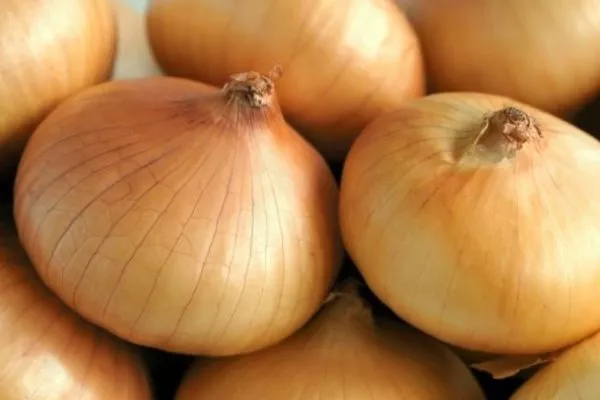
- medium or large size;
- round-flat shape (there are flat specimens);
- weight - 69-150 g (up to 300 g with enhanced agricultural technology);
- medium density;
- number of rudiments - 2-3;
- golden or pinkish-gold coloration of dry upper scales;
- fleshiness and juiciness of the white inner scales.
Myachkovsky 300 onion has a versatile use. Housewives add the onions and greens to salads, first and second courses, dry them, and preserve them for the winter.
When ripe, the yield
Early maturity is the variety's hallmark. Harvest times are as follows:
- 65-75 days after germination - feather readiness;
- 90-120 days is the time it takes for turnips to ripen.
Gardeners begin harvesting in large numbers in July. Turnip maturity rates range from 75% to 99%.
The yield indicators of Myachkovsky 300 are considered high:
- Gardeners collect 2 kg of turnips per 1 sq. m when growing them from seeds;
- 3.2-4 kg per 1 sq. m - when cultivating from sets;
- Farmers who cultivate the variety on an industrial scale collect from 19,700 kg to 35,000 kg per hectare.
Advantages and disadvantages
The variety is popular due to its advantages:
Among the disadvantages, summer residents point out:
Recommendations for growing the onion variety Myachkovsky 300
There are several ways to grow Myachkovsky 300:
- as an annual - by sowing seeds for seedlings or directly into open ground (in the south and in the middle zone);
- as a biennial crop - by planting onion sets (in areas with a cold climate).
Choosing a site for onions
Select a plot of land for planting onions that meets the following requirements:
- solar;
- protected from drafts;
- with light, loose, breathable, neutral or slightly alkaline soil;
- where cucumbers, tomatoes, cabbage, and potatoes previously grew.
- ✓ The soil pH level should be strictly within 6.0-7.0 for optimal nutrient absorption.
- ✓ The soil should have high moisture capacity, but without stagnant water to avoid rotting of the bulbs.
Sowing onions for seedlings
Start sowing seeds for seedlings in March, 60 days before transplanting them to the garden. First, prepare them:
- soak in a weak (pink) solution of potassium permanganate;
- rinse;
- wrap in a damp cloth and leave to germinate.
Sow the seeds in trays with fertile soil mix. Keep them in a bright, warm (18-20°C) area. Water regularly. Treat the seedlings with Fitosporin to protect against fungus. Begin hardening them off 14 days before transplanting.
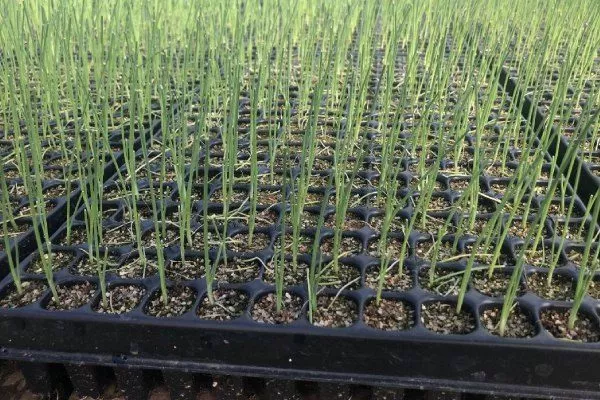
Transplant the seedlings to the garden in early May. When planting them in the garden bed, trim the roots and shorten the top third of the stem. In the south, you can sow the seeds directly into the ground in early May. When sowing, follow these guidelines:
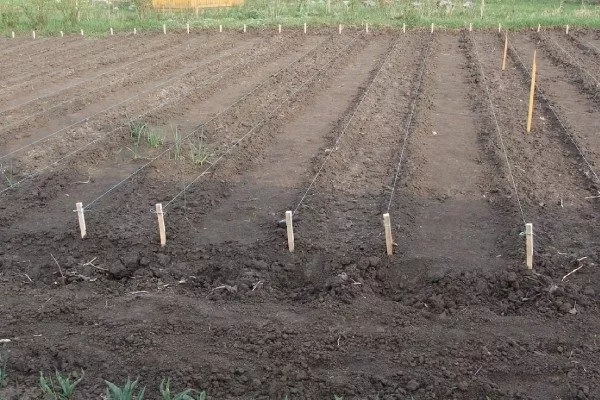
- seeding depth - 1-1.5 cm;
- sowing pattern: 5-7×10-15 cm.
Sowing onion sets
In northern regions, grow Myachkovsky 300 as a biennial crop. To obtain large, tasty turnips, use onion sets harvested from the garden in the first year or purchased directly from the grower.
Immediately before planting, treat the bulbs:
- warm them up for 10-12 hours;
- soak in water with added growth stimulator.
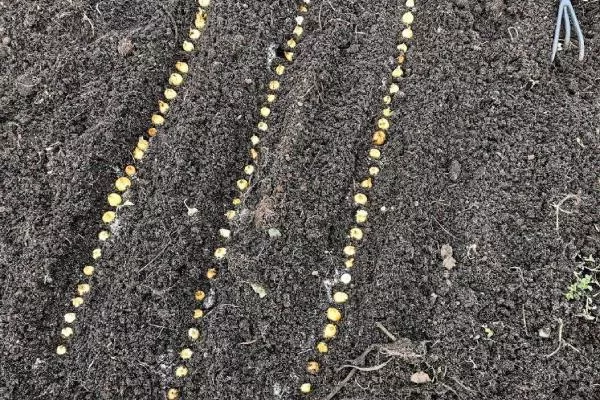
Plant the onion sets in the garden soil in late April (or early May). Wait until the soil warms up to 13°C. Follow this schedule:
- the distance between holes is 10-12 cm;
- between rows - 20 cm.
Onion care
This variety is easy to care for. To ensure a bountiful harvest, follow these steps:
- WateringWater the beds once every 10-14 days. More frequently if it's very hot. Use 3 liters of water per square meter. Avoid watering during the second half of summer to prevent the risk of bulb rot during storage.
- Loosening the soilPerform this procedure after rain and watering to prevent the formation of a dense, air-impermeable crust on the soil. Combine this with weed removal.
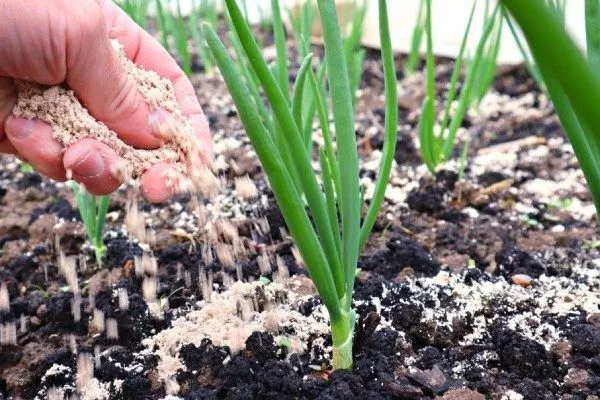
- Top dressingThe crop requires nitrogen, potassium, and phosphorus fertilizers. In the spring, at the beginning of the growing season, fertilize the onion planting with ammonium nitrate, urea, or organic matter. A month before the harvest, apply superphosphate and potassium chloride.
Diseases and pests: prevention and control
This variety exhibits good disease resistance. However, it is susceptible to downy mildew. If cultivation practices are not followed, the planting will also suffer from powdery mildew and anthracnose. To protect it, treat it with copper-containing preparations or Fitosporin.
There is also a risk of the onion bed being attacked by parasites:
- thrips;
- onion fly.
To prevent insect attacks and in case of their invasion, treat the plantings with the following agents:
- tobacco dust;
- wood ash;
- wormwood infusion;
- Onion Rescuer, Ratibor Bio.
Take preventative measures to avoid onion diseases:
- buy high-quality seed material;
- disinfect the soil in the garden;
- Grow green manure to improve the soil;
- Change the location of the onions on the plot every year;
- follow planting patterns;
- loosen the beds regularly;
- weed out the weeds;
- do not over-water the soil;
- Grow carrots nearby to repel onion flies.
Harvesting onions
Begin harvesting when plants show signs of:
- yellowing and lodging of leaves;
- the upper scales of the turnips acquire a golden hue.
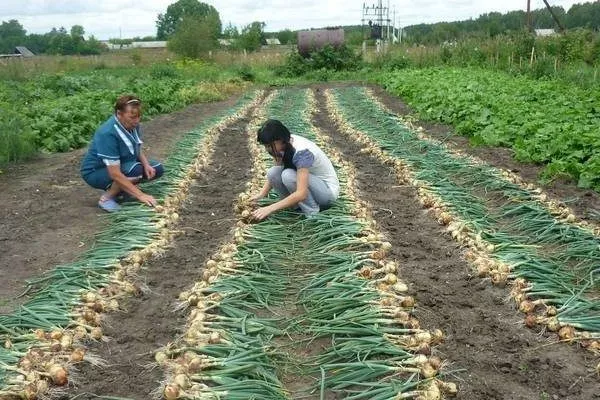
Carefully dig up the bulbs with a pitchfork. Harvest in clear weather. Don't forget to dry them in the garden. After the onion bulb has dried, trim off the top, leaving the neck (3-4 cm long). Then, dry the onion at home and store it.
Reviews of growing the Myachkovsky onion variety
Myachkovsky 300 is a variety of onion that has been around for nearly 100 years. To this day, it remains a favorite among Russian gardeners due to its early maturity, high yield, and ability to produce large, tasty bulbs from seed within a single year.