
"Mednos" is the name of a mid-early chive variety popular among Russian gardeners due to its high yield and resistance to disease and winter. It is loved for its pungent, vitamin-rich greens and its decorative appearance. It is widely used in garden landscaping and is suitable for indoor cultivation in pots.
When and by whom was it selected?
The vegetable variety was developed by the Federal Scientific Center for Vegetable Growing. In 1990, it was added to the State Register of the Russian Federation. It is zoned by region:
- Northern;
- North-West;
- Central;
- Volga-Vyatka;
- Central Black Earth;
- North Caucasian;
- Middle Volga;
- Lower Volga;
- Ural;
- West Siberian;
- East Siberian;
- Far Eastern.
Description of the plant
Chives are a perennial variety of onion that is not a root vegetable. The above-ground green mass of the plant is its edible part, eaten when young (up to three weeks old).
The culture has other common names:
- speed;
- cutter;
- cutter;
- Siberian onion.
Bushes of the Medonos variety have the following characteristics:
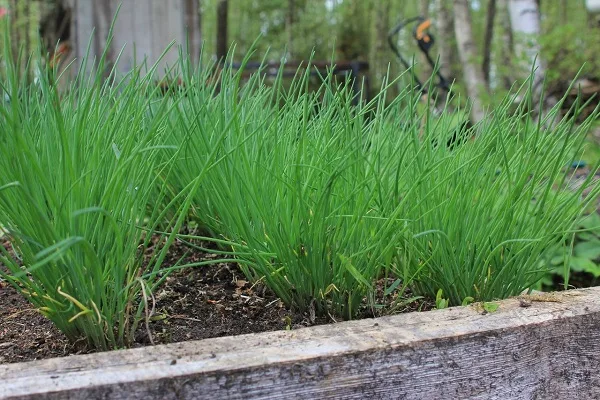
- "height" - 0.2-0.4 m;
- density and lushness of green mass;
- small basal bulbs that turn into a false stem;
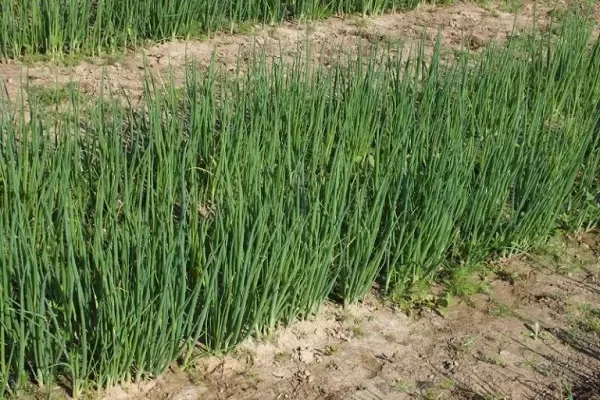
- feathers: dark green, small, thin, long (their average length is 25 cm), covered with a thin layer of wax;
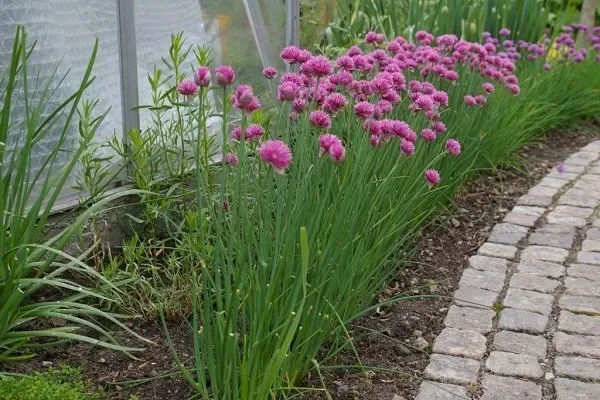
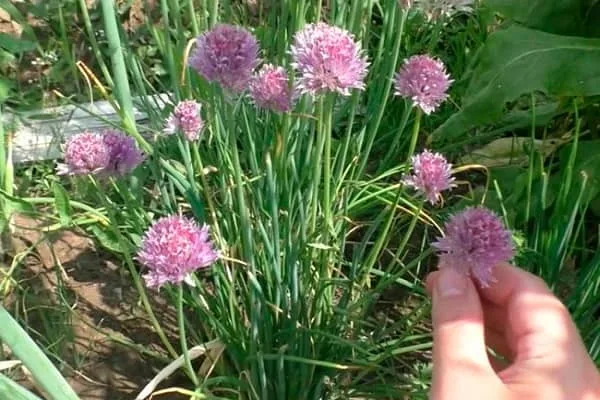
- inflorescences: large, spherical, lilac or pink in color.
- ✓ Inflorescence color: lilac or pink, which is a distinctive feature of the Medonos variety.
- ✓ The presence of a thin layer of waxy coating on the leaves.
The Medonos Rezanets is recommended for four-year use. It has the following characteristics:
- resistance to downy mildew;
- frost resistance (withstands temperatures down to -45°C);
- bush productivity;
- duration of harvest;
- friendly growth of leaves in spring;
- Possibility of propagation by seeds and divisions.
Taste characteristics and purpose
Honeysuckle greens have a semi-sharp, piquant flavor. They are eaten fresh and added to vegetable salads. Chives have excellent shelf life. They retain their freshness and marketable appearance for two weeks if refrigerated. Drying and freezing are also acceptable.
Advantages and disadvantages
Onions have a pungent flavor that not everyone likes, and overconsumption of these greens can cause heartburn. The variety has no other drawbacks.
When it ripens, what kind of harvest does it produce?
Honey plant is a mid-early variety of vegetable crop. Harvest times are as follows:
- 70-85 days pass from the emergence of seedlings to the completion of the mass harvest of onion feathers;
- 25-30 days - until the first cutting of greens.
Gardeners prune the plumes several times during the season. The bush tends to recover quickly after pruning. In the first year of growing from seed, you'll only get foliage in the fall. In the plant's second year, it will produce a harvest from the third ten days of May to mid-September.
Summer residents value the Honey plant harvest for its characteristics:
- juiciness;
- the delicate texture of the feathers;
- their aroma and spicy taste;
- no tendency to coarsening;
- increased content of vitamins, in particular ascorbic acid.
The variety has a high yield, yielding 1.7-2 kg per square meter of onion bed.
Landing
Start sowing Medonos onion in an open bed within the following timeframes:
- in spring (from late April to early May);
- in summer (June, July).
The variety is not demanding regarding soil composition, but its bushes grow best in soils with the following characteristics:
- fertile;
- lungs;
- loose;
- breathable;
- well moisturized;
- sandy-clayey;
- slightly alkaline.
- ✓ Soil pH should be between 6.0-7.0 for optimal growth.
- ✓ The soil must have good drainage to avoid water stagnation.
Select a site with partial shade for planting. In full sun, the leaves of chives quickly become rough. Plant them after any vegetable crops. It's a good idea to plant carrots nearby, as they will repel pests from the chives. Carrots will also protect the carrot bed from pests.
Prepare the area for planting honey plants in the fall:
- dig up the soil;
- remove weed roots;
- If the soil is heavy clay, add sand;
- fertilize the soil with humus or compost, add wood ash.
When sowing vegetable seeds, follow the following pattern:
- distance between lines - 25-30 cm;
- between the tapes - 50-60 cm;
- The seeding rate is 1.0-1.2 g of seeds per 1 sq. m of bed.
In a small area, sow using the nest method:
- 2-3 pcs. per nest;
- the distance between nests is 25-30 cm.
Be sure to mulch the chives with peat or humus. The recommended rate of organic mulch is 6 kg per square meter of chives. It's also acceptable to sow honey plant seeds before winter. Do this after the first frost. Follow the same guidelines as for spring sowing.
Growing and care
Provide your vegetable crop with proper care to produce plenty of tasty and healthy greens. This includes the following procedures:
- WateringThis variety of onion thrives on moisture. Water it frequently and thoroughly, and don't let the soil dry out completely. A lack of moisture will impair the flavor of the onion greens. Avoid waterlogging, as this can lead to root rot.
- Top dressingDon't skimp on fertilizing your vegetable crop once it reaches two years of age. Apply a mullein infusion (1:10) or bird droppings (1:20) or wood ash after the first harvest of greens.
Use nitrophoska, azofoska or Kemira (from 40 g to 100 g per 1 sq. m depending on the condition of the plants) after the second or third cutting of the feathers.
If the vegetable grows in fertile soil and develops well, a second application of fertilizer is not required. - Loosening the soil and weedingCarry out these treatments only during the first two years of the plant's life. Afterward, the onion will grow and begin to suppress weeds on its own.
- Thinning the garden bedCarry out this manipulation in the first year after sowing the seeds. Remove excess plants that are crowding the onion planting, maintaining a distance of 10-15 cm between the remaining bushes.
- Removing flower stalksThe procedure stimulates the growth of young feathers.
Experienced gardeners cover their chives with plastic wrap to increase their yield by half. This technique allows them to produce more of the spicy greens, and the leaves grow more tender and delicious.
Diseases and pests
The variety is resistant to diseases, particularly downy mildew. Under dense planting conditions and overwatering, chives are susceptible to diseases. They are susceptible to the following infections:
- rust;
- rot.
Treat them with Fitosporin, Gamair, and Topaz. Apply these products in the fall, after harvesting.
Pests rarely damage onion crops. If not properly cared for, they may be damaged by insects:
- hidden proboscis;
- onion moth;
- hoverflies;
- tick.
To prevent the problem, follow preventative measures:
- observe crop rotation;
- remove weeds;
- thin out the planting;
- treat the bushes with Fitoverm;
- Spray them with a decoction of wormwood.
Reviews
Melonos is a chive variety popular with gardeners. It's an excellent choice for gourmets who appreciate this pungent vegetable for its flavor and rich vitamin content, as well as for aesthetes who want to decorate their garden with beautiful flowering plants. With proper care, this plant will delight you with its lush greenery all summer and early fall.