
Many gardeners prefer to grow Sturon onions in their gardens. This variety is considered highly resistant to diseases and severe frosts. It is prized for its low maintenance and ease of cultivation. However, a good harvest can only be achieved by following a few important rules.
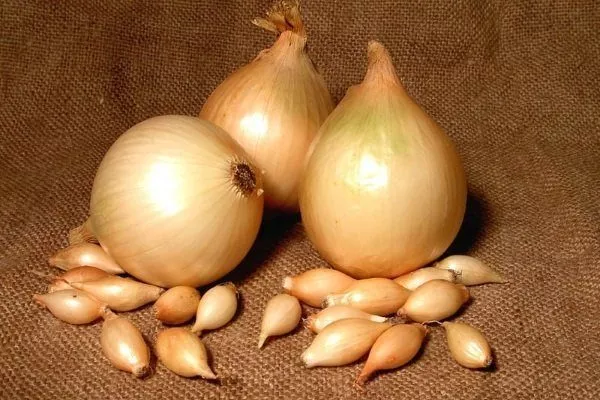
Onion Sturon
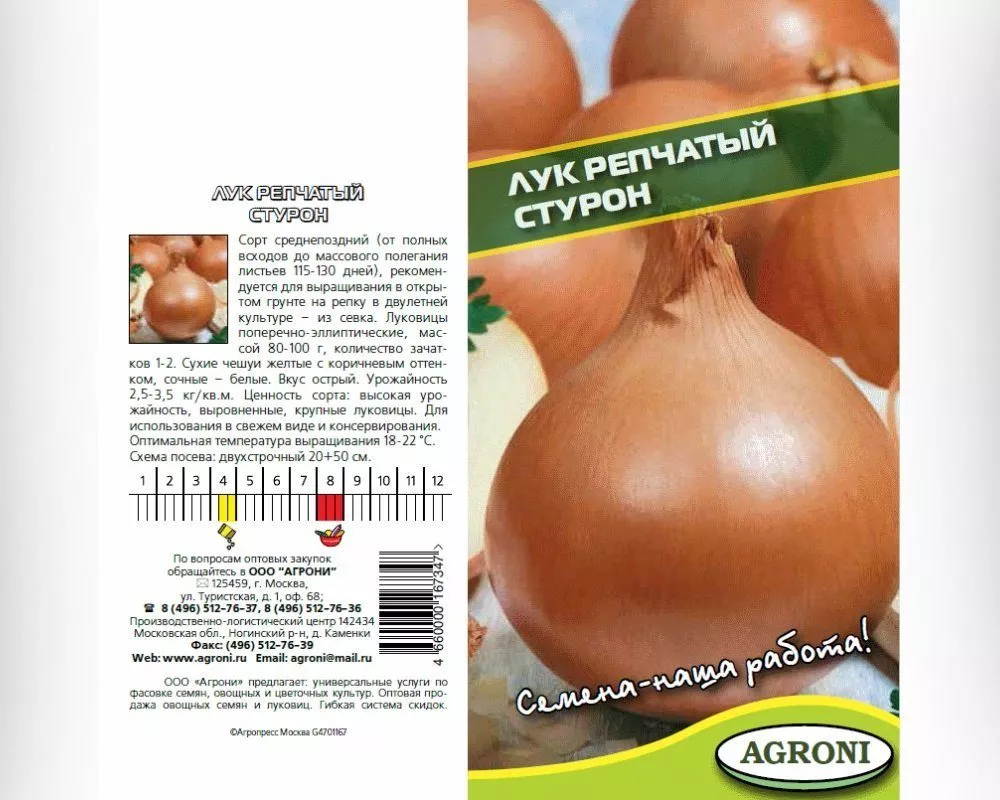
Sturon onion (packet of seeds with sowing pattern)
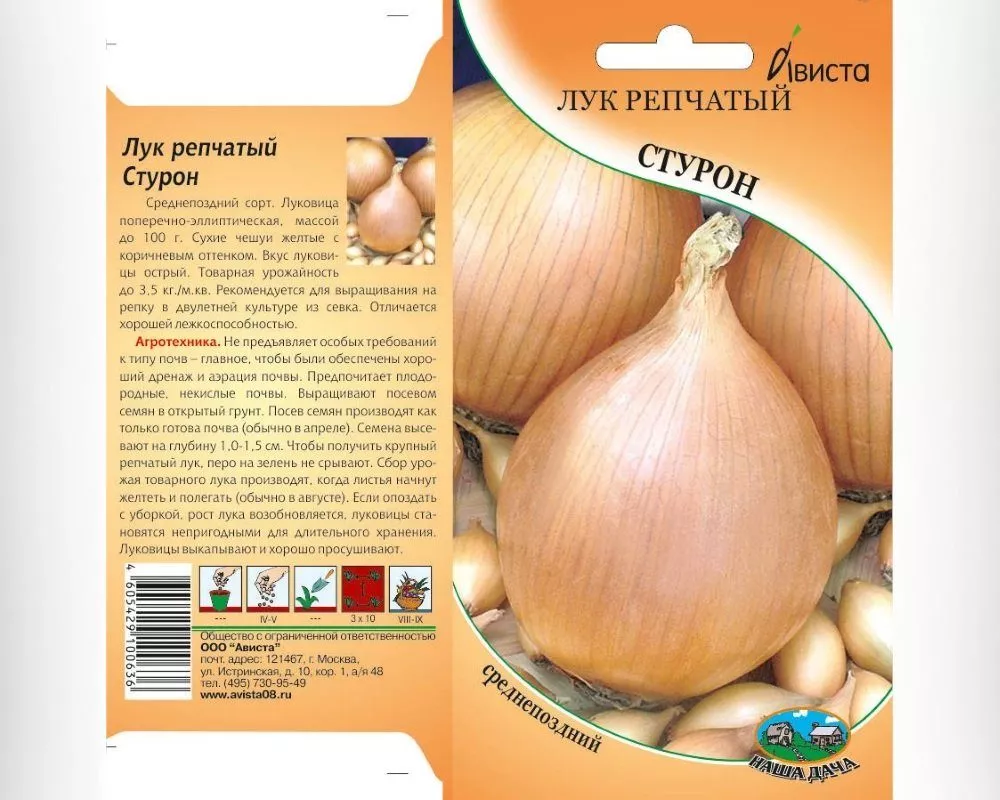
Onion "Sturon". Variety characteristics
Characteristics of the vegetable
Sutron is one of the best onion varieties, as the harvest can be completed within 100-110 days after the first sprouts appear. This variety is frost-resistant, withstanding even the most severe frosts.
Large bulbs form only in the second year; the first season yields only good planting material. With proper onion care, one hectare can yield up to 35 tons of harvest. This is what attracts many entrepreneurs who grow the vegetable for commercial use.
A distinctive feature of the Sturon variety is the shelf life of its bulbs. If all necessary conditions are met, the harvest will remain fresh for up to 8 months. Sturon bulbs are characterized by an elongated, elliptical shape. A single bulb can sometimes weigh up to 210 grams.
| Parameter | Indicator |
|---|---|
| Onion shape | Elliptical, elongated |
| Average weight | 120-180 g (individual up to 210 g) |
| Ripening period | 100-110 days after germination |
| Productivity | 30-35 t/ha |
| Keeping quality | 8 months when stored properly |
| Frost resistance | Withstands severe frosts |
The process of reproduction
Growing onion sets from seed is easy. By following certain guidelines, you'll achieve excellent results. Planting occurs in late March or early April, after the soil has thawed to a depth of 5-6 centimeters.
It's recommended to prepare the soil in the fall. Apply the following fertilizers per square meter of soil before digging:
- 20 g superphosphate;
- half a bucket of compost;
- 20 g of phosphorus fertilizers;
- 200 g of wood ash.
A few days before planting, till the soil and form the beds, then compact them and cover them with black plastic. It's important to prepare the seeds beforehand. To do this, soak them in aloe vera juice or potassium permanganate for 4-6 hours, wrap them in a damp cloth, and store them in a dark place for 48 hours. The cloth should not be dry.
Instructions for sowing seeds in beds:
- Water the beds with warm water and make furrows at a distance of 20 cm from each other.
- Spread the seeds over the surface so that there is a distance of 10 cm between them.
- Cover the seeds with a thin layer of soil and water thoroughly. Mulch the plantings with compost or peat.
Planting vegetables
A bountiful harvest can only be achieved by choosing the right planting material. You can buy onion sets at the store or grow them yourself from seeds. They should be large, at least 2 cm in size, and have a smooth surface. Planting onion sets with the following defects is strictly prohibited:
- green arrows or small roots;
- signs of decay;
- signs of pest or disease impact;
- various mechanical damage;
- abundant moisture on the bulbs.
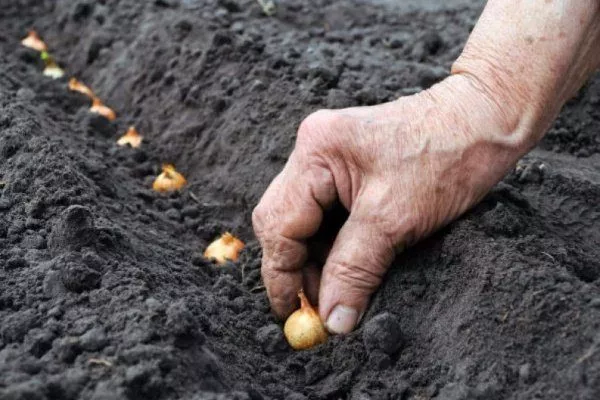
Plant the vegetable in early spring. Planting instructions:
- The vegetable is grown on sandy loam or slightly acidic soils.
- At the end of November, humus and rotted manure are added to the soil before digging, and mineral fertilizers are added just before planting.
- The neck of the bulbs is carefully cut off so as not to damage the sprouts.
- Two days before planting, remove weeds, loosen the soil and dig trenches 20 cm apart.
- Place the onion sets 2-3.5 cm deep into the soil. Place each bulb 10-15 cm apart.
Planting calendar by region
- Southern regions: March 1-15
- Middle zone: April 10-25
- Northern regions: May 1–15
- Ural/Siberia: May 15-30 (under film)
Care
Caring for Sturon onions is divided into several components, since growing sets and full-fledged fruits differ significantly from each other.
If the gardener's goal is to grow fruits for consumption, the following rules should be followed:
- Water the onions generously. Don't allow the soil to dry out. Apply up to 15 liters of water per square meter per session.
- After the first young feathers appear, fertilize the plantings using nitrogen fertilizers, for example, urea.
- Regularly loosen the soil and clear it of weeds.
During the first year of a plant's life, when the gardener needs to obtain high-quality sets, the onion should be cared for as follows:
- After the first sprouts appear, plantings are spaced less frequently. This promotes the formation of large seedlings.
- Do not neglect the process of loosening the soil.
- Water the onions once a week, adding mineral or organic fertilizers to the water.
- Once the height of the sprouts reaches two centimeters, stop all work.
- ✓ Loosen the soil after each watering or rain
- ✓ Soil acidity control (pH 6.4-7.9)
- ✓ NPK 20:10:10 top dressing at a feather height of 15 cm
- ✓ Stop watering 3 weeks before harvesting
- ✓ Removing flower stalks when they appear
Next, the gardener must wait until the greens begin to completely wilt and the necks soften. At this point, the onions can be dug up, dried, and prepared for storage.
When harvesting, it is strictly forbidden to wait until the leaves are completely dry, as this can cause the vegetables to start rotting.
Diseases and pests
Despite the fact that onions have increased resistance to various diseases, they can be susceptible to the following diseases:
- Mosaic. This is a viral disease. When infected, yellow spots appear on the leaves. The above-ground parts gradually die off, and the fruits become very small, significantly reducing their shelf life. Control of this disease is virtually impossible.
- Neck rot. A disease that can appear during vegetable storage. The problem can be combated by promptly removing affected bulbs.
- Downy mildew. This disease manifests itself as characteristic spots on the leaves. These spots gradually begin to spread. This leads to the fungus settling in the bulbs, which can destroy the entire crop.
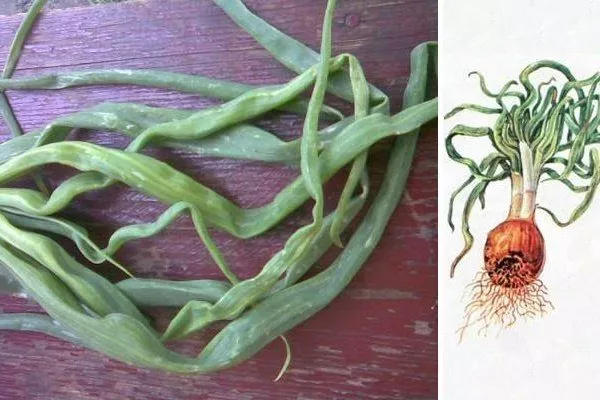
Onion disease - Mosaic
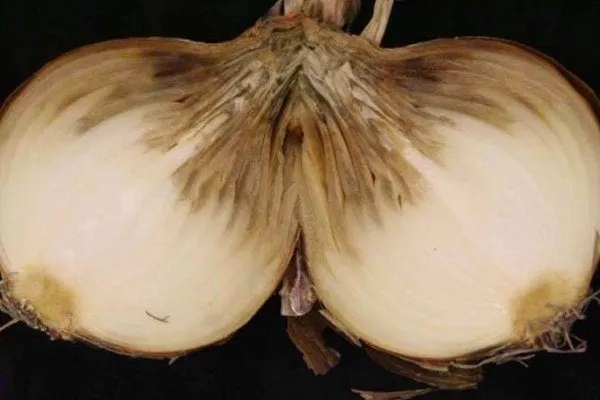
Neck rot
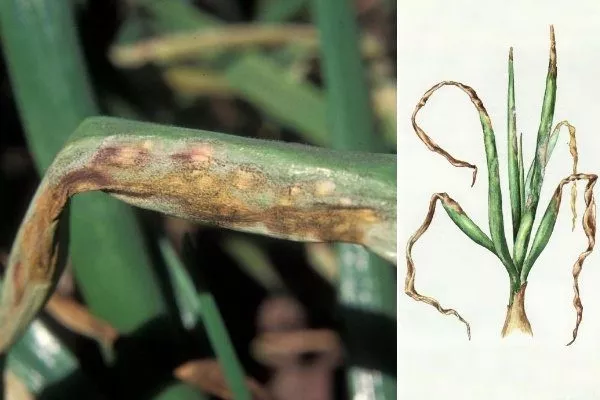
Downy mildew of onions
This disease spreads quickly, so it's recommended to remove infected plants immediately. Treat the remaining crop with specialized products such as Fitoplus and Fitosporin-M. This disease is difficult to eradicate. It's crucial to carry out preventative treatments promptly, including pre-treating the planting material.
Onions often suffer from nematode infestations. These worms can be controlled with effective products such as Fosfamide and Mercaptofos.
| Disease/Pest | Preparations for treatment | Waiting period (days) |
|---|---|---|
| Downy mildew | Fitosporin-M, Ridomil Gold | 15 |
| Neck rot | Maxim Dachnik, 1% Bordeaux mixture | 20 |
| Onion fly | Aktara, Zemlin | 14 |
| Nematode | Phosfamide, Nematophagin | 30 |
Advantages and disadvantages of the variety
Sturon onions, like any other vegetable, can have their positive and negative aspects. It's important to consider these before planting.
Advantages of the variety:
- excellent weight;
- unique taste and aroma;
- maintaining freshness for a long time;
- can be grown in temperate and northern latitudes;
- The harvest is very large.
Disadvantages of Sturon onion:
- To obtain a rich harvest, the plant should be grown exclusively on sandy loam or loamy soils.
- The variety has reduced immunity against downy mildew and onion mosaic.
- When growing sets from seeds, it is impossible to predict whether the planting material will have normal dimensions.
Only with the right approach and adherence to all planting and care requirements can you grow a vegetable that will not only look good but also taste good. Before you begin growing a variety, it's important to assess your capabilities to ensure your efforts are not wasted.