
The Sorokozubka onion is a popular variety of onion, distinguished by its high fertility and complete ease of care. It is related to the shallot, native to Asia. It can be grown in absolutely all climate zones of our country.
What is a Shrike?
Shallot Sorokozubka is a variety of onion that wins the hearts of green lovers with its uniqueness and benefits.
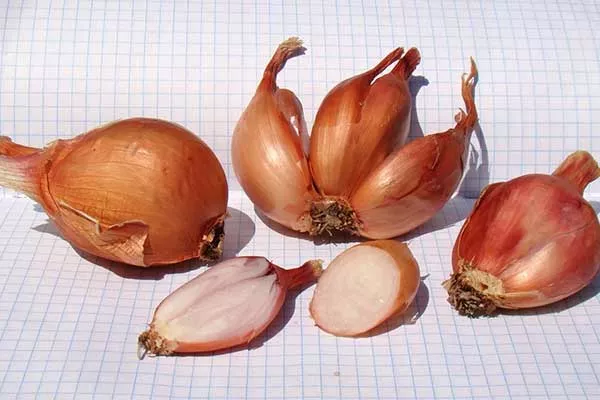
This perennial member of the Amaryllidaceae family, also known as shallots, family onions, Ashkelon onions, or multi-germ onions, is related to the onion, but has a number of differences, although in the first year of its existence, shallots resemble onions in appearance:
- Onions have a single round bulb, while shallots have several smaller bulbs.
- Shallots exhibit a faster ripening rate and are distinguished by their long green leaves.
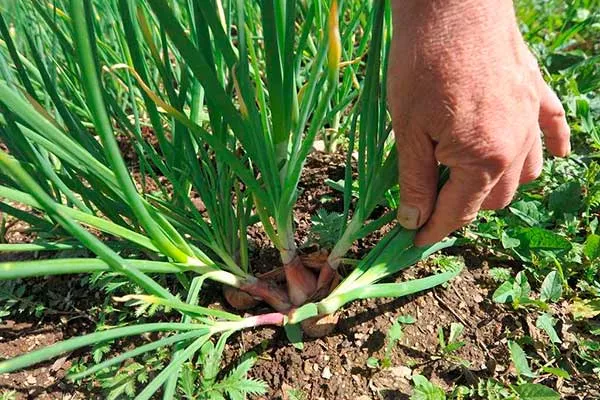
- Kushchevka is a plant that can survive winter in open ground thanks to its ability to form nests. It develops a root system first, followed by leaves, allowing it to be grown in winter. Onions, on the other hand, cannot withstand winter conditions in open ground.
- The size and flavor of the bulbs of these two species differ. The shallot bulb is significantly larger and has a more piquant, sharp flavor. In contrast, the shallot has a mild, aromatic aroma and doesn't evoke tears when cut.
- The multi-germ variety is distinguished by its abundant growth of feathers, which, like the bulbs, are tender and pleasant to the taste. The leaves of the onion variety have a sharper flavor and become coarser over time.
- Shallots stay fresh much longer after being cut.
- Family onions are most often used for salads, while onions are grown for their bulbs, which are used for frying, baking, etc.
Chemical composition
The multi-toothed celery has high nutritional value. It is widely used in culinary dishes due to its rich composition of beneficial components that have a beneficial effect on human health.
The calorie content of shallots is 72 kcal per 100 grams of fresh product.
Compound:
- proteins – 12.3 g;
- fats – 0.5 g;
- carbohydrates – 65 g;
- fibrous substances – 15.7 g;
- water – 2 g.
This chemical composition provides the following positive effects:
- balanced blood pressure;
- improving digestive processes;
- rapid healing of wounds from insect bites;
- solving metabolic problems;
- strengthening the eye muscles.
Key Features
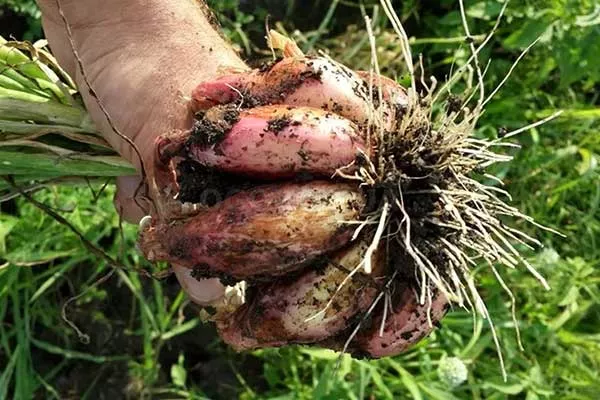
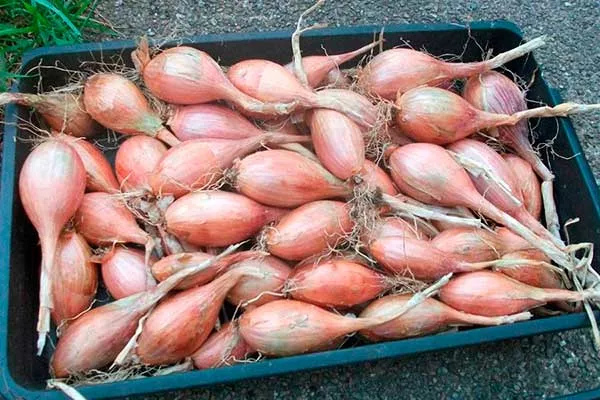
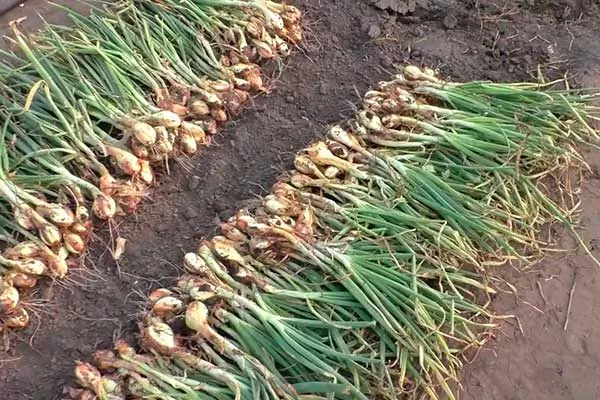
The Sorokozubka, or Sorokaoubka, is a perennial shallot variety with thin leaves. Its bulb is oblong, reaching 9-12 cm in length. It is dense, weighing between 25 and 75 g. A distinctive feature of this variety is its yellowish scales with a slight lilac tint, making it recognizable on store shelves. A single cluster can contain 5 to 7 bulblets.
Other characteristic features:
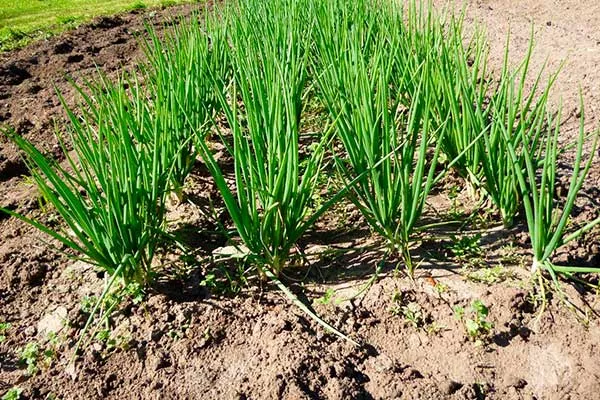
- In the first year of cultivation, the plumula matures from seed—long, succulent, and slightly waxy. In the second year, several bulblets form in its place, forming a so-called nest, which is firmly connected to a single parent bulb.
This is where the name comes from - family, or forty-tooth, since from one planted bulb you can get a whole set of smaller specimens. - In culinary arts, not only mature leaves but also young leaves (thin, with rounded tips) are used. These are harvested several times throughout the growing season. These leaves range in color from light to dark green and have a slight waxy coating.
- It's distinguished by its rapid maturity: from planting to harvest time, it takes only 70-80 days. Fresh leaves can be harvested just 25-35 days after sowing.
- A special feature is that the bulbs begin to multiply upon planting. A single bulb produces 6-12 new bulbs.
- The average yield per square meter is 4-5 kg, and sometimes more.
- The variety is resistant to fungal pathogens and is able to remain fresh for a long time without developing green mold.
- Family - a variety that can tolerate low temperatures and adverse weather changes.
- A month before planting, add humus at a rate of 5 kg per 1 sq. m.
- Two weeks before planting, dig the soil deeply to a depth of 20-25 cm.
- A week before planting, loosen the soil and remove all weeds.
Key advantages and disadvantages of the variety
Agrotechnical subtleties
Family onions can be planted from both seeds and bulbs. This variety produces fruit in open beds, greenhouses, and on windowsills. The key is to choose a sunny, low-humidity location. For more information on planting and care, follow the link: https://gardengrove-en.desigusxpro.com/plants/vegetables/luk/shallot/.
Reviews of the Sorokozubka onion variety
The Sorokozubka variety stands out for its early growing season and excellent taste. A good harvest can be achieved by observing the planting timing and proper care. This will ensure a long shelf life and the preservation of the vegetable's beneficial properties until spring. Growing heirloom onions is profitable – from one part of a large onion, you can get a large, multi-clove vegetable.