
Long Tokyo is the name of one of the most popular varieties of Welsh onions among Russian gardeners. It is prized for its early maturity, high yield, ease of care, and adaptability to growing conditions. Growing it as a perennial allows you to enjoy delicious, vitamin-rich greens throughout most of the year (spring through late fall).
Breeding history
The variety was developed in 2008 by domestic breeders, employees of the Federal Scientific Center for Vegetable Growing. The authors are the following scientists:
- Khovrin A. N.;
- Klimenko N. N.;
- Maksimov S. V.
It was added to the Russian state register in 2009. It is suitable for private and commercial cultivation. It was recognized by the organizers of the "Russian Farmer" fair and awarded a gold medal.
Introduction to the variety
Long Tokyo has gained popularity among Russian gardeners thanks to its excellent characteristics. Not only is it productive and early-ripening, but it's also resistant to heat and frost. Its plants are resistant to cracking, lodging, and yellowing. They are rarely affected by powdery mildew.
Characteristics of the appearance of the plant and bulbs
Welsh onion (Tatar or tubular onion) is characterized by its ability to be grown in one place for 4-6 years. Its plants have distinctive characteristics:
- medium-sized;
- compact;
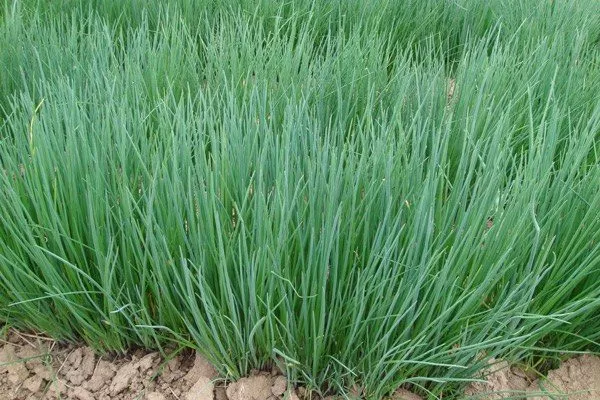
- have an erect rosette of leaves;
- dense greenery;
- fragile root system;
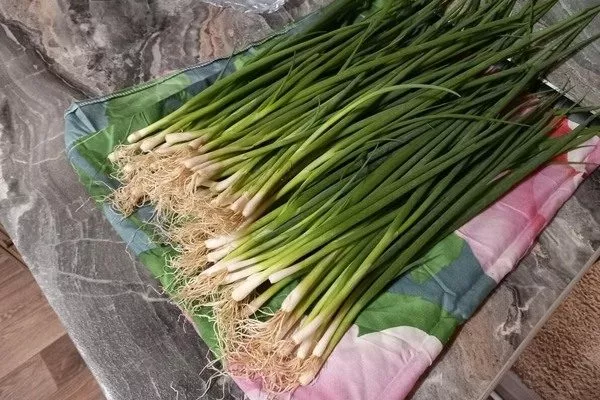
- an undeveloped oval bulb of medium length (5-7 cm), consisting of a bunch of thickened false stems without anthocyanin coloration and lacking a dense shell (the bulb is edible, but not suitable for storage).
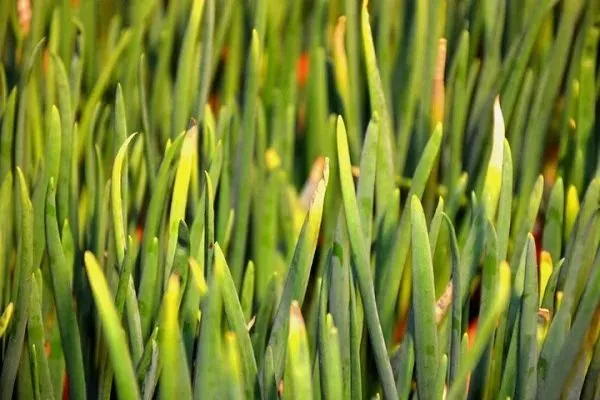
Gardeners and farmers grow this variety of onion for its greens. The leaves of the Long Tokyo variety have the following characteristics:
- length - 40 cm;
- thin tubular shape;
- dark green color;
- the presence of a slight waxy coating on their surface;
- fleshy and very juicy walls.
The average plant weight of this variety is 40-50 g. Its greens contain beneficial nutrients: carotene, thiamine, riboflavin, minerals (potassium, magnesium, iron), sugars, and essential oils. They contain twice as much vitamin C as onions.
Purpose and taste
Long Tokyo Welsh onions are a favorite among gardeners for their pleasant, semi-sharp flavor. Their greens are meaty, juicy, and tender. They are neither stringy nor watery. They are much less pungent than spring onions.
The vegetable harvest is intended for fresh consumption. Housewives use it to make vitamin-rich salads. It is also suitable for freezing and drying.
When it ripens, what kind of harvest does it produce?
This vegetable variety is considered early maturing and has the following characteristics:
- 55-60 days is the duration of the growing season;
- 30-45 days is the period of ripening of the first greens, which have reached a length of 25-30 cm.
The first cutting of onion leaves when growing Tatarka as a perennial can be done as early as April. During the season, gardeners cut the greens 3-4 times. The main harvest occurs in June (or early July). If the crop is grown as an annual, cutting is done once in the fall.
The yield indicators of the variety are high:
- Summer residents collect 4 kg from 1 sq. m of garden bed per season, making 3-4 cuts;
- 2 kg per 1 sq. m – one-time harvesting of onion greens;
- Farmers cultivating the crop on an industrial scale collect 35,000–47,000 kg per hectare.
Soil requirements
This variety of vegetable grows well in soils that meet the following requirements:
- fertile;
- lungs;
- loose;
- moderately moistened;
- neutral or slightly alkaline (plants do not do well in acidic soil);
- loams or chernozems;
- where cucumbers, cabbage, tomatoes, potatoes, and legumes were previously grown;
- fertilized with mineral nitrogen compounds (consumption - 30-40 g per 1 sq. m).
Necessary climatic conditions
The bulbous onion variety is renowned for its heat and frost resistance. It thrives almost everywhere in Russia. Its plants can survive winter temperatures as low as -25°C without cover. They are also resistant to spring frosts. They produce a harvest in open ground even in late autumn.
Long Tokyo is best suited for cultivation in the following regions:
- Northern;
- North-West;
- Central;
- Volga-Vyatka;
- Central Black Earth Region;
- North Caucasian;
- Middle Volga;
- Lower Volga;
- Ural;
- West Siberian;
- East Siberian;
- Far Eastern.
Timing of planting seeds, sets and seedlings
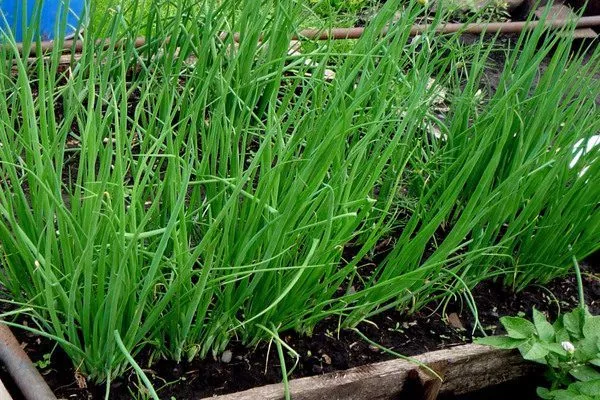
Gardeners sow Long Tokyo onion seeds in April or July. Spring sowing is designed to yield a one-time harvest when growing the vegetable as an annual. Plants planted in midsummer are not completely harvested. Some are left over the winter to produce young greens as early as April.
Gardeners also practice growing tatarka using sets and seedlings to obtain an earlier and higher-quality harvest.
Growing chives from seedlings
To maximize the yield from annual cultivation, experienced gardeners grow the crop from twenty-day-old seedlings. If you prefer the seedling method, follow these recommendations:
- Selecting soil and suitable containers, their preparationPrepare a soil mixture of turf and humus (1:1) for growing seedlings. Enrich it with mineral fertilizer (75 g per 10 kg) and wood ash (200 g per 10 kg). Use boxes or pots (5 cm deep) as planting containers.
- Sowing seeds for seedlingsSow Long Tokyo in containers with potting soil in late March or early April. Pre-treat the seeds by soaking them in water with Energen for 24 hours.
Sow the seeds in furrows 1 cm deep and 5 cm apart. Cover the seedlings with plastic wrap and keep them in a warm place. - Caring for seedlingsAfter the sprouts emerge, remove the film. Transfer the containers with the seedlings to a bright, warm room. Provide them with a daytime temperature of 20–25ºC (and 12–15ºC at night). The plants require at least 14 hours of light per day for proper development. Provide supplemental lighting with a phytolamp.
Water them moderately, allowing the soil to dry out slightly between waterings. Fertilize the seedlings at 7 days and 3 weeks of age. Use superphosphate dissolved in water (2 g per 10 l) with the addition of potassium salt (2 g).
Thin the seedlings. Space the seedlings at least 3 cm apart. Seven days before transplanting to the garden bed, begin hardening off the seedlings by placing them on the balcony. - Planting seedlings in spring. Transfer the seedlings to open ground in May. Transplanting in early summer (June) is also acceptable. Plant the seedlings, spacing them 10-12 cm apart between holes and 20 cm between rows. Cover the plantings with plastic for the first few days. This will help acclimate the seedlings.
Growing from seeds in open ground
Sow Long Tokyo seeds in an open bed at the following times:
- in spring - in April (the soil should warm up to +5°C), May;
- in summer - in July, August.
Follow the sowing rules and recommendations of experienced gardeners for successful vegetable growing:
- Choosing a planting site and preparing the soilSelect a sunny area of the garden for planting chives. They prefer light, fertile soil (sandy loam, clay loam, or black soil) and do not tolerate dense soil or peat.
Prepare the selected area for sowing vegetable seeds in the fall: dig up the soil, add manure and mineral fertilizers. - Pattern and depth of seed sowingBefore sowing, soak the seeds in water with a growth stimulant, then dry them to prevent them from sticking together. Follow the pattern: sow them 1.2-2 cm deep, space them 4-5 cm apart, and space them 10 cm apart between rows.
Cover the seedlings with plastic wrap to retain heat. Do not remove it for the first 8-10 days until the seedlings emerge.
Forcing green onions in winter
To produce lush, green foliage during the fall and winter, grow the crop in a greenhouse or indoors on a windowsill. Keep the room temperature between 15°C and 22°C. Use seedlings from your garden or grow from seeds.
The best option is to use two-year-old bushes dug up with the root ball in October. Plant them in a bed in a greenhouse or in a box. In the former case, mulch the area with well-rotted humus or compost. After 30 days in the greenhouse, the stems will reach a length of 20–25 cm.
After each cutting of greenery, carry out the following activities:
- water the onion planting;
- Feed it with nitrogen compounds (feeding is not required when forcing the plants to feathers if the soil was well fertilized during the transplantation of the bushes).
Care Features
Growing onions is not complicated. It boils down to the following care procedures:
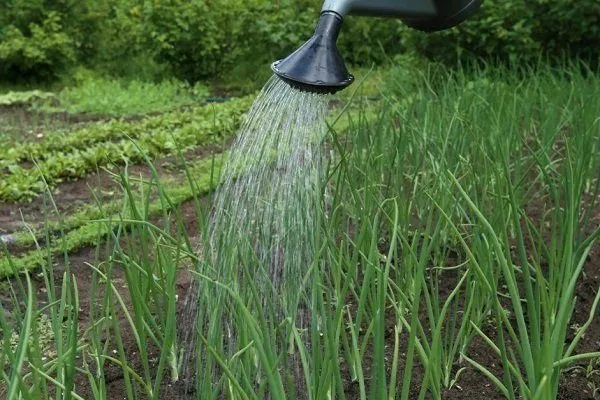
- WateringWater the bed twice a week. During periods of prolonged rainfall, water less frequently or avoid watering altogether. To maintain optimal soil moisture, mulch the soil between the rows with organic matter.
- LooseningIf you choose not to mulch, loosen the soil weekly. Do this every time after watering and rainfall. This will improve soil aeration.
- Thinning of plantingsPerform this procedure for the first time after the seedling has developed three leaves. Repeat this several times during plant growth, increasing the distance between plants to 5 cm.
- WeedingRemove weeds regularly. This prevents viruses and insect infestations. Weeds not only promote plant disease but also inhibit growth. Weed carefully. Combine weeding with watering and loosening.
- Fertilizing the garden bedsFeed your onion plantings by providing them with additional nutrients. Tatarka onions especially need this during the period of foliage growth. Apply fertilizer three times per season. Use formulations rich in nitrogen, phosphorus, potassium, and magnesium.
Harvesting
Begin harvesting the greens when they reach a height of 20-30 cm (25-30 days after germination). Harvest the entire crop in late June. The final cutting of the tops should be done in early October. Store the harvest in the refrigerator.
Resistance to diseases and pests, prevention
Long Tokyo chives have a strong immune system. They rarely get sick or suffer from pest attacks. If poorly cared for and without proper agricultural practices, these plants are susceptible to fungal and parasitic attacks, including:
- powdery mildew;
- aphids.
Treat plants affected by fungal diseases with Fitosporin or Planriz. If aphids are detected, use products such as Aktara, Zolon, or Decis. A tobacco-soap solution will also help protect your plants from pests. To make it, mix the following ingredients:
- 200 g tobacco;
- 20 g of soap;
- 10 liters of water.
Don't neglect disease prevention for your vegetable crops: water them properly, feed them, and don't allow the plantings to become too dense or overgrown with weeds.
What are the advantages and disadvantages?
The Long Tokyo onion has become a favorite among domestic gardeners thanks to its excellent qualities:
Among the disadvantages of this variety, experienced gardeners point out the bushes' love of light and their demanding soil conditions.
Reviews from gardeners and consumers
The Long Tokyo Welsh onion is an excellent choice for gardeners looking for early, abundant harvests of succulent greens. This variety is renowned for the excellent, delicate flavor of its onion leaves and their rich vitamin content. It is resilient to adverse weather conditions: it tolerates low temperatures well and is not affected by heat. Even a novice gardener can grow it.