
The Cupido onion, bred in Holland and labeled F1, is easy to grow and resistant to diseases and pests. Its distinctive feature is its well-developed, powerful root system, which retains moisture for a long time and prevents bolting. It easily tolerates dry summers and climates.
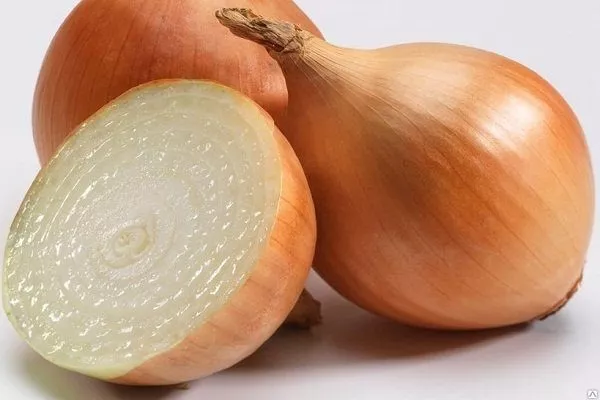
Cupid's Bow
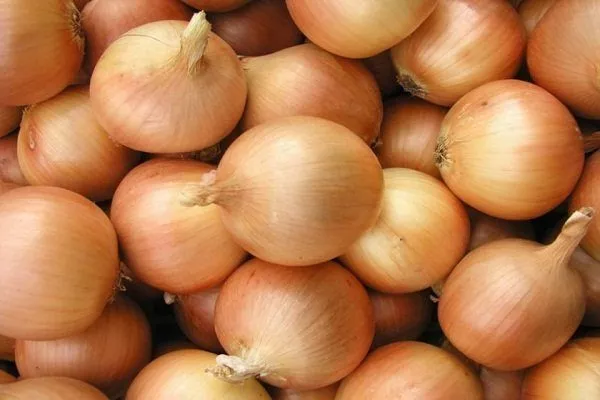
Cupido onion is easy to care for.
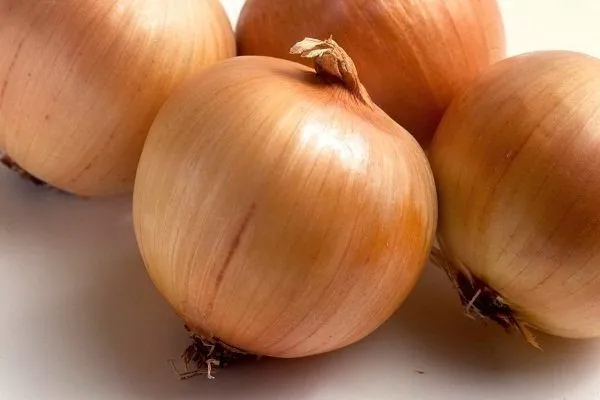
Cupido onions can be stored for a long time.
Characteristics of the variety
Cupido is a heterotic hybrid, significantly surpassing its "parents" (the varieties from which it was bred) in terms of quality. The yield and other factors were increased by crossing an onion mother plant grown from seed with a mother plant grown from sets.
F1 has another distinctive feature: it's practically impossible to obtain seeds at home, so they have to be purchased from specialty stores. Even if you do manage to obtain planting material, the bulbs' beneficial qualities diminish with each subsequent planting.
Characteristic Cupid's bow:
- the period of formation of heads from the formation of sprouts is 75-80 days;
- preferred climatic conditions – southern regions of Russia, central zone;
- developed root system;
- the degree of exfoliation of scales is low;
- spiciness – medium;
- weight – from 110 to 150 g;
- the skin adheres tightly to the head;
- juiciness – increased.
Appearance
You can recognize the Cupido variety by the following external characteristics:
- the color of the husk is golden-straw;
- the bulb is hard to the touch;
- the skin is thin;
- shape – rounded-elongated;
- feather height – up to 30-35 cm;
- The flesh color is white-creamy.
Productivity and shelf life
Cupido onions are considered a high-quality vegetable: farmers harvest 300-400 kg per 100 square meters, and 3-4 kg per square meter. The bulbs can be stored for up to 9-10 months without losing their flavor.
Pros and cons
Among the many undeniable advantages The most important varieties can be noted:
- high yield and shelf life;
- absence of pronounced bitterness and pungency;
- storage duration;
- transportability;
- rapid ripening;
- ease of care;
- resistance to diseases and pests;
- presentable appearance;
- readiness of seed material (no need for pre-sowing preparation);
- excellent germination and maturation rates – up to 99%;
- drought tolerance;
- possibility of planting in winter and spring;
- suitable for growing in greenhouses and open ground;
- versatility of application;
- no tendency to shoot arrows;
- relatively inexpensive cost of planting material.
But onions also have flaws:
- intolerance to severe frosts;
- the need for shelter during sudden temperature changes.
Composition and properties
Like other varieties of onions, Cupido is considered a healthy product, as it contains a variety of substances:
- phytoncides;
- vitamins – C, E, PP, H, group B;
- fructose;
- glucose;
- essential oil;
- malic acid, citric acid;
- flavonoids;
- oligosaccharides;
- monosaccharides;
- maltose;
- sucrose;
- macroelements – phosphorus, potassium, sulfur, chlorine, sodium, magnesium, calcium;
- microelements – zinc, iron, fluorine, iodine, nickel, boron, copper, manganese, etc.
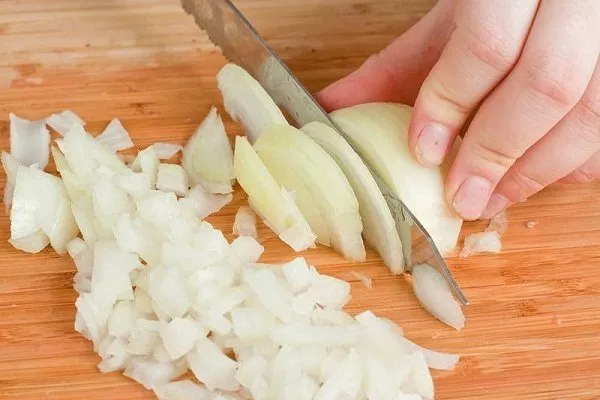
Such a rich composition has a healing effect on the human body, possessing the following beneficial properties:
- antibacterial action;
- antiviral effect;
- antiseptic properties;
- strengthening the immune system;
- toning the body;
- hematopoiesis;
- diuretic effect;
- antiscorbutic, expectorant effect.
Where is it used?
Due to its lack of strong pungency and bitterness, this variety has a wide range of culinary uses – for preparing first and second courses, onion pancakes, sauces, casseroles, salads, appetizers, preserves, marinades, etc.
Furthermore, Cupid's onion is widely used in folk medicine to treat many ailments. In cosmetology, it is used to strengthen hair follicles.
Preparing for landing
The Cupido variety is not particularly demanding or demanding in cultivation, but to increase yield and improve the quality of root crops, it is necessary to adhere to agricultural requirements, which also include preparatory measures before planting.
Conditions
The bulbous crop does not require any special conditions – they are standard:
- absence of strong wind;
- sunny side;
- moderate soil and air humidity;
- soil fertility;
- neutral soil acidity;
- no frost;
- optimal soil - sandy loam, loam;
- temperature conditions: for planting in open ground – from +12 to +18°C, for germination of seeds – 4-5°C;
- a mature formed bulb does not die at frosts of -7°C.
Choosing a location
When planting Cupido onions in open soil, you need to choose the right location - it should be well lit and ventilated (but without gusts of north wind).
The variety does not tolerate high humidity, which can lead to the development of rot diseases, so the site should have a slight slope to allow precipitation to drain.
Be sure to follow crop rotation – plant onions after zucchini, cucumbers, legumes and nightshade crops, watermelons and melons, pumpkins and squash.
Soil preparation
Successful bulbous plant growth requires fertile, loose soil, so regardless of planting time, the soil should be fertilized and thoroughly tilled. Organic fertilizers, such as compost, slurry, humus, and chicken manure, are typically added.
Immediately before planting the seedlings, weeds are removed along with the root system, the surface of the soil is leveled with a rake, after which furrows can be made 5 to 7 cm deep (the distance between rows is 20 cm).
Selection and preparation of seed material
Since Cupido onion is a heterotic F1 hybrid, seeds are usually purchased from specialty stores. This material has already undergone disinfection treatment, so the initial preparation steps are skipped.
However, today you can find uncertified seeds (without a certification document from the manufacturer) on sale, so it is worth taking all necessary preparatory measures:
- Carefully inspect the planting material for signs of damage, mold, rot, or spots. If any are present, discard it. If you've chosen seeds, they should be smooth; if you're using sets, they should have golden skins and a thin neck.
- It's important to determine whether the material is hollow, as such seeds will not germinate. To do this, soak the seeds in a salt solution for 10-15 minutes – healthy material will sink.
- To disinfect, prepare a weak solution of potassium permanganate and soak the seeds or onions in it for 20-40 minutes. Then rinse them under running water and dry.
- To speed up the germination process, use special growth stimulants, which can be purchased at the store.
- The penultimate step is germination. To do this, wrap the seedlings in a damp cloth, place them on a flat container, and leave them in a warm place for 3-4 days. As the cloth dries, spray it with water to keep the seeds moist. Another way to germinate seeds and sets is in a peat pot.
- Finally, you need to harden the sprouted material by lowering the air temperature in the room every day.
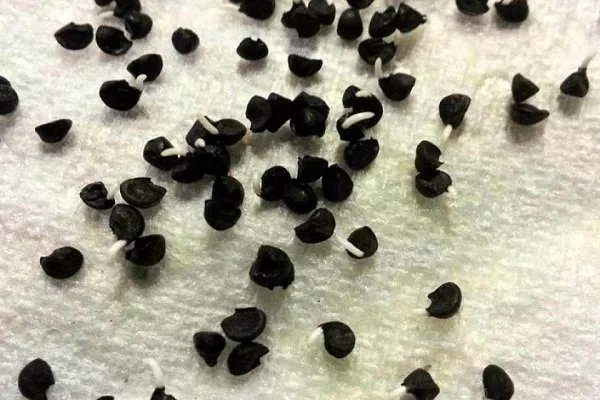
Planting dates
Onion sets are planted outdoors in the fall or spring. In the former case, this can be October or November, depending on the regional climate. As for spring planting, in temperate climates, onions are transplanted into the ground after April 25th, and in the south, after April 10th.
If outdoor temperatures aren't ideal (frost is expected, etc.), it's best to plant onions in a hotbed or greenhouse. The seedlings are transferred to the open ground after the weather stabilizes.
Planting technology
Cupido is grown using two methods: from seedlings in open ground and from seedlings. Each method has its own planting pattern and growing characteristics.
Into open ground
If the seedlings are planted directly into the ground, regardless of whether it is spring or autumn, you must adhere to the following schemes:
- distance between rows – 18-20 cm;
- distance between heads – 8-11 cm;
- The depth of planting the bulbs is from 3 to 5 cm.
- ✓ The optimal planting depth for seed onions should be at least 3 cm to protect them from freezing.
- ✓ The distance between plants should be at least 8 cm to ensure sufficient space for root system development.
Planting process:
- divide the area into beds - make furrows using garden tools;
- moisten with warm, settled water (you can add Kornevin, Epin - root system growth stimulants);
- let the liquid be absorbed;
- press the seedlings into the soil;
- sprinkle with soil, compacting it as much as possible;
- mulch, which helps maintain the required level of moisture.
Planting seedlings and transplanting into open ground
After carefully preparing the planting material, the seeds are planted as seedlings. Any container can be used for this—peat cassettes, pots, boxes, and the like. The soil can be purchased at the store or prepared yourself. To do this, mix garden soil with peat moss and humus, which can be replaced with compost or vermiculite. The variety prefers loose soil, so you can add coconut fiber, and river sand for aeration.
Seeds are sown for seedlings starting in February, depending on the climate and the gardener's abilities. Keep in mind that seedlings fully develop 60 days after planting.
Before planting seeds, be sure to disinfect the soil, as it may harbor weed roots and pest larvae. This can be done in a variety of ways:
- pour boiling water over the substrate, leave for several minutes, dry;
- treat with potassium permanganate solution;
- Place the soil in the oven or microwave for 10-15 minutes.
The landing process seed material:
- Disinfect seedling containers using potassium permanganate.
- Make small holes in the walls to allow oxygen to enter.
- Pour the substrate into the container, placing a few expanded clay stones at the bottom for drainage. The soil layer should be at least 8-9 cm thick.
- Lightly compact the surface and make furrows up to 1.5 cm deep.
- Pour warm water over it.
- Place the seeds 3-5 cm apart. Each hole can hold 2-4 seeds.
- Sprinkle with soil and spray with water from a spray bottle.
- Be sure to cover with plastic wrap or glass (if using plastic containers, then cover with a lid).
- Place in a warm place (temperature 22-26 degrees).
The first shoots appear within a week, with large numbers appearing within 12-15 days. During this period, the cover should be opened once a day for ventilation, the soil should be moistened, and the air temperature should be maintained at an appropriate level.
Rules for caring for seedlings after sprouts have formed:
- When strong shoots appear, the film is removed and the temperature is slightly reduced (to +10-20°C).
- Maintain adequate lighting – light should be on for 12-14 hours. Additional lighting fixtures, such as fluorescent lamps or phytolamps, can help with this.
- Water the bulbs frequently enough to maintain moderate soil moisture. The water should be slightly above room temperature and should be settled, as tap water contains substances harmful to plants (chlorine, etc.). After allowing it to settle for 2-3 days, the elements evaporate, making the water suitable for watering.
- When the seedlings start to grow, be sure to thin them out - a maximum of 2 bulbs should remain in one hole, but 1 is preferable.
- The seedlings require fertilizing. The first application is 5-7 days after mass germination. The second application is 2 weeks later. Ingredients: water – 9-10 liters, urea – 10 g, superphosphate – 20 g, potassium chloride – 5 g. If these ingredients are unavailable, use chicken manure mixed with water at a ratio of 1:10.
- To encourage root development, trim the leafy part by a couple of centimeters.
- 12-15 days before transplanting into the garden beds, the seedlings need to be hardened off, that is, prepared for different climatic conditions. To do this, take the containers outside (to the balcony) or open the windows. Additionally, artificial shade is provided. These procedures are introduced gradually: an hour on the first day is sufficient, two on the following day, and so on.
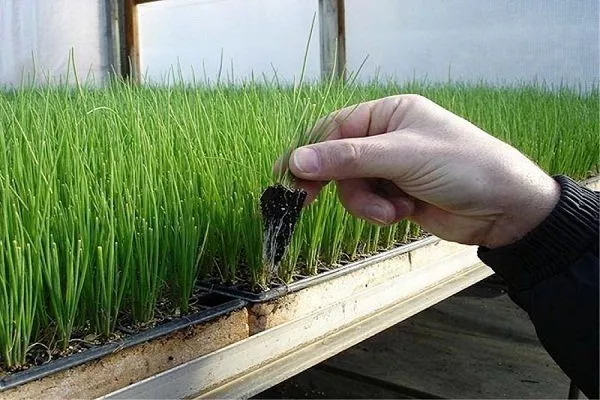
Cupido onions don't need to be pricked out, so the seedlings are planted directly into open ground. However, if you want to transplant the plants into other containers, feel free to do so, as the variety's roots are strong and resistant to pricking.
Care instructions
Agricultural technology growing onions This requires following specific care guidelines for plants planted in the ground. Failure to adhere to these guidelines makes it impossible to grow a quality product and reap a rewarding harvest.
Watering
The Cupido variety is highly drought-resistant, so avoid overwatering the soil. Furthermore, stagnant water promotes the development of fungal diseases, which can lead to plant rot. On average, if there's no rain, watering the variety 2-3 times a month is sufficient.
To avoid a shortage or excess of water, adhere to the main rule of watering: there should be no large cracks on the surface of the soil, and the soil should not be waterlogged.
Loosening
Loosen the beds after watering or rain, which eliminates the risk of dry crust formation and oxygenates the soil. When loosening, proceed carefully to avoid snagging the bulbs with tools. Try not to expose the bulbs.
Weeding
If weeds are present in onion beds, the crop's growth will be stunted because the grass absorbs all the essential micronutrients from the soil. To ensure healthy onion development, weeding should be carried out as weeds appear, pulling them out of the soil along with their root system.
Top dressing
Cupido onions prefer fertile soil, but fertilizing too frequently is undesirable, so it's sufficient to fertilize the soil before planting. If the soil is low in nutrients, add minerals and organic matter. If you want to get small onions, fertilize them during the growing stage with a nitrogen fertilizer; if you want a large onion, add potassium and phosphorus.
- First feeding: 2 weeks after planting, apply nitrogen fertilizer to stimulate the growth of greenery.
- Second feeding: a month after the first, apply potassium-phosphorus fertilizers to form the bulb.
- Third feeding: a month before harvesting, apply potassium fertilizers to improve the shelf life of the bulbs.
An alternative is chicken manure, compost, rotted manure, or slurry. You can make a mixture of 3 kg of rotted manure, 10 g of ammonium nitrate, 15 g of potassium salt, and 30 g of superphosphate. Spread the resulting mixture over 1 square meter.
Pest and disease control
Cupido is not afraid of diseases and pests, as it has a strong immune system. However, onions do have one enemy: the onion fly. You can recognize its presence by the following signs:
- wilting of green mass;
- head rot;
- suspension of feather growth;
- the appearance of white larvae under the husk.
What to do to prevent and control onion fly:
- In the autumn, dig up the beds to a depth of 20-25 cm, which will bring the larvae to the surface of the soil and kill them before spring.
- Plant carrots or marigolds next to onions – these plants repel onion flies.
- Prepare a decoction of coniferous branches—pine, fir, etc. Add a little mint and spray it on the feathers.
- Every 10 days, add a salt solution to the soil (1 glass of table salt per 10 liters of water).
- Dandelion root is very helpful - pour boiling water over the crushed roots, let it steep for 2-3 days, then dilute with water (200 g of grass - 10 liters of water).
- Water the plant with a weak solution of potassium permanganate.
- Combine 200 g of wood ash, 1 teaspoon of ground black pepper, and the same amount of tobacco dust. Sprinkle the mixture over the onion beds.
- Specialized products are available at the store, including Mukhoed, Aktara, Medvetoks, Sochva, Tabazol, Karate Zeon, and Zemlin. These products are used strictly according to the instructions.
How to harvest and store crops?
Onions are being harvested From mid-summer, depending on planting time and climate conditions. Some harvesting guidelines:
- About 2 weeks before the expected date, stop watering the onions.
- The weather should be sunny and dry. Harvesting begins early in the morning, after which the heads are spread out on beds to dry until evening.
- It is forbidden to pull the heads out by the tops - it is necessary to dig up the root crop with a shovel or pitchfork, and then remove it from the ground.
- Don't shake the soil by hitting the bulbs against hard objects. It's better to wait until the soil dries out and the dirt falls off on its own.
- Depending on the storage method, the tops are cut off (if you assume braid hair, leave the greens). The neck should be up to 4 cm long.
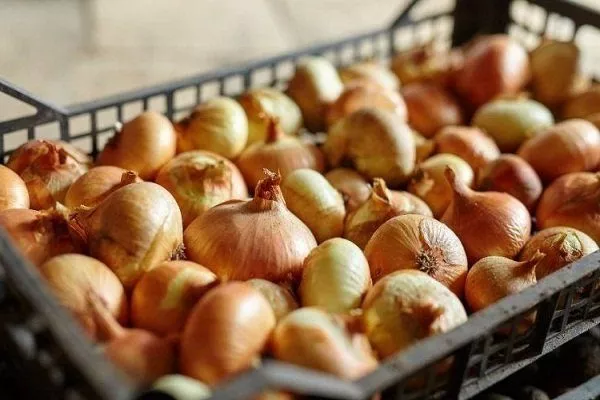
What is the correct way to store Cupido onions:
- The boxes are made of wood or plastic. It is essential to have ventilation holes in the sides.
- Cardboard boxes.
- Baskets made of natural wicker (small size).
- Fabric bags made of burlap, cotton, linen without synthetic threads.
- Old nylon tights.
- Polypropylene nets.
Braiding onions is considered the best way to store them. The principle is identical to braiding hair, but this method requires twine. Fold the rope in half, secure one onion by the tail, and braid the other onions in. The benefits are that the onions are ventilated, look beautiful, and don't rot.
Storage conditions:
- In the basement, the bulbs are stored at a temperature of 0 to +4-7 degrees with a humidity level of 80-85%.
- The air temperature in an apartment or house should be 20 degrees, humidity – 70%.
Reviews
The Cupido onion variety is characterized by its low maintenance, high yield, and excellent flavor, making it popular among gardeners and farmers. It also boasts an important characteristic: drought and disease resistance, so it doesn't require frequent watering or disease and pest control.