
The Yalta onion variety is called Crimean onion. It's a unique southern variety with characteristics that distinguish it from most varieties of this crop. Although Yalta onions are grown primarily in Crimea, some vegetable growers are also attempting to grow them in the central part of Russia. This variety requires a special approach to cultivation.
Characteristics of the variety
The red Yalta onion was bred in Crimea from the Madeira flat onion variety. This variety was brought to the peninsula from Portugal in the 19th century.
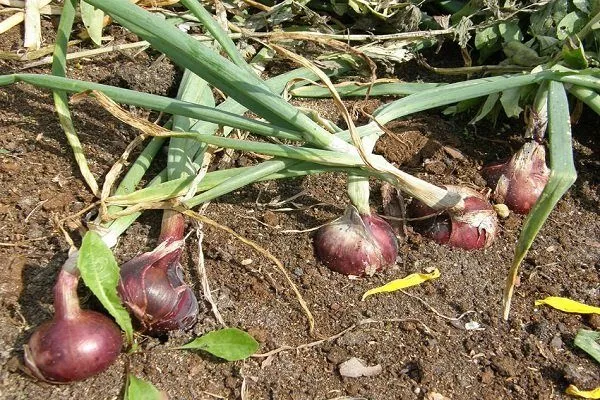
Yalta onion The Crimean onion is distinguished by its bulbs not being as pungent as many other varieties with red-purple scales. They are sweet, without a hint of pungency or bitterness, and without a strong onion aroma. Because of this, the Crimean onion is considered a salad variety and is eaten raw, without cooking.
The shape of the heads is also remarkable – round and flat, with no indentation at the top. This makes them easy to cut into half rings of equal length.
The bulbs are made up of thick, juicy scales, tightly pressed together. Interestingly, the varietal bulbs contain only seven of these scales, no more and no less. The outer scales of mature Yalta onion bulbs are purple-red. The onion sets are the same color. The inside of the bulbs is white or pinkish, very juicy.
This is a late-ripening variety: the plants require 140-150 days for the bulbs to fully mature. Each bulb averages just over 7 cm in diameter and weighs 150 g, yielding approximately 2 kg per square meter.
Advantages and disadvantages
Crimean onions are renowned for their sweet flavor and attractive appearance. They are a favorite among farmers and gardeners, and are also a popular purchase among consumers. However, to obtain bulbs with the flavor of genuine Yalta onions, they must be grown in their native Crimea, where the climate creates optimal conditions for the development of all their valuable qualities.
Onions can be grown in colder climates, but the flavor will be sharper. This is considered a drawback of the variety, but many gardeners don't let that stop them.
Late-ripening Crimean onions don't keep well, so long-term storage is not recommended. However, most mild varieties are not suitable for winter storage, so this shouldn't be considered a significant drawback of this particular variety.
Growing seedlings from seeds
In the south, varietal plants are grown by sowing seeds directly into the soil. However, this can be done in regions with long summers and warm autumns. In Russia, with the exception of the southern regions, Yalta onion is grown from seedlings. This is due to the variety's long maturation period—if the seeds are sown in garden beds, the bulbs will not have time to ripen before the cold weather sets in. Crimean onion seedlings are grown in greenhouses under plastic or in warm rooms in cassettes. Sowing is done at the very end of winter.
- ✓ The optimal soil temperature for sowing seeds should be at least 10°C.
- ✓ To prevent seedlings from stretching, it is necessary to provide additional lighting for 12-14 hours a day.
First, prepare the substrate and seeds. For filling the trays, it's best to use a universal substrate for growing vegetable seedlings. All components are selected to best meet the needs of the plants, and it also contains micronutrients.
The best specimens—large, flawless, and undamaged—are selected from the available planting material. They are disinfected for 20-30 minutes in potassium permanganate or a fungicide solution (dilute according to the instructions). Afterwards, they are rinsed with water, dried, and sown.
For 1 square meter, use 10-20 g of seeds, sowing them according to the following scheme:
- 1 cm in a row;
- 4-5 cm between rows;
- sowing depth – 1 cm.
If onions are grown in fine-mesh trays, sow 1-2 seeds in each tray. After sowing, water the seeds and cover them with soil, a layer of humus, or peat.
The greenhouse temperature after sowing and until the first shoots emerge should be between 18-20°C (65-68°F). Once all the seeds have sprouted, which will happen in about two weeks, the temperature is reduced to 14-16°C (57-61°F). Humidity should be around 70%. Daylight hours should also be at least 10-12 hours. If the plants don't receive enough light, they will become overgrown, elongated, thin, and pale green.
Caring for Yalta standard red onion seedlings:
- WateringWater the plants with clean, settled, warm water; cold water is not recommended. First, spray the seedlings with a spray bottle—this helps moisten the soil surface without eroding or compacting it. Watering frequency should be such that the soil remains moist but not wet: damp soil can cause seeds to rot and prevent germination, and the roots of already sprouted plants can also be damaged.
- Loosening and weedingAfter each watering, the beds are carefully loosened to aerate the soil. Weed seedlings are also removed during this process.
- Top dressingFertilize the onions 2 or 3 times during seedling growth, at intervals of 1.5 to 2 weeks. Fertilizing the plants with nitrophoska (1.5 tablespoons per 10 liters of water) produces good results. Pricking out is not necessary, but thin the plants if necessary, leaving 2 cm between them. Harden off the seedlings 7 days before transplanting them into the garden beds by opening the greenhouse for a few hours each day.
Watch a video showing how to sow Yalta onion seeds for seedlings in a greenhouse:
Planting seedlings in open ground
Crimean onion thrives in open, sunny, level, flat areas free from groundwater. It should not be grown in the shade; it thrives in sun and warmth.
The best soils for Crimean onions are light, loose, fertile loams and sandy loams. If the soil is clayey or sandy, add sand, sawdust, and peat moss in the former case, or soddy soil and mineral fertilizers in the latter. The soil should be neutral or slightly alkaline.
- Check the soil pH, it should be between 6.0-7.0.
- Add compost or humus at a rate of 5 kg per 1 sq.m. 2 weeks before planting.
- Ensure good drainage to avoid waterlogging.
The Crimean variety's predecessors are the same as those for other varieties of the crop: potatoes, root vegetables, cucurbits, nightshades, greens, and legumes. It should not be planted after onions of any kind or variety, or garlic. These rules must be followed to prevent the plants from contracting common diseases and being harmed by common pests.
For onions to thrive, they need to be grown in well-cultivated and fertilized soil. Prepare the soil in the garden in the fall or early spring:
- All remains of the previous crop and weeds are removed from the beds.
- Dig to a depth of at least 30 cm.
- Add compost at a rate of 1 bucket per square meter. Fresh manure should not be used, as it causes tops to grow, causes plants to bolt, and delays the formation of turnips. Ash or phosphorus-potassium fertilizers are added to the compost at a rate of 0.5 kg per square meter.
- If the beds are prepared in the fall, the clods of earth are not broken up so that they freeze during the winter, killing all pathogens and pests.
Ready-to-plant Crimean variety seedlings are planted in late April or early May. By the time of transplanting, the plants should be at least 15 cm tall and have 3-4 developed leaves. They are carefully removed from the substrate or tray cells along with the root ball. Any poorly developed ones are discarded, leaving only healthy and well-formed ones.
Seedlings are most often planted in furrows, but they can also be planted in holes. In either case, the plant placement pattern will be the same:
- 6-8 cm in a row;
- 30 cm between rows;
- depth – 1 cm above the root collar.
After planting is complete, the beds are watered and mulched with a thin layer of humus or peat, compacting it slightly.
Caring for the crop
Although the crop is considered undemanding, it's impossible to get a large harvest of high-quality bulbs without constant care. This includes watering, loosening the soil, weeding, fertilizing, and, if necessary, disease and pest control.
Watering
Yalta onions are demanding not only of soil, warmth, and sunny days, but also of care—they must be well watered, only then will they be sweet and juicy.
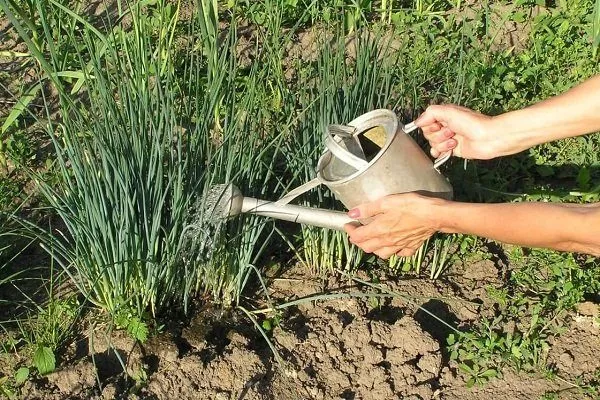
Watering frequency depends on the weather, but typically is twice a week. In home gardens, it's convenient and cost-effective to use a drip irrigation system instead of using a hose as usual. This saves water, time, and effort, and prevents root or bulb rot from overwatering. Drip irrigation also makes it easy to fertilize plants—fertilizer can be added directly to the water.
Stop watering the onions three weeks before harvesting to allow them to ripen. Unripe onions with thick necks don't store well.
Loosening and weeding
After each watering, the beds are loosened, which makes the soil breathable and removes weed seedlings.
Top dressing
Red Yalta onions are fertilized with organic and mineral fertilizers. fertilizersBefore the bulbs begin to form, use an infusion of manure (at a concentration of 1 to 10 if cow, pig, or rabbit manure is used, and 1 to 15 if bird droppings are used).
Once bulbs begin to form, the plants are fed with phosphorus-potassium fertilizers, excluding nitrogen. The final feeding should be done no later than three weeks before the expected harvest.
Pest and disease control
Many onion varieties with red scales have good resistance to infectious diseases and pests. Yalta onion is similarly resistant. With proper care and stable weather, it rarely suffers from diseases.
If there's a lot of rain, plants can become infected with downy mildew or gray mold. Control and prevention measures include spraying the beds with fungicides or a 1% Bordeaux mixture.
The most common pest affecting Yalta onions is the onion fly. It can be controlled with folk remedies or, if that proves insufficient, with chemical insecticides.
Harvesting and storage
Yalta onions are late-ripening, ripening in late summer and early fall. Harvesting should begin once the bulbs are fully formed and ripe. This can be determined by the plants' appearance: the tops turn yellow and fall over, the outer layers of scales on the bulbs dry out, tightly enveloping them, and the necks become thin and dry.
Don't let onions sit in the garden for too long. If rain comes soon, they'll start to root again. Such bulbs are difficult to dig up and don't store well.
Crimean onions are harvested on a dry, sunny day. If the weather is damp or rain is expected, it's best to postpone harvesting. The onions are dug up with a pitchfork or shovel to make them easier to remove. They are then spread out on beds to dry for 2-3 days. In damp weather, they are dried indoors in a dry, ventilated area. All the onions are spread out in a thin layer and turned daily to ensure even drying.
Once the drying process is complete, the onion heads are prepared for storage: the roots are trimmed, leaving the base and tops intact, leaving a 5 cm tall piece at the base. If you plan to braid the onion heads, the tops are not trimmed.
Onions are placed in boxes, baskets, or plastic vegetable nets and stored in a dry but heated room. If storing vegetables in a cellar, be sure to keep them in a dry place.
The storage temperature should be between 0 and 5 degrees Celsius. If it rises above 10 degrees Celsius, the heads will begin to sprout. Bow braids They can be stored in a shed, utility room, or hallway of a residential building. In such places, they are always at hand and easy to access.
During storage, the onions are sorted several times, and any rotten or dried out bulbs are removed to prevent infection from spreading to the remaining vegetables.
Although the Yalta onion variety is cultivated in the warm southern climate, it can also be grown from seedlings in central Russia. While this onion variety has its own unique cultivation techniques, they are generally similar to those used for growing other vegetable varieties.