
Red onions are a unique variety among similar crops. Externally, they differ from regular onions only in color, but their chemical composition and taste are distinct. To ensure a good harvest, both qualitatively and quantitatively, certain conditions must be met.
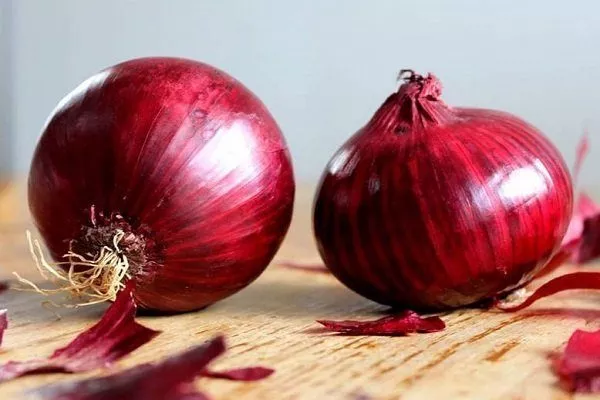
Red onions are suitable for canning.
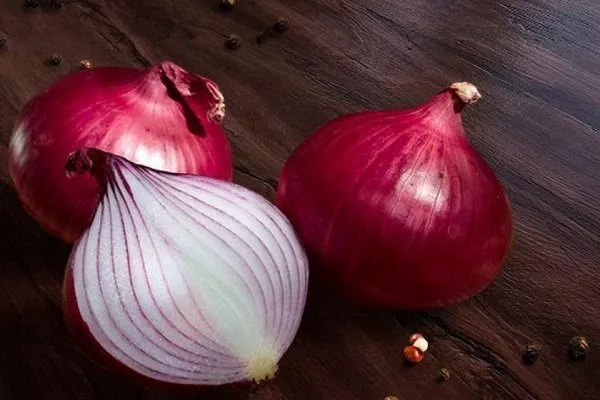
Red onions have a medium-hot flavor.
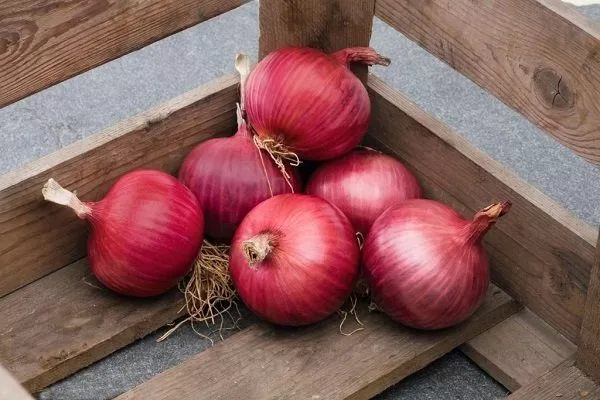
Red onion
Characteristics
Red onions are believed to have first appeared in Central Asia. They are a type of onion.
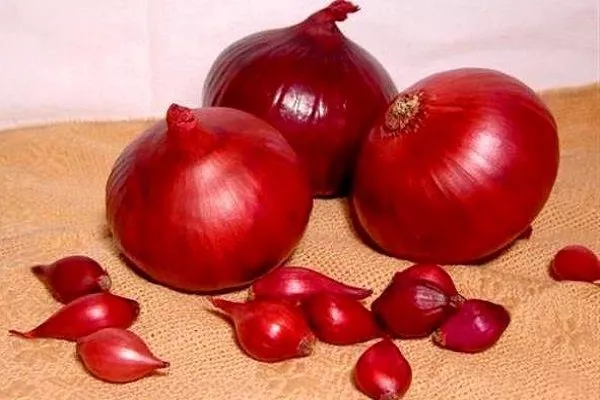
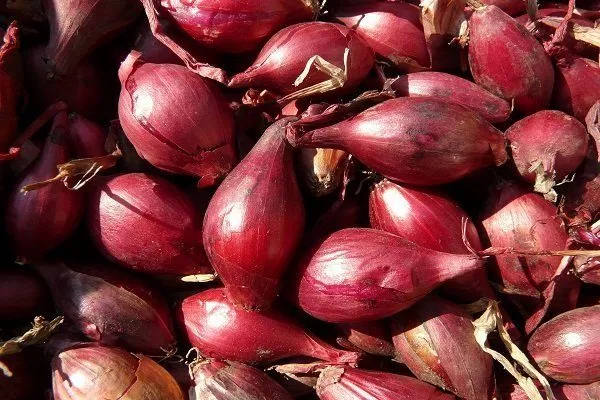
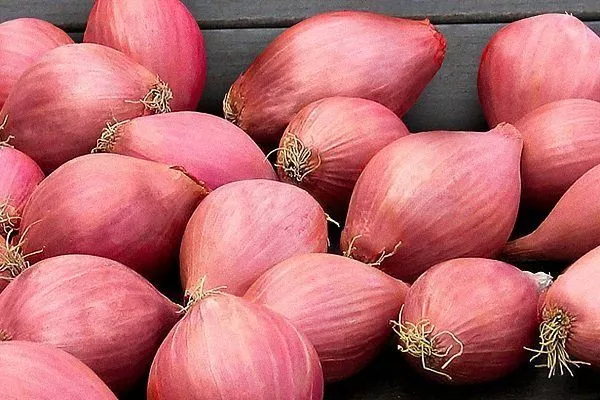
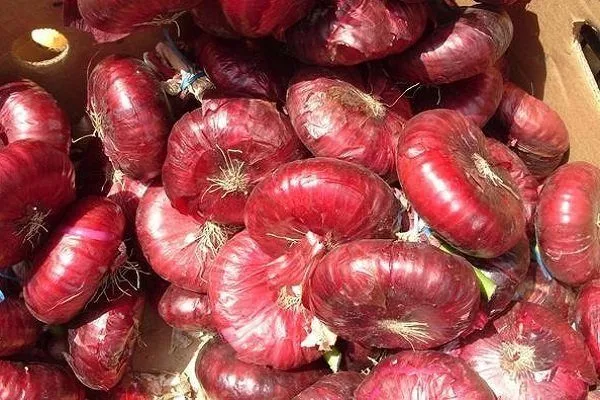
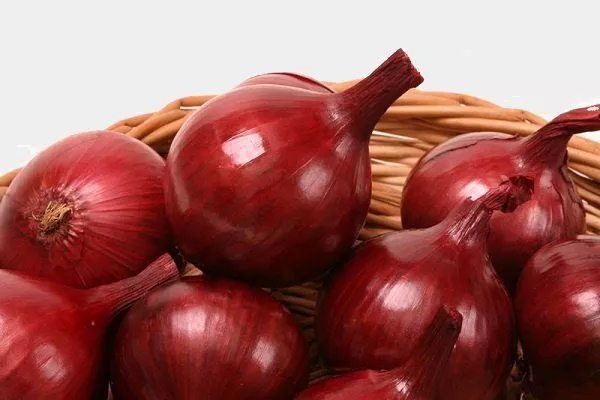
The characteristics of red onions depend on their variety. Fruit shape and size vary greatly. Color can range from deep red to deep purple. The flesh is often white with pink or purple veins.
Red onions are rarely overly spicy. They typically have a mild to medium-hot flavor, sometimes with a slightly sweet aftertaste. Because of these flavor characteristics, many varieties are suitable for salads and are recommended for fresh consumption. Red onions are also excellent for canning, especially when used in pickles.
The flavor characteristics of red onions depend largely on their growing location and care. These factors also influence the chemical composition of the fruit.
Varieties
| Name | Ripening period | Disease resistance | Taste |
|---|---|---|---|
| Crimson Ball | Early maturing (up to 90 days) | Average | Semi-sharp |
| Brunswick Red | Mid-early (70-100 days) | High | Mildly spicy |
| Brunswick | Mid-season (100-105 days) | High | Semi-sharp |
| Danilovsky | Mid-season (150 days) | Average | Semi-sharp |
| Campillo | Mid-season | High | Semi-sharp |
| Carmen | Early maturing (70-95 days) | Average | Semi-sharp |
| Karminka | Early, summer | Average | Semi-sharp |
| Prometheus | Mid-season | Average | Semi-sharp |
| Red button | Mid-season (100 days) | Average | Sweetish |
| Red Baron | Mid-season (95 days) | Average | Semi-sharp |
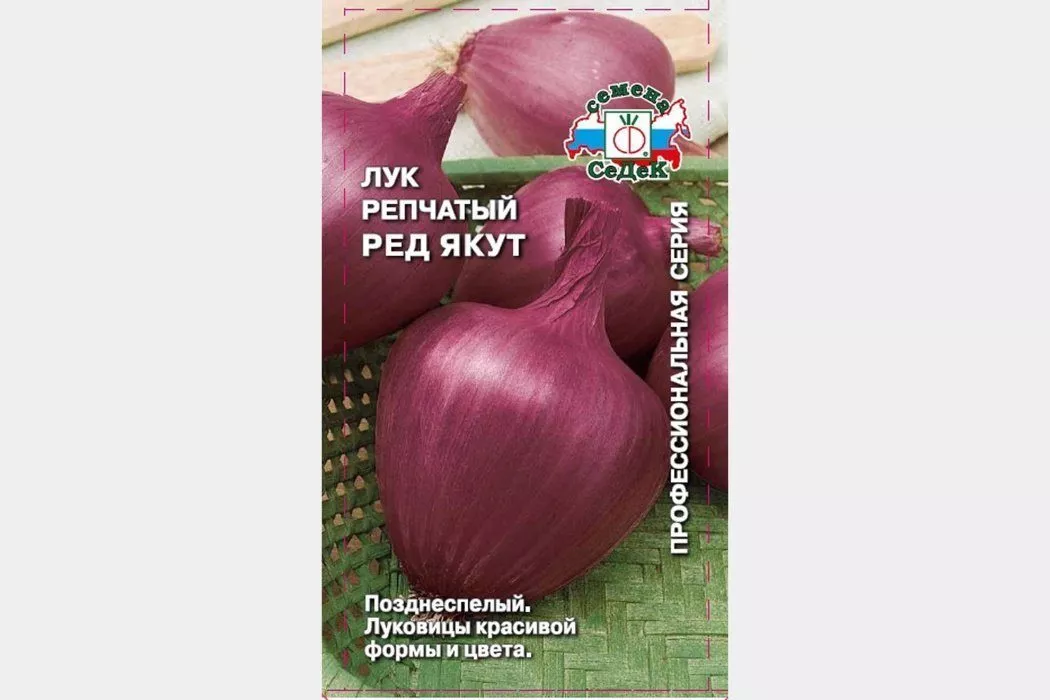
| Red Yakut | Late ripening (130 days) | High | Semi-sharp |
| Robin | Early | High | Semi-sharp |
| Red Zeppelin | Mid-early | High | Semi-sharp |
| Salad red | Early maturing | Average | Semi-sharp |
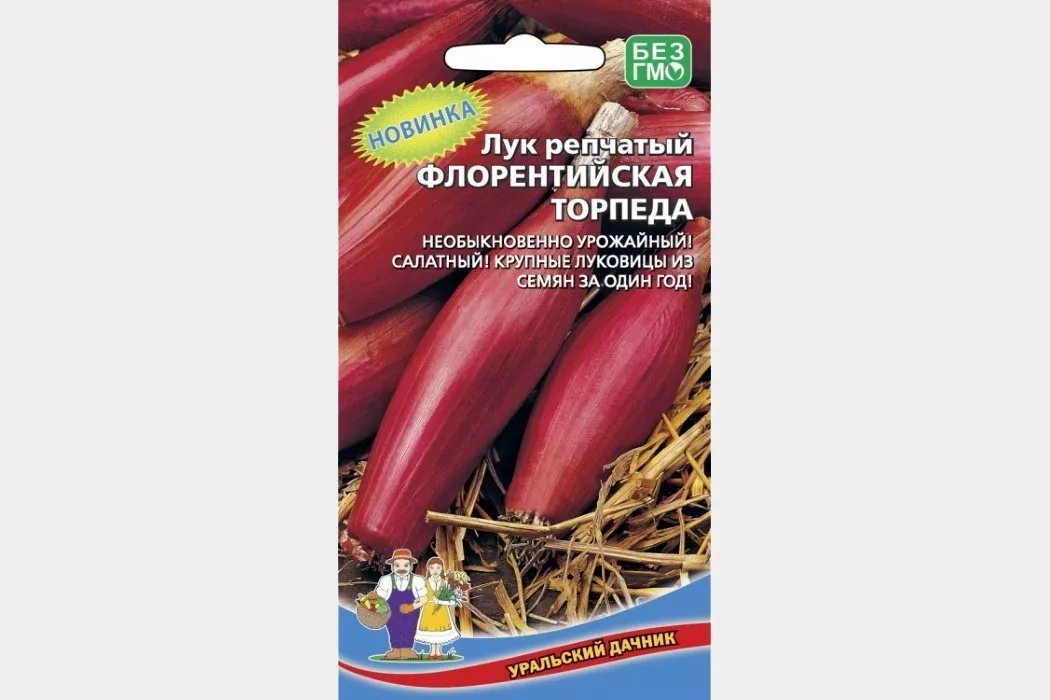
| Florentine torpedo | Salad | Average | Mildly spicy |
| The Black Prince | Mid-season (90-105 days) | High | Sweet |
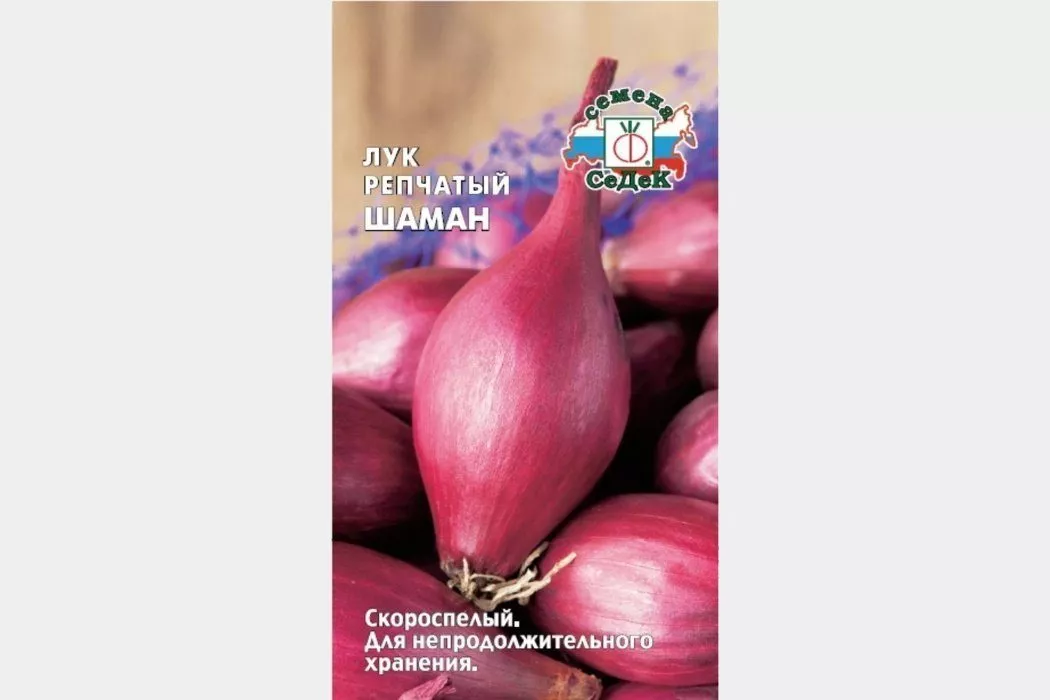
| Shaman | Early maturing (80-90 days) | Average | Spicy |
| Yalta Red | Late-ripening (140-150 days) | Average | Mildly spicy |
There are quite a few varieties of red onions, including:
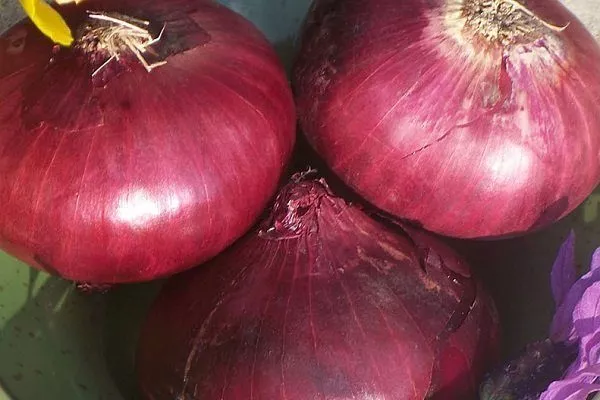
- Crimson BallAn early-ripening crop, growing in up to 90 days. The bulbs are perfectly rounded with dense white flesh streaked with purple. The fruits weigh an average of 80-90 g and have a semi-sharp flavor. The husk is dark purple.

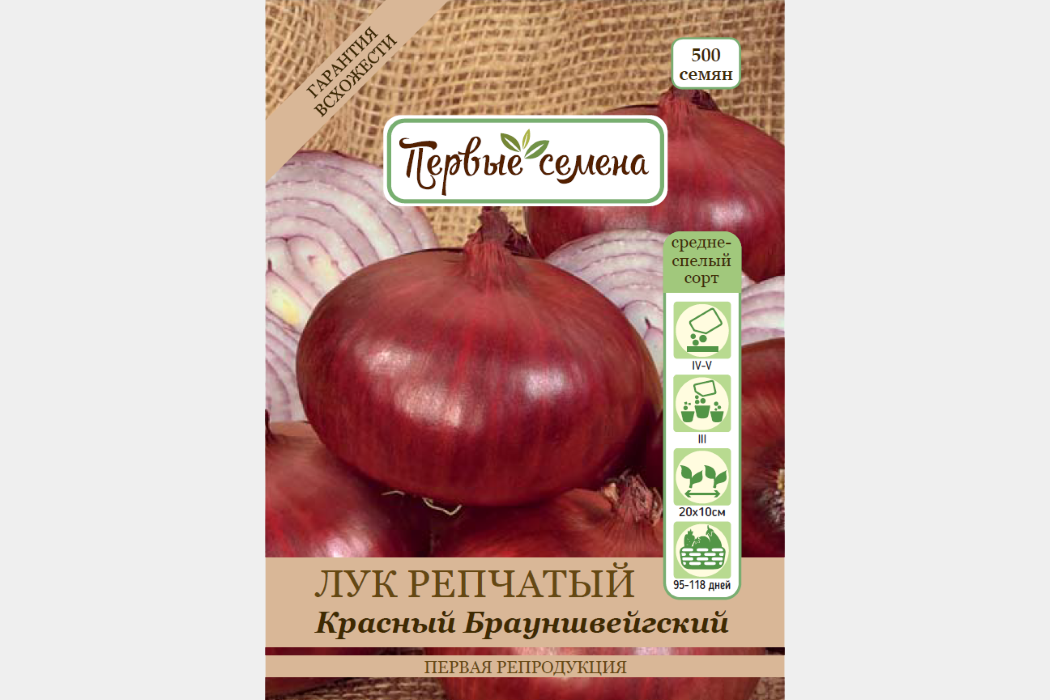
- Brunswick RedThis variety is mid-early, with a harvest time of 70-100 days. The husk is purple, the fruits are round and flat, and the flavor is mildly spicy. A significant advantage of this variety is its high resistance to fungal diseases.
- BrunswickA mid-season variety, growing in 100-105 days. The fruits are round and flat, dark red on the outside, with white flesh ringed with red. Average weight is 100 g. The flavor is semi-sharp. This variety is resistant to disease and is well suited for long-term storage.
- DanilovskyThe ripeness is average, with a 150-day wait until harvest. The fruits are flat or round-flat, weighing on average 80-150 g. The bulbs are dark red on the outside, with a purple tint. The flesh is juicy, light purple, with a semi-sharp flavor. This variety yields up to 3 kg per square meter.
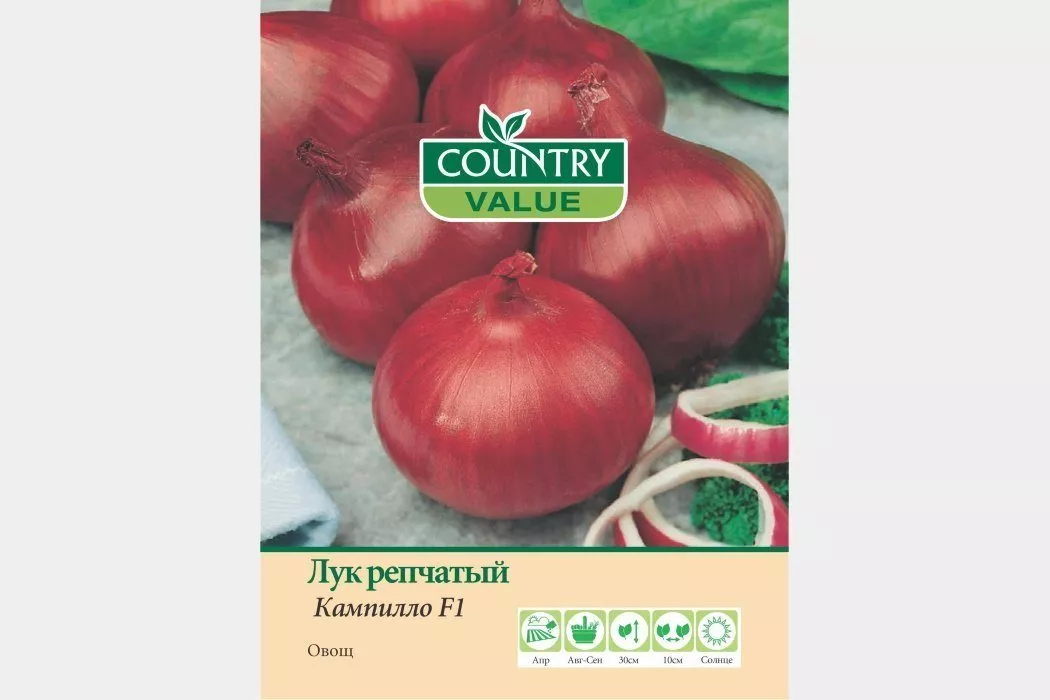
- CampilloThis variety is mid-season. The bulbs are round and flat, deep red on the outside, and have a semi-sharp flavor. The variety is disease-resistant.
- CarmenThis variety is early maturing, with harvest time reaching 70-95 days. The bulbs are round and flat, medium-dense, and weigh 50-70 g. They have a semi-sharp flavor. The husk is purple, and the flesh is white-purple. Yields up to 1.6 kg per square meter.
- KarminkaThis is an early, summer-ripening variety. The bulbs weigh 90-100 g and are elongated-oval in shape. The husks are a rich, dark red. The juicy flesh has a semi-sharp flavor. This variety is recommended for eating raw. The plumes are dark green and have excellent flavor.
- PrometheusThis variety is mid-season. The bulbs are round, weighing 70-100 g. The peel is dark red, and the flesh is red with a semi-sharp flavor. Yields up to 4.5 kg per square meter.
- Red buttonThis mid-season variety can be harvested in 100 days. The bulbs are small, weighing approximately 50 g. They are flat, with reddish-purple scales and sweetish flesh.
- Red BaronThis is one of the most popular red onion varieties. It is mid-season, producing a harvest in 95 days. The bulbs are round and flat, with red skins and dark red flesh. The fruits weigh an average of 18-24 g. Yields up to 1.5 kg per square meter.
- Red YakutThis late-ripening variety yields fruit in 130 days. The bulbs have a distinctive, elongated, round shape and a dense, purple-burgundy skin. The semi-sharp flesh is white-pink. The fruits weigh 150 g each. Yields up to 9 kg per square meter. The vegetables can be stored for up to six months.
- RobinAn early hybrid variety, considered a commercial one. The onions weigh an average of 150-200 g. They have a mild, semi-sharp flavor, similar to salad varieties. The color is intense, and they are highly disease-resistant. They are suitable for long-term storage, up to 10 months under proper conditions.
- Red ZeppelinThis variety is a mid-early hybrid. The large bulbs are round, weighing up to 600 g. The peel is dark red, and the flesh is semi-sharp. This variety is well suited for long-term storage.
- Salad redThis early-ripening variety was recently bred. The bulbs are elongated, reaching 10-12 cm in length, and weigh an average of 50-65 g. The husk is purple, and the white-purple flesh has a semi-sharp flavor.
- Florentine torpedoThis variety is used for salads and is eaten primarily fresh. The bulbs have an elongated elliptical shape, with dry purple-crimson scales and mildly spicy, piquant red-pink flesh. They reach 10-12 cm in length and 5-6 cm in width.
- The Black PrinceA domestic mid-season variety suitable for northern regions. Harvesting occurs in 90-105 days. The bulbs are round, with purple scales and sweet flesh. This variety is suitable for long-term storage and can be stored throughout the winter.
- ShamanThis variety is early maturing, producing a harvest in 80-90 days. The bulbs are very elongated, reaching 10-12 cm in length. The fruits weigh 50-65 g. They have a brownish-red skin, and the spicy flesh is pinkish-red and medium-firm. Yields up to 3 kg per square meter. Not suitable for long-term storage.
- Yalta RedThis salad variety is late-ripening, producing a harvest in 140-150 days. The bulbs are flat-round with deep purple flesh and scales, weighing 150 g each. The flesh is sweet and mildly spicy, with no bitterness. Watering requirements are higher, which affects the flavor and yield.
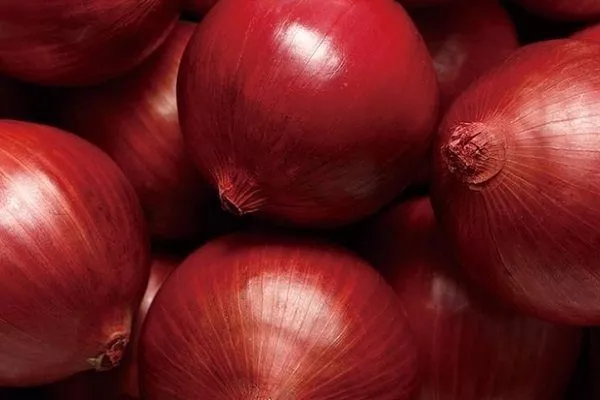
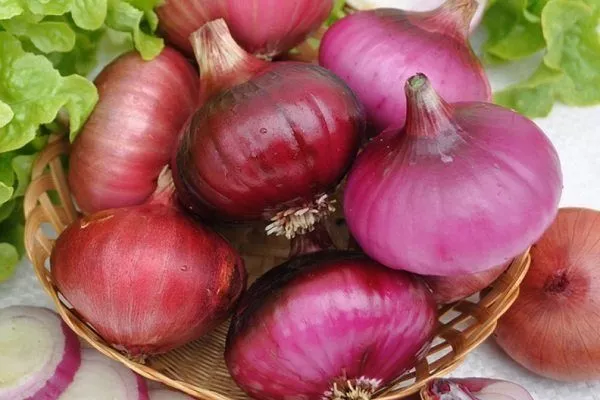

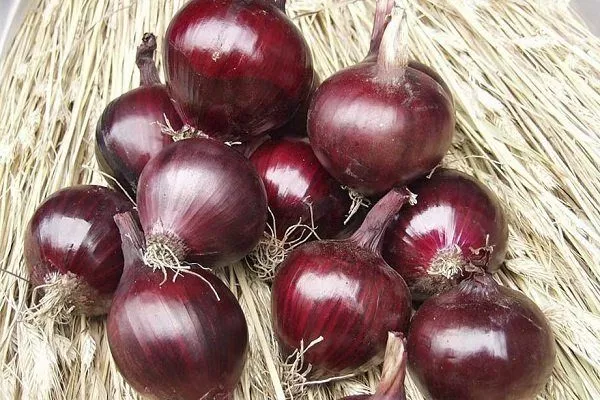
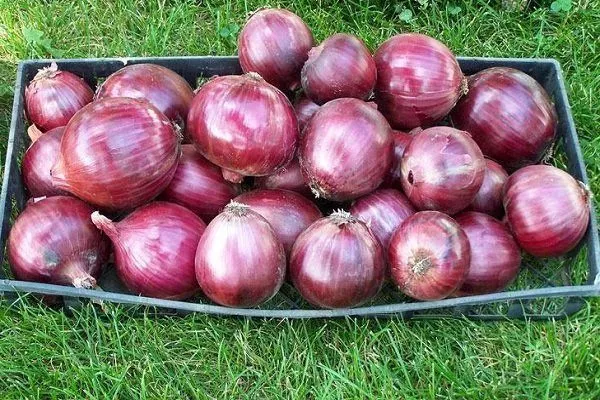
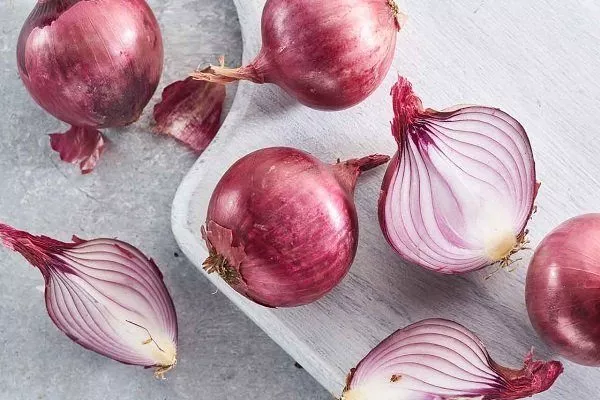
When choosing a variety, it is important to consider not only its yield, appearance and taste characteristics, but also growing recommendations.
Growing conditions, soil requirements
Growing red onions is not particularly difficult if you provide certain conditions:
- The right areaThe place should be sunny and well ventilated.
- Compliance with crop rotation rulesRed onions can be planted after cabbage, legumes, nightshades, and spinach. Avoid choosing a site where other bulbous plants have been planted in the last three years.
- Proper soil preparationRed onions can be harvested most quickly if grown in sandy loam soil. Loamy soil, on the other hand, provides the best flavor. Dense clay soil is unsuitable for red onions, as it can cause a hard crust to form around the rhizomes, which will hinder their development. This can be resolved by adding sand to the soil. Soil acidity is also important. The optimal pH for red onions is 6.4-7.9. This means the soil should be neutral or slightly alkaline. Excessively acidic soil requires alkalization by adding dolomite flour, slaked lime, ground limestone, and chalk.
- ✓ Soil pH levels should be strictly between 6.4-7.9 for optimal growth.
- ✓ Sandy loam soil accelerates growth, but loamy soil improves taste.
Soil preparation should begin in the fall. This involves digging the selected area, removing weeds and insect larvae, and applying fertilizer. Organic matter and complex fertilizers are effective.
In spring, the soil also needs to be cultivated. If it's light enough, re-digging isn't necessary—loosening is sufficient. The area must be leveled.
Landing
Red onions can be planted in a variety of ways: from seeds, seedlings, or sets. When using the first method, the crop can be grown as a biennial, meaning it will only produce fruit in the second year. Some varieties produce fruit in the same year.
Planting red onions from seedlings or sets is commonly practiced in northern regions. Early-ripening varieties are best suited for this purpose.
Each method of planting red onions has its own characteristics.
Seeds
Growing from seeds is practiced in southern regions, and this method is used to grow seedlings or sets. When grown as a biennial crop, planting can be done in open ground.
- Disinfection of seeds in a solution of potassium permanganate for 30 minutes.
- Seed stratification: hot water (40-45°C) for 20 minutes, then cold for 1 minute.
- Germination of seeds in a damp cloth with possible treatment with a growth stimulator.
To obtain seedlings, seeds are planted in a greenhouse or indoor containers. Planting red onions from seeds follows this procedure:
- Disinfect planting materialPotassium permanganate works well for this. Prepare a light pink solution and soak the seeds in it for half an hour. After this treatment, be sure to rinse the planting material with plain water.
- Stratify seedsSoak the seeds in hot water for 20 minutes. The water temperature should be 40-45 degrees Celsius. Immediately transfer the seeds to cold water and soak for 1 minute.
- Germinate the seedsTo do this, wrap them in a damp cloth and place them in a warm place. You can pre-treat the planting material with a growth stimulant – follow the instructions included with the product.
- Prepare a greenhouse or suitable containersYou can use ready-made soil or create your own mixture. You can use equal parts turf and compost, or add peat, sand, and compost to the turf—all ingredients should be used in equal amounts. If possible, warm the soil. For smaller volumes, you can use a microwave or oven. A solution of potassium permanganate and fungicides are effective for disinfection.
- Sow the seedsThere's no need to plant them deep; a 1 cm layer of soil is sufficient. It's recommended to leave 2 cm between the seeds. You can prepare furrows in advance, deepening them to 1 cm, leaving 3 cm between them.
- Water the cropsUse a spray bottle. The water should be settled and warm.
- Cover the crops with filmGlass can also be used.
The seeds germinate at a temperature of 20-25 degrees Celsius. They don't require light at first; maintaining the correct temperature is much more important.
When planting seeds outdoors, follow the same procedure. The soil should be well-warmed. Initially, provide cover.
From seedlings
You can grow red onion seedlings yourself or buy them, but the latter option is quite problematic. Planting seeds for seedlings is done similarly to the previous section.
After sowing, you need to proceed according to the following algorithm:
- Once the seedlings emerge, move the containers to a cooler room. Daytime temperatures should be 15 degrees Celsius. Good lighting is essential. If natural light is insufficient, supplement with artificial light.
- Fertilizing seedlings is optional, but applying a complex fertilizer is recommended. A single application is sufficient.
- Hardening off should begin 1.5 weeks before planting the seedlings outdoors. Initially, taking the seedlings outside for 15 minutes is sufficient. Then, gradually increase this time.
The seedlings are ready for transplanting to a permanent location after three pinnae appear and the stem thickens to 5 m. This usually occurs in the second half of April.
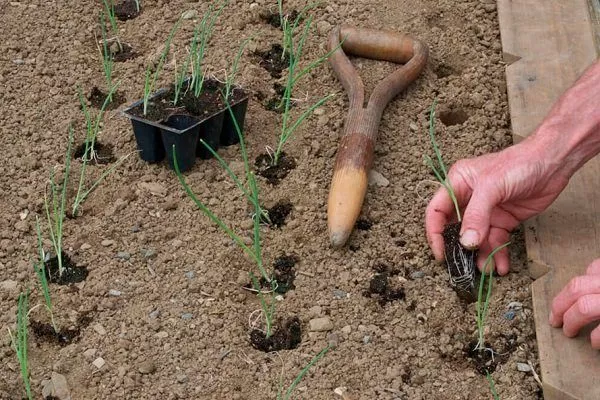
Disembarkation is carried out according to the following algorithm:
- Prepare the ground.
- Dig holes. They shouldn't be too deep. Leave 15 cm between holes—this distance should be based on the expected bulb size and variety. Leave 25 cm between rows.
- Transplant the seedlings together with the lump of earth.
- Sprinkle the seedlings with soil, compact and water.
Onion sets
Planting red onion sets is the most popular method. The planting material can be purchased or prepared independently. In the latter case, it's important to store the bulbs properly.
Planting red onion sets is carried out according to the following algorithm:
- Culling of planting materialIt is necessary to carefully sort it out and get rid of all diseased and damaged specimens.
- Cut off the tops of the onionsThey need to be shortened by 25-30%. After trimming, leave the treated material for 2-3 hours to dry.
- Make holes in the prepared soilLeave 15 cm between adjacent holes and 20 cm between rows.
- Plant the onion setsBe sure to leave a few millimeters of bulbs on the surface.
Care
Regardless of planting method, red onions require comprehensive care. Overall, they're a fairly low-maintenance crop.
Watering
Red onions need to be watered regularly. This ensures the bulbs remain juicy and reduces the pungency of their flavor. The optimal frequency of watering is every 3-4 days. During dry periods, more frequent watering is required.
Not only the frequency of watering is important, but also the technique. Drip irrigation or furrow irrigation should be used. When cutting greens, it's important to ensure that no water gets into the cuts, as this will cause the plants to rot.
Watering should be stopped three weeks before harvest. Otherwise, there is a risk of rot.
Loosening and weeding
It's easier to loosen the soil after watering. This ensures aeration.
Weeding is one of the most important activities. Timely removal of weeds ensures normal crop growth and development, which will inevitably impact the harvest.
Top dressing
During its development, the crop must receive sufficient nutrients. Red onions are fed with organic and mineral fertilizers. It is recommended to apply them three times a month.
Organic fertilizers should be used for young plants. Chicken manure, diluted in 10 parts water, is effective. Fresh cow manure can also be used; in this case, the water requirement is half that of fresh manure.
When the bulbs begin to grow and gain weight, it's time to switch to phosphorus-potassium fertilizers. It's recommended to use them in liquid form.
At least 3 weeks before harvesting, you should stop using chemical fertilizers.
Diseases and pests
Red onion susceptibility to diseases and pests depends largely on the variety. Potential problems include:
- Downy mildew (peronosporosis)Blurry, pale spots appear on the leaves, and fungi develop. Affected plants should be removed, and the remaining ones should be treated with fungicides.
- RustOrange balls first appear, followed by spores. Remove affected plants, and treat the remaining ones with a copper-containing product.
- Onion fly – the most common crop pest, which its larvae feed on. Affected plants should be removed, and the remaining ones should be dusted with tobacco dust, ash, and black pepper.
Harvesting and storage
Red onions are usually harvested in the second half of August and early September. It's recommended to trim the roots with a shovel a week beforehand—this will make harvesting easier and allow the onions to dry better.
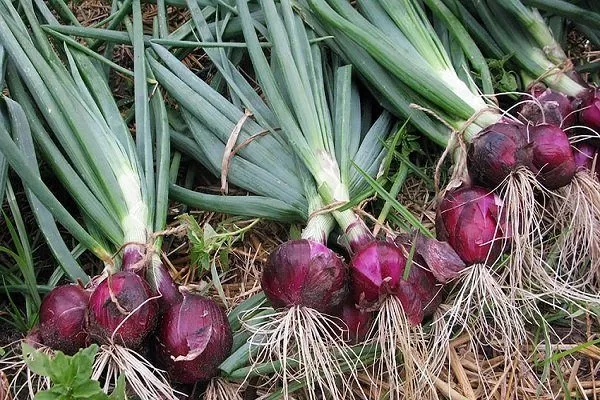
After harvesting, the crop should be cleared of soil and laid out in a warm, well-ventilated area to dry. After a week, continue harvesting: trim the necks with pruning shears, leaving 10-15 cm. Trim the roots as well, leaving 5 cm to the base. This procedure increases shelf life.
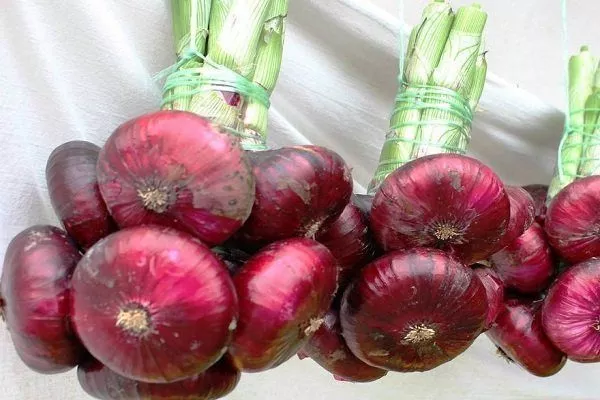
The optimal temperature for storing red onions is 18-24 degrees Celsius. They need to be kept dry, well-ventilated, and away from heat sources. You can store the harvest in nets, wicker baskets, or wooden boxes. Mixing the onions with crushed chalk is effective.
All spoiled specimens must be thrown out promptly, otherwise the rest of the harvest will suffer.
Growing red onions is fairly simple and profitable for subsequent sale – red onions are more expensive than their counterparts, despite the cultivation requirements being virtually identical. Growing this crop allows you to add variety to your diet, adding a distinctive flavor to various dishes and preserves.