
This Dutch-bred variety has thrived in Russia and the CIS. It's easy to grow and has excellent disease resistance, making it a boon for both novice and experienced gardeners. More details on its characteristics are available below.
Description of the variety
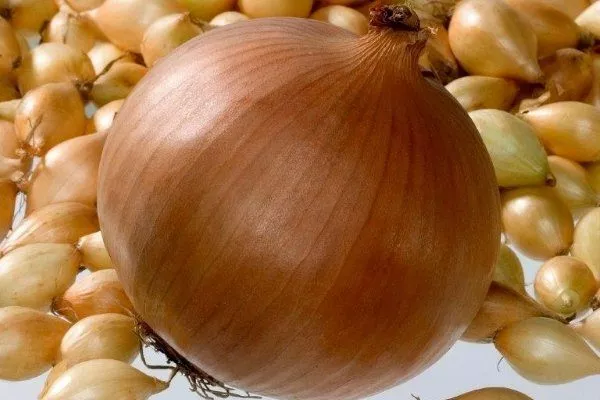
Corrado F1 (Carrodo) is a modern, first-generation hybrid originating from the Netherlands. It was included in the State Register of Breeding Achievements in 2015 for cultivation in six regions of Russia. Despite its relatively recent introduction, this variety has already become a favorite among many gardeners. This is due to its properties, which are presented in the table below:
| Parameter | Description |
| Ripening period | Corrado is an early-ripening variety. Harvesting can be done 80-95 or 100-105 days after germination. Harvesting times may vary depending on the specific climate zone, as the vegetable gains strength faster in warmer climates than in colder ones. |
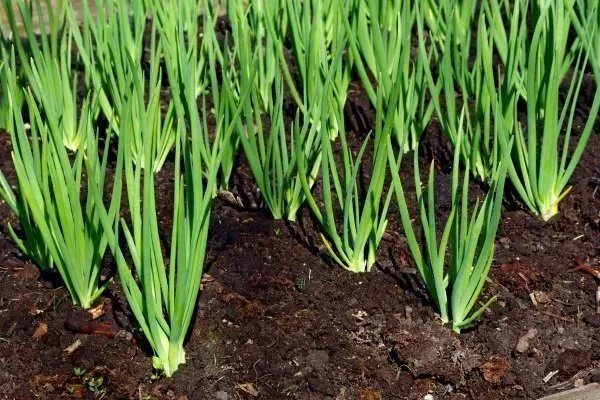
| Features of leaves | The plant develops hollow leaves arranged in two rows, each row growing from the axil of the previous one. The leaves reach about 30 cm in length and are glaucous-green in color. |
| Appearance of the bulbs | A vegetable with a powerful root system forms dense fruits with the following characteristics:
|
| Seeds | The seedlings of this hybrid produce a large (up to 15 mm) hollow stalk, at the tip of which an inflorescence subsequently emerges. After flowering, triangular black seeds form in the capsules. |
| Scope of application | Onions with a pleasant semi-sharp taste can be added fresh to salads, heat-treated when preparing various dishes, frozen and dried. |
| Yield and germination | On average, one square meter of plot yields approximately 8 kg of fruit. With winter sowing, up to 350 kg of yield can be obtained from one hundred square meters, as the variety has a high growth rate and a germination rate of up to 96-100%. |
| Growth characteristics | The hybrid is highly resistant to various diseases and does not bolt. It tolerates temperature fluctuations and is well adapted to various climates. It is a medium-sized variety and suitable for growing for feathers. |
Onion sets are the name of the planting material, not the name of the onion variety. Onion sets can be grown from any onion variety; simply leave the onion stalk until the seed pods (called nigella) appear, which are then collected and planted. Each nigella will grow into an onion set, and each set will grow into a full-sized onion bulb.
Planting dates
They can be determined depending on the region where the vegetable is grown:
- southern and central regions – onions can be planted for the winter in October-November, when the temperature warms up to +5°C (the crop will overwinter well, and with the onset of warmth it will produce friendly shoots);
- north – planting should begin in the spring, when the weather warms up to +10…+12°C.
The optimal temperature for onion ripening is between 18 and 20°C. Warmer conditions and lack of moisture will degrade the vegetable's flavor. If ripening occurs at temperatures below 18°C, the bulbs will stunt growth and become smaller.
The crop can be grown outdoors. A greenhouse is only useful if you need to harvest the greens throughout the spring and fall.
Processing of planting material
Corrado can be grown from onion sets or seeds. In either case, there are a number of rules to consider when harvesting it, which we'll discuss below.
Onion sets
Classified by size and suitable for planting at different times:
| Fraction | Dimensions | Planting dates |
| Small | 8-14 mm | An ideal option for winter planting. |
| Average | 14-21 mm | Suitable for winter and spring planting. |
| Above average | 21-24 mm | If planted in winter, it will produce a feather, and if planted in spring, it will produce a rich harvest of heads, but only if the favorable planting dates are observed. |
| Large | 24-30 mm | It has the same planting time as 21-24 mm onion sets, but the cost is lower. |
| Sample | 30-40 mm | Used for planting on greenery. |
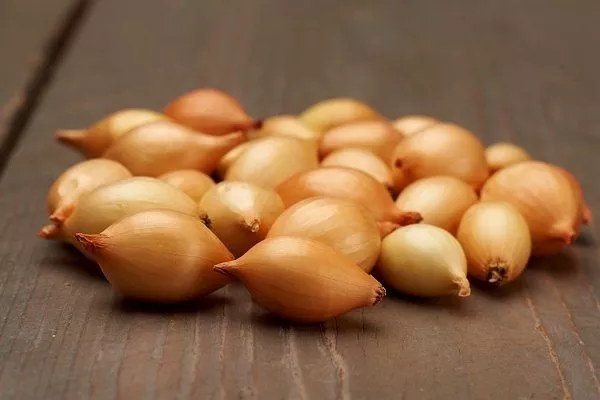
Bulbs of any size should not be purchased from outside, especially in cold weather. Such planting material is likely frozen, which will reduce its germination potential. Furthermore, it's important to ensure that the bulbs have the following characteristics:
- have a smooth surface, free from any defects;
- are dry (without excess moisture);
- have a dense structure.
If the product is in its original packaging, the packaging date and expiration date must be indicated on it.
All seed onions should be properly stored in a ventilated area at a temperature of 10 to 15°C and a humidity of 70-75%. It's important to avoid extreme changes in the microclimate, as this will cause the seed onions to bolt.
Seeds
You should buy them from a reputable store, giving preference to well-known manufacturers. Be sure to check the expiration date on the label. After purchasing, it's a good idea to test the seeds for germination, following these guidelines:
- Take 10-15 seeds and place them in a glass or seedling container with a capacity of 50-100 ml. Line the bottom with filter paper or gauze.
- Pour water over the seeds to make them slightly damp.
- Place the container in a warm place and leave for 7-10 days.
- After the specified time, count the number of germinated seeds. This should be at least half of the total number of soaked seeds (germination rate at least 50%).
Selection and preparation of soil
For onions, you need to select a site with the following characteristics:
- is located on a small hill;
- protected from cold winds and drafts;
- warms up well in the sun's rays.
Hydride grows well in all types of soil, but prefers loose soils and loams with neutral pH. If necessary, the pH can be reduced with lime, but it's best to do this 2-3 years before planting. The soil can also be fertilized with humus 1.5-2 years in advance.
- ✓ Optimal planting depth to prevent freezing or drying out of the bulbs.
- ✓ Precise composition of the soil mixture for seedlings, ensuring optimal growth.
Crop rotation rules should not be ignored. It's best to plant onions after early varieties of cabbage, cucumbers, zucchini, and potatoes. The crop should only be returned to the same location after three years. It's also not advisable to grow them after legumes (peas, beans).
Experienced gardeners grow onions near carrots, as these crops complement each other well and help prevent the spread of harmful insects. To repel onion meal, calendula and marigolds can be planted around the perimeter of the garden bed.
The designated area must be properly prepared. The specific steps depend on the planting method:
- AutumnThe soil should be mulched with leaves, peat, and humus, creating a layer 8-10 cm thick. This will protect it from freezing. Fourteen days before the onset of frost, remove the mulch and plant the onion sets in the ground, then mulch them again.
- SpringRemove the mulch prepared in the fall, loosen the soil with a rake and make furrows in it for sowing the bulbs.
Planting Corrado onion sets in the ground
A popular technology that can be roughly divided into two stages.
Processing
Start this about a month before planting:
- Sort the bulbs - discard dried and damaged specimens, and sort the remaining ones by size.
- Dry the bulbs in a warm, dry place away from drafts, then warm them to prevent premature bolting. This can be done near a radiator or outdoors (in direct sunlight). Keep the bulbs at 20°C for 14 days, then place them at 40°C for 8-10 hours.
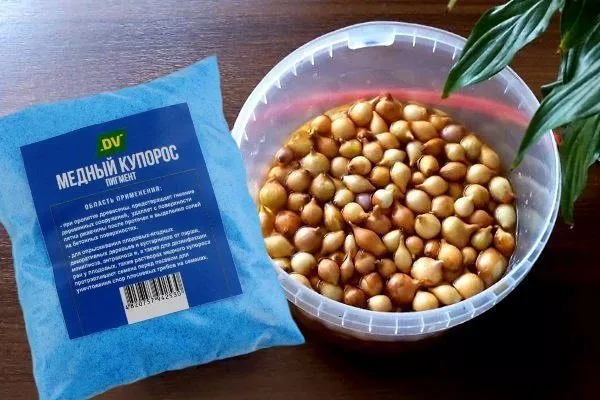
- Before planting, disinfect the bulbs by soaking them in a solution of copper sulfate (30 g per 10 l of water) for 2 hours and rinsing under warm running water.
Planting in the ground
The seedlings should be planted in beds that have been furrowed beforehand. The planting pattern is as follows:
- width between holes – 8-10 cm;
- distance between rows – 20-30 cm;
- The planting depth is 3-4 cm for spring planting and 6-10 cm for winter planting.
Do not soak the bulbs before planting. They should be planted in prepared furrows so that the crown is 1.5-2 cm below the soil level.
Seedling cultivation method
This technology allows for not only earlier harvests but also more viable ones. Its implementation can be divided into several stages, each of which will be discussed separately.
Seed treatment
The first step is to check the seeds for germination using the procedure described above. If this is followed, seed treatment should begin 2-3 days before sowing. If this step is skipped, approximately 14 days will be required, as it is possible that the seeds are not up to standard and will need to be replaced.
The tested seeds must be processed as follows:
- Fill a small container with warm water (50°C) and soak the seeds in it for 20-30 minutes.
- Cool the heated material slightly by holding it under running water for 2-3 minutes.
- If you need to disinfect the seeds yourself, soak them in a weak solution of potassium permanganate for 24 hours and then place them in a growth stimulator, such as Ecopin, for about 3 hours.
- Wrap the seeds in a damp cloth and place them in a warm place. Check them daily for germination. When 3-5% of the seeds sprout, they should be planted in soil.
Sowing
Seedlings can be grown in boxes or cups no deeper than 6-9 cm and with drainage holes in the bottom. For soil, you can use a commercial substrate or a homemade mixture of the following ingredients:
- leaf soil (1);
- turf (1);
- humus (1.5);
- river sand (0.5).
The prepared mixture should be filled into seedling containers and approximately 50-60 days before transplanting the seedlings into open ground (in April-May), begin sowing the seeds, following this order:
- Using tweezers, carefully place each seed into small grooves at a distance of 1.5 cm from each other.
- Sprinkle the seeds with soil on top and cover with film.
Growing seedlings
To get strong seedlings, you need to properly care for them, observing the following measures:
- Creating an optimal microclimateAfter sowing, move the seedlings to a warm location and keep them indoors at a temperature of 18 to 25°C until the first shoots appear. Then, lower the temperature to 14 to 16°C, remove the plastic wrap, and move the boxes to a sunny spot. This will prevent the seedlings from becoming too tall.
- WateringAs a crust forms on the top layer of soil, moisten the soil with settled, room-temperature water. Avoid overwatering, as this will cause root rot.
- Top dressingFeed the seedlings every 14 days with a solution of 20 g superphosphate, 5 g potassium chloride, and 10 g urea per 10 liters of water. A simpler option is to dilute chicken manure in water (1:10).
- HardeningTwo weeks before planting, take the seedlings outdoors. The initial treatment should last no more than 10-15 minutes. Gradually increase the duration each day.
Transplants into the ground
As soon as the danger of frost has passed, seedlings with 3-4 true leaves can be transplanted to their permanent location. This is best done in the afternoon. Moisten the seedling bed, remove each seedling, and trim any overly long roots by a third. Follow this planting pattern:
- width between holes – 5 cm;
- distance between rows – 30 cm;
- planting depth – 1 cm.
After planting, water the bed well and mulch (for example, peat).
Planting care
Regardless of the planting method, proper care is required for the vegetation. Let's take a closer look at how to achieve this.
Watering
After sowing, the crop should be watered immediately, and then moistened 1-2 times a week for two months. This schedule should be adjusted based on specific weather conditions. For example, during dry seasons, the frequency of watering should be increased, otherwise glycosides will accumulate in the bulbs, which will impart a bitter taste. In any case, use settled water at room temperature for this procedure.
By the middle of the growing season, the frequency of watering should be reduced, and 2-3 weeks before harvesting, it should be stopped completely.
Loosening and weeding
To ensure healthy vegetable growth, weed the garden bed about once a week. This should be done in the evening or morning (before the heat sets in) during dry weather. Along with weeding, shallow soil loosening should be performed. Hilling is not necessary.
Top dressing
With proper preparation during the growing season, the crop will not require additional fertilization. However, it may show signs indicating the need for additional feeding:
- If the vegetable is stunted and the leaves are turning yellow, it means the soil is deficient in nutrients. To remedy this, add a nutrient mixture of 10 grams of ammonium nitrate and 15 grams of potassium salt per bucket of water. This mixture is sufficient for 1 square meter of garden bed.
- If the foliage is fading, this indicates a nitrogen deficiency in the soil. To stabilize it, water the soil with a urea solution (10-15 g per 10 liters of water).
- If the feathers curl, there's a potassium deficiency. This can be corrected by adding a potassium salt solution (5-7 g per 5 liters of water).
- Check soil moisture before each watering.
- Regular loosening of the soil to ensure oxygen access to the roots.
- Applying fertilizer according to plant signals.
Harvesting and storage
There are a number of signs that can help you identify a ripe harvest. They look like this:
- the leaves turned yellow and fell to the ground;
- the formation of new leaves has stopped;
- the onion neck has become thin and soft;
- the bulbs were covered with dry scales.
If these signs are observed, harvesting should begin in dry weather. This should be done by hand, carefully pulling the bulbs from the soil, holding them by the tops.
Harvested onions should be shaken off the soil and left in the garden bed to dry slightly. This will take about 2-3 days. If the weather is cloudy or rainy, the onions will need to be dried under a canopy or in the attic, but this process will take at least 1-2 weeks. During this time, the crop should be regularly inspected and turned. Trimming the stems is not recommended, as this can lead to rot.
Dried onions should be stored in wooden boxes in a well-ventilated area at a temperature of 15 to 20°C. If all storage instructions are followed, the onions will retain their marketable appearance and flavor until the next harvest.
Pros and cons of a hybrid
The Dutch variety is revered by gardeners for the following qualities:
- high yields (with good wintering, 350 kg of fruit can be collected from a hundred square meters);
- resistance to bolting;
- good immunity to various pathogenic microorganisms;
- strong root system;
- almost 100% germination;
- excellent keeping quality.
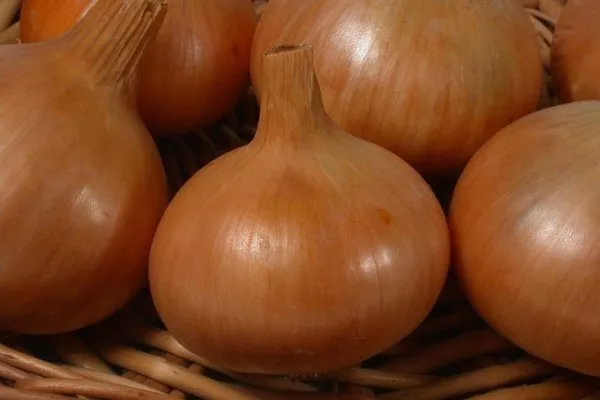
Corrado onions
As for this vegetable's weaknesses, its poor adaptation to low temperatures is noteworthy. For this reason, it is best grown in southern and central regions rather than in the north.
Reviews of the variety
One of the most popular varieties of onion is the Corrado F1 hybrid. It has become popular among gardeners for its undemanding nature, rapid germination, high yield, and excellent flavor.