
Among the many onion varieties, the Carmen variety stands out for its sweetness and undemanding nature. This Dutch breeder has been a leader in our country for several years. Carmen onions are easy to care for, store well, and are often used in cooking.

Onion variety Carmen
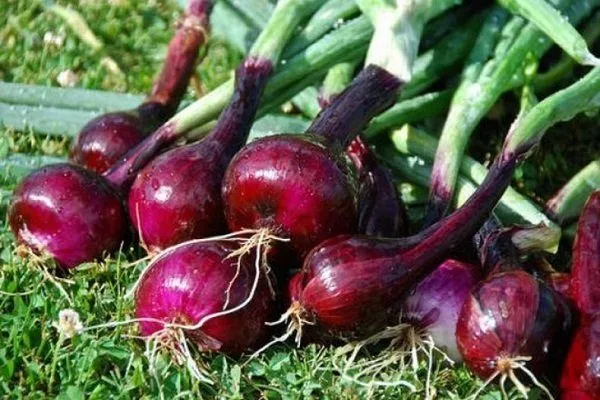
The Carmen onion variety has a sweet taste.
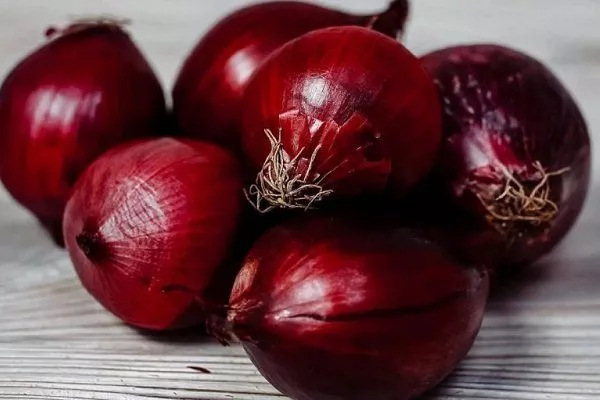
The onion variety Carmen is immune to diseases
General characteristics of the variety
This variety is a mid-season red onion. It is grown as an annual crop from seeds and as a biennial from onion sets.
Description of appearance
Carmen has the following characteristics:
- shape – round-flat;
- bulb size – medium;
- weight – from 50 to 70 g;
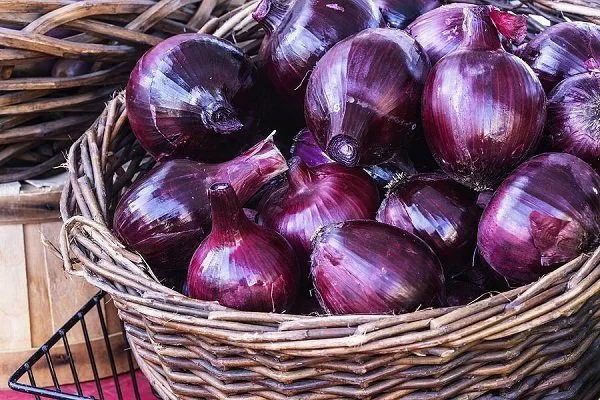
- the outer, dry scales are purple, the juicy scales are white with a purple tint;
- feather height – up to 30 cm;
- Onions are two- and three-germ.
- ✓ The bulbs have a characteristic purple tint on both the outer and inner scales.
- ✓ The height of the feathers does not exceed 30 cm, which is a distinctive feature of the variety.
Productivity and shelf life
One square meter of plot can yield up to 2.5 kg of harvest. Carmen is grown in all regions of Russia, but the following are particularly suitable:
- Central;
- Middle Volga;
- Central Black Earth.
Depending on the climate and location, ripening takes anywhere from 65 to 90-100 days from planting. Under favorable conditions, the harvest can be stored for up to 8 months.
Pros and cons
Planting and caring for this onion variety is not very difficult, and the crop itself has the following list of advantages and disadvantages.
Advantages:
- has a 100% maturity rate;
- contains a large number of useful substances;
- characterized by good shelf life;
- resistant to bolting;
- Suitable for all regions, even northern ones;
- has a sweet and fragrant taste;
- has immunity to diseases.
Composition and properties
Carmen onion is known for containing a huge amount of useful substances and minerals:
- sulfur compounds;
- flavonoids;
- macroelements – calcium, sodium, potassium, etc.;
- microelements – selenium, copper, fluorine, iron;
- vitamins C, A, E, group B, etc.
By growing this variety in your garden, you'll gain a natural remedy that helps combat seasonal viral epidemics and boost your immune system.
Areas of application
Carmen's flavor is delicate, sweet, soft and piquant, and the flesh of the bulbs is juicy and crispy.
Carmen is a salad onion, but it is best eaten fresh and avoided from being cooked to preserve as many of its beneficial properties as possible.
Preparing for landing
A variety's low maintenance doesn't mean it requires no care. Begin planting by selecting and preparing the site and soil.
Soil preparation
The beds should be located in a well-drained, wind-free area. Carmen prefers loose, nutritious soils with a neutral or slightly alkaline reaction—most often, chernozem, loam, or sandy loam.
- ✓ Soil pH level should be strictly between 6.0-7.0 for optimal growth.
- ✓ The soil must have high drainage capacity to avoid water stagnation.
If the soil is heavy and clayey, add organic matter and coarse sand to make it looser, and if the acidity level is high, lime the soil.
Also, ensure that the chosen location is free of flooding and stagnant water, as this can cause the onion bulbs to rot. Prepare the beds in the fall by removing weeds, adding compost or manure, and tilling. Over the winter, the soil absorbs all these nutrients, making it more fertile.
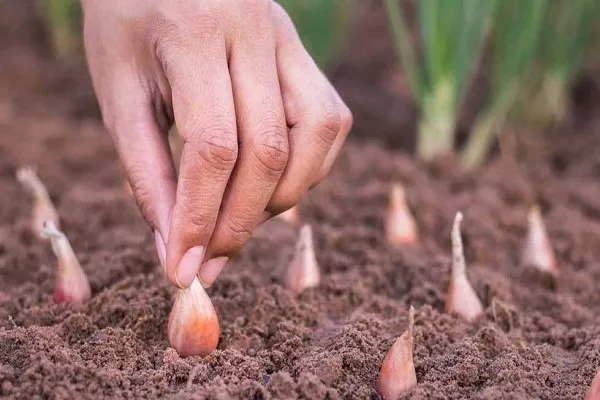
Selection and preparation of seed material
Seeds can be purchased at specialty stores. In southern regions, they are planted directly in open ground, while in the north, it's best to grow the variety from seedlings.
Before sowing, the seed material must undergo certain preparation:
- the grains are soaked in a solution of potassium permanganate for half an hour;
- soak the seeds in any growth stimulator.
Next, place the planting material in a damp cloth for germination, and after a couple of days, begin sowing.
Planting technology
Growing onions involves several planting options. Each gardener chooses the one that best suits their region and climate.
Into open ground
Carmen onion sets and seedlings are planted in May, when the soil is warm but not dry, with sufficient moisture from early spring. Successful rooting and bulb development depend on the correct soil selection.
The instructions for planting Carmen in soil are as follows:
- Make furrows or holes in the prepared soil.
- Water them.
- Place the sets 4 cm deep, but plant the shoulders tightly to avoid air pockets.
- Cover with 2-3 cm of soil.
- Rake the top layer of soil.
Plant the seedling without burying the growing point, pressing the root into the moist soil and covering it with soil. Lightly press the onion sprout into the soil and secure it firmly with soil.
The planting pattern is 10 x 15 cm. Sometimes, for greater convenience, the width between rows is adjusted to the size of the tool being used, such as a flat cutter or hoe. The key is to make sure it's at least the length of a palm.
Planting seedlings and transplanting into open ground
For the seedlings, you'll need a small container. Fill it with about 100 mm of soil, warm it up, and water it with a weak solution of potassium permanganate to kill harmful bacteria. Then, sow the nigella seeds thickly and cover them with the prepared soil. Smooth the soil with your palm and water with room-temperature water.
These seedlings should be prepared by early March so that the seeds have time to germinate and sprout by May. Grow the seeds on a windowsill so that the daytime sunlight warms the soil.
Some gardeners cover the box with plastic to create a greenhouse effect. A grow light can be used if there's insufficient sunlight.
After these steps, the seedlings can be transplanted into open soil. If everything is done correctly, they will take root without any problems:
- Before transplanting seedlings, dig up the soil.
- After digging, cover the soil with film to ensure planting in warm soil.
- Water the soil in which the seedlings grew generously so that the feathers do not come off the head during pulling.
- The seedlings need to be planted at a depth of 30 mm so that the forming head is not too deep from the surface of the ground.
- As the plant grows, do not open the green feathers so that the onion head forms strong and large.
Care instructions
To ensure that your plants grow well, carry out all necessary actions in a timely manner and comply with agricultural requirements.
Top dressing
The procedure is performed several times per season as follows:
- 2 weeks after planting, nitrogen fertilizers (nitrophoska and urea) are added - 25 g of urea or 30 g of nitrophoska per bucket of water;
- 2 weeks after the first feeding, phosphorus-potassium fertilizers are added to the onions - 30 g superphosphate/15 g potassium salt per 10 liters of water;
- After 15 days, repeat the phosphorus-potassium fertilizing - 30 g of superphosphate and 15 g of potassium salt.
After each application of fertilizer, water the soil thoroughly. Be sure to rinse any remaining fertilizer from the onion leaves with warm water from a watering can.
Watering
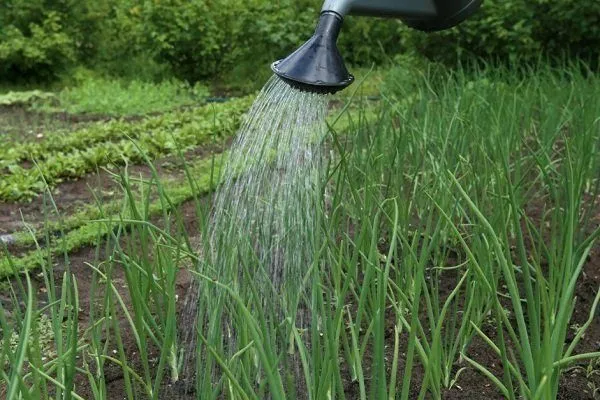
Water the onions so that the soil doesn't dry out, otherwise the seedlings will wilt and dry out. Water the onions once a week, but stop completely 2-3 weeks before the expected harvest date to allow the onions to ripen in dry soil.
Loosening and weeding
The day after watering, loosen the soil. Loosen the soil shallowly between rows, being careful not to damage the bulbs.
Weeding is carried out throughout the plant's growth. When planting onions from seeds, weeds can prevent the heads from forming, resulting in no harvest. Since the shoots are very small when planted from seeds, weed as carefully as possible to avoid damaging the plants.
Pest and disease control
Carmen is susceptible to attacks from the following pests:
- Onion bat. This beetle lays eggs in onions, which, after hatching, feed on the plant's leaves. Control measures include crop rotation, careful harvesting, autumn plowing, and the destruction of plant debris.
A mixture of ash and tobacco dust in a 2:1 ratio is suitable for control. Treatment with Karbofos (0.6%) solution is also recommended. The recommended dose is 100 ml of solution per square meter. - Onion fly and moth. Plants are affected starting in the second ten days of May. The effects of flies and moths are not immediately visible, as the insects operate in the soil. The problem becomes noticeable when the onion leaves wilt and dry out. Control can be achieved by watering with salt water (100 g per 3 liters).
- Nematodes. This is a family of parasitic roundworms. Signs of onion infestation include deformation and drying of the green mass, loosening and cracking of the bulb, and a rotten onion odor after rain. Prevention is recommended, including proper crop rotation, proper seed selection, and proper storage practices.
Percalcit is a suitable chemical control agent; it destroys nematode cysts and eggs, as well as larvae in the soil. Spread the product over the area in dry weather 5-10 days before planting at a rate of 200-300 g per square meter and rake it in to a depth of 10-15 cm.
Diseases that onions may encounter:
- Downy mildew. A fungal disease that overwinters both on bulbs in storage and in the soil. Affected stems turn a dirty green, droop, and die. As a result, the bulbs fail to mature, and the yield decreases.
To prevent the disease, when the leaves reach a height of 10-12 cm, spray with Polycarbacin (40 g of the preparation per 10 l of water) or Arcerid (30 g of the preparation per 10 l of water). - Bacterial rot. This disease can be encountered when cutting an onion—you'll notice several soft, dark layers among the healthy scales. The longer the onion is stored, the more severe and extensive the damage will be.
As a preventative measure, carefully select the bulbs before planting, trimming off 0.5-1 cm of the base and neck to expose the scales. You can also treat the soil with Hom (40 g per 10 liters of water, using 1 liter per 10 square meters). - Fusarium. A fungal disease that causes green shoots to wither and rot during the growing season and the base to turn pink and become soft during storage.
Before sowing, be sure to soak the seedlings in a fungicide (Fundazol or Quadris), and burn any affected plants to prevent them from infecting neighboring plants. If spots appear, a treatment with Hom (40 g per 10 l) is effective. - Yellow dwarfism and mosaic. They occur as a result of improper planting and care of seedlings. Affected plants experience stunted growth and change shape and color. There is no specific treatment, only preventative measures.
Therefore, to prevent the development of diseases, first of all, follow preventive measures:
- follow crop rotation rules;
- plant onions without thickening;
- carry out disinfection of seeds, sets and soil;
- water without over-watering;
- remove all plant debris from the beds;
- weed the soil regularly;
- plant pest-repellent plants.
Harvesting and storage
Harvest Carmen onions on a dry, sunny day. Pull the plants out, digging them up with a shovel if the soil is hard, and lay them in rows. Trim the roots of the onions, leaving a 3-4 cm stem.
After harvesting, the crop is dried in the garden bed for 2-3 weeks. Drying should be done in sunny weather, and if rain begins, the plants should be covered.
Once the onion is completely dry, remove any excess skins and tops. When storing in braids Leave about 30 cm for braiding. If storing onions in boxes, leave 10 cm of tops. Store Carmen in a dry (humidity should not exceed 70%) cool or warm place:
- cold storage – at temperatures up to 0 degrees;
- warm – at 20 degrees.
Reviews
By choosing to grow the Carmen onion variety, you can reap a bountiful harvest with minimal investment. If you cultivate it properly, you won't have to worry about pests or diseases. These onions boast a long shelf life and excellent flavor.