
Other names for the Indian onion include the tailed ornithogalum, sea onion, Chinese onion, false onion, Mongolian onion, brandushka, and hell's root. In England, the onion is called the Star of Bethlehem, in Germany, the milk star, and in Israel, hawk's milk.
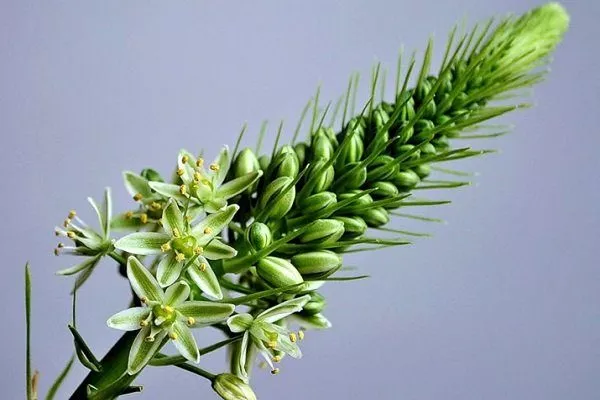
Indian onion has many beneficial properties.
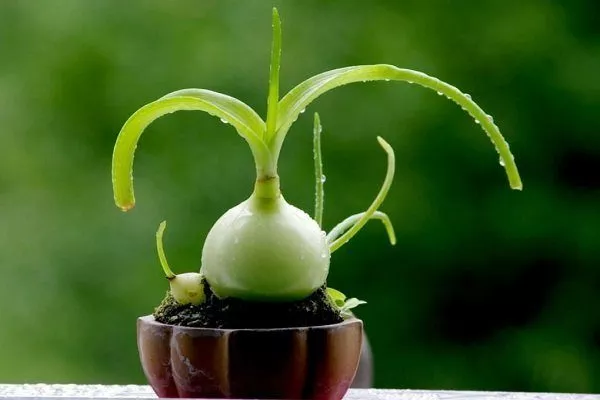
Indian bow
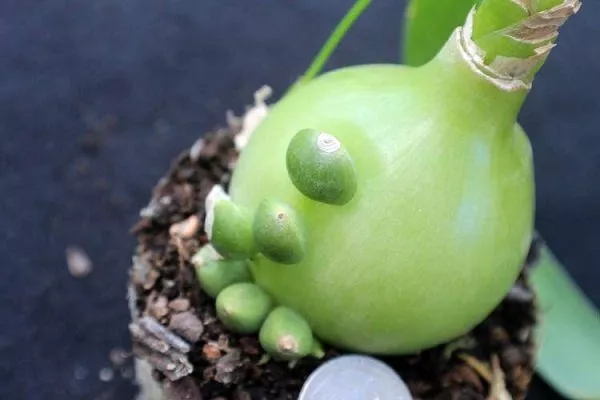
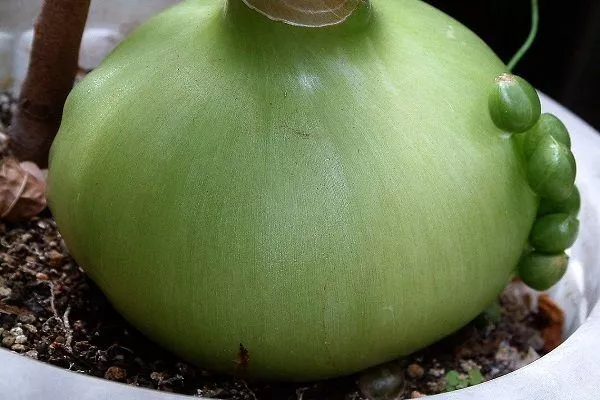
The root part of the onion is located on the surface of the soil
General characteristics
The Indian onion is an exotic vegetable common in South Africa, India, China, the Mediterranean, and Europe (central and southeastern). It was introduced to the CIS countries after the 1950s.
Ornithogalum is a perennial plant in the Liliaceae family, distantly related to lily-of-the-valley and other flowers. Its appearance resembles Kalanchoe, aloe, and similar plants, which is why it is often confused with houseplants.
It has numerous beneficial properties, making it popular in folk medicine and cosmetology. All parts of the onion are used to make tinctures.
Indian onion is easy to care for, lives up to 30 years, doesn't require much light, heat, or humidity, and grows both outdoors and indoors. Its age is determined by the number of leaves—a new leaf emerges each year of growth.
Indian bulbs should be used with extreme caution, as they contain a milky, whitish juice that can cause severe burns. For this reason, fresh liquid and prepared remedies should be taken strictly according to the prescribed dosages.
Description of the plant
A distinctive feature of the Indian onion is the location of its roots on the soil surface, which distinguishes the plant from other varieties. External characteristics have their own distinctive features:
- The root consists of numerous white cord-like rootlets that are connected to the bulbous part.
- The bulb has a light green hue, with white, compact scales that adhere firmly to the bulb, up to 10 cm in diameter. The husk is white-brown.
- The foliage originates near the root and is 3-5 cm wide and 30-100 cm long. The leaf blade is entire and linear, with a white vein running down its center. As the leaves grow, they break off in the middle due to their own weight. The tips tend to curl.
- The fruits are small capsules containing seeds – black, shiny, flattened grains.
- The flowers are white, interspersed with green veins. They reach a maximum size of 10 mm, with racemes arranged on a fleshy peduncle. Flowering begins at the bottom, and the shape resembles small stars. A distinctive feature is that the first flowers appear after 2-3 years.
- The length of the flower stalk is about 1 m.
- The babies are formed in the bulb, after which they fall to the surface of the soil and take root.
- ✓ The presence of a white vein in the middle of the leaf blade.
- ✓ The ability of old leaves to break off in the middle due to their own weight.
Composition and properties of Indian onion
Indian onion contains biologically active and beneficial substances that have a therapeutic effect on the body. Ingredients:
- essential oil;
- alkaloids – colchicosides, thiocolchicines, colchicines;
- glycosides;
- organic acids;
- antioxidant quercetin;
- microelements;
- macronutrients.
Thanks to these compounds, Indian onion has the following effects:
- relieves pain;
- eliminates inflammatory processes;
- suppresses pathogenic microbes;
- dilates capillaries and blood vessels;
- accelerates peripheral blood circulation;
- prevents the formation of blood clots by thinning the blood;
- destroys parasites and viruses;
- regenerates damaged tissues and cells;
- has keratolytic, antitumor, and antigout properties;
- warms;
- strengthens the walls of blood vessels.
Official medicine does not recognize Indian onion as a medicinal product for internal use, but it does not scepticize gels based on turmeric and hot pepper, as the plant warms and irritates receptors in the joints, which leads to a reduction in inflammation.
Areas of application
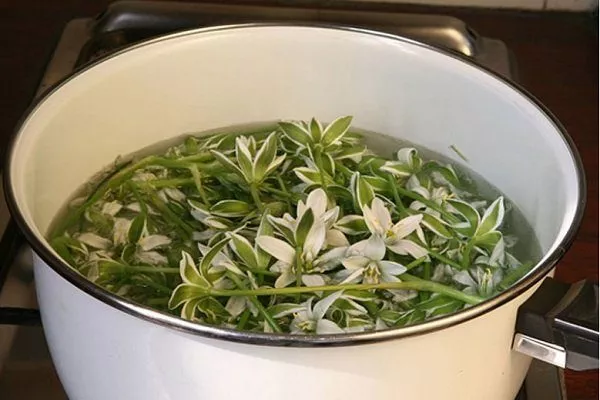
Indian onion belongs to the group of ornithogalums, which are strictly prohibited for human consumption. However, the tailed onion variety is an exception – it can be used for frying, pickling, baking, and eating fresh. Hell root has found application in cosmetology – it is used to make alcohol tinctures, lotions, tonics, and decoctions for the face and hair.
Indian onion is most popular in folk medicine. It is used to make tinctures, ointments, and other remedies for the following conditions:
- Immune system disorders – dermatitis, seborrhea, eczema, psoriasis, allergic reaction.
- Diseases of the oral cavity and throat – herpes, periodontal disease, stomatitis, tonsillitis, gingivitis.
- Skin damage, insect bites, burns, frostbite.
- Fungal infection.
- Purulent boils, pimples, papillomas, lipomas, warts, dropsy, skin tumors.
- Joint and muscular diseases – arthritis, arthrosis, myalgia, osteochondrosis, pinched nerves, gout.
- Pain in teeth and head.
- Cold.
- Mastitis.
- Varicose veins.
- Hematomas, fractures.
Traditional healers recommend using Indian onion for weight loss and cellulite removal, specifically externally. To do this, dilute the pure plant juice 1:10 with vegetable oil and massage it into the affected area daily.
How to plant and grow Indian onions at home?
Indian onion is a perennial plant that is intolerant to cold, so growing it solely in garden beds is impossible. Therefore, stock up on large pots (the mature plant's root system reaches 1 m) for replanting for the winter. There are different methods for planting Indian onion, depending on the propagation method.
Seed material
The main requirement is pollinated seeds, which can be collected independently in the spring or summer. Here's how to sow them:
- First, prepare the seedlings by storing them in the refrigerator for 4-5 months. Place the seeds in a piece of cheesecloth and place them on a shelf in the refrigerator.
- Take a container with holes in the bottom so that the liquid does not stagnate when watering.
- Place stones (pebbles) on the bottom and fertile soil on top (you can buy a universal substrate or mix perlite and peat in equal proportions).
- Sow seeds 1-3 cm apart, 1 cm deep into the soil.
- Moisten the soil.
- Sprouts will form within 6-7 months. During this period, care for the planting material properly. Water as the soil dries out and monitor the temperature (15-22 degrees Celsius).
- When the first 3 leaves appear, transplant them into separate containers filled with the following mixture: 2 parts river sand, 1 part each of turf and leaf soil.
- ✓ Optimum temperature for seed germination: +15-22°C.
- ✓ Seed stratification period: 4-5 months.
Bulbs
To obtain individual bulbs, you need to divide the mature onion into sections. Planting method:
- prepare pots from natural materials (clay, peat);
- pour expanded clay onto the bottom;
- add a substrate of sand, leaf and turf soil;
- make a hole;
- deepen the bulb;
- sprinkle with soil;
- moisturize.
Sprouts
The shoots are harvested after the Indian onion has finished flowering. The planting method is identical to the previous one. Rooting takes 14-16 days.
Remember that onions grow quite quickly and have a long root system. Therefore, transplant the bulbs periodically into larger pots. Do this with confidence, as the roots are strong and easily tolerate transplanting.
Care instructions
When growing Indian bulbous crops, follow the basic rules of care:
- Onions love light but don't tolerate direct sunlight. If you're growing them on a windowsill (or during the winter), avoid placing them in direct sunlight during the day—it's better to provide artificial lighting (growth lamps, fluorescent lights, etc.).
- Room humidity shouldn't exceed 75-80%, but dry air can also harm the plant. To prevent this, mist the onions with warm water 2-4 times a week. If the onions are located near heating appliances that dry out the air, mist more frequently.
- The temperature range in summer is a maximum of 20-22 degrees, in winter - a minimum of +10-12. The optimal temperature is room temperature.
- Indian onions don't suffer from drought; they are harmed by excessive soil moisture, so there's no need to worry too much about watering. To accurately determine the right time to water, inspect the top layer of soil—it shouldn't be wet or heavily cracked (a light, dry crust is acceptable).
- Water for irrigation must be rainwater or settled. Avoid tap water, as it contains many substances harmful to plants (chlorine and the like). Allow the water to settle in an open container. The water should be at room temperature.
- Loosening the soil is essential, as without oxygen, the root system stops developing, resulting in the plant's death. This must be done carefully to avoid damaging the roots.
- To ensure proper gas exchange and photosynthesis, remove dust from the feathers using a soft cloth or special devices.
- Potted soil quickly loses its beneficial properties, so Indian onions need to be fertilized with organic matter and minerals. A favorite fertilizer for Indian onions is wood ash (10%) diluted with water. Fertilize every two weeks. A weak solution of potassium permanganate can be added. A complete fertilizer purchased from a specialist store is ideal.
Planting in open ground
The minimum temperature range for Indian onions to thrive is 10 degrees Celsius, requiring gardeners to move the plant indoors for the winter. Indian onions easily adapt to new conditions, so they are not afraid of picking and transplanting.
Features of planting in the garden:
- The bulbs should be planted in open ground when the temperature is consistently warm: for central regions of Russia, this is mid- to late May.
- The location should be shaded, as the variety does not tolerate direct sunlight. However, plenty of light is required.
- Watering should be moderate - do not allow waterlogging.
- Onions can be grown all winter before planting in the soil, but there's a way to give them a rest. To do this, place the pot away from direct sunlight in the fall and stop watering completely (only occasionally mist with a spray bottle). Watering should be resumed immediately after transplanting into the garden.
- There's no need to fertilize the soil—onions are easy to grow. Their only requirement is moderate acidity.
You don't have to transplant the plant at all during the summer; you can simply place it outside in a pot, but this won't promote rapid growth. Why is it advisable to transplant Indian onions into garden beds?
- there is no need to apply fertilizers frequently – it is enough to use organic matter once a month;
- feather development is accelerated;
- natural pollination occurs, due to which the number of seeds and babies increases;
- the plant blooms more abundantly and longer.
The transplant process:
- carefully remove the root system from the pot;
- prepare the bed - dig a hole along the length of the root (depending on the age);
- moisten the soil;
- insert the bulbs at a distance of 2-5 cm from each other;
- sprinkle with soil, compact, water.
Methods of reproduction
Indian onion propagates quickly and easily at home. Moreover, there are three methods:
- Onion method. Small bulbs are used and planted in pots.
- Seeds. This requires patience and diligence, as the planting material takes several months to germinate. A key feature is that seeds are formed from insect-pollinated bulbs, so the plants are first moved outdoors for the summer (in the absence of pollinating insects, this process is impossible). If transplanting into the ground is not possible, artificial pollination can be used.
- Children. The most common and convenient method. The bulblets themselves emerge from the bulbs as they grow. Simply collect them and plant them according to requirements.
How to harvest and store Indian onions?
If you are growing bulbs of this variety for therapeutic purposes, it is sufficient to trim the leaves as needed.
If you have too many feathers and need to store them for future use, you should collect them, put them in a plastic bag and place them in the refrigerator.
Another option is to squeeze out the juice immediately. The bulbs are stored in the same way as regular onions.
Features of the Indian Bow (video)
This video will show you how to grow Indian onions and their beneficial properties:
There are some restrictions regarding the use of Indian onion, so consult your doctor beforehand if you have any chronic conditions. When growing Indian onion at home, follow proper agricultural practices.