
To grow large, tasty, and juicy onions in your garden, never allow the onions to bolt during the flowering stage. This can damage the bulbs and result in a complete loss of the harvest. Every gardener should know how to prevent bolting and what to do if flower stalks have already formed.
What is the danger of shooting onions?
Bolting is the first phase of plant propagation. Bolting poses a risk of spoilage to mature vegetables, as the turnip begins devoting all its energy to seed development and formation.
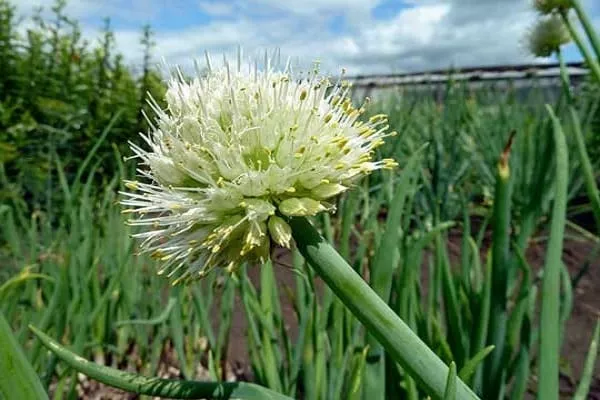
During the growing season (seed ripening), the turnip bulbs become small and have poor storage properties, with all the nutrients from the bulb being transferred to the seeds. The turnips begin to spoil, gradually shriveling, becoming dry, and unfit for consumption.
Possible causes of onion bolting
Early bolting of onions can be caused by the following reasons:
- Lack of moisture in the soilIn dry soil, the bulb enters the propagation phase more quickly and produces shoots almost immediately, without ever sprouting a tuft of greenery. Gardeners should ensure adequate watering of the plant.
- Seed sizeThe larger the onion sets, the higher the chance of getting early shoots in the garden. Careful selection of planting material is essential. The bulbs should be small, no more than 3 cm in diameter, slightly smaller than a walnut.
A bulb suitable for planting is firm and should not crunch when squeezed between your fingers. The health of the onion sets is indicated by their appearance: a healthy, shiny skin is a good indicator; peeling skin indicates improper storage (exposed to frost or high humidity). - Improper storage of planting material In a room with high humidity (over 80%), with a temperature above 28 degrees Celsius or below 0 degrees Celsius. The optimal storage temperature for onion sets is 0-20 degrees Celsius. Bulbs for planting should be stored in a dark, cool room; otherwise, growth processes begin under the skin. After planting in the ground, such seeds begin the vernalization process, and the onions will inevitably sprout. Conversely, sets stored in a dry room with optimal temperatures will not germinate.
- Wrong onion variety selectedThe choice of onion variety is crucial – it affects the quality of the ripe vegetables. Golden onions generally do not bolt, while purple and red varieties are prone to bolting.
- Untimely or early harvesting of last year's fruits This can lead to improper development and the onset of unwanted early growth in the bulbs planted after them. Onion sets harvested too late for subsequent planting in the ground begin to store nutrients and prepare for overwintering, resulting in the development of additional roots—this, in turn, will inevitably lead to subsequent bolting.
- ✓ Storage temperature should be between 0-20 degrees.
- ✓ Humidity in the room should not exceed 70%.
- ✓ The room should be dark and well ventilated.
What to do if the onion has bolted?
If you see the first signs of onion scapes in your onion beds, you should remove the stalks immediately. Daily inspection of the beds will help reduce the risk of onion spoilage. The scapes should be removed when they reach a length of 20-30 cm.
Only remove the shoots by hand. Trimming with a metal object can cause serious illness to the onion, due to the long healing time required for the wound.
The crack formed after a stem break allows water, carrying bacteria, to enter the plant's small openings. Bacteria thrive wherever liquid is present. The broken onion will heal faster if you break it off at the top, 4-5 cm above the ground, rather than at the root.
Instead of throwing away the picked onion shoots, you can use them in cooking: add them to a vegetable stew or a French salad with vegetables, make a frying, or preserve them for the winter by cutting them into rings, placing them in cellophane, and putting them in the freezer.
Prevention of bolting
Before planting onion sets, experienced gardeners soak them in various solutions to prevent them from bolting:
- Saline solution. Dissolve 1 tablespoon of salt in 1 liter of water.
- Soda solution. Dissolve 1 tablespoon of soda in 1 liter of water.
- Potassium permanganate solution. Dissolve a small amount of potassium permanganate in water until it turns a light pink color.
The bulbs should be soaked in the solution for 2-3 hours. The fruits should be planted only after they have dried.
Proper planting of onion sets, which will protect the plant from further bolting, involves:
- Warming upSpread the onions prepared for planting on clean white paper and leave them in the sun or on a radiator. This is especially true for sets previously stored in a cool place. If the planting material was purchased privately in April or May and its storage conditions are unknown, it should be warmed up within 2 months.
- HardeningPrepare two containers: one with water at 45 degrees Celsius (113 degrees Fahrenheit), the other with cold water. Soak the seeds in the first container for 15 minutes, and in the second for 10 minutes. Then dry the seeds thoroughly and prepare them for planting.
- Smoke treatmentHang nets containing onion sets over an extinguished fire and leave them there for 15-20 minutes. In addition to preventing bolting, this is excellent protection against fungal diseases and pests.
Another planting method yields good seedlings without bolting. The seedlings should be laid out on a wooden board 30 days before planting outdoors.
To prevent onions from bolting, it's best to plant them in winter (choosing proven frost-resistant varieties). However, this can only be done in regions with moderate winters without severe frosts. If planted in soil that hasn't been warmed by sunlight, the onions may fail to germinate.
In spring, you need to wait for warmer days, which usually begin around May 5th. The first watering should preferably be done with a nettle infusion (soak the nettles in water in an enamel container for two weeks). Onions should not be planted in clay soil, otherwise they will not germinate; sand and peat will help overcome this problem. Dolomite flour should be added to highly acidic soil. Fresh manure should not be added to the soil before planting the bulbs.
This video explains why onions bolt and what to do about it:
Non-bolting onion varieties
| Name | Ripening period | Productivity | Disease resistance |
|---|---|---|---|
| Troy | Early maturing | High | Moderate |
| Yellow Senshui | Mid-season | Average | High |
| Radar | Late-ripening | High | High |
| Rostov | Early maturing | Average | Moderate |
| Mayachkovsky | Mid-season | High | High |
| Centurion | Early maturing | High | High |
| Stuttgarter Riesen | Mid-season | High | High |
| Shallots | Early maturing | Average | High |
Today, there are many varieties of onions that don't bolt. By choosing them, gardeners can avoid the hassle of preventing and eliminating this problem:
- TroyAn early-ripening variety. Produces round onions with golden skins during harvest. The flavor is moderately spicy. Planted in spring and winter, the onion keeps for 4 months.
- Yellow SenshuiA result of Japanese research in the field of breeding. Seeds should be sown in winter. The fruit is flat, has a sharp flavor, and is bright yellow. Besides bolting, it is highly resistant to powdery mildew.
- RadarA Dutch onion variety. Planting is best done in winter. The fruit is flat and round. It has a very pungent flavor, a yellowish color, and large bulbs (up to 300 grams).
- RostovIt ripens earlier than regular onions, producing bulbs weighing 50–60 grams and golden-colored skins. It produces a large number of green onions.
- MayachkovskyThe flavor is medium-spicy, the fruit weighs 120 grams, and the skin is dark brown. This variety produces round, flat fruits.
- CenturionThis variety was developed in the Netherlands and is considered one of the best among all artificially bred fruits. It can be grown in both hot and cold climates, and its bulbs are compact.
- Stuttgarter RiesenThis variety was developed by German scientists. The fruit weighs 130-150 grams. A rich harvest is obtained when the seeds are planted in acidic soil. The bulbs are rich in juice and easy to grow.
- ShallotsAn early-ripening onion variety characterized by its slicing. It produces tender, juicy greens with a pungent flavor. The leaves grow up to 25 cm long.
If a gardener wants to get a bountiful and high-quality onion harvest, they should inspect the beds daily to ensure proper onion formation and regulate plant growth, avoiding the early growing season. Preparing the onion sets before planting is also crucial – even at this stage, bolting can be prevented.