
The Globo onion is a vegetable with a delightful flavor. It's easy to grow and preserve. Its large bulbs allow you to prepare a variety of delicious dishes at once. Cultivation and subsequent care play a crucial role in cultivating this variety, as they determine the yield and quality of the vegetables.
History of origin
It is popular among gardeners and farmers. Developed by Czech specialists at the agricultural firm Semo, it remains highly popular despite its absence from the Russian State Register.
Description and characteristics of onion variety Globo
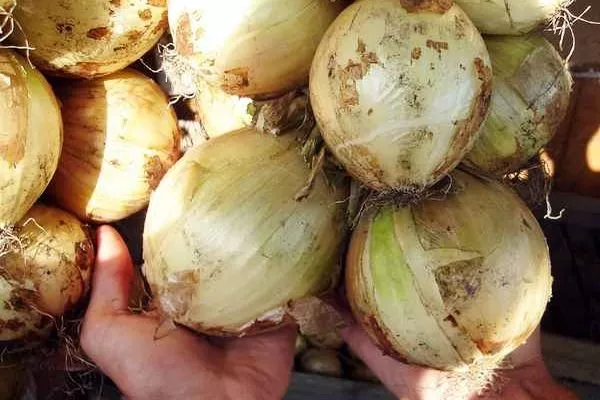
Globo is a large-fruited variety with a mild flavor and high yields. It can be grown for both personal consumption and commercial sale.
Appearance
This vegetable grows as a compact plant, saving space in the garden. It has an upright, above-ground part and a moderately dense rosette of bright green, fleshy, and dense leaves with a glossy sheen and a light waxy coating. With proper care, they reach a height of 50-55 cm.
Other distinctive characteristics:
- During the growing season there is virtually no bolting.
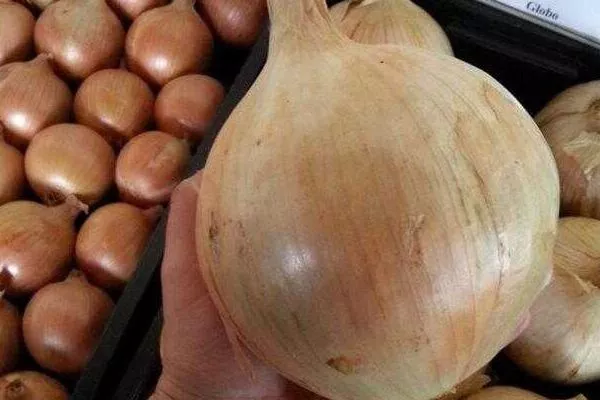
- Elliptical or broadly oval bulbs weigh from 700 g to 1 kg, sometimes reaching up to 1.2 kg.
- The top is slightly elongated, and the surface is perfectly smooth.
- The husk is light brown or golden brown in color.
- The onion consists of a small number of nests – 1-2 bulblets.
Ripening period and yield
This is a mid-season variety, although many vegetable growers consider it late-ripening. From germination to full maturity, the bulbs take 135-140 days. The vegetables ripen slowly and can be harvested from the second half of August to the end of September. A sign of maturity is the yellowing and falling of the tops.
The crop is very productive. With basic care, you can get up to 10-12 kg of marketable bulbs per square meter.
Resistance to diseases and pests
Globo is resistant to diseases and pests, ensuring high yields. However, the risk of damage cannot be completely eliminated. If improperly cared for or during cold and rainy summers, the crop can be affected by downy mildew. There is also a risk of onion fly and other pest infestations.
Inspect your plantings periodically. At the first sign of disease, treat them with folk remedies or specialized preparations.
Composition and properties
The inner layers of the onion are light-colored and white when cut. They contain vitamins, sugars, microelements, and other valuable components:
- vitamins B, C, E, PP;
- saponins;
- glycosides;
- phytoncides;
- essential oils;
- pectins;
- organic acids;
- macro- and microelements (potassium, sulfur, iron, phosphorus, iodine, etc.).
The vegetable is juicy, with a sweet and mild taste, which many gardeners rate as excellent.
Application
Onions are eaten fresh, used in salads and a variety of dishes. They are also suitable for homemade preparations, such as pickles and marinated dishes.
Regions for cultivation
The crop adapts well to various climatic conditions, so it is cultivated in most regions of the country, from the Central Belt and Northwest to the Urals, Siberia and the Far East.
Advantages and disadvantages
Globo is a favorite among gardeners and farmers. This variety's popularity stems from its numerous advantages:
Summer residents consider the following to be the disadvantages of the variety:
When to plant Globo onions?
Due to its late ripening period, early planting is recommended. However, this variety does not tolerate return frosts below freezing, so choose the planting date carefully, taking into account the growing method and the regional climate.
If using seedlings, plant the seeds in March. Transplant the seedlings into open ground in early May. You can sow the seeds directly into the garden. The optimal period is from mid-April to early May. When planting onion sets, plant them in the first half or middle of May.
Methods for planting Globo onions
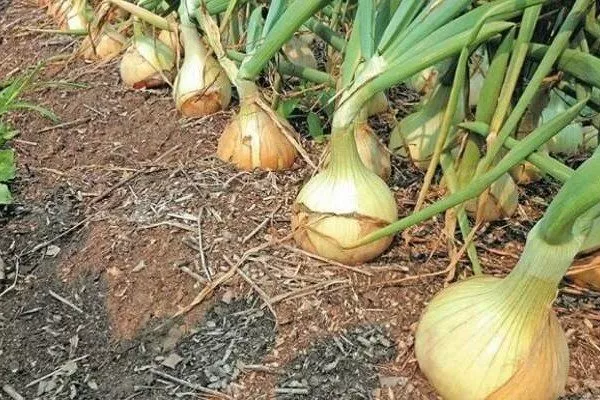
Globo is most often grown from seed. Gardeners plant sets or seedlings and then transplant them into open ground.
Sowing for seedlings
Growing seedlings requires more effort, but a bountiful harvest is guaranteed, and frost damage is virtually eliminated. Before planting seeds, follow these steps:
- Soak the seeds in a 1% solution of potassium permanganate for 30 minutes.
- Place them in warm water for several hours.
- Let the seeds dry.
- Soak them in a growth stimulator, such as Epin.
- Place on damp gauze and leave for a week (preferably on a saucer).
Sow seeds in 10-12 cm tall boxes. The soil should be fertile, such as a mixture of garden soil, humus, black peat, and sand in a ratio of 2:1:1:1. Before planting, make several furrows 1 cm deep, spaced 5 cm apart.
Plant the seeds 3 cm apart, then lightly cover with soil and spray with water. Cover the container with plastic wrap and place in a warm location (23-25°C). Once the seedlings emerge, remove the plastic wrap and grow the seedlings at 16-18°C.
After two weeks, begin hardening off the seedlings by placing them outside for several hours, gradually increasing the time. When transplanting into the ground, follow these guidelines:
- Planting depth: 2 cm.
- The distance between seedlings is 10 cm.
- The distance between rows is 50 cm.
If the weather is normal, transplant the seedlings into the ground after three full leaves have emerged. If frost is expected, wait a few more days.
Growing from seeds in open ground
Sow seeds outdoors using the same method. Before sowing, clear, dig, and fertilize the bed. The soil should be light and fertile, such as loam or sandy loam. If the soil is poor, pre-fertilize it with organic matter, such as compost or humus, at a rate of 10 kg per square meter.
During the initial stages, keep the soil moist. Until seedlings emerge, cover the bed with plastic at night and on cool days.
Planting onion sets in spring
For planting onion sets, choose open areas free from flooding and moisture retention (avoid lowlands). Prepare the planting material two weeks in advance. First, heat it for 8 hours at 45°C, then treat it with a fungicide solution for 30-40 minutes and let it dry at room temperature.
The planting pattern is as follows:
- The depth of the furrows is 2 cm.
- The interval between seedlings is 8-10 cm.
- The distance between rows is 30-40 cm.
If possible, mulch your plantings with sawdust, straw, or pine needles. This protective layer helps retain moisture in the soil longer and suppresses weed growth.
Caring for Globo onions
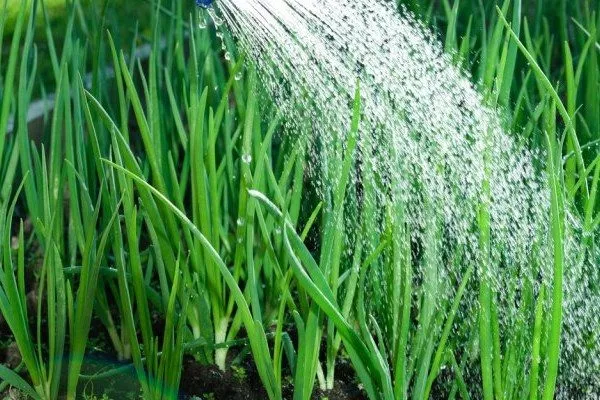
This variety doesn't require complex care, but it's important to follow basic agricultural practices. Follow these recommendations:
- Water the plants as the soil dries out. Initially, water at least once every 3-4 days for 2-3 weeks, then increase the intervals to 6-7 days, and stop watering 3-4 weeks before harvest. After each watering, loosen the soil to oxygenate it and remove any crust.
- Regularly remove weeds from your garden beds to prevent them from competing for nutrients with your crops. Weeds can significantly reduce yields.
- During the formation of green mass, feed the onions with nettle infusion, which promotes accelerated growth of the crop and an increase in the size of the bulbs.
Pest and disease control
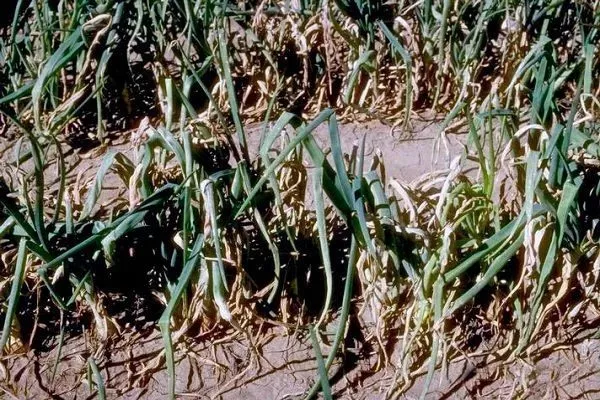
The plant rarely suffers from diseases or pests. If brown spots or a purple coating appear on the leaves, or the stems become wilted, treat the plantings with fungicides: Bordeaux mixture, HOM, Maxim, Ordan, or Fitosporin.
For onion fly, moth, thrips, and other pest infestations, spray with household solutions such as tobacco dust, wood ash, laundry soap, baking soda, or chili pepper. If absolutely necessary, use insecticides such as Aktara, Decis, Confidor, Inta-Vir, or Match.
Reviews from gardeners
The Globo onion is one of the most common and popular varieties, used in cooking worldwide. It boasts large, round bulbs, a delicate flavor, and versatile uses. With proper care, you can reap bountiful harvests and high-quality vegetables that are resistant to diseases and pests.