
Dzhusai is a prominent representative of the fragrant onion family and one of the most ancient garden crops. This plant possesses not only excellent flavor but also powerful healing properties, which is why it has become very popular in many countries around the world.
General information
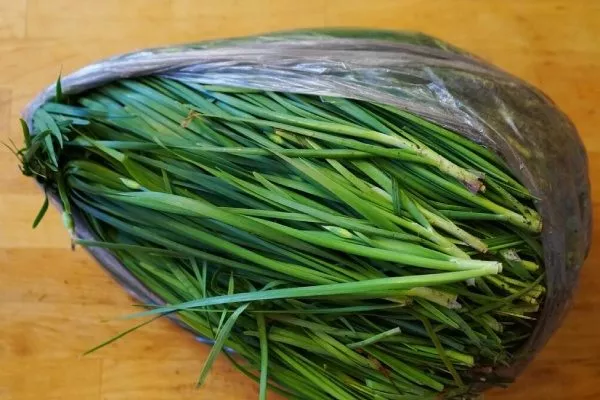
Dzhusai (Allium ramosum) is a variety of fragrant onion that differs from common onions in its distinctive garlicky flavor. This crop also tastes like wild garlic, but is more pungent. Dzhusai is also known as zhusai or Chinese onion. This perennial onion can be used for growing greens and for bulbing.
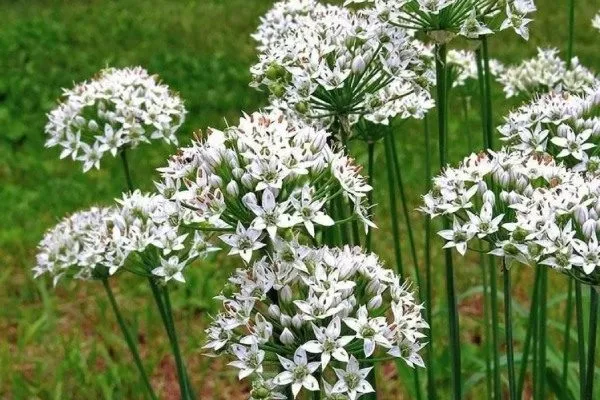
Chives are low in fiber, so they can be stored for a long time without losing their juiciness. They can even be eaten while they're flowering, as this doesn't affect their flavor.
Description
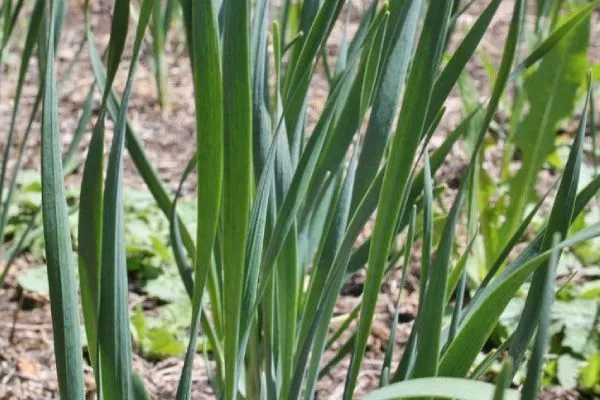
This variety has a medium-sized rosette of leaves, about 30 cm tall. The leaves are green, covered with a light waxy coating. The leaves are 0.5-0.7 cm wide and flat, like garlic. The bulblets are false, up to 1.5-2 cm in diameter.
The main difference between fragrant chives and regular chives is that their leaves don't become coarse over time; they remain juicy and tender throughout the season. They are pruned regularly, but no more than four times during the growing season, to a length of 4-6 cm.
Origin and habitat
Chives primarily grow in Southeast Asia, wherever there's plenty of sun but not prolonged, stifling heat. This crop is widespread in China, Kazakhstan, Mongolia, and the Altai Mountains.
Originator and popular varieties
Today, fragrant onions are grown throughout the world. Several varieties of this crop are listed in the Russian State Register: Aprior, Aromatny, Benefis, Vostochny, Pikanty, as well as a variety called Dzhusai, which was added to the register in 2003. The Kuban State Agrarian University named after I. T. Trubilin is considered the originator of the Dzhusai onion.
Regions where the Dzhusai variety is grown
The variety is recommended for cultivation in the Northern, Northwestern, Central, Volga-Vyatka, Central Black Earth, North Caucasian, Middle Volga, Lower Volga, Ural, West Siberian, East Siberian and Far Eastern regions.
Agrotechnical characteristics
The Dzhusai onion is a late-ripening variety. It takes about 45 days from the spring growth of greens to the first harvest. This medium-sized perennial onion is characterized by high yields. On average, 4.5 kg of greens are harvested per square meter.
Purpose and application
Jusai leaves are used to make pie fillings. They are also added to salads and used in fish and meat dishes. This onion pairs especially well with lamb. The aromatic jusai onion is an important ingredient in many traditional dishes of Turkic peoples.
Fragrant dzhusai is widely used in the preparation of manti, lagman, and chebureki. This onion is preserved for the winter in various ways, including frozen, pickled, dried, or salted with red pepper. Dzhusai pairs beautifully with eggs and soy sauce. The inflorescences of fragrant onions are used in winemaking.
Dzhusai onions are grown both for their greens and as a seasoning for meat and fish in a wide variety of dishes. The green leaves contain a lot of vitamin C—37.7 mg per 100 g of raw material.

Pros and cons
Before planting Dzhusai onions, it's helpful to evaluate all of their advantages and disadvantages. This will help you determine whether this crop (and variety) is suitable for your plot and your intended purposes.
Pros:
No particular drawbacks have been identified with the Dzhusai onion, except for a few characteristics that some may find undesirable. Among the most significant drawbacks is its susceptibility to certain diseases and pests.
Cons:
Landing features
To get a good harvest of fragrant onions throughout the summer, it is important to plant them correctly, prepare the planting material, and adhere to the timing and planting pattern.
Preparing for landing
You can grow Dzhusai onions by dividing the rhizome or from seedlings grown in the standard way - by sowing seeds in cups or cassettes.
- ✓ The water temperature for soaking seeds must be strictly maintained at +40°C to activate the germination process.
- ✓ Soak seeds in warm water for at least 48 hours to ensure sufficient hydration.
Features of planting onions Dzhusai:
- Site requirementsThe variety prefers sandy loam and loamy soils. Sandy soils are unsuitable, as the onions grow in them with absolutely no flavor. Light, fertile black soil with slightly to neutral acidity is the best option. Peatlands are also suitable. The site should be warm and sunny.

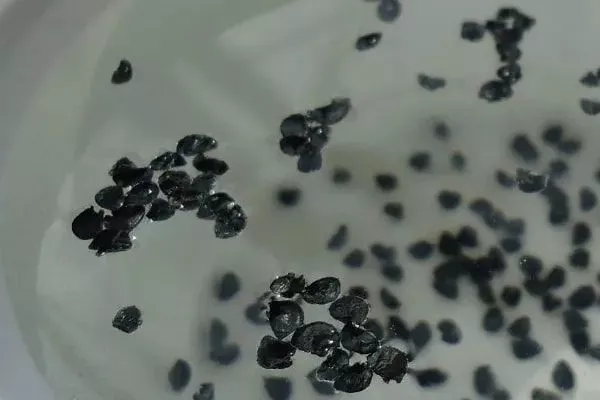
- Seed preparation. Before sowing, soak the seeds in warm water. The water should be heated to 40°C. Maintain this temperature; the water should not become cold. Then leave the seeds in slightly warm water for two days.
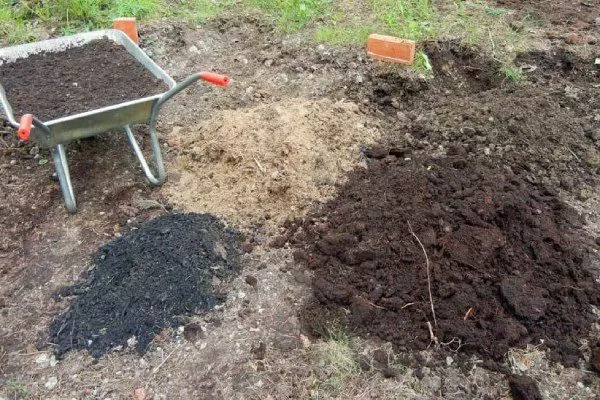
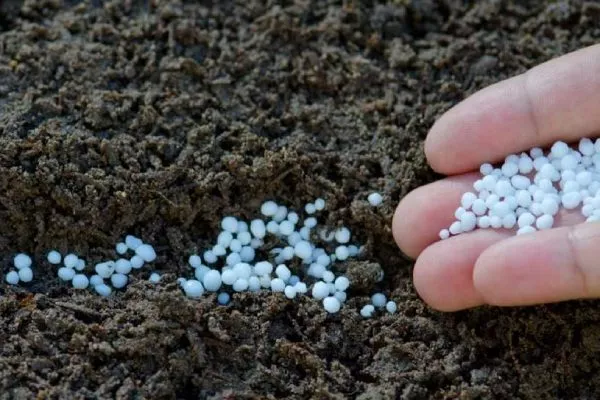
- Preparing the soil. In the fall, the area is dug over, adding 10 liters of humus per square meter. This area should also be supplemented with 30 grams of superphosphate, 20 grams of potassium fertilizer, and 200 grams of wood ash. In the spring, the area is dug over again, adding 5 grams of ammonium nitrate per square meter.
Growing onions from seedlings
It takes approximately 2 months to grow seedlings – this must be taken into account in order to correctly calculate the sowing time.
Features of growing onion seedlings:
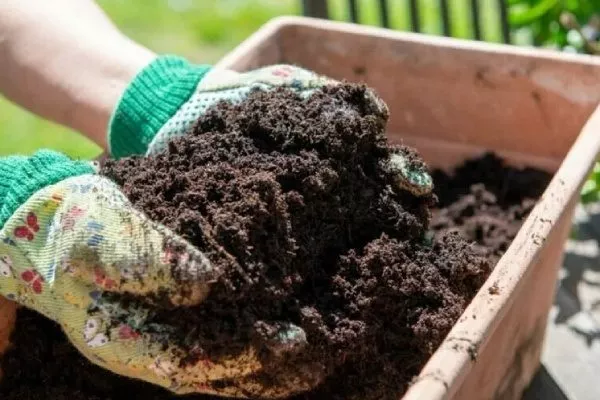
- To fill the container, prepare a soil mixture of equal parts garden soil, sand and peat.
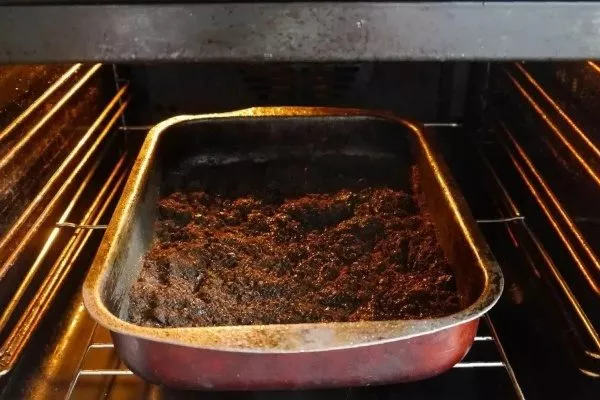
- The prepared soil mixture is disinfected by dousing it with a solution of pink potassium permanganate. You can also bake the soil in an oven at 180°C for 30 minutes.
- The seeds are sown at intervals of 3 cm. They are sprinkled with soil and moistened with a spray bottle.
- Polyethylene is stretched over the top to create a greenhouse effect. The crops are placed in a cool but well-lit area.
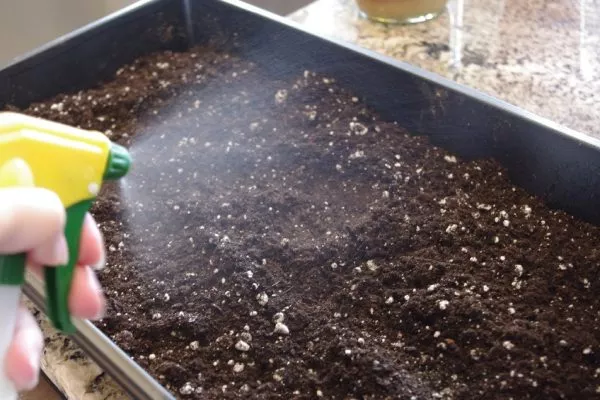

When the seedlings have 3-4 leaves, they are ready to be transplanted into the open ground. Planting usually occurs in March or April (depending on climate conditions), when the air temperature is 2°C.
How to transplant seedlings into the ground:
- Planting is done in furrows spaced at 30 cm intervals. They are watered generously.
- Holes are made in the furrows at intervals of 20 cm.
- The seedlings are placed in the holes, their roots are covered with soil, but not compacted. The planted seedlings are watered.
Planting by division is done in spring or fall, selecting the healthiest and strongest bulbs at least three years old. These are divided into sections and planted in furrows.
In some regions, planting is also done by sowing seeds directly into the soil. Rows are spaced 20-30 cm apart, and the seeds are planted 1-1.5 cm deep.
Care
Onion Dzhusai is considered unpretentious, but requires certain care, which mainly consists of watering and fertilizing.
Care features:
- During the first year of planting, the plant is watered sparingly, only when the soil dries out. The following year, olives are watered more frequently—about ten times during the growing season. The watering rate is 30-50 liters per square meter. If the plant experiences a moisture deficit, the leaves will become coarse and lose their juiciness.
- Every week, the soil between the rows is loosened and weeded. The soil is loosened to a depth of 6-8 cm.
- Fertilize twice during the first year. In the spring, apply 1 teaspoon of urea per square meter. Additionally, spray the onions with Epin Extra. After two weeks, apply Ferovit, which enhances photosynthesis.
- In the second year and thereafter, onions are fed in the spring with diluted chicken manure. After cutting the tops of the onions, the beds are fertilized with complex mineral fertilizers.
Diseases and pests
Onion Dzhusai is resistant to diseases, but under unfavorable conditions it can be affected by powdery mildew and downy mildew, as well as pests such as nematodes, onion moths, and onion flies.
To minimize the risk of disease and pests, it is recommended to use only high-quality planting material, adhere to a proper watering schedule, follow crop rotation rules, and disinfect seeds before planting.
When signs of disease appear, onions are sprayed with Profit Gold or other fungicidal preparations; pests are controlled using popular insecticides (Actellic, Fitoverm, Fufanon).
Collection and storage
The harvest begins in the second year after planting. The first harvest is in late July, when the leaves reach 25-30 cm in length. The next harvest occurs in mid-August. When harvesting, the onions are carefully dug under the bushes. If the soil is dry, the onions are shaken off; otherwise, they must be washed and dried under a canopy.
- ✓ For long-term storage of fresh Dzhusai onions, a temperature of 0…+2°C and good ventilation are required.
- ✓ Frozen onions retain their properties at a temperature of -15…-18°C for up to 12 months.
Store cut greens in the refrigerator. Here, they retain their flavor and nutritional value for 10-12 days. Dzhusai onions can also be frozen (at -15 to -18°C). They will keep safely in the freezer for up to a year.
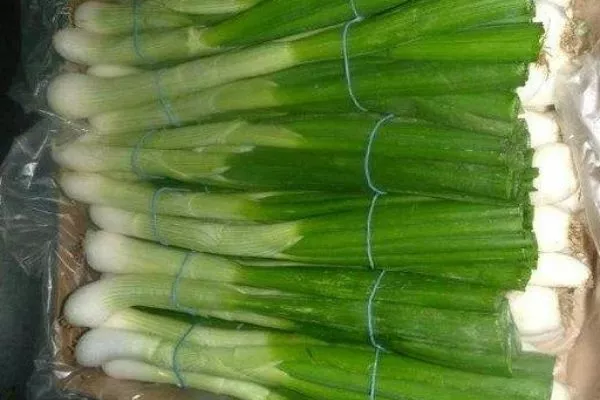
The dug-up onions are placed in prepared containers and stored in a dry, well-ventilated area at a temperature of 0 to +2°C. Under these conditions, the onions retain all their characteristics and can be planted in the spring.
Reviews
Onion is an interesting, tasty, and healthy crop, worthy of the attention of our gardeners. This fragrant onion can be grown in almost all regions of the country. It is hardy, productive, and requires little care.