
Ornamental onion is also called allium, although this is actually the name of an entire genus of plants. There are many varieties, mostly used for ornamental purposes. Allium can be planted in a variety of ways, and its care is relatively easy.
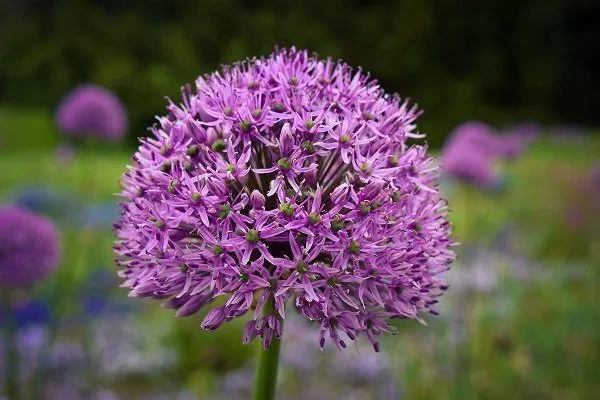
Some varieties of ornamental onions are edible.
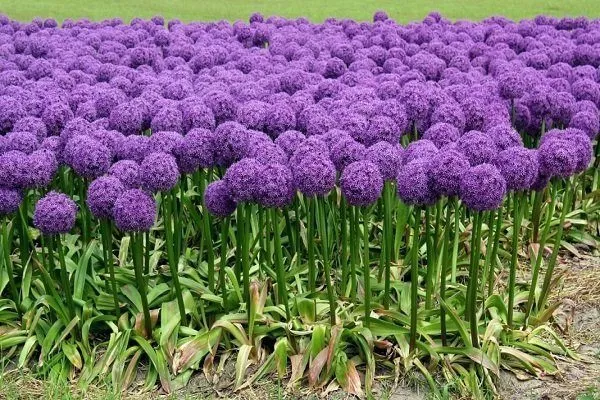
Ornamental onions bloom for a long time.
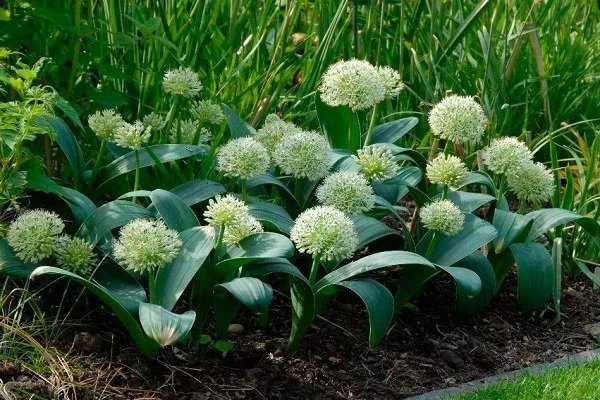
Ornamental onions come in a variety of colors.
What is an ornamental onion?
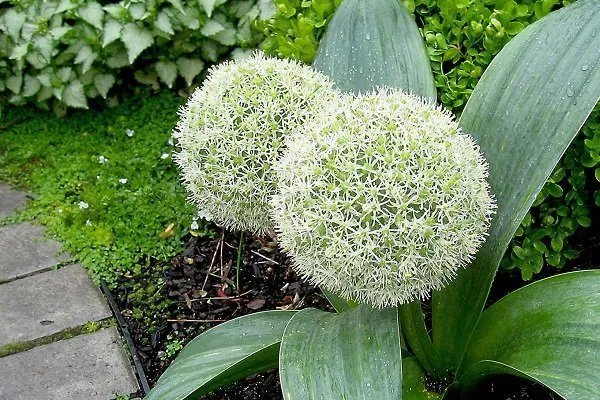
Ornamental onions are prized and grown for their attractive appearance. They bloom for a long time, and their shapes and colors are extremely varied.
The plant is primarily perennial, although annual species also occur. It is used primarily for ornamental purposes, but some varieties are also edible—either the leaves or bulbs.
Ornamental onions are typically grown outdoors, as their distinctive scent, belonging to the onion family, makes them known. For this same reason, they are often planted with other plants and used in landscape design.
Ornamental onion flowers are small, but typically clustered in large inflorescences—spherical or umbel-shaped. They most commonly come in various shades of pink, lilac, and purple. The onset and duration of flowering depend on the variety. By using several varieties and other ornamental plants, you can create a garden of continuous bloom.
Varieties
There are over a hundred known varieties of ornamental onions. The most popular are:
| Name | Stem height (cm) | Flower color | Flowering time |
|---|---|---|---|
| Aflatun onion | 150 | light purple | May-June |
| Bulgarian onion | 90 | purple-white | beginning of summer |
| Gladiator | 100 | blue-lavender | June-July |
| Dutch onion | 200 | white or deep purple | July-August |
| Blue onion | 90 | blue | June-July |
| Mountain-loving onion | 5-10 | pinkish purple | July-August |
| Giant Bow | 150 | light purple | June-July |
| Karatavsky | 15-25 | light pink-purple | June-July |
| Kovani | 30-40 | white | May-June |
| Roundhead | 80 | pink, lilac, purple | midsummer |
| Ostrovsky's Onion | 20 | crimson | June-July |
| Christoph's Bow (Star of Persia) | 40 | pinkish-violet or purple-violet | June |
| Schubert's Onion | 20-30 | white or pinkish | June |
| Moli | 30 | yellow | May-June |
| Neapolitan onion | 25-35 | pink | June-July |
| Pink onion or roseum | 40 | fawn or pink | June-July |
| Chameleon | 50-60 | pastel pink | June-August |
| Pretty | 50-60 | purple-lilac | June |
| Chives | 60 | from pale pink to pinkish-purple | May-August |
| Eros | 30 | from pink to light lilac | June |
| Unifolium | 20 | hot pink | June-July |
| Ivory Queen | 25 | light | May-June |
- ✓ Resistance to specific pests, such as onion fly, varies among varieties.
- ✓ Some varieties require a special soil composition that differs from the general recommendations.
Aflatun onion
The plant is perennial and primarily ornamental. Its leaves are edible, but only before flowering. This occurs in May-June, and the flowers are light purple. The flowers are star-shaped. The inflorescences are spherical, and the flowers are small. The stem can reach 1.5 m in height and 12 cm in diameter. The plant prefers mid- and upper-mountain zones and is frost-resistant.
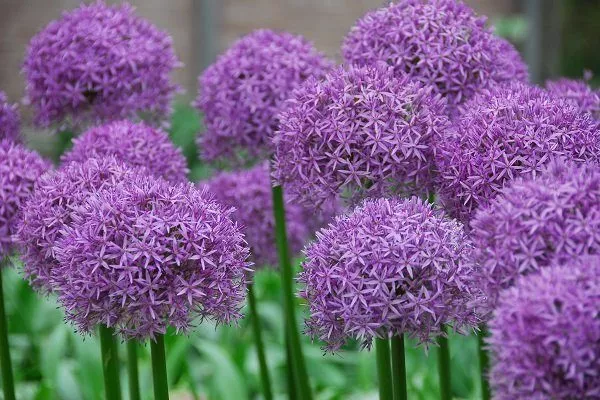
Bulgarian onion
The stem height can reach 90 cm. Flowering occurs in early summer, the color is purple-white, the appearance is very impressive.
Gladiator
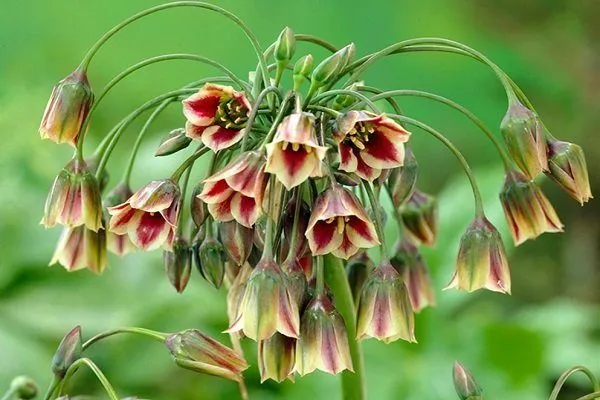
An ornamental perennial with dark green, edible leaves. The stem can grow up to a meter in height. The flowers are star-shaped, blue-lavender in color, and have a pleasant, sweet scent. The inflorescence forms a spherical cluster, which can reach 20 cm in diameter.
Dutch onion
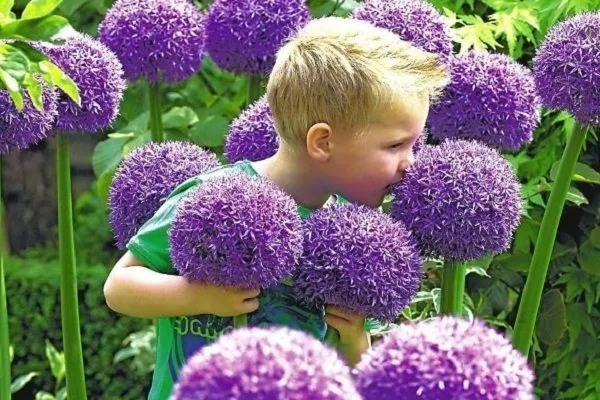
The flower stalk of this ornamental perennial can reach up to 2 m in height. The inflorescences reach 25 cm in diameter and are white or deep purple in color.
Blue onion
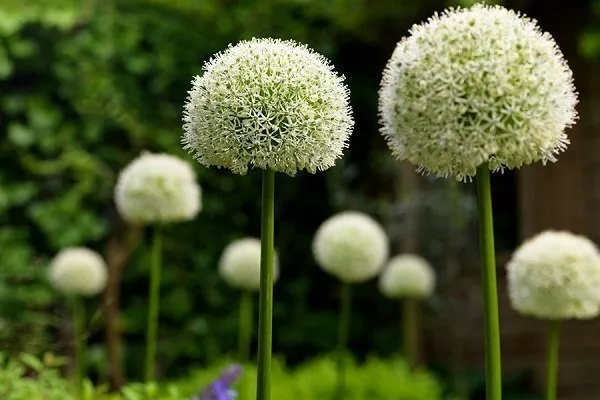
This species is edible—the bulbs are eaten. It is also used decoratively for its blue, broadly bell-shaped flowers. They reach only 5 mm in length and form a spherical or hemispherical umbel. The stem can reach 90 cm in height.
Mountain-loving onion
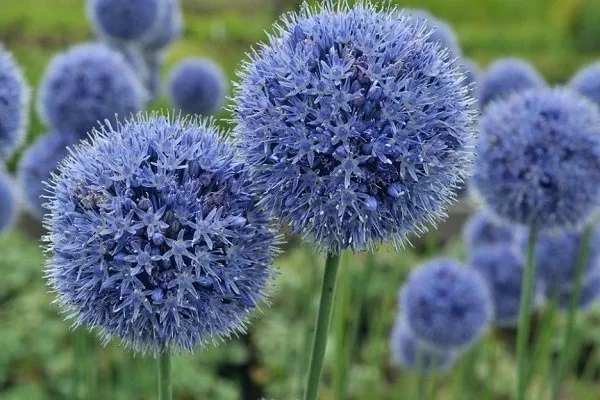
This perennial plant prefers gravelly slopes and upper mountain zones. Stems grow to 5-10 cm, flowers are small but distinctive for their pinkish-purple color. Flowering occurs in July-August.
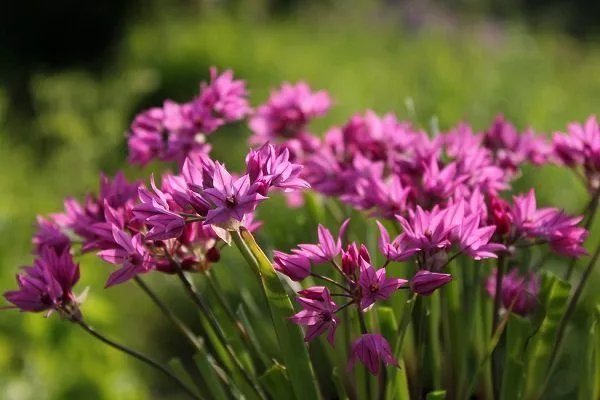
Giant Bow
A perennial species used for ornamental purposes, the leaves are edible. The stem can reach 1.5 m in height. The color is light purple.
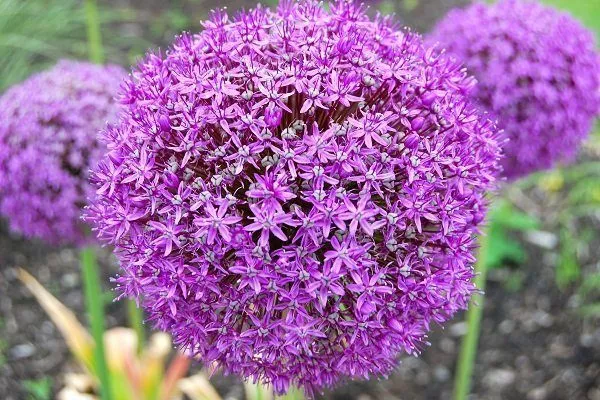
Karatavsky
The stem of this perennial reaches 15-25 cm in height, giving the inflorescence a particularly large appearance. Its color is light pinkish-purple. This species is used as an ornamental plant not for its flowers, but for its unusually wide and dense leaves.
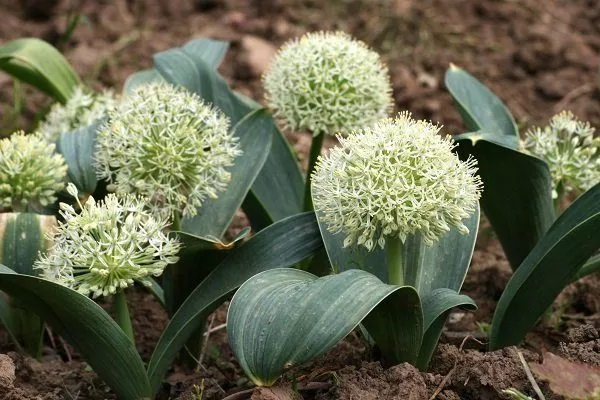
Kovani
This perennial is attractive for its early blooming, which occurs in May-June but lasts only 2-3 weeks. The plant is low-growing, rarely exceeding 30-40 cm in height. The inflorescences are spherical and very striking. The flower is white and has a pleasant scent.
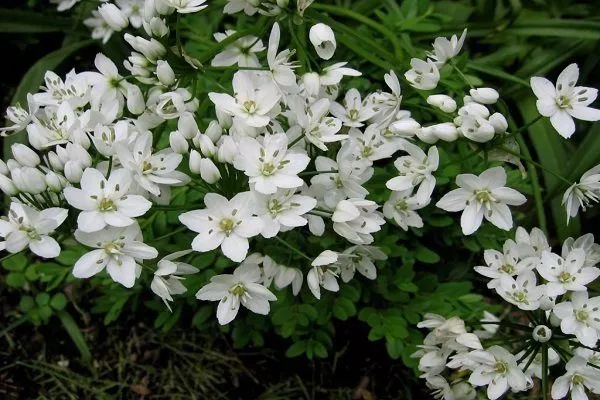
Roundhead
This perennial prefers steppes, slopes, and hills. The stem can grow up to 80 cm. Flowering occurs in midsummer and lasts about a month. The color can be pink, lilac, or purple. The inflorescences are oval.
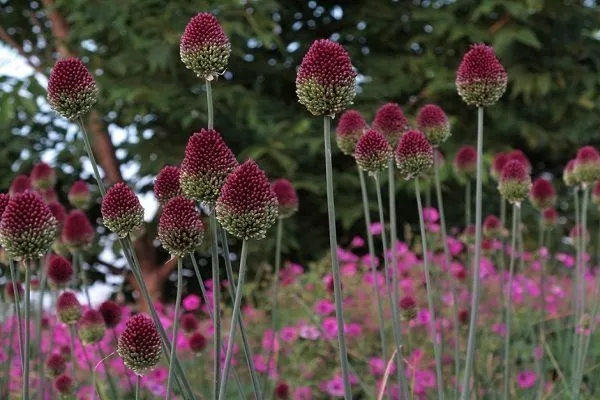
Ostrovsky's Onion
A low-growing perennial, its stems rarely exceed 20 cm in height. The plant is attractive for its decorative qualities – wide, bell-shaped, raspberry-colored flowers with a pleasant scent. The inflorescences can reach 10 cm in diameter.
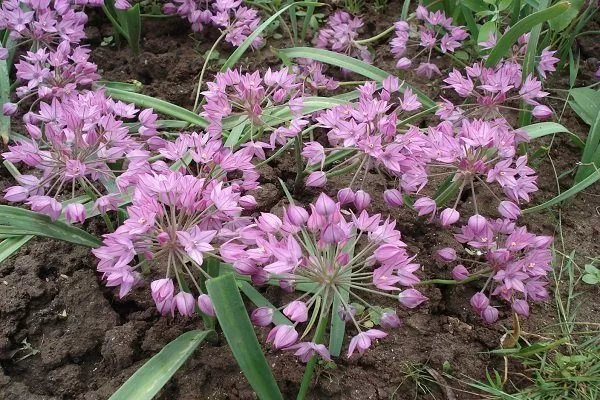
Christoph's Bow (Star of Persia)
This ornamental perennial prefers gentle slopes and lower mountain zones. Stems reach 40 cm in height and 15 cm in thickness. Flowers form a ball up to 20 cm in diameter. They are star-shaped and pinkish-violet or purple-violet in color. Flowering occurs in June, after which the leaves die back.
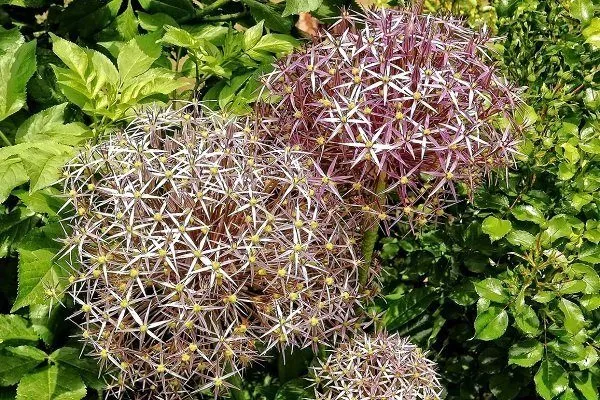
Schubert's Onion
This perennial is native to Asia. It prefers sandy and gravelly slopes in the lower mountain range. The plant is low-growing, with stems no more than 20-30 cm tall. The leaves are slightly longer, linear-lanceolate, and 2-3 cm wide. The perianth is stellate, white or pinkish.
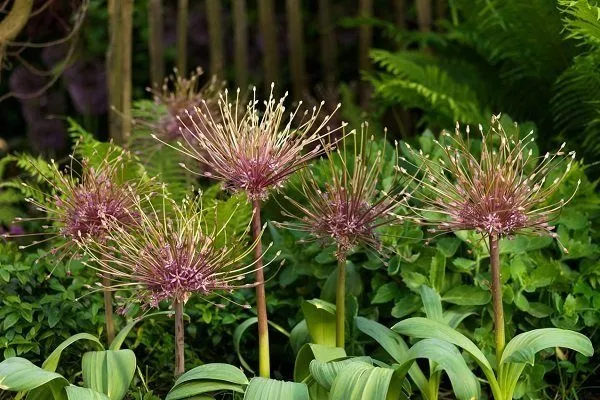
The flowers are borne on long stalks that reach 10-20 cm in length. Flowering occurs in June.
Moli
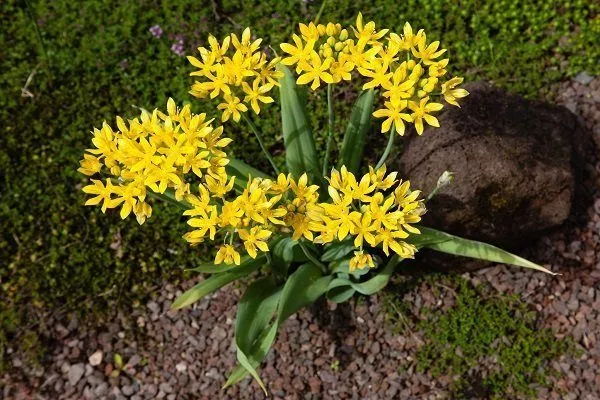
A perennial plant used for ornamental, culinary, and medicinal purposes. The stem grows up to 30 cm tall, and the flowers are star-shaped and yellow. The bulb, which has a strong garlicky aroma, is eaten.
Neapolitan onion
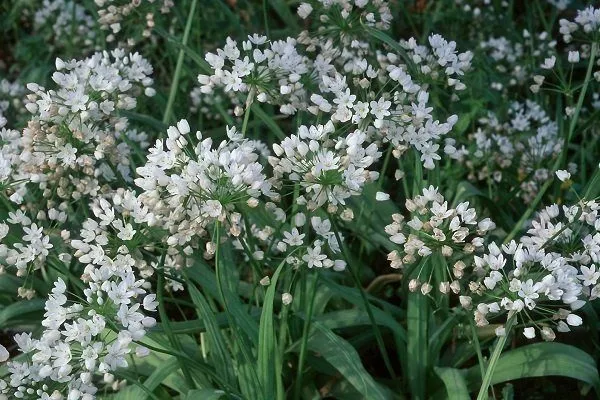
The height of the bush reaches 25-35 cm. The flowers are pink and broadly ringed, 1-1.5 cm long, forming a flat or slightly convex umbrella-shaped inflorescence.
Pink onion or roseum
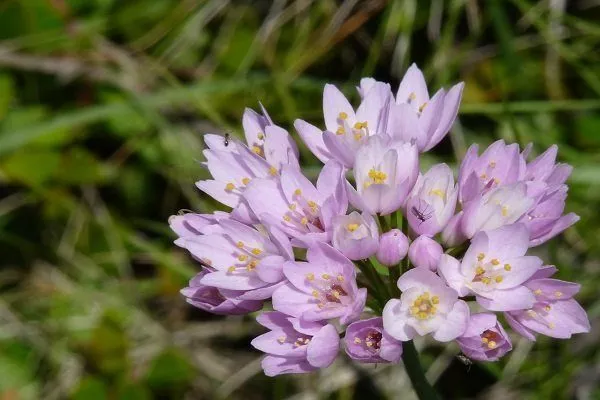
The plant is used purely for ornamental purposes. Stems can grow up to 40 cm. The flowers are small, fawn or pink, and form a flat umbel.
Chameleon
This variety of ornamental onion was developed through selective breeding. The result is a frost-resistant plant with a long flowering period, which lasts from June to August.
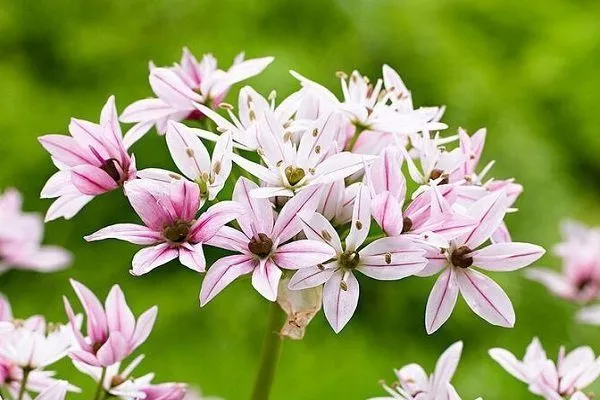
The bush reaches a height of 50-60 cm. The inflorescences are spherical, 6-7 cm in diameter. The flowers are star-shaped, the main color is pastel pink, with a bright crimson stripe running down the center of the petal.
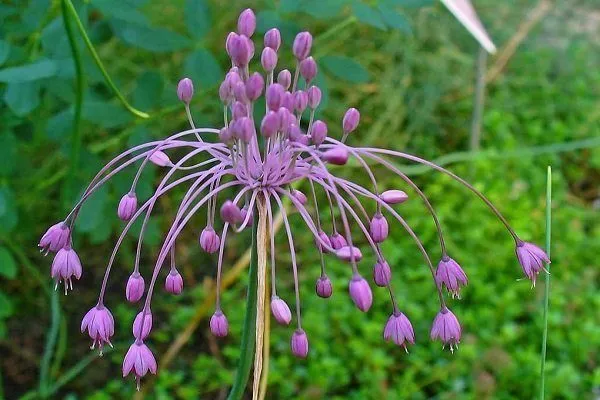
Pretty
The plant reaches a height of 50-60 cm. The flower stalks droop, causing the bush to be compared to a fountain. The flowers are small, usually purple-violet. Flowering occurs in June, producing loose, umbel-shaped inflorescences.
Chives
Also known as skoroda, chives, or chives, this perennial plant is used both for ornamental and edible purposes. It grows to a height of 60 cm. It blooms from May to August, and its color ranges from pale pink to pinkish-purple.
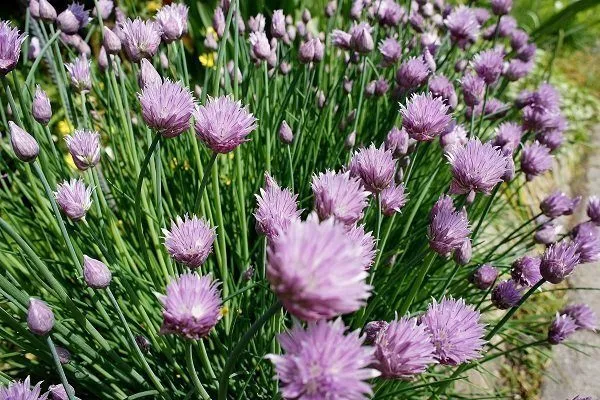
Chives are grown not only in open ground, but also at home in pots or boxes.
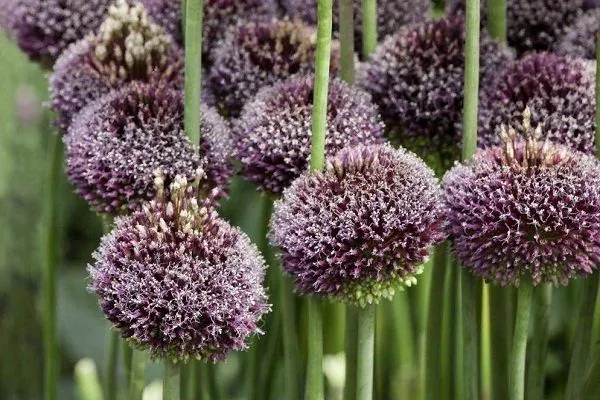
Eros
The stem height reaches 30 cm, and the diameter of the spherical inflorescences is 10 cm. Flowering occurs in June, the color is varied - from pink to light lilac.
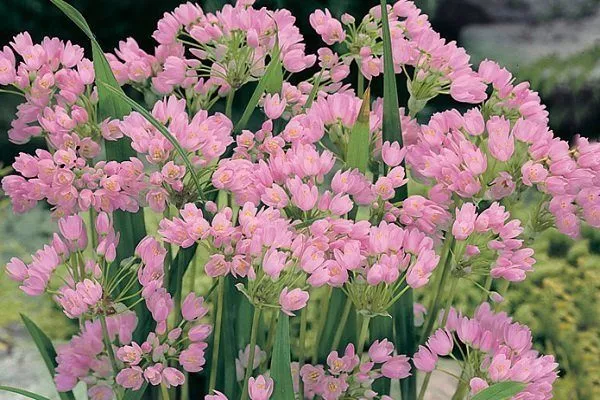
Unifolium
This variety is also known as single-leaf onion. It is native to the far west of North America. The stems are short, rarely exceeding 20 cm in height. The flowers are 1-1.5 cm in diameter and a beautiful bright pink, sometimes white.
Ivory Queen
This plant grows to a height of no more than 25 meters. Flowering occurs in May-June and lasts approximately three weeks. The flowers are light-colored and borne in spherical umbels. The appeal of this ornamental onion variety lies not in its blooms, but in its leaves. They are long, wide, and corrugated.
Growing conditions
To grow ornamental onions of any variety, it is important to comply with certain conditions:
- loose and neutral soil, optimal acidity level – 7.0 pH;
- elevation - in lowlands, rainy weather and melting snow lead to stagnation of water, which is unacceptable for growing ornamental onions;
- the optimal time for planting early flowering species is autumn, for late flowering species – spring from the end of April;
- sunny area - sufficient amount of color ensures beautiful coloring of leaves and more saturated shades during flowering;
- The right neighborhood – you can plant irises, peonies, delphiniums, and poppies nearby.
The area chosen for growing ornamental onions should be dug to a depth of 20-25 cm. Fertile soil does not require additional fertilizer. If the soil is loamy or sandy, apply the following fertilizers per square meter:
- humus or rotted compost – 5-7 l;
- simple superphosphate – 25-30 g;
- Potassium sulfate – 25-30 g, can be replaced with a liter of wood ash.
Landing
Ornamental onions are propagated in different ways, so there are several options for planting them.
Seeds
When planting ornamental onions from seeds, keep in mind that flowering will occur only after several years—the exact timing depends on the variety chosen. Species with particularly large inflorescences may not bloom until the sixth or seventh year.
Ornamental onion seeds can be purchased at the store or harvested yourself if you already have this plant in your garden. In the latter case, the planting material should be collected from the earliest and largest inflorescences. These should be selected in advance, but the seeds should be collected only after flowering has finished and they have fully matured.
The specifics of sowing ornamental onion seeds depend on the characteristics of the chosen variety. This also applies to planting timing. Sowing in open ground can be done in the fall or spring. Some varieties require winter sowing, as this method allows the seeds to undergo natural stratification.
When planting ornamental onions from seeds, you need to follow the following algorithm:
- Artificial stratificationThis step is only necessary when planting in the spring. Wrap the planting material in a damp cloth and leave it for 2-3 days. Be sure to moisten the cloth as it dries.
- DisinfectionFor this, potassium permanganate is used. The solution should be a light pink color; the seeds should not be kept in it for long.
- Preparing the soil and sowing seedsThere's no need to plant them too deep—1-2 cm is enough. Sprinkle some soil on top and water.
Seed germination rates are low, so you can grow seedlings first and then plant them outdoors. Here's how to proceed.
- Soak the seedsYou can start planting when they hatch.
- Prepare the substrate, using turf, peat, and humus. You can also buy a ready-made mixture.
- Plant the seeds into a suitable container.
- Pick out seedlings after emergence.
- Hardening off seedlingsThis should begin two weeks before planting outdoors. Initially, only expose the seedlings to fresh air for fifteen minutes at a time, then increase the time.
- Transfer the seedlings to a permanent location 60-70 days after sowing the seeds.
- Prepare the area for plantingLoosen and level the soil. Make furrows, going 10 cm deep. Water the furrows and the seedlings themselves. Carefully transfer them to the prepared site.
When propagating a plant from seed, changes in the characteristics of a particular variety may be observed. This is most often reflected in the color of the inflorescences, which becomes paler.
Bulbs
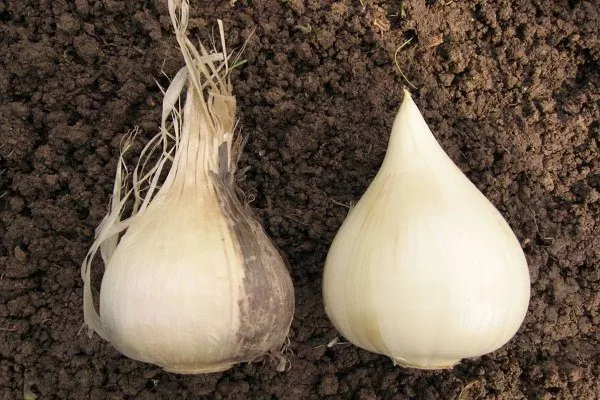
This method can be used to plant ornamental onions for the first time or to replant an older plant. The second option is recommended when the plant is five years old, if it was also planted as a bulb.
The bulbs should be dug up after the seeds have fully ripened and the leaves have dried. This is recommended not only for replanting and propagating the plant, but also annually for winter storage. Dug up bulbs require temperatures of 18-20 degrees Celsius (64-68 degrees Fahrenheit). To prevent them from drying out, use peat moss or sawdust.
When planting ornamental onions, you need to follow the following algorithm:
- Select planting materialThe bulbs should be strong and healthy. Loose and weak specimens should be discarded.
- Prepare planting materialAt this stage, it's important to take care of disease and pest prevention. Prepare a suitable fungicide solution according to the instructions and soak the bulbs in it for half an hour. Afterward, be sure to dry the planting material. To prevent pests, heat the bulbs at 40 degrees Celsius for 12 hours. This should be done immediately before planting.
- Prepare the area for plantingIt should be dug over, loosened, and leveled. Fertilizer should be added if necessary.
- Prepare the holesBe sure to provide drainage—add 2-3 cm of sand. It will absorb excess moisture.
- Plant the bulbsThe planting depth depends on the size of the planting material and should be twice the length of the bulb including the base. The distance between plants should be based on their size: 10 cm is sufficient for small specimens, while 20 cm or more is sufficient for larger ones. If planting ornamental onions in groups, leave approximately 35 cm between them.
- Water the soil generouslyThe moisture should reach the bottom of the bulbs.
Bulbs
This propagation method isn't suitable for all ornamental onion varieties, as not all of them produce bulblets. This interesting name refers to the small bulblets that form on the inflorescences. You can stimulate and enhance their formation by pruning the buds and treating the bush with a growth stimulant.
Bulbs should be planted in the fall. This should be done before frost so the plants have time to take root. It's important to plant the bulbs correctly, taking into account their size: small and medium-sized plants should be planted 5-6 cm deep, and larger ones 8 cm deep.
The appeal of propagating ornamental onions using bulblets is that such planting material is free of phytopathogens. This means flowering will begin as early as possible, even the following year.
An important advantage of propagating ornamental onions from bulblets is that all the characteristics of the mother plant are preserved. This means they will grow to the same height and retain their vibrant color.
Care
Ornamental onions require comprehensive care. Growing conditions are fairly simple.
Watering
This stage of care is especially important during the growing season. In May, the soil should be watered generously, keeping it moist to a depth of 20-25 cm. After watering, loosening the soil is necessary. Mulching is also beneficial – any loose material, including grass clippings, can be used.
After the growing season, ornamental onions require virtually no watering. Watering should be done as needed if dry weather sets in.
Top dressing
Ornamental onions are sensitive to potassium levels in the soil, so they should be regularly fertilized. Adding wood ash and compost is also beneficial.
Ornamental onions require fertilizing several times a season—during active foliage growth, during bud formation, and during bulb formation. Autumn feeding is also necessary to help the plant survive the winter. Granular potassium-phosphorus fertilizers are best used during this period.
Ornamental onions also need fertilization in early spring, after the snow has melted. This feeding gives them strength for further growth and development. Loosen the soil and apply a complete mineral fertilizer—either dry or in solution. Avoid getting the fertilizer on the sprouts. If using granular fertilizer, carefully incorporate it to ensure all the granules are buried.
At the end of the growing season, you can add the following per square meter:
- superphosphate and potassium sulfate - 40-60 g of each type;
- bone meal (70-100 g) and 2 shovels of wood ash;
- ready-made complex fertilizer, use according to instructions.
Trimming
Before flowering, the leaves begin to die back, and the bulb begins to actively accumulate nutrients. Removing leaves at this stage is not recommended, as this will cause further damage to the plant.
If you don't plan to collect seeds for propagation, it's best to trim off faded flowers. Be sure to leave 3-4 leaves, as the bulb needs them to photosynthesize.
Leaves and stems should be trimmed when they turn completely yellow after flowering. This sign indicates the bulb has finished accumulating nutrients.
For information on planting and caring for ornamental onions, watch the following video:
Diseases and pests
Ornamental onions are susceptible to diseases and pests typical for their species:
- PeronosporosisThis disease is also known as downy mildew. It manifests itself as fuzzy, pale green spots on leaves and flower stalks, along with the development of myceliums with gray-purple spores. Affected plant parts must be removed. Spring treatment with fungicides is recommended as a preventative measure.
- Cercospora leaf spot, also known as leaf spotNot only the stems are affected, but also the flower stalks, which develop gray spots. The affected parts of the plant should be removed and sprayed with a copper-containing product.
- RustThis disease can appear simultaneously with warmer weather. Initially, orange spots appear on the leaves, followed by the formation of spores. Control methods are similar to those described above.
- Black moldThis disease can affect ornamental onions in midsummer. It manifests itself as yellowing of the leaves and the appearance of a coating. Treatment involves removing affected leaves and using copper-containing products. Prevention involves following planting and care guidelines.
- Onion fly and root miteInfestation by both pests results in plant death. Treatment involves dusting with tobacco dust and ash, or spraying with an infusion of the two. Black pepper is also helpful. Dichlorvos can also be used, but personal protective equipment must be taken. Prevention involves proper preparation of planting material.
Regularly inspecting your plants allows you to quickly identify signs of disease and pests. Taking immediate action can help avoid many problems.
Ornamental onions are relatively easy to grow and require little effort. Using different varieties of this plant in combination with other flowers allows you to create a unique landscape design in your yard.