Loading Posts...

Features of the Ded onion variety

The Ded onion is often confused with another similarly named variety, Dedulya. However, these are completely different varieties. Ded is considered a high-yielding, versatile variety with a medium ripening period and absolute ease of cultivation. It is intended for mass cultivation in central Russia.
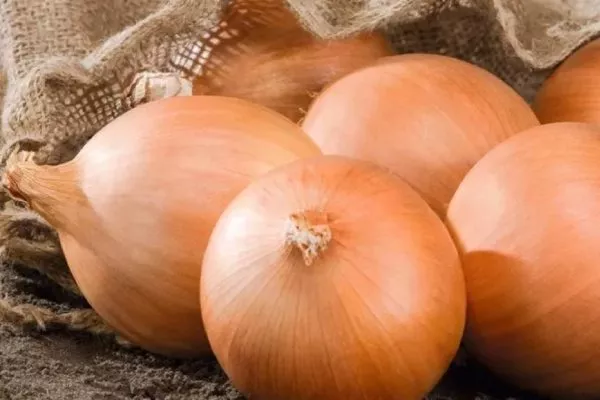
Onion variety Ded

History of origin

The Ded onion variety, developed by the Gavrish breeding and agricultural company, was approved for cultivation in 2014. Application for approval No. 55639, registered on November 30, 2010.

Characteristic qualities of the variety and appearance

Ded is a salad-type onion with versatile uses: it is eaten fresh, added to cold salads, fried, boiled, baked, used for marinating kebabs and even winter preserves.

Not only the bulb but also the green feather is used.

Specifications:

  • the degree of maturity depends on the period – before digging, maturity is 65%, and after the ripening process it reaches 90-93%;
  • the yield is at a high level – From 1 square meter, gardeners get about 3.5-6.8 kg, and farmers from 1 hectare get about 190 centners (there is also an officially registered record of 546 centners);
  • variety type – annual;
  • ripening period – average, so the harvest can be dug up after 115 days in the south and 120 days and a little more in cool climates.

Before planting, it is important to familiarize yourself not only with the properties of the onion, but also with its appearance:

  • the bulbs have a round, even shape;
  • the color of dry scales varies from golden yellow to light brown;
  • the pulp is dense in structure, juicy in texture and snow-white in color;
  • the weight depends on various factors, but the minimum is 50 g, the average is 80-150 g, and the highest is 220 g;
  • The bulb type is small-nest, so only one clove is localized in one nest.
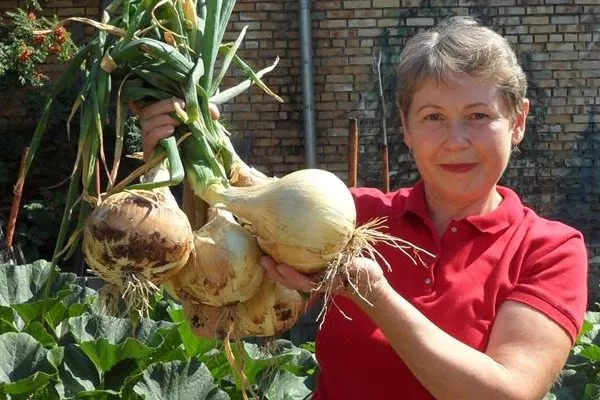
The appearance of the grandfather's bow

This onion has a slightly pungent aroma, making it suitable for a variety of culinary delights. This variety has a shelf life of up to 6-7 months.
Tips for Increasing Yields
  • • To increase the size of the bulbs, it is recommended to mulch the soil after planting.
  • • Regular loosening of the soil around plants improves aeration and promotes better development of the root system.

Planting and care rules

To successfully grow Ded onions, it's best to use the seed method. If using seedlings, maintain planting intervals of 10x15 cm or 7x15 cm. When planting using any convenient method, choose sunny areas that aren't prone to standing water in early spring.

Conditions for optimal growth
  • ✓ The soil should be well drained, with a pH of 6.0-7.0.
  • ✓ The planting site should receive at least 6 hours of direct sunlight daily.

Care for the variety includes regular watering, nitrogen fertilization and thinning:

  • Onions require frequent watering, especially in persistently hot weather.
  • Feed twice per season: the first time immediately after the green feathers appear, and the second time a month after the first feeding.
  • Thinning is necessary to ensure that each bulb has a single large clove.
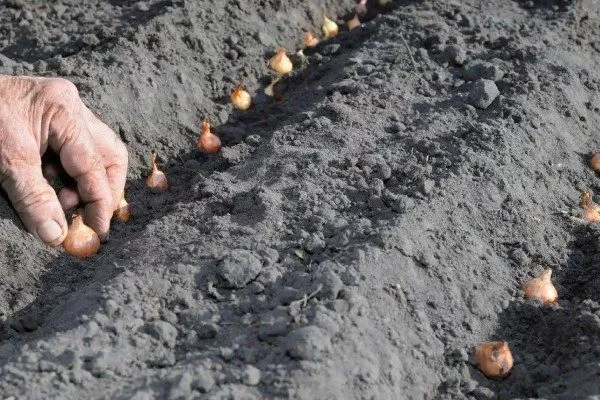
Critical aspects of watering and fertilizing
  • × Watering should be not only frequent, but also deep, so that water reaches the root system, especially during hot periods.
  • × Nitrogen fertilizers should be applied strictly within the specified timeframes to avoid provoking excessive growth of greenery to the detriment of bulb formation.

planting onions grandfather

Reviews

Svetlana Romanianskaya, 43 years old, Naberezhnye Chelny.
The onion is quite good in terms of taste and yield, but after harvesting, it turns out that one bulb is average in size, and the other is very large. Basically, I don't like the uneven size of the onion.
Olga Vetrova, 52 years old, Krasnodar.
A wonderful variety that I've been planting for four years now. I only use my own seeds now, and they always germinate 100%. When storing, I put the onions in the pantry, and they stay healthy until May or June. When planting, I add liquid horse manure, and then fertilize them once a year with superphosphate. It's important to water them frequently, as it's very dry and hot in our region. But I do this with all onion varieties.
Oleg Denisenko, 53 years old, Lutsk.
As a large farmer, abundant harvests are crucial for me, so for the past seven years, I've been using only Ded. I'll let you in on a secret: if you properly set up a drip irrigation system and fertilize it a couple of times a season, you can harvest a ton of onions that are truly worthy of attention. I highly recommend it.

The Ded onion variety is universal—it's grown in all regions of our country and used in a variety of dishes, with both the green leaves and the snow-white bulbs used. The key is to follow the simplest farming practices and harvest the crop on time.

Frequently Asked Questions

What type of soil is best for growing this variety?

Can this onion be grown in short day conditions?

How often should you water in dry areas?

What fertilizers are best to use for feeding?

How to avoid bulbs of different sizes when harvesting?

Can this variety be used for winter storage?

What is the optimal spacing between plants when using the seedling method?

Is it possible to grow this onion in northern regions?

How to increase crop yields in small areas?

Is this variety suitable for drip irrigation?

Can green feathers be eaten?

What is the minimum bulb weight to expect?

Can this variety be grown in a greenhouse?

How to avoid excessive growth of greens at the expense of the bulb?

Which regions, besides Central Russia, are suitable for mass cultivation?

Comments: 0
Hide form
Add a comment

Add a comment

Loading Posts...

Tomatoes

Apple trees

Raspberry