
The Bogatyrskaya Sila onion is a salad onion variety from a Russian seed supplier. This semi-sharp onion is versatile, suitable for fresh consumption and canning. It is easy to grow, requiring little effort or care.
History of creation
The Bogatyrskaya Sila onion is a relatively new variety from the Gavrish company. Its creators are S. F. Gavrish, A. N. Logunov, and E. A. Tiko. This onion was approved for cultivation in 2021. It is recommended for cultivation in virtually all regions of the country, including the Northern, West and East Siberian, Far Eastern, and Ural regions.
Description of the Bogatyrskaya Sila bow
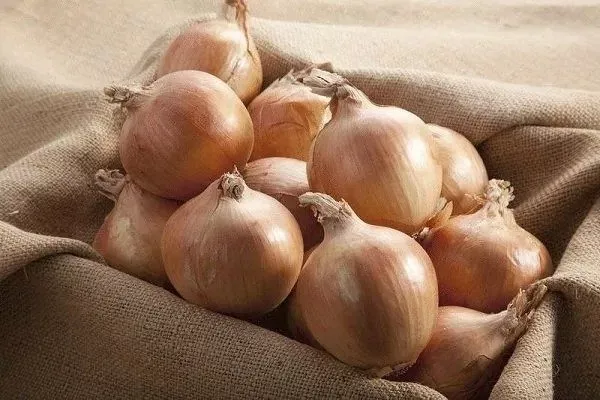
The plant's leaves are light green. The bulbs are large and round. When grown from seedlings, they can weigh up to 500 g. The average weight of bulbs grown directly from seedlings is 160 g. Dry scales are yellow, while juicy ones are white.
Taste and purpose
This variety has a pleasant, semi-sharp flavor and is used primarily for fresh consumption. This salad onion is widely used in cooking, for preparing meat and fish dishes, and for canning.
Productivity and other characteristics
The Bogatyrskaya Sila onion variety has a fairly high yield, reaching almost 600 centners per hectare when grown commercially. Growing this variety in a garden, you can harvest up to 6 kg of onions per square meter.
Pros and cons
No disadvantages were found in this variety.
Landing features
This variety can be grown from seed as an annual crop, but for larger bulbs, transplanting is recommended. Seedlings are planted in open ground using a 10x20 cm pattern.
The variety prefers light, nutritious soils, but can also grow in poor soils. Choose a sunny or partially shaded site for planting.
How to grow onions using seedlings:
- The seeds for seedlings are sown a month before the expected planting. The containers are filled with vermicompost-based soil, to which "Siyanie" fertilizer is added (200 ml per 10 liters of soil).
- The seeds are spread over the soil and covered with a thin layer of peat. Coconut coir is also an option—it prevents crusting and acidification of the soil and allows for good aeration. To speed up germination, mist the seeds with warm (not hot) water.
- The seeds are covered with plastic wrap and placed in a warm place. As soon as the seedlings emerge, they are moved to windowsills. When the stems reach 15 cm, they are trimmed back to 10 cm.
- Seedlings are planted from mid- to late May. Dig 4-cm-deep furrows for planting. Row spacing is 20 cm, and it is recommended to cover the rows with straw, peat, or freshly cut grass. The seedlings are root-trimmed and planted in 7-cm-deep holes at 10-cm intervals. If the weather is hot, cover the seedlings with a covering material for a week to protect them from the scorching sun.
Seed cultivation is carried out using standard technology. The key is to use high-quality planting material that ensures good germination.
Caring for onion beds
You can reduce the time and effort spent on garden maintenance by mulching your beds. This reduces the amount and frequency of weeding, tilling, and watering.
Care features:
- Water the onions occasionally, as the soil dries out. Use warm, settled water.
- To grow large, sweet-tasting onions, you will need three fertilizers:
- Two weeks after planting, fertilize the onions with ammonium nitrate (30 g), superphosphate (40 g), and potassium chloride (20 g), diluted in 10 liters of water. This amount is enough for 5 square meters. Alternatively, use a mullein solution—200 ml per 10 liters of water.
- After another two weeks, water the onions again with a solution of saltpeter, superphosphate, and potassium chloride. You can also use an infusion of chopped herbs—250 ml per 10 liters of water.
- After two weeks, apply the final, third feeding. It's prepared from 250 g of wood ash and 10 liters of hot water. The infusion is left for three days, and then used to water the beds.
- Regularly add mulch, making sure it doesn't cover the bulbs. Mulch not only prevents moisture evaporation and weed growth, but also decomposes, enriching the soil and providing the onions with nutrients.
Pest and disease control
The Bogatyrskaya Sila variety, like any onion, can be affected by bacterial, fungal, and viral infections under unfavorable conditions. Among the most common diseases are powdery mildew, downy mildew, fusarium wilt, and gray mold. These are controlled with appropriate fungicides; diseased plants are uprooted and destroyed.
The variety is not susceptible to insect damage, but if insect infestations are widespread and agricultural practices are improper, onion crops may be attacked by pests such as the onion hoverfly, onion fly, tobacco thrips, and onion mite. These can be controlled with various insecticides, such as Aktara, Actellic, Fitoverm, Fufanon, and others.
Harvesting and storage of crops
The Bogatyrskaya Sila onion ripens in August-September, with the exact harvesting time dependent on climate and weather conditions. The onion is ready to harvest when the tops turn yellow and fall off. The outer scales become dry, and the neck dries out and becomes thinner.
Harvesting is done on dry days, and watering should be completed at least two weeks beforehand. Onions dug up in the morning are left to dry in the beds until evening, then stored under a canopy or in a ventilated area. There, they dry for about two more weeks.
Reviews
The Bogatyrskaya Sila onion will surely appeal to lovers of a mildly spicy flavor and subtle onion aroma. This large onion is ideal for salads and a wide variety of dishes; it's delicious, productive, and easy to grow.