
The Bogatyr onion has long enjoyed well-deserved popularity. It is considered early maturing, easy to store, transportable, and high-yielding. This variety is cultivated throughout Russia, even in the northern regions. Both the bulbs and the green tips are used for food. This is a completely annual variety.
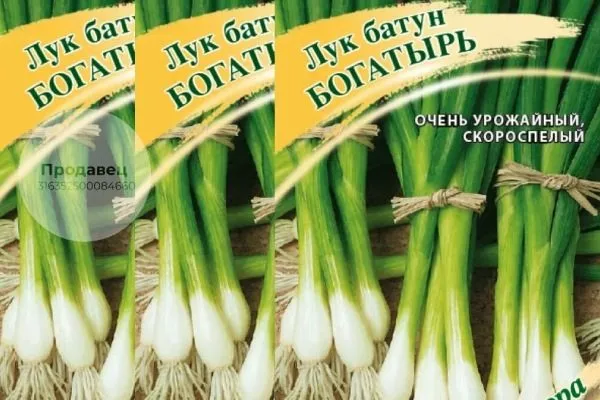
Characteristic features
This variety of target plants is distinguished by a strong, dense rosette of deep green leaves. The leaves are particularly juicy and delicate. The bulbs of these plants are small, but their flavor is captivatingly sweet and aromatic.
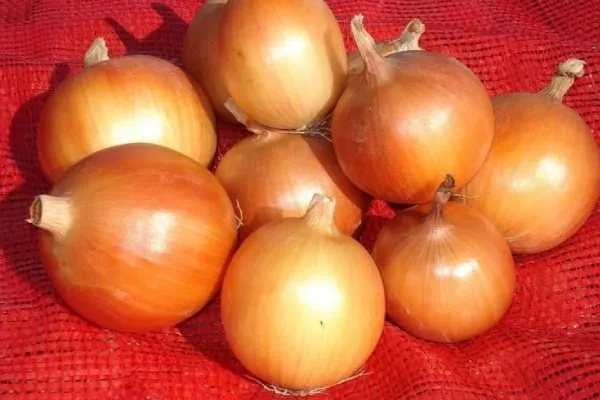
- ✓ The bulbs have a high sugar content, which makes them especially aromatic and sweet.
- ✓ The variety has high resistance to common onion diseases, such as powdery mildew and neck rot.
Specifications:
- Category: variety, not hybrid.
- Purpose: for fresh consumption, for freezing, for greens (for feathers).
- Productivity: high.
- Socket features: powerful, compact.
- Leaf color: dark green.
- Feather texture: juicy, tender.
- Features of the bulb: small size.
Growing and care
To begin growing onions, it's important to properly prepare the soil. It should be rich in organic matter and located in full sun. Avoid planting in the same spot where it grew the previous year. The optimal soil pH should be around 6.0-7.0.
- ✓ The optimal soil loosening depth should be at least 25-30 cm to ensure good root aeration.
- ✓ The soil pH level should be strictly within 6.0-7.0, as deviations can lead to poor absorption of nutrients.
Important steps:
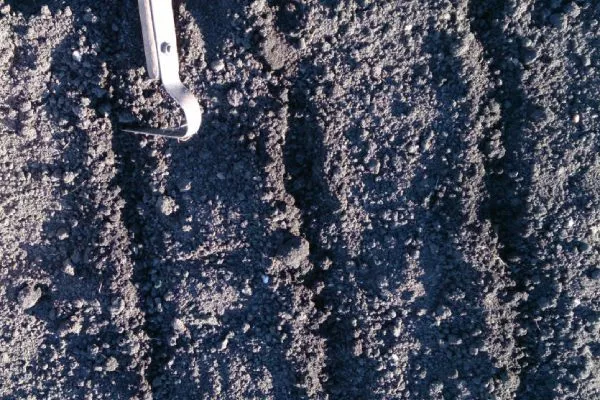
- Before planting onions, it is necessary to loosen the soil to a depth of about 20-25 cm and clear it of lumps and stones using a rake.
- Onions should be planted after the last chance of night frost has passed.
- The seeds are sown in rows at a distance of about 30-35 cm from each other.
- The planting material is evenly distributed over the surface and covered with a thin layer of fine-grained soil no more than 0.8-1 cm thick.
- The first shoots will appear a week or two after planting. Until then, keep the soil moist, but avoid excessive moisture.
- When the seedlings reach 5-7 cm in length, thin them out, leaving a gap of about 7-9 cm between plants.
- To keep weeds out, regular plowing and mulching are necessary.
- When forming bulbs, timely watering is critical to ensure rapid and continuous fruit growth. The best irrigation method is drip irrigation, which delivers water through special grooves.
- To prevent disease, onion leaves should be kept dry.
- It is better to start fertilizing one and a half months after planting.
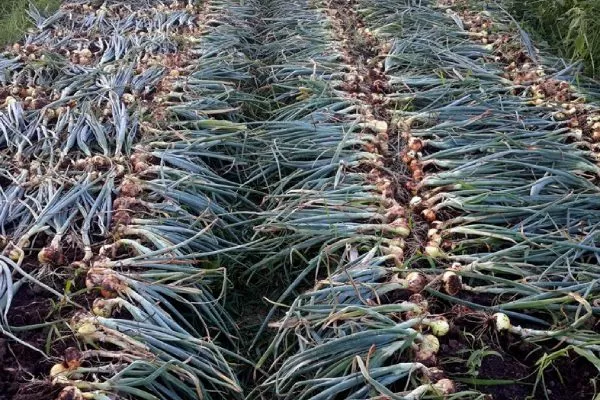
One hundred days after sowing, you can begin harvesting for further storage:
- To dry the onions, after digging them up, lay them out in the fresh air, covering them with a protective blanket to prevent sunburn.
- Then keep the bulbs in a dry, warm place with good ventilation for two to three weeks.
- After this, clean the crop of dirt, remove excess husks and stems, leaving 2-3 cm from the bulb.
- Store onions in bags in a cool, dry place.
- It is necessary to regularly check the stock for mold and rot, removing spoiled specimens so that they do not affect the rest of the batch.
This variety is particularly spicy and can be marinated in a warm brine to tone it down. Small pickled onions have excellent flavor, while larger ones can be used in a platter with other pickled vegetables.
Reviews
The Bogatyr onion can be successfully cultivated throughout Russia. This variety is adapted to any weather, resistant to pests and diseases, and easy to care for. However, the bulbs are not as large as its name suggests. It is suitable for both small-scale gardening and large-scale agricultural production.