
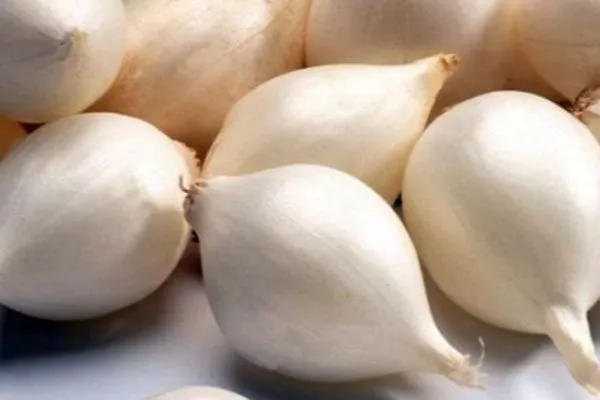
White Eagle is a mid-season onion variety popular with domestic and international gardeners. It is prized for its excellent yield, resistance to adverse weather conditions, ease of cultivation, pleasant salad flavor, and attractive bulbs covered with snow-white skins. It is grown from seed or sets in both open and closed ground as an annual.
Introduction to the variety
White Eagle is an achievement of domestic breeding. It was developed by Yu. D. Tarasov, representing the Euro-Semena agricultural holding. In 2017, the variety was added to the Russian Federation State Register. It was zoned for the Central Black Earth Region.
This vegetable variety is considered high-yielding. Its characteristics are as follows:
- Farmers who cultivate the variety on an industrial scale collect from 12,000 to 21,800 kg per 1 hectare of onion planting;
- 31,400 kg/ha is the maximum yield of turnips collected in 2015 as part of state tests conducted in the Belgorod region;
- 63% is the rate of maturity of bulbs before harvesting;
- 95-100% — maturity of turnips after their ripening;
- 8 months is the shelf life of the harvest in a vegetable storage facility without losing its consumer qualities.
External data
Plants of this variety are medium-sized and produce small nests (1-2 turnips per nest). They are distinguished by a developed rosette of upright, dark green leaves. The leaves are distinguished by a delicate texture and juiciness.
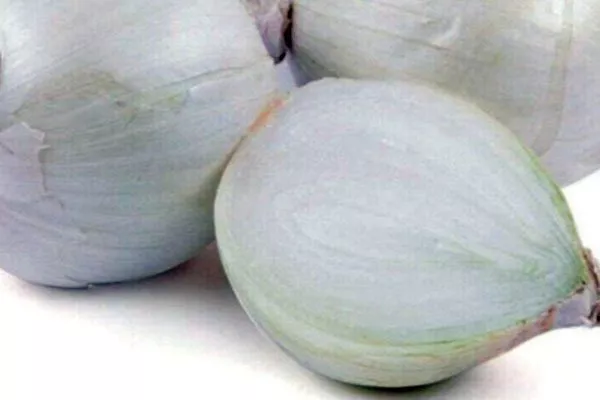
White Eagle turnips are even and beautiful. They possess the following characteristics:
- weight - 75-100 g;
- rhombic shape;
- density of structure;
- dry white scales covering the bulb in 3-4 layers, quite thin and easy to peel off;
- internal juicy scales of a greenish-white color, somewhat transparent;
- thin neck.
Taste characteristics and purpose
The White Eagle, like other white onion varieties, has a milder and more pleasant flavor than its yellow-skinned cousin. It has less bitterness and a distinct sweetness. The vegetable is mildly spicy (both the flesh and the greens). Its aroma is rich but not harsh.
The culinary uses of different types of onions are as follows:
- it is added to fresh vegetable salads;
- used to prepare French onion soup with croutons (thanks to the mild taste of the vegetable, the dish turns out more delicate and delicious);
- used as a filling for onion pie or quiche;
- added to sauces, marinades;
- canned.
| Dish | Recommended cutting form | Heat treatment time |
|---|---|---|
| French soup | Half rings 3-5 mm | 35-40 minutes on low heat |
| Quiche pie | 1 cm cubes | Pre-sauté for 7 min. |
| Pickling | Rings 2-3 mm | Blanching for 1 min |
Subtleties of agricultural technology
To grow onion sets as a vegetable crop, plant them in the spring when the soil warms to 5-8°C or above. The best time to do this is late April or early May. When choosing your time, consider the weather conditions in your region.
Choose a suitable area in your garden for an onion bed. It should meet the following requirements:
- be well lit and ventilated;
- with any loose and fertile soil (except for soils with pH less than 5.5);
- with good drainage system;
- be located in a place where you have not grown onions and garlic for the last 2 years.
The best predecessors for vegetable crops:
- legumes;
- pumpkin;
- nightshade.
Prepare the site for planting White Eagle in advance, in the fall. Follow these steps:
- dig up the area;
- clear it of weeds and their roots;
- add humus (consumption rate: 5-7 kg per 1 sq. m).
Plant the onion sets in rows, following the pattern:
- seeding depth - 2.5-3 cm;
- step (distance between bulbs) - 5-7 cm;
- distance between rows - from 20 cm.
- April: calibration of seed onions (fraction 1-2 cm), heating at +35°C for 8 hours
- May: planting in stable +5°C soil, mulching with peat
- June: 1st top dressing NPK 16:16:16 (20 g/m²), treatment with Enzhio
- July: stop watering after the 15th, harvest when 60% of the feathers have lodged
- August: drying under a canopy for 14 days, pruning leaving a 4 cm neck
Work schedule
At the end of planting, water and mulch the beds to retain moisture in the soil and suppress weed growth.
To obtain a bountiful and high-quality harvest of white onions, follow these planting care guidelines:
- Water itWater the onion beds every other day. During dry periods, water more frequently—daily. If it rains, the soil under the onions does not need to be moistened. Stop watering completely starting in mid-July to ensure tastier, longer-lasting onions.
- Fertilize the cropTo produce larger bulbs, feed the plants in the garden with complex mineral fertilizers. Sprinkle them dry every 7-10 days before watering.
- Weeding is doneRemove weeds promptly to ensure proper growth and development of onions.
- Don't forget to loosen the soilThis measure ensures unimpeded access of oxygen to the roots of the vegetable crop.
- Carry out preventative treatments of plantings against diseases and pestsAlthough White Eagle plants have a strong immune system, white onions are still more susceptible to infections and insect attacks than yellow ones.
To protect your plants from pests, particularly thrips, use the insecticide Engio. To prevent disease, treat the plants 2-3 times per season with fungicides such as Ridomil Gold and Quadris.Preparation Consumption rate Waiting period (days) Protective action Enzhio 3.6 ml/10 l 20 Thrips, onion fly Ridomil Gold 25 g/5 l 10 Downy mildew, rust Quadris 6 ml/5 l 5 Alternaria, powdery mildew
Reviews
White Eagle is a high-yielding variety of white salad onion. It's beloved by gardeners for its resistance to disease and adverse weather. Housewives prize it for its excellent flavor and use it in French cuisine and summer vegetable salads.