
Welsh onions are popular worldwide, appreciated for their low maintenance, ease of care, and unique flavor. Unlike common onions, the greens of Welsh onions are milder and don't leave an unpleasant aftertaste. This makes them a popular vegetable in gardens, and even a novice can grow them.
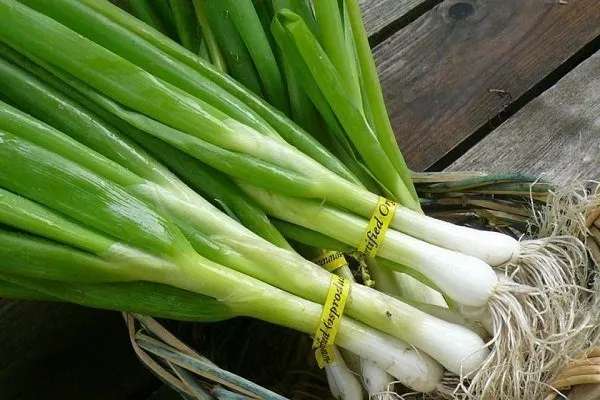
Welsh onions
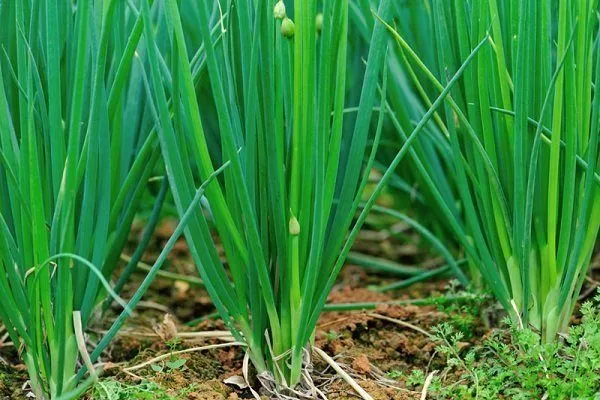
Welsh onions are grown for their greens.
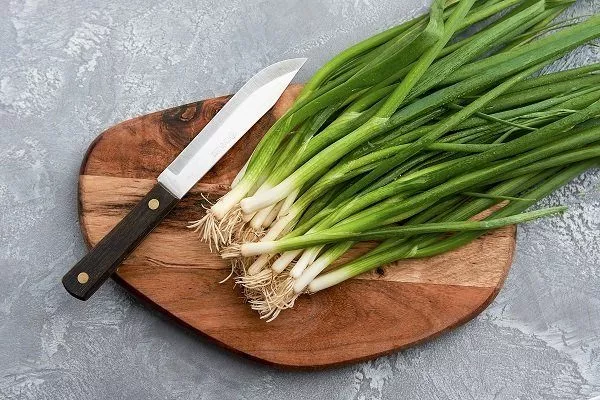
Welsh onions have a delicate taste without a strong smell.
Plant characteristics
The Welsh onion is a perennial plant. It grows wild in Southeast Asia, Siberia, and Japan. It is also known as "angelica," "Tatar onion," or Chinese onion. A distinctive feature of this plant is the absence of a large bulb. The fruits of the Welsh onion are oblong, mild, and slightly thickened at the tip.
Welsh onions are grown for their greens. Unlike onions, the greens of this onion are thicker and hollow inside. They can reach a diameter of 2.5 cm. If left uncut, they grow up to 1 m. This variety is popular for its delicate, mild flavor and lack of a strong odor, which is why it is called odorless garlic.
Welsh onions are just as healthy as onions. They contain many vitamins, minerals, amino acids, and saturated fatty acids. Just 150 grams of green onions contains the daily requirement of vitamins C and A. They have a higher nutritional value than regular onions.
In addition to its valuable nutritional qualities, this plant attracts gardeners with its ease of cultivation. Its distinctive properties include:
- grows in one place for 8-10 years, although after 4 years from planting it becomes smaller and thicker;
- If feathers are not collected in time, they become tough;
- already in the second year, 1-2 flower stalks appear from each bush, on which small seeds appear;
- grows well in any soil, but does not tolerate either a lack of water or its excess;
- It is best to grow onions in partial shade, because in bright sun the leaves will dry out and the shoots will form faster;
- tolerates light frosts well.
Onion varieties
| Name | Ripening period | Frost resistance | Productivity |
|---|---|---|---|
| Russian size | Average | High | High |
| Emerald | Early | Very high | Average |
| Russian winter | Late | High | High |
| April | Very early | High | High |
| Tenderness | Early | Average | Average |
| Baron | Early | High | High |
The crop is widespread, and many of these onions grow wild. For garden cultivation, the varieties with the most valuable nutritional properties are used. Those that ripen quickly and produce abundant greens are also popular.
There are several of the best varieties of chives:
- Russian sizeIt is distinguished by its tall, thick stems, which are not only added to salads but also stuffed.
- EmeraldIt's a hybrid of Welsh onion and onion, so its leaves are sharper than others. They are dark green and juicy, making them ideal for salads. This variety is frost- and pest-resistant.
- Russian winterGrown as a perennial, it's especially valuable in the second year, producing abundant, succulent leaves. Unlike other varieties, it has a longer bulb. It stores well after cutting.
- AprilIt ripens earlier than all others, appearing as soon as the snow melts. It tolerates frosts down to -10 degrees Celsius and is resistant to pests, but is weed-intolerant. It produces sweet, fleshy leaves rich in vitamins and minerals. Its unique feature is that it can yield 3-4 harvests per season.
- TendernessValued for its high yield and pleasant flavor, it can be harvested as early as spring. The leaves are light-colored, with a delicate, sweet flavor. The bush does not branch much, growing no taller than 50 cm.
- BaronEarly maturing, frost-tolerant, and undemanding. A large harvest only begins in the second year. The leaves are straight, bright, and piquant. They can be frozen for winter storage.
Choosing a Welsh onion variety for growing depends on many factors. Local climate and soil characteristics must be considered. The choice also depends on how quickly you need to harvest and what you'll be using the onion for—salads or long-term storage. Taste preferences should also be considered, as each variety has a different flavor: some are more pungent, others sweeter.
Features of growing chives
The most common method of growing plants is from seeds. This can be done in two ways: by using seedlings or by sowing them in open ground.
- ✓ The optimal soil temperature for sowing chives seeds should not be below +5°C.
- ✓ To prevent diseases, it is necessary to observe crop rotation, not planting onions in the same place more than once every 4 years.
Vegetative cultivation, by dividing the bush, is also possible. In late August or early September, 2-3 shoots are separated from each old bush, the cut ends are dried, and coated with ash, then planted. The plant should have time to establish roots before the cold weather sets in. This method of cultivation results in less flavorful greens.
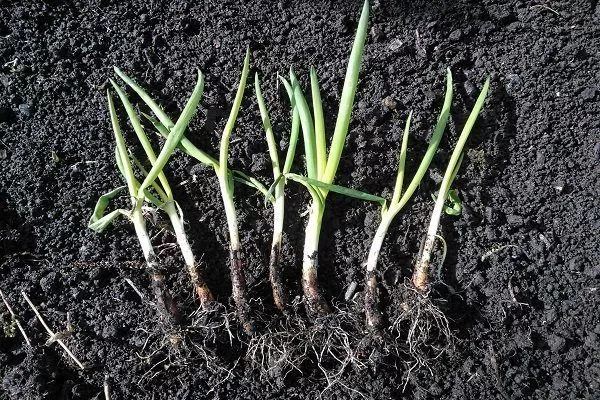
Usually, chives are grown as an annual or biennial plant:
- Annual It's better because its leaves are juicier and more tender, not very wide, and the bulbs don't taste bitter. However, the harvest only begins in mid-summer, and when grown as an annual, the bushes are dug up whole, bulbs included.
- Biennial crop This method is more widespread. The seeds are sown in early summer, the plant is watered and fertilized, but the harvest during this season is small, and only individual leaves can be harvested. Seedlings emerge in the spring, and by mid-May they are ready for consumption. With this method of cultivation, the harvest can be collected several times per season.
To ensure that chives delight the gardener with juicy, tender greens, without drying out or becoming diseased, certain rules must be followed when planting them, which are important regardless of the growing method:
- the soil should be sandy loam or loamy; onions do not tolerate acidic soils;
- the plant needs to be fed with organic or complex mineral fertilizers;
- Onions don't like drought, so they need to be watered on time;
- It is not advisable to plant it in a place that is flooded in the spring, as the onion will quickly bolt;
- Several times per season you need to loosen the soil or replace this process with mulching.
Welsh onions have no dormancy period, so they're easy to grow on a windowsill year-round. You can also preserve them for the winter by transplanting them into a flowerpot in the fall.
Soil requirements
Welsh onions prefer humus-rich, sod-like soil that's not acidic. Loam or sandy loam soil is a good choice. They can be planted in locations that don't meet these requirements, but to ensure a good harvest, the soil will need to be enriched. Add peat and black soil to sandy soil, and rotted organic matter to loam. Acidic soil requires liming.
Choose a planting site that doesn't receive full sun all day. You can even sow them in the shade. It's recommended to plant chives after legumes, cabbage, pumpkin, and zucchini. If tomatoes were previously grown in the same location, the risk of fungal infection increases. It's also not recommended to plant them after garlic, onions, cucumbers, or carrots.
It's best to prepare the planting site in advance. For spring sowing, this should be done in the fall. After adding mineral fertilizers and organic matter, the soil should be dug over and beds formed. It's recommended to fertilize the soil with rotted manure at a rate of 100 g/sq. m. The following fertilizers are also beneficial: nitrogen – 10 g, phosphorus – 12 g, potassium – 8 g.
When sowing seeds outdoors, it's crucial to thoroughly clear the soil of all weeds. Weeds are very sensitive to this type of planting, and weeding them is difficult. The young shoots are so thin and their roots so tender that the plant itself is pulled out along with the weeds.
Planting dates
Welsh onions are sown in open ground 2-3 times per season:
- Early spring (April)When planted in spring, the greens can be harvested in summer; the bushes also form several flower stalks. Spring shoots appear no earlier than two weeks after sowing.
- In summer (in June)Summer planting is mainly used to grow biennials. Seedlings appear within a week.
- In autumn (October-November)Welsh onions are sown before winter to ensure an early harvest next year. To do this, wait until the temperature drops to 3 degrees Celsius (37 degrees Fahrenheit). If the seeds are sown earlier, they may not germinate.
Growing seedlings from seeds
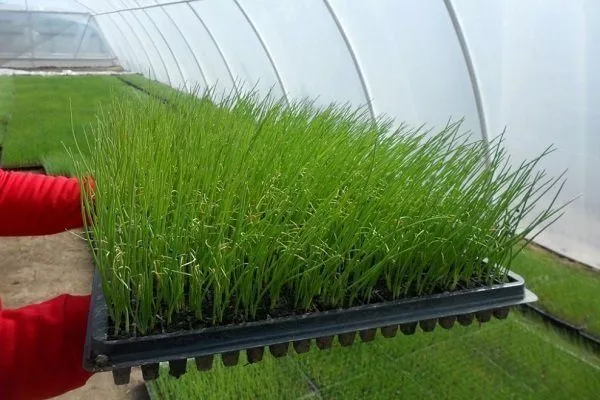
This growing method is quite labor-intensive, but has many advantages. The most important is saving seeds, which almost all germinate indoors. When growing from seedlings, the harvest can be harvested as early as early summer. Another advantage of this method is the lack of hassle with weeds.
Sow seeds in hotbeds, cups, or containers around mid-March. The soil is a mixture of humus and turf, to which ash and fertilizer are added. It's best to buy ready-made seedling soil, enriched with all the necessary nutrients.
The step-by-step process looks like this:
- Furrows are made in prepared containers and the seeds are sown. It is recommended to refrigerate them for several days at 6°C (44°F) before sowing, then wrap them in damp cheesecloth for 24 hours. This will increase their germination rate.
- After sowing, cover the seeds with soil, water, and cover the container with plastic wrap. Maintain humidity, keep the container on a sunny windowsill, and occasionally lift the plastic wrap for ventilation.
- Once the seedlings emerge, the film should be removed. For normal plant development, the air temperature should be around 16 degrees Celsius, and even lower at night.
- Once every 2 weeks, the sprouts need to be fed with complex mineral fertilizer.
- When full-fledged leaves appear, the seedlings are thinned out a little - they should be located at a distance of 2-3 cm from each other.
- A week before planting the seedlings in open ground, begin taking them out onto the balcony during the day. By this time, the bush should have at least 3-4 leaves.
The plant is transplanted into the garden bed after 40-60 days. When transplanting, there's no need to dig up the bushes—they're transferred directly to the garden bed with the soil in place.
You can grow Welsh onions on a windowsill in a similar way during the winter. The pot should be deep and have drainage holes. Sufficient light—at least 14 hours a day—is essential for lush greenery, so supplemental lighting is necessary.
Sowing in open ground
Sowing chives outdoors requires many considerations. It's important to consider planting time, soil conditions, and location. The seeds of this plant are difficult to germinate, so it's best to activate them. There are three ways to do this:
- soak in warm water for 24 hours;
- soak, adding a growth stimulator or fertilizer to the water;
- use bubbling - soaking with air supply, this can be done with an aquarium compressor.
| Method | Efficiency | Processing time |
|---|---|---|
| Soaking in warm water | Average | 24 hours |
| Soaking with a growth stimulator | High | 12-24 hours |
| Bubbling | Very high | 18-24 hours |
Before soaking, you can soak the seeds in a weak solution of potassium permanganate. This will help prevent common diseases. After soaking, dry the seeds to facilitate sowing.
When planting seeds in spring or summer, make a furrow 1.5-2 cm deep in a prepared bed and water it. Then sprinkle the seeds thickly into the furrow. The recommended dose is 1.2 g per square meter. The thicker the seeding, the softer the onion tips will be. After sowing, cover the seeds with dry, humus-rich soil and water again.
There should be at least 20-25 cm between rows. After the seeds germinate, thin the seedlings, leaving the strongest plants. Space them 5-8 cm apart; if planted too far apart, the leaves will become tough.
In winter, onions are sown at a depth of 2-4 cm, depending on the soil, to prevent the seeds from freezing. The bed is then leveled and compacted. To protect the plants from frost, the soil should be covered with mulch; spruce branches can be added. In spring, the mulch is removed, but the bed is covered with plastic film: the greenhouse effect will speed up germination.
Caring for the crop
Welsh onions do not tolerate lack of moisture. Without water, they develop tough, fibrous, and sharp leaves that dry out or turn yellow. Flower stalks quickly appear, which also makes the plant unfit for consumption. Therefore, the key to a tasty harvest is regular watering. The soil should be moist to a depth of at least 20 cm. Warm water is preferable.
Fertilizing the plant in the first year is not necessary. Adding fertilizer to the soil before planting is sufficient. In the second year, additional feeding is necessary, preferably with organic matter. If mineral fertilizers are used, they should contain some nitrogen, as chives accumulate nitrates.
The soil must be loosened regularly, especially after heavy rains. Removing weeds is also essential for a good harvest.
Diseases and pests
Welsh onions are susceptible to the same diseases and pests as the rest of the onion family. These include:
- black mold;
- fusarium;
- bulb fly;
- nematode;
- powdery mildew;
- rust.
The problem is that onions can't be sprayed with chemicals, as this will make them unfit for consumption. Therefore, it's important to try to prevent diseases. To do this, it's important to remove weeds promptly and avoid stagnant water to prevent rot and mold. To prevent diseases, plants can also be sprayed with an infusion of onions, garlic, potato greens, or tomato leaves.
Powdery mildew spreads especially quickly in damp, cool weather. This disease causes leaves and bulbs to become covered with a white-purple coating. Rust and fungus may also develop. Bordeaux mixture or copper sulfate are effective against these. It's best not to eat leaves treated with these.
Welsh onions can be affected by pests:
- root knot nematode, bulb fly or onion thrips burrow into the stem or chew through the bulb;
- The onion weevil pierces the leaf and sucks out the juice.
Insects can only be controlled with insecticides (for example, by spraying the beds with Karbofos), so it's best to prevent them from appearing. For this purpose, it's recommended to treat the plantings with a mustard powder solution. It's harmless to humans, but the pests don't tolerate it.
Harvesting and storage
Trim the green onions as needed. Harvesting can begin a month after planting, when the stems reach 15-20 cm in length. Leaves are cut from June to September. This should be done almost at ground level.
The harvest is typically 2-3 times per season, with the plant and bulbs dug up the final time. If the plant is left over winter, stop cutting leaves a month before the first frost to allow the plant to prepare for the cold.
The greens are stored in the refrigerator, wrapped in bags or plastic wrap. Welsh onions retain their properties and flavor for up to a month. The stems can be preserved for the winter by washing, drying, and placing them in containers, then freezing. Sometimes it is recommended to chop the onions and dry them. Stored this way, they can be used as a seasoning.
Watch a video about the specifics of planting and growing chives in the garden:
Many gardeners plant Welsh onions several times a year to ensure they have a constant supply of their juicy, tasty stems. This vegetable's undeniable benefits and ease of cultivation make it one of the most popular garden crops.