
The Bamberger onion was developed in the Netherlands. Breeders succeeded in creating a unique variety with a tangy flavor and medium-sized fruits. Bamberger's characteristics and properties surpass those of most onion varieties. It is easy to grow and care for.
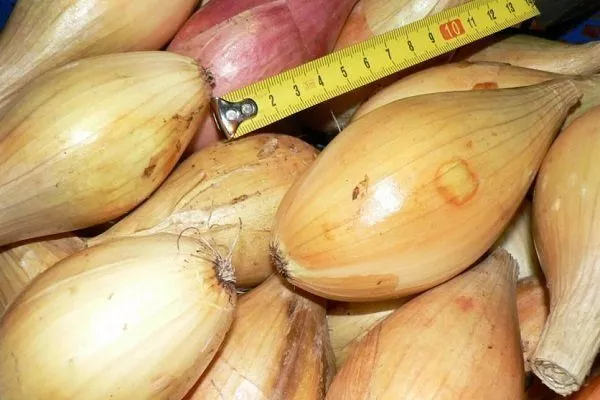
The Bamberger bow reaches 10 cm in length.
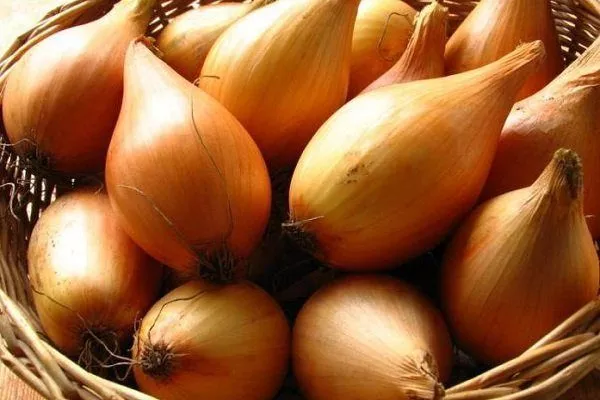
Onion Bamberger
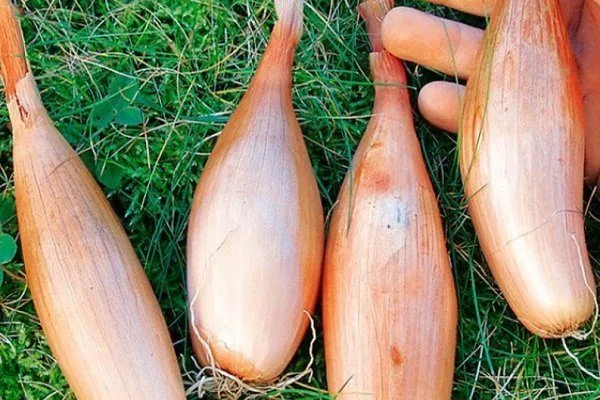
Bamberger onion is sweet without strong bitterness
Description
Bamberger attracts attention with its taste characteristics, which are similar to salad varieties.
Appearance
Let's look at the characteristics of the variety in more detail:
- shape – round, elongated;
- fruit size – medium;
- fruit weight – up to 100 g;
- the length of one head is up to 10 cm;
- pulp color – white;
- the color of the husk is yellow-brown;
- taste – sweet, no pronounced bitterness;
- yield – 6 kg per 1 sq. m;
- Depending on the growing region, it can be early-ripening, mid-season, or mid-late.
Pros and cons
Vegetable growers distinguish the following characteristics of the variety: advantages:
- unique taste qualities;
- excellent shelf life – can be stored almost until the next harvest;
- convenient bulb shape;
- high level of productivity;
- versatility of application;
- peels well;
- fairly resistant to diseases and pest attacks;
- Suitable for planting in different climatic zones.
But there is also a little disadvantages:
- during storage the husk falls off;
- planting material is quite expensive;
- large bulbs may produce a bolt;
- The harvested crop does not tolerate moisture well.
Methods of reproduction
There are several methods of propagating this onion:
- Sevkom. You can grow the seeds yourself or buy them in a specialty store.
- Vegetatively. In this case, the cloves that form on mature bulbs are used – they are carefully cut, sprouted and planted in the soil.
Landing
Before planting Bamberger, familiarize yourself with the planting rules - how to prepare the site and the planting material itself.
Conditions
Best plant onions Bamberger thrives in sandy loam soils, choosing a well-lit, draft-free location. This variety is planted in the fall or early spring. If planting in winter, select the smallest bulbs possible.
- ✓ The soil pH level should be between 6.0-7.0 for optimal growth of Bamberger onions.
- ✓ The soil must have good drainage to avoid water stagnation and rotting of the bulbs.
When growing this variety, follow crop rotation rules: onions should not be planted in the same area for three years. It's best to choose areas where beans, tomatoes, or cabbage were grown in previous seasons. Carrots are an excellent companion for Bamberger.
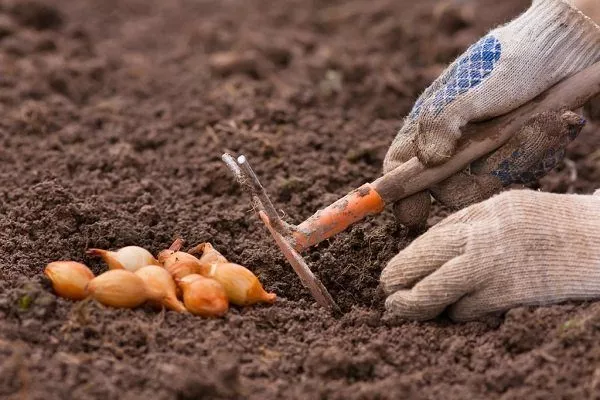
Soil preparation
Before planting onions, prepare the soil by tilling it and adding fertilizer. The soil should have a loose structure and sufficient nutrients. To do this, follow these steps:
- weed (to a depth of 2-3 cm);
- remove all weeds;
- If there are more than 5 perennial weeds per square meter growing on your property, use chemical control against them – use Roundup and Hurricane herbicides (30 ml per 100 square meters);
- scatter organic fertilizers over the soil surface - rotted manure or compost (from 5 to 9 kg per 1 sq. m);
- a few days after fertilizing, plow the area - the optimal depth is 15-18 cm;
- Level the plowed area using agricultural equipment - if one time is not enough, repeat the harrowing;
- Divide the prepared soil into holes (the number depends on the scale of the planting).
Preparation of seed material
Since there are two methods of growing Bamberger, there are also several preparatory features for preparing the seed material.
Preparing the onion sets
Dry the purchased material by laying the bulbs out in a warm room. Even if you grew the bulbs yourself, warm them up before planting.
Warm up the planting material gradually:
- Keep it in a room with an air temperature of about +20 degrees for several weeks;
- A day before planting in the soil, move the seedlings to a room where the temperature is 15-20 degrees higher.
This accelerates onion germination and prevents bolting. If you don't have time for such a lengthy process, you can speed it up by soaking the bulbs in hot water for 15-20 minutes before planting. Growth stimulants such as Rost-1 or Humisol (instructions for use are on the packaging) can also be used to accelerate growth.
To prevent diseases and pests, treat the seedlings with a solution of potassium permanganate or copper sulfate, and before planting, check them again to ensure they are free of various defects, such as signs of rot, mold, and so on.
The sets should be firm, golden in color, and rustle in your hands. It's best if all the planting material is approximately the same size. The ideal size for sets is 2-4 cm. If the size is smaller, the onion won't produce the desired results; if it's larger, it will can shoot.
Winter planting of onion sets begins 20 days before the onset of frost. Furrows are made in the soil 3-4 cm deep, with a distance of 20-30 cm between them. The onion sets are planted at intervals of 8-10 cm, then covered with soil and mulched.
Preparing and planting seeds
If the cultivation is carried out not by bulbs, but by seeds, then they are also prepared for planting:
- Sort out the seeds, separating out any empty, damaged or rotten ones.
- Before sowing, soak the seeds in a solution containing growth stimulants—use Vympel or Emistim for this. To prepare the solution, simply add 5 ml of growth stimulants to 5 liters of water.
- Soak the seeds in this liquid for 24 hours, then immediately plant them in pre-prepared holes.
When sowing seeds, make furrows 5-7 cm deep and water thoroughly. Space furrows 15 cm apart. Before sowing, add rotted manure (50 g) and superphosphate (10 g) to the bottom of the furrows. Then, sow the seeds at a depth of 2-3 cm (3 g per square meter). Then, fill the prepared rows with soil and lightly compact the soil.
Planting dates
The timing for planting onion sets varies in different regions:
- In Siberia, onion sets are planted outdoors in late May. Monitor the temperature before planting—it should be at least 8-10 degrees Celsius.
- In the Urals, onion sets are planted around mid-May. As in Siberia, wait until the soil temperature is 8-10 degrees Celsius.
- The optimal time for planting onion sets in central Russia is mid-April to early May.
Care instructions
Planting onions isn't the end of the story. Next, several agricultural practices are implemented to ensure a successful harvest.
Watering
Watering is continued throughout the onion's active growth period until the bulbs are fully ripe. Watering frequency depends on several factors, but the most important is weather conditions.
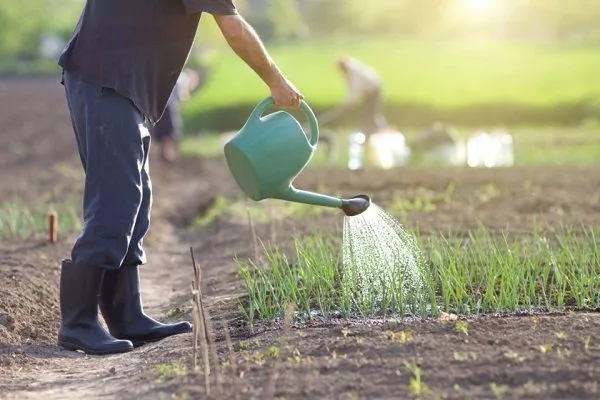
Moderation and regularity of watering are important—Bamberger onions require ample watering two weeks after planting. Water with settled water (5 liters per square meter). After this, water as the top layer of soil dries.
Initially, water twice a week, then, from mid-summer, reduce the frequency to avoid overwatering. It's crucial to stop watering completely two weeks before harvest.
Loosening
This procedure is performed to ensure the plant receives sufficient oxygen. Loosening is performed at least once a week.
If you add mulch under your onions, you can avoid loosening the soil. Suitable mulches include peat, sawdust, and rotted straw.
Weeding
Weed as soon as you notice weeds sprouting. The key is to completely remove weeds before they take root. Weed to a depth of 2-3 cm.
Top dressing
Once the first shoots emerge, it's time to fertilize the plants. Fertilize onions three times per season, using the following schedule:
- on the 15th day, add a solution of chicken manure at the rate of 10 liters per 1 square meter of land;
- after 21 days, apply nitrogen fertilizer at a rate of 2 tablespoons of urea per 10 liters of water;
- After another 21 days, the soil is watered with potassium fertilizer (2 tablespoons of superphosphate per 10 liters of water).
Pest and disease control
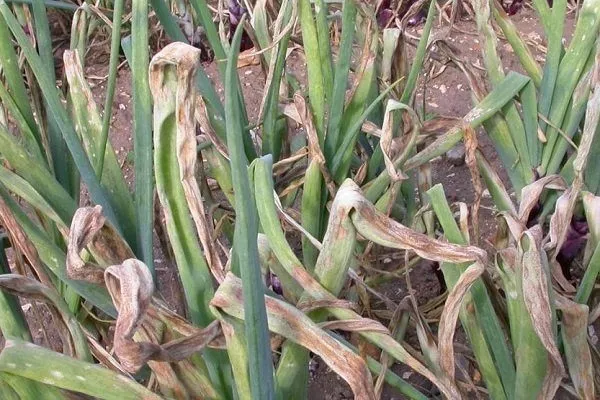
Onions are quite disease-resistant. To prevent them and strengthen young plants, treat them twice with copper sulfate and copper oxychloride. The first time, when the shoots reach 20 cm in length, and the second time, in mid-summer, during the active growth period.
Bamberger is susceptible to the following diseases:
| Disease | Symptoms | Control/Prevention |
| Powdery mildew | It attacks bulbs, seed scapes, and leaves. It appears as elongated spots covered with a grayish-purple fluff. | Cleaning up plant residues from previous years of cultivation, proper crop rotation, balanced fertilizing, treatment with fungicides (Topsin 500 SK). |
| Bacteriosis. | The stems develop poorly and wet rot appears at the base. | Do not water by sprinkling, use fungicides (Copernico Hi Bio). |
| Yellow dwarfism | A viral disease that manifests as yellow streaks on the leaves. Affected leaves lie on the ground, and the bulb remains small and does not survive winter storage. | There is no treatment; prevention involves removing affected plants, planting healthy seedlings, and using insecticides. |
| Fusarium | A fungal disease that attacks roots, bulbs, and leaves damaged during fieldwork or by pests. Diseased roots become covered with white spots, and the leaves become slightly yellowed. | Using healthy material, chemical treatment with Topsin 500 SC (5 or 10 g per 10 liters of water) is recommended. Each plant is sprayed with the solution (0.5 l). |
The Bamberger onion variety can also be attacked by the following types of insects or pests:
| Pest | Symptoms | Control/Prevention |
| Nematode | It attacks stems and bulbs, appearing in spring. Onions are infected through soil or contaminated seeds. The bulbs remain small, cracked, and misshapen. | Correct crop rotation, removal of diseased plants from the area, treatment with Force 1.5 G (15 kg per 1 ha). |
| Onion fly | It lays eggs in onions, the larvae of which chew holes in the leaves and move toward the center of the leaf. The onions dry out, and growth slows. | To combat the pest, early planting of onions is used, as well as spraying with insecticides Diazon (3 g per 1 sq. m) and Borey (10 ml per 10 l of water). |
| Hidden Trunk. | Insects sitting in the spaces between onion leaves feed on onion juice, causing serious damage to the plants. | They are controlled using the drug Mospilan 20 SG (1.5 g per 6 l of water). |
How to harvest and store crops?
Once you've harvested the onion, your task is to preserve it. When digging up the onions, don't cut off the tops, as they can be used later to tie the vegetables into bunches or braid hair.
Once harvesting is complete, the onions are placed in a warm, well-ventilated area to dry. The recommended drying temperature is 30 degrees Celsius (86 degrees Fahrenheit). If the weather is sunny and pleasant, they can be dried directly outside, spreading them out on a prepared tray.
Before sending onions to storage, each bulb is inspected, since if even a few rotten ones are found, it will spoil the entire crop.
It's recommended to store vegetables in a basement, where the temperature should be between 3 and 10 degrees Celsius and the humidity level should be 70%. If you don't have a basement, an insulated and glazed balcony will do.
Onions are best stored in:
- wooden or plastic boxes with holes made;
- wicker baskets;
- cardboard boxes in which perforations are made;
- in mesh bags.
Popular issues
Almost all problems you may encounter when growing Bamberger are related to violations of the following agricultural practices:
- planting too small sets results in the root system not being developed and not being able to support the weight of the green mass;
- the soil lacks nutrients;
- growing temperature is too high;
- little light.
For a video review of the Bamberger variety, watch the following video:
Reviews
Bamberger is an easy-to-grow, sun-loving plant that, with proper care, can produce an excellent harvest. Its ability to retain its marketable appearance and flavor for a long time makes it popular among gardeners looking to reap a bountiful harvest from their plots.